Why are there so many midlife suicides?

As an well-informed boomer and specialist in midlife psychology, I have been trying to draw attention by writing about and publishing pieces on the ALARMING increase in depression and suicide among Boomers, especially among women going through menopause,  since 2008.

DEATH NEED NOT BE AN OUTCOME OF MENTAL ILLNESS IN OUR WORLD TODAY! WE CAN DO SO MUCH BETTER THAN THIS…

In 2013,  when my cousin killed himself and my brother John disappeared after descending into a profound, private despair, I dedicated my book: Find Your Reason To Be Here: The Search for Meaning in Midlife, to themas I continued to seek a deeper understanding of the reasons why midlife suicides keep rising. Here’s an excerpt from one of those pieces from the Huffington Post, April 2013:

Why is Boomer Suicide on the Rise?

There have been a number of studies on boomer suicide that seek to explain why we continue to kill ourselves at an ever-increasing rate. Some say it is the period effect,” blaming the historical and cultural experiences we share as a generation. The “cohort effect“ theorizes that being born into the largest age cohort in American history created unbearable competition for limited resources, including jobs.

Then there are the facts: Boomers share higher depression and substance abuse rates than any previous American generation. Could it be that we did not face the kind of adversity growing up that creates successful coping skills? Were we raised to be too optimistic, and now find we cannot deal with how it all turned out?

Beyond all of the mythology around boomers, the fact is we now face extreme wage inequality, and the highest level of poverty since the generation born before World War I. We also face ever-increasing personal debt. In 1965, the ratio of household debt to income was 60%. In 2012, that ratio had risen to 163%.

We may have been born at the high point of American optimism, but that has vanished…

Some say Boomers have been witnesses to the death of the American dream. Most of us grew up with high expectations for our lives, but now, as we reassess where we’ve been and where we hope to go, we must admit, this is as good as it gets. We will never be richer or younger than we are right now.

I only know that I tire of so much misinformation about boomers and their lives. I have had enough personal experience with midlife depression to now feel determined to do what I can to alleviate some of the suffering, and this terrible waste of human potential.

Globally, about a million people kill themselves each year, the single largest cause of violent death. It remains mysterious and debilitating for those who surround every suicide and ask the question: What made him/her do it?
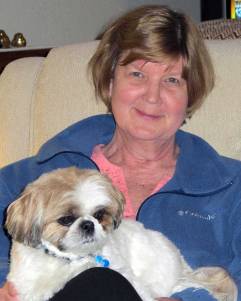
Laura small for blogThrough my research, I have learned just how normal and natural it is to feel depressed and disillusioned in our 40s and 50s as we discover that our lives may not turn out as previously planned. What is the best way to cope with these feelings of hopelessness? I share what I have learned in my ten years of research, and what has worked for me, in my books about boomer psychology, midlife despair and how to change your midlife for the better.

Please follow me on Twitter: https://twitter.com/midlifequeen
Laura Lee Carter, Midlife researcher, author, psychotherapist

Dietland: Being fat in a world that hates women

My measure of any form of media, is whether it continues to please, alarm or haunt me days after viewing it. Dietland did that for me! After viewing the first episode on AMC this past Monday night, I couldn’t quit thinking about how mixed are the messages we receive as females growing up in a world that tells us to love ourselves while critiquing us at every turn.

Part of me learned about being fat from watching those around me struggle with dieting and self-hate their whole lives. The other part learned about it on a much more personal level in the past few years, as I joined the legions of women starving themselves constantly for “the cause.” But perhaps all of us can relate to some extent to how beauty-focused advertising teaches young girls that we don’t deserve joy. We should instead strive toward “perfection,” no matter how self-destructive that path may become.

dietland baking scones

“Dietland doesn’t merely argue that beauty culture is violent, but also asks the unsettling question of whether the violence that women spend inflicting on themselves is actually a coy display of anger, not at ourselves, but a deeply misogynistic culture.”  — Arielle Bernstein, “Killer Looks, How Dietland Confronts The Violence of Beauty Culture.”

A few things I learned while watching Dietland were disturbing at best. For example, this line by the star “Plum Kettle” about being fat and attracting men: “Men screw women like me, but marry women like my boss,” played by Julianna Marguiles below.

dietland Julianna Margulies

Since I didn’t grow up dieting, I never quite understood the fantasy of those women who have been taught that their lives will be completely transformed as soon as they lose just the right amount of weight. The self-hate is everywhere in this show, and in our cultural bias created by advertising.

“Dietland allows fat women, women like me, who have fallen off too many treadmills and gone to bed so hungry it hurts, the chance to explore a righteous anger; it connects our pain to the bigger issues of a world that hates women.”  —  Laura Bogart, “I see myself in Dietland”

All of this brings up the issue of finding a healthy sense of self-love and respect in a world that doesn’t necessarily believe we deserve it. My biggest issues growing up were around whether I even deserved to be here at all, because I was quite different than most of the girls I met. In my decades-long journey to find and then allow my true self to be seen and heard, few were reassuring. I thank those strong, brilliant women (& Mike!) everyday for speaking to me about my right to be here and to be heard!

Take the greatest risk of all, to be seen as you truly are!

Retirement in rural southern Colorado: If you don’t take the risk, how will you ever know?

Four years ago, on June 17th, Mike and I sold our nice home in suburbia and left behind everything familiar to us. After living up in the Fort Collins area for the past few decades, this move felt like a gigantic leap of faith.

906 Deer Creek Lane front view

Here’s a photo of our past home in south Fort Collins. In the past four years it has increased in value more than $100,000! Wow, the prices of homes up in metroland are growing by leaps and bounds!

morning sun on comanche drive

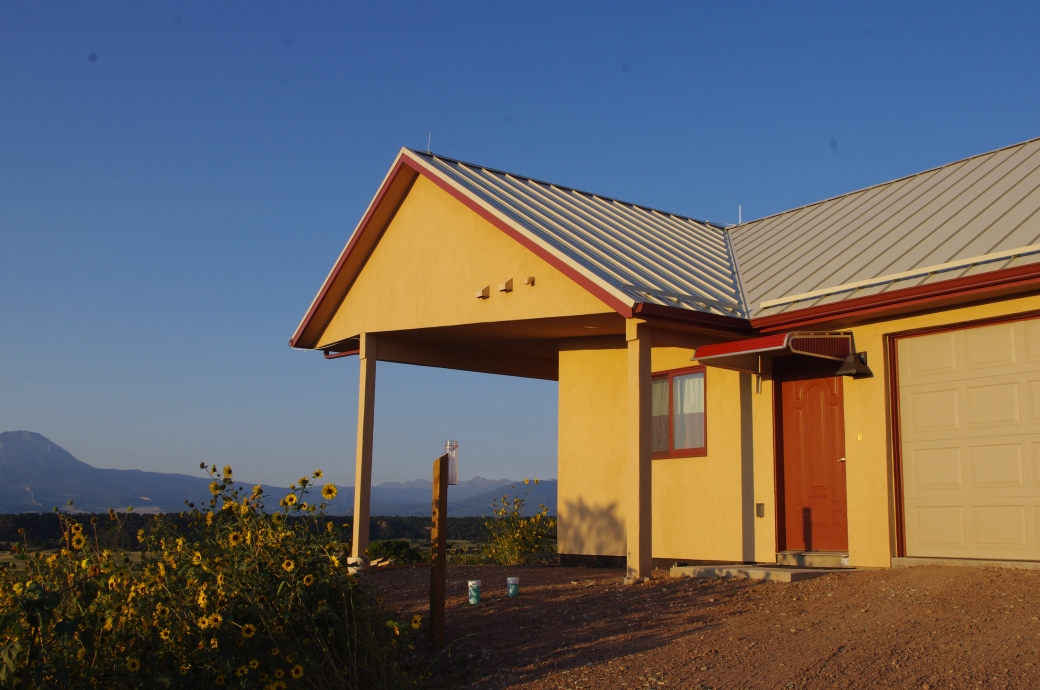
After over a year of emotional and financial struggle, we triumphed over a million difficult challenges to create this passive solar home west of Walsenburg Colorado. We have been quite happy living here for the past few years. Retirement agrees with us, and especially in such a quiet, natural part of the West. BTW, passive solar works great down here!

Most of my worries about moving here never came to pass, and other completely unexpected problems replaced those. The biggest challenges for me have been health-related. My body made a quick decision to start falling apart soon after age 60, creating new opportunities for compassion towards others who suffer. And the truth is, I have met so many here who have been forced to retire early because of health concerns and disabilities.

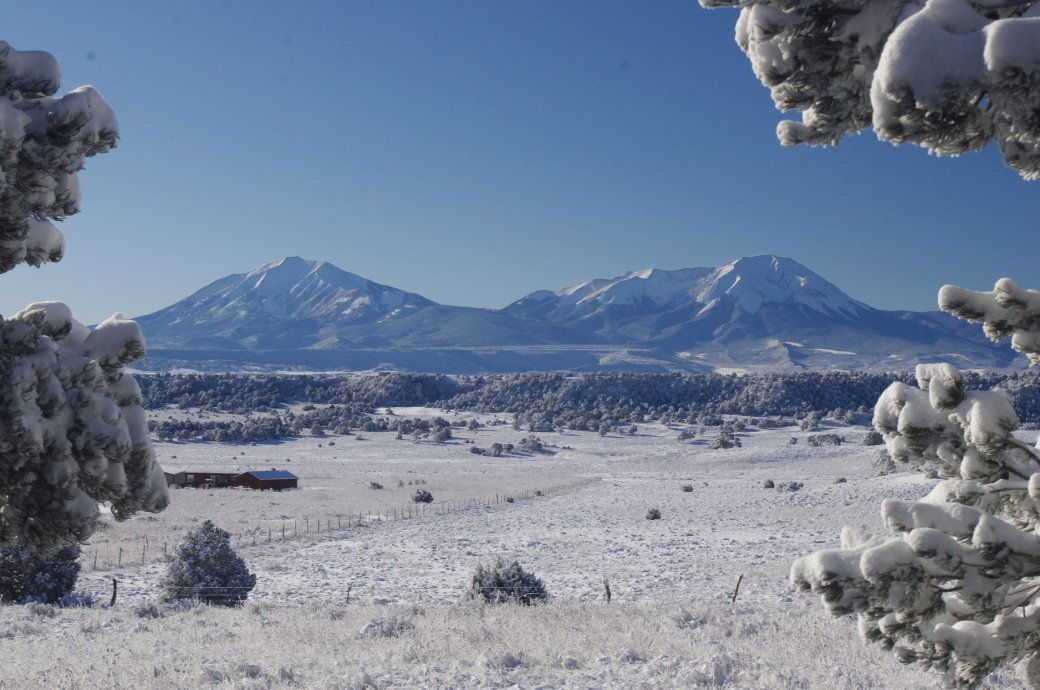
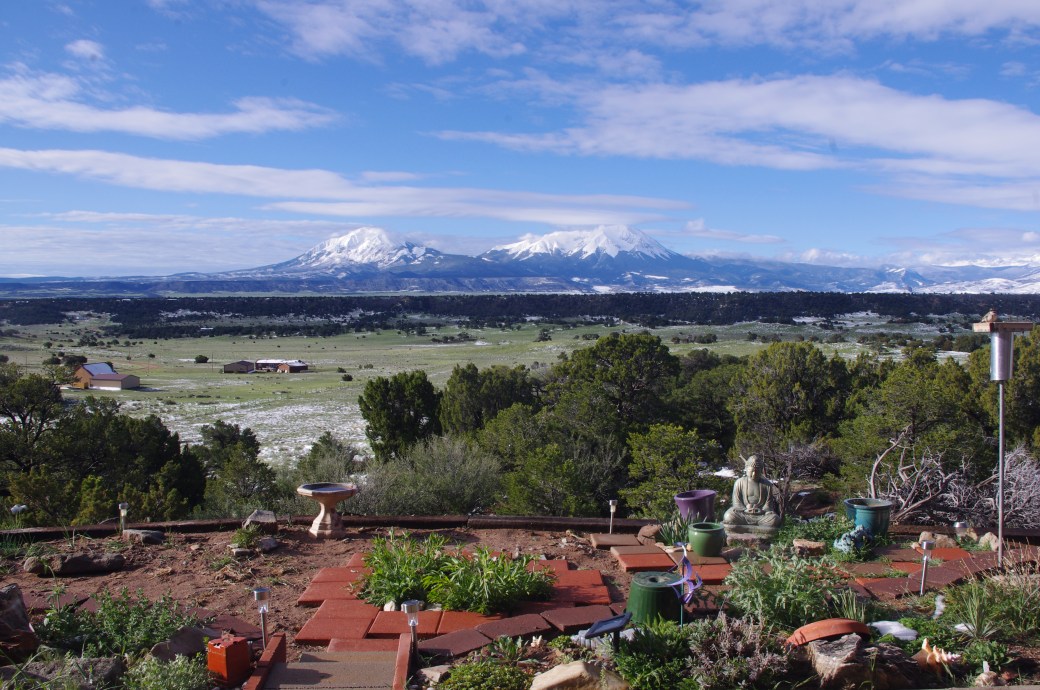
great Mike photo of snow and Spanish Peaks

Huerfano, meaning orphan, is a poor, rural county down near the New Mexico border, with a total population of around 6,500 and an average age of 54 years. With few good jobs and an abundance of natural beauty, the Huerfano attracts those with less money and more appreciation of rugged country and rural life. We live on three acres in the Pinon-Juniper ecosystem right around 7,000 feet elevation.

Judging by the rapid increase in traffic in Walsenburg, the many homes sold here in the past few years, and how crazy Highway 160 has become in the summer, it looks like this area has been “discovered” by those living up north in metroland.

AMAZING sunrise over the Spanish Peaks January 2018

We have found this area to be slow and quiet, especially in the winter, and windy as hell. If you hate the wind, don’t move here! The slow country ways are what now attract me. I can go into La Veta and always see people I know. I like that.

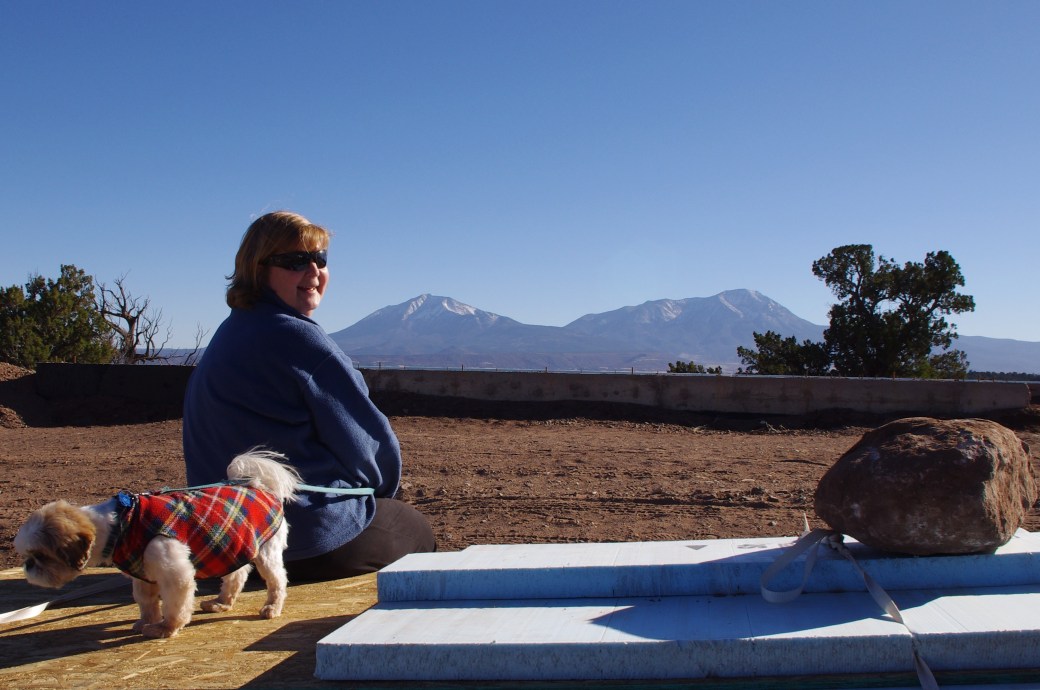
Laura and Rasta on insulation 2014 (2)

Laura Lee Carter is a professional photographer, writer and psychotherapist. Her midlife crisis included a divorce and the loss of her career as an academic librarian, misfortunes she now finds supremely fortuitous, as everything wonderful flowed from these challenges. Laura now sees midlife difficulties as once-in-a-lifetime opportunities for personal liberation. She has produced four books and one workbook on personal change, midlife psychology and how country living changes you.

Don’t miss her new one: A Memoir of Retirement: From Suburbia to Solar in Southern Colorado

My New Xeric Garden in Southern Colorado

nice garden scene at comanche drive

Now on to my favorite pastime, where you can find me every morning bright and early, my rock garden outside my door! I know, it isn’t much to look at this time of year, but my new plants are just getting established, some last spring and some this year.

IMGP7375

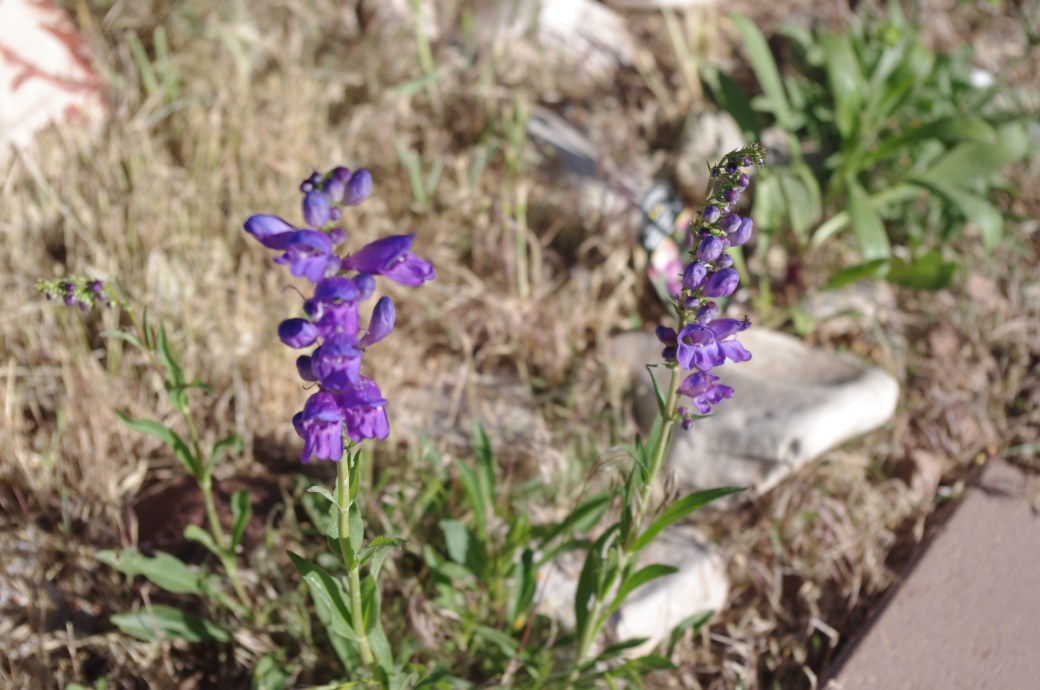
Some plants came back with enthusiasm! I have found that Rocky Mountain Penstemon (Penstemon Strictus) never bloom the first year they are planted, but all three of them are blooming this year!

And this one I forgot all about, but it is sure happy in my garden this year!

may-garden-with-spanish-peaks-2019

I have some cute little pussy toes! All blooming very soon I’m sure!

I haven’t had many problems this year with rabbits or other animals chowing down on my plants. I try to choose the ones the animals don’t like, but I just learned how much they like certain Yarrows!

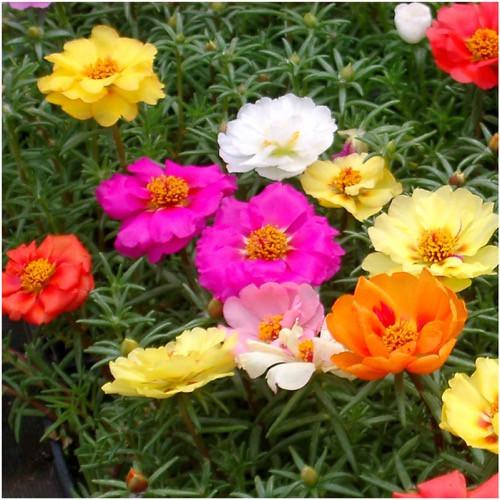
Portulaca Mix

I learned the hard way my first summer out here that they LOVE tender, well-watered Portulacas! Perfect rabbit salad! These are the only “annuals” I buy every year. Sometimes they do re-seed themselves in their own pot. Now I keep them up on a shelf away from all hungry critters.

garden scene outside my bedroom door

THE VIEW OUT OF MY BEDROOM LAST SUMMER…

I’ve also had great success with Blue Mist Spirea bushes, Jupiter’s Beard, Lavender, most sedums, Gallardia, and I’m working on establishing a few Walker’s Low Nepeta (Catmint) for their lovely purple color in the spring.  Nice to see a few native plant volunteers too! We plan to add hardscaping this summer. It should look wonderful in just a couple more years… That’s the way with new gardens, patience is key! The main problem we have here is the drying wind. I like what Merrilee over at Perennial Favorites said about that: “We hate the wind, but the plants really don’t mind.”

Please keep writing, but with fewer words…

writing penI seem to be cursed with an undeniable need to edit and critique the writing of others. Everywhere I look I see misuses of our marvelous language. When I worked as an editor for a few years I finally got in touch with my inner English teacher. Red pen in hand, I labored over the writing of others to make them and me look better. But lately I can’t help but notice how most writers, even professionals, use TOO MANY WORDS. After over twelve years of writing professionally, I see in my old writing and that of just about everyone else, a tendency to be over-wordy. Let’s call that verbose or “expresses thoughts with more words than are needed.”

verboseYes I can just hear a few editors who critiqued my freelance pieces ten years ago saying, “Too many words!” Of course, back then I was getting paid by the word. Why not throw in a few extras? I’ve always been more a fan of the “get to your point and then stop” type of writing. Some have even critiqued my chapters or books by saying they’re so short. Well, I said what I came to say and then I shut up. I could never be the fiction writer who runs on for hundreds of pages.

“I am a minimalist. I like saying the most with the least.” ~Bob Newhart

So, here’s what I recommend. After you write a piece for public consumption, re-read it and see how many words you can remove and still get your exact same point across. Writing for others is not the same as keeping a journal. What do you want your audience to take away from reading your piece? The fewer the words, the more likely they will read the whole thing, get to your point, and then absorb it.

write until it becomes naturalBut, most important of all, please keep writing! It frees the soul, it lifts the spirits, it gives you a secret friend to talk to anytime you need to. Reading and writing have always been two of my best friends. I honestly have no idea where I would be without them. I have learned literally volumes of information and experienced so many new parts of the world and great adventures by reading about them. I have learned who I am by writing a journal for many decades. And finally, I hate to brag, but I’m very good at Jeopardy! I love it when none of the contestants know the answer but I do…

We read (and write!) to know we are not alone.

Hot off the presses: The Best of Boomer Blogs!

It’s summertime here in southern Colorado and the living is dry and HOT!

Colorado drought monitor

We are experiencing “severe drought” this spring, ruining our usual display of early native plant bloomers. In fact, the photo in the header of this blog was taken just a few years ago at this time of year!

Moving on to the thoughts of some super HOT Boomer writers…

Carol Cassara discusses the ins and outs of making good decisions this week:

Have you noticed that good decisions and bad ones look alike? It’s an observation that Carol Cassara discusses and relates to episodes of her own life over at A Healing Spirit.

I bet you didn’t know that this is National Palliative Care Week in Australia? This is a topic we all could learn a thing or two about. We learned about this topic this week when a new friend dropped dead at 69…

Palliative care

Here Sue Loncaric from Sizzling Towards 60 & Beyond discusses why we need an End of Life plan and the need to document our wishes. This is NOT a conversation most of us like to have with our loved ones, but certainly one that everyone should have sooner rather than later.  Not sure where to start?  Sue offers some information, together with a video of prominent Australian’s all discussing this important topic.

Hillbilly elegyOnce in a while a memoir not only tells one individual’s story, but sheds light on a people, their culture and way of life. That is what J. D. Vance’s memoir of growing up amidst the people of Appalachia does. Hillbilly Elegy highlights a group of people that are an enigma to many Americans – Trump supporters. Vance did not do this purposefully. The book was published in 2016. Meryl Baer of Six Decades and Counting highly recommends Vance’s story of growing up in a dysfunctional family and successfully escaping his environment, an insightful, interesting must read.

In this important health report over at BabyBoomster.com  Rebecca Olkowski interviews a woman who discovered she had skin cancer (basal cell carcinoma) after twelve years of being diagnosed with eczema/psoriasis. Fortunately, she was able to find a doctor who could help her before it was too late.

Jennifer of Unfold And Begin returns this week after a short anniversary trip and she has a short but to the point post on why it’s important to keep learning.  Why trying new things is important to all of us.  Read about it in: Anyone Who Stops Learning Is Old.

On The Survive and Thrive Boomer Guide, Rita R. Robison, consumer journalist, is having trouble deciding what action by the Trump administration during the week was the worst. Was it bank deregulation, including the weakening of consumer protections in mortgage transactions, or a resolution overturning guidance on racial discrimination in auto lending, which allows Congress to review all federal agency regulations and prohibits them from ever reissuing a “substantially similar” rule if a rule has been nullified by Congress. To cheer herself up, Robison decided to write about her recent visit to Spain where she went cava, or sparkling wine, tasting. She visited, Freixenet, the largest cava producer in the world, Albet i Noya, a small organic winery, and Agusti Torello Mata, a winery named after the man who founded it.

Oregon trailTom Sightings asks if we remember studying the Oregon Trail in high school. Or playing the Oregon Trail game on our computers in the ’90s. In any case, in retirement Sightings has decided to set out on his own trip across the country, following the old route of the Oregon-California Trail. In “Following the Rivers” he tells about his first days out, finding a refreshing spring, a tragic grave, a reconstructed fort, and an important river.
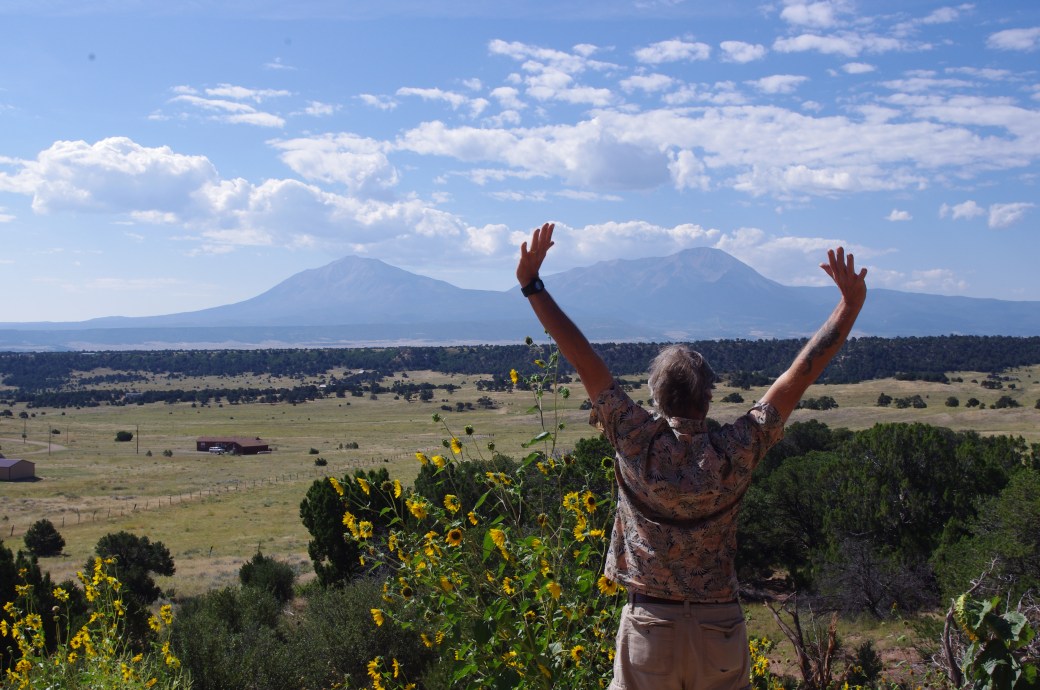
I would only add a bit about my latest post. Here I recommend that we all:

Mike at home

“Hold on to your dreams! Don’t give up when those dreams require taking risks that scare you. Don’t let others talk you out of your most important goals. You have the needed vision to live your dream.”

“The person who says it cannot be done, should not interrupt the person doing it.” –  Chinese proverb