Some Romantic Advice From a Sexagenarian!

Happy Valentine’s Day To Everyone!

What a crazy celebration this truly is, considering this Hallmark holiday where some get a temporary high from spending lots of money, began as an excuse for pagan partying. Yes, Valentine’s Day began as a raucous annual Roman festival where men stripped naked, grabbed goat or dog skin whips, and spanked young maidens in hopes of increasing their fertility!

As you might guess, in my many decades of romantic experiences I have earned the right to be called a ‘sexagenarian” (better known as a person between 60 and 69 🙂 ) You might have heard that older people spend more time thinking about their past, which only seems natural since we have more past to look back on. It only seems fair that I share a few wise nuggets from my decades as a single and married woman. Here’s the most important romantic advice I can give to you, especially if you are still young:

If you allow someone else to control your emotions, you’ve already lost.

I know, you’re probably thinking, but isn’t love when you don’t control your own emotions? Isn’t that what being “lost in love” is all about? Well, that’s what they’d like you to believe, especially the person who is trying consciously or unconsciously to control you. Which brings me to my second most important piece of human communications advice:

You cannot control how other people receive your energy. Anything you do or say gets filtered through the lens of whatever they are going through at that moment, which is NOT ABOUT YOU.  

Now I know this is probably not what you want to hear about falling in love, but I sure wish someone had shared this kind of advice with me when I was young and falling in love on a regular basis.

Now I finally realize that I regularly mistook “falling in love” with having any kind of deep, meaningful conversation with a male I was even slightly attracted to. Now I have these kind of conversations regularly without mistaking them for romance or love. Yes, hormones are awfully powerful, but don’t let them take full control of your emotions or your brain.
We all will make plenty of stupid mistakes when it comes to love, or what we sometimes mistake for love. Just try not to do any lifelong damage to yourself along the way. Trauma is such a painful teacher, and it can keep you stuck emotionally for years.

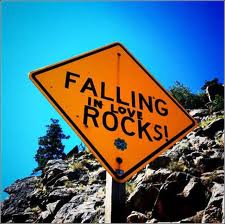
Falling in love is the BEST high I have ever experienced, even at age 49 when it last happened to me. After that Mike and I decided to fall in love all over again, as many times as possible until we die. Why? Because falling in love rocks!

Postscript: The absolute best book I have ever read on finding success in love is called, “How to Be an Adult in Relationships” by David Richo. Check it out!

How writing can improve your mood and keep your brain moving forward…

In the process of writing my last post about AI and writing, I learned quite a bit about exactly how good writing is for our brains. First of all I learned that writing by hand is better for the brain than typing. Although a slower task, research indicates that physically writing things down appears to make the writer become more selective in what they write. What’s more, when you pen words on paper, the neurons in your brain fire signals at rapid speed, enabling you to make more neural connections.

Writing is a stimulating yet strenuous activity for the brain. When you write, all parts of your brain are actively engaged. Thanks to the brain’s neuroplasticity, it can grow and change over time. Just as athletes train their bodies, writers can do the same with their brains.

The process of recalling something, writing it down, and reading it back on paper boosts memory and comprehension, leading to improved cognitive processing. Given that many areas of the brain are engaged, the more you write, the more neural connections are formed within your brain.

Writing every day can benefit everyone, not only professional writers. It improves your memory, builds vocabulary, and refines your communication skills. Writing can also be very relaxing, especially if you lead a busy or stressful life.

When it comes to emotional stability and development, writing can be quite therapeutic. Writing gives some structure and organization to anxious thoughts and feelings. It can help the writer feel more in control of their negative moods, thus helping them get past suppressed difficult or traumatic events.

I have always been a avid writer since I first learned how. Writing is my way to have someone to talk to about difficult thoughts or feelings, a way to process my feelings to make me feel better. These days I find writing to be essential to both my mental health and brain health. Although I sometimes find it quite challenging for my brain, I do need this challenge to keep moving forward after a few serious head injuries.

5 Surprising Benefits of Writing by Hand

Will new AI programs replace the art of writing?

OpenAI’s artificial intelligence writing program ChatGPT can compose poetry, prose, song lyrics, essays, even news articles. That has ethicists and educators worried about the program’s ease at replacing human ideas with chatbot-generated words. I can already hear the concerns of educators. What about the process of writing your first term paper? Isn’t that an important part of learning?

In the history of our species there have been a number of reasons to create writing so we could record history. The first hieroglyphics were used by Egyptian priests to record important events like wars or stories about their gods and Pharaohs. These were also used to decorate temples and tombs. Writing has been used to communicate with future generations, entertain others as art (poetry, plays, prose, stories), for history and business. For most of these purposes an AI program would have sufficed to communicate. Most of us may not need to learn how to write a poem, an essay or a term paper if we have no interest and we will never need that skill again. The skill we all need and seems to be sorely lacking in our world today is critical thinking.

For most, writing a term paper may be a useless exercise, but for some of us, writing is a lifeline to sanity. I have made a practice of keeping journals my entire life. This practice of self-analysis has always helped me think through what I am experiencing and process the reasoning behind my choices, my way of delving into something I want to know more about within myself.

Now, after a few serious brain injuries, writing is my lifeline to my former self; how I connect the two worlds, the person I used to be and who I am today. My fine mind has served me well, but now it is exhausting and confusing for me to sit down at my computer and put ideas and feelings together in writing, and yet I believe this is an essential exercise in me still being me. No AI program can do this for me, and it is so worth the effort.

The process of creating is vital to the human brain. Films, music, books, poems, works of art can all be programmed into AI today, but should they be? What about the lived experience of each of us? What about the emotions of living a life?

Writing was created for a purpose, and it has served humanity in so many ways. I feel certain that will continue.

Create Your Own “Lifetime Achievement Award”

While watching the Golden Globes last night, I decided it was time for me to create my own lifetime achievement award. While watching so many ‘stars’ in their fancy outfits, it becomes too easy to undervalue our own achievements, but only we know how difficult it may have been for us to choose a certain life path and achieve what we have in our own chosen endeavors.

Only we know what struggles we have endured to overcome major obstacles to be where we are today.

To identify our own achievements we must first ignore any outside opinions and judgments, because no one knows like we do how hard we may have fought to overcome major fears just to become our best selves today. I know for myself I often wonder why I could not have been more fearless in the choices I have made, and yet I’m sure there are plenty of good reasons for that.

For now just focus on your achievements instead of what you may perceive as your failures. For example, instead of only seeing the failures you have had in your past, focus on the fact that you now enjoy a few wonderful, genuine love relationships.

My list of lifetime achievements includes the fact that I did finally find love, I have put up a valiant fight to be nothing but myself and celebrate that, I have generally followed my dreams, I’ve seen much of the world, and I’m proud and happy with myself at age 67.

If I continue to focus on that, and not on what I haven’t done, than I am indeed a success in my own mind

“I’ve spent too many years at war with myself…”

Every time I listen to Sting sing “Consider me gone” I get stuck on these words. Why do we spend so much time picking on ourselves? As a psychologist I assume we learn how to do this from our overly self-critical parents, and then carry on the practice by habit. Some say these patterns get stuck in our brains and are almost impossible to fight against or change.

I know I have been far too self-effacing for as long as I can remember and then, of course, others along the way helped me become even more critical. Now, in my 60s, I’m still working at fighting this pattern in various ways. It helps so much to have a close friend or life partner who points out how hard we can be on ourselves. I remember back in my late 40s I gained a lot of new insight when I read Gloria Steinem’s book “Outrageous Acts & Everyday Rebellions” but this is a process that will last forever I’m afraid.

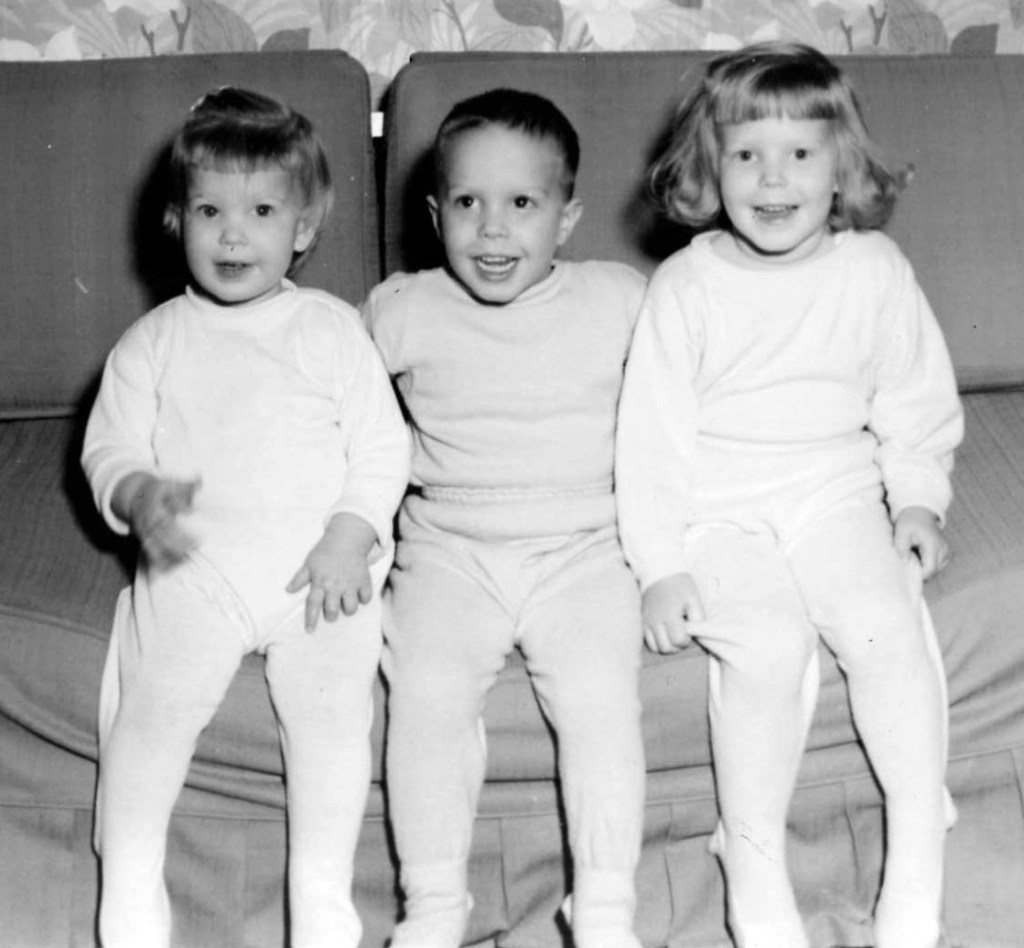
The three Carter kids at Grandma’s house at Christmas

Just recently I was rearranging things and came across a small photo of myself at around age three, looking pretty sassy in my new Easter clothes. Now I focus for a few minutes everyday on that little girl, on loving her all the way through and sending good thoughts for the many ways she might feel really good about herself for the rest of her life. I feel so much compassion for the battles she has fought in her war against herself and visualize how much easier her life could have been if she had learned self-love at an early age. I seems it has always been easier to be critical rather than compassionate towards myself.

I watched a marvelous 2005 movie recently called, “Mrs. Palfrey at the Claremont.” It’s about a retired older woman, played wonderfully by Joan Plowright, who befriends a young man, played by Rupert Friend, (YUM!) by chance on the streets of London. It’s has a lot of insights into aging and how we treat our elders with a number of great lines, but the one that keeps coming back to me is:

“It’s very important to praise people a lot early on, otherwise they might die of disappointment.

Ice Dancing is the Perfect Sport (for me!)

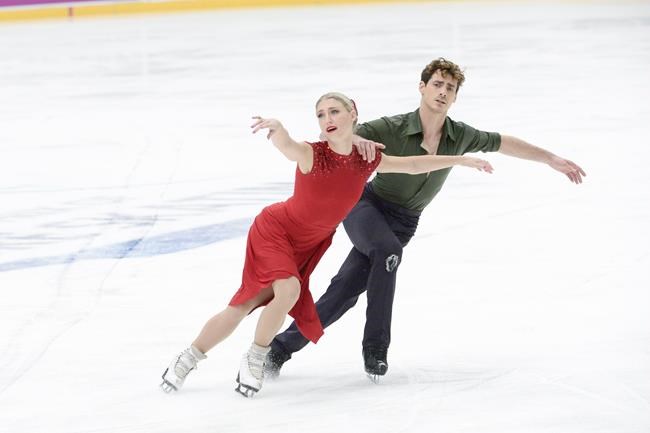
If any of you were able to watch the finals of the Free Skate competition this weekend in Finland, you were very lucky! The winning Canadian couple, Piper Gilles and Paul Poirier, absolutely took my breathe away when they skated their final program to the music from Evita. This was the epitome of artistic beauty completed with amazing ice skating skills. I had it on Peacock so I could watch it over and over again. Such perfection!

I’ll let you in on a secret few know about me. I have absolutely loved ice skating for as long as I can remember. My brother John and I began skating in junior high school. Colorado College had their own ice rink and we got to skate there for free, because my Dad worked at the college. I would go skating as often as I could in high school with my friend Linda Cook, spending hours perfecting our balance, coordination, figures, spins, jumps and hockey stops. In high school during boring classes (like chemistry!), I would dream up skating routines, escaping into dreamy dance routines, music, etc. It was a major focus for my teenage brain and body.

Why? Because I loved the freedom and versatility of skating. After I got good at it I loved to work on skating figures on my edges. The fine tuning required to lean into an edge just the right amount without overdoing it fascinated me. It seemed like the perfect sport, requiring great strength, control and artistry.

Only later I learned about ice dancing. Recently I signed up for Peacock streaming just so I can enjoy all of the international ice skating competitions at length. I especially love that I can watch the skating without all the interruptions of commentators. How rude to talk during these amazing performances! I like the individual events too, but the concentrated coordination of the pairs and ice dancers blow me away.

Now I know I am a true romantic. When I watch them I sometimes feel like I have escaped to the land of sprites and fairies. It is almost unbelievable how the ice dancers swoop and swirl like snow flakes across the ice. If only I could have been an ice dancer!