Being alone: how much is enough?

I can highly recommend an article in the December/January issue of AARP magazine entitled: “Is there a cure for LONELINESS?” Positive human connections are a part of being human. I have been studying this topic up-close-and-personal for most of my life. The main theme of this excellent AARP article is that social isolation can have measurable medical causes and remedies.

Did you know that genome researchers can now see signs of social isolation in your white blood cells? The blood cells of very lonely people “appear to be in high alert, responding the way they would to a bacterial infection.”

Another social connectedness researcher recognized our “human need to be embedded, connected and integrated in a social network…When that network is missing the consequences are very real in terms of mental and physical health.”

These researchers were not studying those who are natural introverts who love to be alone. They are studying those do not wish to feel so alone in the world and may go days without talking to anybody who knows or cares about them.

Did you know there is a 32% increased risk of early death for those living alone, according to a study of 3.4 million people? Social isolation can be a killer, and not just figuratively. Loneliness may actually cause premature death by damaging the heart. Research suggests that feeling loneliness may double a person’s risk of dying of cardiovascular disease. Older Americans are at the greatest risk for social isolation, which can lead to physical illness, depression and even dementia.

My place of meditation & serious contemplation at age 49

This was foremost on my mind when I did a major life review in my late 40s. After I got divorced and then lost my job/career at age 49, I sat for a few months in my self-created sunroom and thought about my highest priorities for the years I had left before me. What did I need most to survive my future? I had been an introvert and a loner my whole life and dealt with this issue a number of times in counseling. Did I want to be alone forever?

That is when I decided that I would put all of my energy into finding the best partner for me. I didn’t want to face forever alone. I figured I couldn’t be alone in my loneliness. There must be at least one person I can truly enjoy spending lots of time with. Once I became totally focused on this goal, I met Mike. He lived ten miles away, but I never would have met him without Match.com We spoke for over ten hours the first time we met!

Now, fifteen years later, I cannot imagine where or even who I would be without Mike. So loyal, loving and like me. We are both introverted and loners to some extent, but we also actively choose not to live alone. We love each others’ company and also know when we need to spend some time alone. We give each other LOTS OF SPACE. We have become the guardians of each others’ solitude. This works well for us.

I have decided now, at almost 65, that we all need a witness to our lives; people to look after and those who look after us. Our survival and well-being depend on not only ourselves, but also loving, supportive others. Yes, I could have lived alone forever, but did I really want to?

My book “How to Believe in Love Again” explains the process I went through to change my attitudes about living without love…

Traumatic Brain Injury (TBI) is NOT just “a few headaches”

OK. Now I’m mad. We all know how often our President lies about just about anything, and mostly we just ignore him in his ignorance, but when he minimized the head injuries of our soldiers after the al Asad airbase attack on Jan. 8, I knew I had to attack myself! Remember, this missile attack was in reprisal for a U.S. drone strike Jan. 3 that killed top Iranian general Qassed Soleimani.

A total of 34 American service members were diagnosed with TBI after the al Asad airbase attack. At first Trump said it was just a few concussions. I’ve had “a few concussions” myself and that is no small thing. But then we realized that some soldiers were instead experiencing traumatic head injuries.

DefinitionTraumatic brain injury (TBI) is a non-degenerative, non-congenital insult to the brain from an external mechanical force, possibly leading to permanent or temporary impairment of cognitive, physical, and psychosocial functions, with an associated diminished or altered state of consciousness.

I fell head-first off my bicycle in 2008 and I have NEVER BEEN THE SAME. I fell onto dirt. If it had been concrete I probably would have died. With a serious internal brain bleed, I slipped in and out of consciousness for 24 hours afterwards. I couldn’t think clearly, spell, or write for months after my fall. So much to re-learn! But even then, and even now, 12 years later, I cannot remember words or focus my thoughts anything like I did before my TBI. Some days it is very hard for me to function at all with a constant fear of losing consciousness and balance limitations.

So no, Mr. Trump, a TBI is not about “a few headaches.” Head injuries can and do cause lifelong brain changes that limit full functioning, including balance, consciousness and full cognition!

To learn more about results from trauma head injuries, check out this excellent NBC News article: ‘A different person’: Personality change often brain injury’s hidden toll

In 2018, 1.5 million Americans attempted suicide

U.S. suicide rates have risen in recent years, while rates in other nations continue to fall. Our suicide rate increased 33 percent from 1999 through 2017, and this rate has increased more sharply since 2006. Suicide ranks are now the fourth leading cause of death for people ages 35 to 54, and the second for 10- to 34-year-olds. It remains the 10th leading cause of American deaths overall. Suicides have increased most sharply in rural communities (like mine), where loss of farming and manufacturing jobs has led to economic declines over the past quarter century.

What can we learn about why our suicide rate continues to climb? According to the American Psychological Association (APA) The reasons for why suicide rates rise or fall is challenging, in part because the causes of suicide are complex:

“Suicide risk factors include health factors such as depression, substance use problems, serious mental illness and serious physical health conditions including pain, environmental factors such as access to lethal means and stressful life events including divorce, unemployment, relationship problems or financial crisis and historical factors including previous suicide attempts, a family history of suicide and a history of childhood abuse or trauma.”

“At the individual level, there is never a single cause of suicide. There are always multiple risk factors,” says Christine Moutier, MD, chief medical officer of the American Foundation for Suicide Prevention. “That confluence of multiple risk factors makes it a trickier business to explain a population-level rise.”

What can you do about this?

Those who have attempted suicide say,

“All I wanted was for one person to see my pain and say something kind.”

Any intervention can prevent suicide. I remember back in 2004, when I was divorcing (loss of 75% of my income!), I lost my job and then career, and I could find not one more job in any area at age 49. I set up an appointment with our Unitarian minister just to talk and I told her, “I just need one thing to go right!” Because it felt like everything was going to shit.

I learned two important lessons from this breakdown to breakthrough moment in my life. Action is the greatest antidote to despair and suicide is a permanent solution to a temporary predicament. The action I took, although it seemed a bit crazy at the time, was to start my own offline dating service. This led to meeting lots of others who were feeling lost and confused in the middle of their lives. Eventually it led to meeting Mike, my midlife best friend and lover. He then helped me begin a new career as a writer, which led to my blog “Midlife Crisis Queen” and my books.

If you are feeling lost and depressed start anywhere. Make your mess your message and spread the word, all is not lost just because you feel unhappy right now!

And remember, You miss 100% of the shots you don’t take!

Surprise! None of us get out of this alive…

“America is the only country in the world that looks upon death as some kind of personal failure.”

As we age, it is natural to contemplate more often the inevitable consequence of life, our own death. I know that since I experienced a serious brain injury at age 53, with hours of spontaneously moving in and out of consciousness, death has become a fascinating topic for me. I often wonder if unconsciousness is what death feels like. If so, it may not be so bad.

Then as I entered my 60s and personally experienced too many new ailments and disabilities, I wondered again when and of what I would die. I also learned something important about our culture: Even if we Americans don’t see death as a personal failure, we most certainly see illness as one. Ever since I moved from the healthy column to the older, not so healthy column, I have noticed many treat me quite differently. But aren’t I the same person with equal potential?

This all reminds me of a patient I treated in my counseling internship in a rehab hospital. When this elderly woman became ill and ended up in the hospital, the only question on her lips was,

“What did I do to deserve this?”

That has been the realm of religious leaders and philosophers forever. How do we make sense of this thing called life and death? That must be where our judgment of those “failures” who have the indecency to die comes from. When we are still among the living and healthy, it rarely seems likely that we will die someday.

I am reminded of a very cynical MD I met once in Boulder decades ago. I remember him telling a story about one of his theoretically healthy patients. The doc was given the unenviable task of telling this person that they had cancer. The patient’s response?

“I can’t have cancer! I run ten miles a day!”

If you like to play the odds game, the top 10 causes of death in the USA are heart disease, cancer, unintentional injuries, chronic lower respiratory diseases, stroke, Alzheimer disease, diabetes, influenza and pneumonia, kidney disease, and suicide.

Please note number ten on this list, the rate of suicides among Americans. This rate has risen since these statistics came out in 2017. And speaking of suicide, let’s give Camus the final word on this topic:

“There is but one truly serious philosophical problem, and that is suicide. Judging whether life is or is not worth living amounts to answering the fundamental question of philosophy…These are facts the heart can feel; yet they call for careful study before they become clear to the intellect.” -Albert Camus

Learn more about nodules & lung cancer in women!

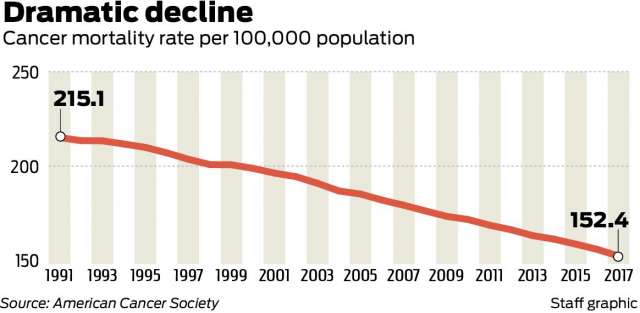
First the GOOD NEWS: The cancer death rate in the U.S. dropped 2.2% from 2016 to 2017, the largest single-year drop ever recorded, according to the latest report from the American Cancer Society, continuing a longstanding decline that began a quarter-century ago. This decline was fueled in no small part by recent advances which have lowered death rates in lung and skin cancer patients.

This 26-year decline in our overall cancer mortality rate, a 29 percent drop, translates to roughly 2.9 million fewer deaths than there would have been had the rates remained the same. In contrast, less impressive results remain for other major causes of death, such as heart disease, whose mortality rate has slowed; stroke and other cerebrovascular disease, whose rate has stabilized; and accidents, Alzheimer’s disease and suicides, rates which continue to increase.

Unfortunately lung cancer statistics don’t hold up as well among American women. Internationally, screening programs and more effective treatments have helped lower breast cancer death rates. Meanwhile, the number of deaths from lung cancer has already sped past those from breast cancer in the U.S., Canada, New Zealand and other higher-income countries. In the U.S. in 2015, more than 70,000 women died from lung cancer and about 41,000 women died from breast cancer.

In the U.S., smoking rates peaked in women after they did in men. That is why the U.S. is one of the countries where lung cancer rates have stabilized or decreased in men but they continue to rise in women. Men are still far more likely to smoke than women, and this will likely hold true in the future. Research is now underway to investigate whether smoking cessation programs are more effective than lung cancer screening in reducing lung cancer deaths in women.

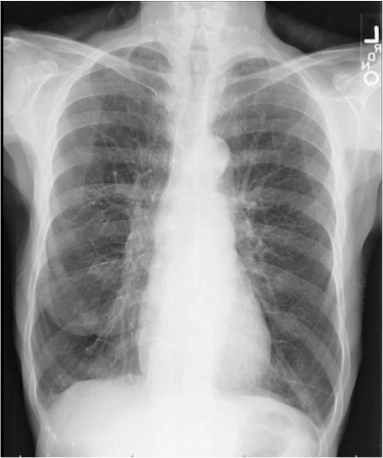
An X-ray showing COPD

Please let me share a few interesting facts I have learned about lung cancer since discovering I have nodules in my own lungs. Nodules can be seen as a precursor to cancer. In my case they were found by getting a simple chest X-ray. Please get your lungs checked today! But when I recently asked my pulmonologist how common nodules are, she informed me that they are far more common than previously expected. How do we know this? So many more people have received X-rays and cat scans of their lungs in the past decade or so.

I also learned that, like me, as many as 20% of people who die from lung cancer in the United States every year have never smoked or used any other form of tobacco. In fact, if lung cancer in non-smokers had its own separate category, it would rank among the top 10 fatal cancers in the United States. Non-small cell lung cancer (NSCL) is the most common type of lung cancer, yet it’s difficult to detect early on because early-stage lung cancer often has no symptoms and is not detected with a chest X-ray. Positron emission tomography (PET) and CT scans can be more helpful in diagnosing lung cancer.

Researchers continue to make progress in understanding what can cause lung cancer in people who have never used tobacco. A few other causes of lung cancer include:

  • Radon gas. The leading cause of lung cancer in non-smokers is exposure to radon gas, according to the US Environmental Protection Agency (EPA). It accounts for about 21,000 deaths from lung cancer each year.  About 2,900 of these deaths happen among people who never smoked. Radon occurs naturally outdoors in harmless amounts, but sometimes becomes concentrated in homes built on soil with natural uranium deposits. Studies have found that the risk of lung cancer is higher in people who have lived for many years in a radon-contaminated house. Because radon gas can’t be seen or smelled, the only way to know whether it’s a problem in your home is to test for it. A Citizen’s Guide to Radon explains how to test your home for radon easily and inexpensively, as well as what to do if your levels are too high.
  • Secondhand smoke. Each year, about 7,000 adults die of lung cancer as a result of breathing secondhand smoke. Laws that ban smoking in public places have helped to reduce this danger. The American Cancer Society Cancer Action NetworkSM (ACS CAN) – the nonprofit, nonpartisan advocacy affiliate of the American Cancer Society – is working to expand and strengthen these laws to further protect both people who smoke and those who don’t from the dangers of secondhand smoke.
  • Cancer-causing agents at work. Some people are exposed to carcinogens (cancer-causing agents) like arsenic, asbestos and diesel exhaust at their workplace. Work-related exposure to such cancer-causing materials has decreased as the government and industry have taken steps to help protect workers. Still, if you work around these agents, be careful to limit your exposure whenever possible.
  • Air pollution. Researchers have known for a long time that both indoor and outdoor air pollution can contribute to lung cancer. The World Health Organization (WHO) classifies outdoor air pollution as a carcinogen. However, it’s believed the risk of lung cancer associated with air pollution is lower in the US than in many other countries because of policies that have helped to lower the levels of exposure.
  • Gene mutations. Researchers are learning more about what causes cells to become cancerous, and how lung cancer cells differ between people who have never smoked and those who smoke. Understanding how gene changes cause lung cancer cells to grow has helped researchers develop targeted therapies, drugs that specifically attack cells with these mutations.

Do not assume that because you never smoked, you cannot have nodules or lung cancer. Get your lungs checked regularly as you age.

.

So glad to see the end of that decade!

For me, the 2000 teens were a time of great changes. I started in 2010 with a few books published, a popular and well-read blog named “Midlife Crisis Queen” and lots of optimism for the future.

I was (and am still) recovering from a traumatic brain injury from a bike wreck in 2008. At the time I had no idea what BIG changes were in store for me, or how difficult those changes would be.

Mike’s job got sent to China in 2011 and there went most of our income, so he entered an Obama era program that would support us while he returned to school for retraining.


Wash Day in the Tomebamba River in central Cuenca Ecuador!

Soon after that we began looking into some pretty wild alternative futures including a move to Cuenca Ecuador! I spent a week there in September of 2013 and decided against it.

So then we were off to southern Colorado in search of a few acres of high desert land with a mountain view to build our passive solar dream home.

One thing led to another and by June 2014 we had fixed up and sold our nice suburban home in South Fort Collins and moved into an ancient mining cabin in Walsenburg, as we prepared the plans for our new home west of town. That was total culture shock for me, but we enjoyed exploring our new area that summer as our home plans came together.

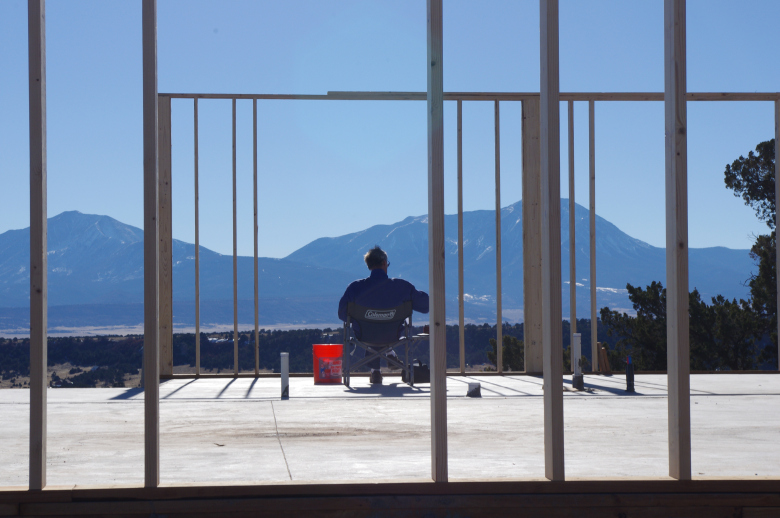
Mike contemplating his future home & view!

The next year or so passed in a chaotic confusion of construction, one step forward, two steps back, but by August 2015 we moved into our solar home with amazing views and lovely solar heat!

All of my physical stress and uncertainty slowly dissolved as I realized how quiet, peaceful and contemplative my future would be in this lovely place. One thing I didn’t count on at that time was the myriad of health problems that would follow. Yes, part of it was simply moved up to 7,000 feet, but I had never had breathing problems before at over 5,000 feet. I guess my old lungs that have been through too many cases of bronchitis and polluted air had had enough. Just breathing has become a struggle. Add on new problems with my hearing, eyes, shoulders and back and I think you get the picture. The sixties have not been kind to me so far.

My Sky Garden in Bloom! August 2019
One of my greatest achievements of the past few years!

Still I feel grateful every single day for all that has been given to me. So many exciting and interesting experiences all over the world. So many cool people I’ve met everywhere, and I’m not done yet!

My greatest blessing has been meeting Mike finally at age 49, thus finding the love I had been seeking my entire life. We just work well together. In the best and the worst of times, we are always a great team!

So I choose to be optimistic about Mike and I’s future as well as the future of our country and Mother Earth. Bring on 2020! I’m ready!