“A Man Called Otto” my very personal review

My family has been falling apart…literally, in the past few years. We are a family of elders with no children or grandchildren around us. I am the youngest at age 68.

First my Dad died in 2020 leaving my Mom bereaved, in great need of companionship, and beginning to experience dementia and yet forced to live alone for a couple years, because of the COVID pandemic. In the meantime, my brother John finally left his lean-to tent near Oak Creek outside of Sedona AZ to move up near Mike and I. He needed more help to live. Since 2020 my sister and her husband have been taking care of our Mom in Denver while Mike and I have been helping John access affordable housing, medical care and food assistance here.

As John and Mom’s memory and mental status continued to fail, our Mom went into assisted living in Denver. Today my sister and I do what we can to keep everyone going in spite of our own health challenges. We also commiserate often over what is happening to our family. This can be quite depressing at times.

I spent most of my life trying to “go it alone.” After a traumatic betrayal in my early 20s I decided, “Who needs all those others who can be so disloyal, undependable and will only abandon me in the end?” When I was in counseling in my 30s my counselor assigned me the duty of inviting others to share a hike or a meal with me. I have spent most of my life alone.

This is why I can highly recommend the 2022 film “A Man Called Otto.” This story does not minimize the difficulties of life, especially as we enter our 60s and 70s. The writer acknowledges the “systems” we put in place to retain some sense of order in an otherwise lonely, messy and chaotic world. Yes, life can be so unfair at times. Yes, it is almost impossible to go it alone. Yes, suicide is always an option. Yes, some of us must be forced into caring for others, but that can also be our saving grace.

That is why I so joyfully welcomed Mike into my life at age 49. I changed. I finally found somebody worth my trust and was forced to acknowledge that life would not be worth living without the love and support of my best friend.

We Carters have never been a close family, but now we are finally bound together to face the end of us all. Mike has joined us in this process, as his own brother and sisters face their own demise. I guess this must be a common boomer process we face, especially if we don’t have children or grandchildren that care.

We all face the future as it comes, crying together when we need to, and laughing at it all when we can; knowing that all of humanity has come before us facing very similar situations and consequences. In the process, the love of others is such a plus.
Where have all the Boomers gone? And why?

I was reorganizing my retirement funds recently and that got me thinking: How are other retired Baby Boomers doing? In that process I learned about why we have fewer and fewer workers for highly skilled jobs…

Baby Boomers, born between 1946 and 1964, make up 28% of the United States population, making them one of the largest living adult generations, second to millennials. In 2011, the first round of Baby Boomers—those Americans born between 1946 and 1964—turned 65.

From now until 2030, 10,000 Baby Boomers will be retiring every single day!

The COVID pandemic, shall we say, encouraged early retirement. According to the Pew Research Center, the rate of retirement for Boomers accelerated with COVID-19, with nearly 29 million Boomers retired in 2020, three million more than in 2019.  

Seventy-five million Boomers are expected to retire by 2030, paving the way for what is now being called “The Great Retirement,” as opposed to the “Great Resignation.”

Retirement Savings

“The Great Retirement” is an unprecedented flood of retirees exiting the workforce earlier than planned, triggered by the pandemic which heavily affected those 60 and older. Whether it was to enjoy life, health concerns, or a changing work environment, this part of the workforce has seen an uptick in retirement. In spite of these numbers, many Boomers find it hard to retire. Why? Many baby boomers are worried about their finances. Nearly two-thirds expressed concern about not having enough savings to quit their job. Shockingly, at least to me, the median retirement savings of Baby Boomers today is just $144,000 to $202,000.

Health & Death Rate Among Boomers

The largest generation in American history, Boomers are likely to remain that way for the foreseeable future. What wasn’t foreseen was how long Baby Boomers would live. When the first Boomers were born, the average life expectancy was 63 years old. Among Boomers recently that was 79 years, but that is falling.

Unfortunately we, as a generation, are not as healthy as our parents were at our age. Why? One culprit is obesity-associated chronic diseases caused by a gigantic dietary shift. Beginning in the 1950s we were introduced to fast, convenient, processed foods with plenty of additives and preservatives. Today we have increased deaths from chronic liver disease, suicide, cirrhosis of the liver, along with poisonings all caused by addiction. I’m sure you have heard about recent death spikes related to opioid abuse, alcohol abuse, and heroin abuse. The implications of this epidemic are massive.

As we all know, addiction is a symptom of bigger issues—the underlying causes of addiction need to be treated. Our generation, known for questioning authority and seeking equality, has lived through significant family changes brought on from two-parent working households, increased divorce rates, increased career mobility, increased technological advancement, and increased psychological awareness. How have these factors impacted our long-term well-being?

My thoughts

As someone who lives in a poor, rural county in southern Colorado, whose average age is 55, I can say I have known many more people who have died here in the past 9 years than I have ever known before. It seems a fairly regular event to hear of another person’s death. Some move here to retire and find the higher elevation too much of a challenge (kind of like me). Many came here to die and do. We certainly have our share of addiction problems and depression. I now see retirement as more of a quality of life challenge. It isn’t about money, addiction or even how long I live, but more about spending my last years in appreciation for what I have right here before me everyday.

What were you born to do?

I heard an expression lately that struck me in a good way and reminded me of my upcoming birthday. Of all the ways there are to say it, I think asking, “What were you born to do?” gets down to the basics of our very existence here on earth. I was born 68 years ago into the mid-1950s, the third kid in a lower middle class family. My Dad was just finishing his PhD at the University of Iowa while my Mom worked nights to keep our family going. No, my family really didn’t need another child, but there I was.

On my first birthday, my Mom made me a cake and then my brother and sister cheered me on as I first learned about the intricacies of blowing out my one candle…

It took me quite a while to figure out what I was born to do and in my case it had little to do with how I earned my living. For as long as I can remember money was never that important to me. Fine qualities of character are what I look for in everyone I meet, and even more so today. Through decades of trusting the wrong people, I learned how to identify those worthy of my trust.

“Experience is the best teacher, and the worst experiences teach the best lessons.

Through a lifetime of experiences I have learned more and more about who I am and what I value. From these I can now clearly identify what I was born to do:

I was born to love unconditionally, but very selectively.

I was born to love the earth & sun, and conserve nature in all forms.

I was born to travel the world.

I was born to try to understand human nature and animal psychology.

I was born to love dance, beautiful movements, and especially in ice skating.

I was born to love intellectual stimulation, learning, research, books and the visual arts.

I am a natural born plant and flower lover!

So on this, my 68th year on earth, I now wish myself a heartfelt:

How I Identify With The Women at the Oscars

For once in a very long time (if ever!) we saw women in their fifties and sixties nominated and winning Oscars last night! Angela Bassett, Jamie Lee Curtis, Michelle Yeoh and Cate Blanchett looked so lovely, drawing attention to the fact that, as Michelle pointed out,

“This is proof! Dream big. Dreams do come true! And don’t let anybody tell you that you are past your prime!”

Historically the men in charge of Hollywood decided women were OLD past age 30 or 40. Why would anyone want to see them on the silver screen? Of course there were character actors like Thelma Ritter, who died at 66, and one of my favorites, Eve Arden. Did you ever wonder why Marilyn Monroe killed herself at age 36? Most of the men who have won best actor awards did so later in life, but female actors were finished by age 40. So nice to be defined by your youth and then counted out by an all male majority before your career can even take off.

Of course there have been a few exceptions, Katharine Hepburn age 74 for “On Golden Pond” and Jessica Tandy age 80 for “Driving Miss Daisy” and Maggie Smith, three of the grand dames of movies and theater, won Oscars for their performances. Somehow they were able to keep working past 40.

Doesn’t that make you wonder what other magnificent performances we have missed out on? What more interesting movies might have been made had women producers, directors, writers and actors been in charge or even had some voice in this business?

Why do we celebrate birthdays like we do?

My birthday is coming up next month and that got me wondering when and why Americans started celebrating birthdays in the ways we do. The first thing that comes to mind for me when I think about my birthday was the disappointment I felt to discover that mine was too early to have a swim party in Kansas… too cold. But I think I did have a roller skating party once…maybe. I can’t really remember!

Research suggests that birthdays were once just another day until the 1880s. It wasn’t until the late 19th century that middle-class Americans began having special celebrations of their children’s birthdays, and not until the early 20th century that these celebrations became a nationwide tradition. In fact, “Happy Birthday to you” a song popular worldwide, is only about one hundred years old.

Historically, birthday celebrations were for rich people or national heroes. Americans celebrated George Washington’s birthday, but for everyone else, a birthday—if they even remembered the date—was just another day. The shift in the mid-19th century started with kids. The increased attention that began to be lavished on individual children as families started having fewer of them, may have led to a desire for special celebrations. Could that be because with industrialization, American children started being viewed less for their economic contributions and more for their emotional ones?

My first birthday cake with my brother and sister cheering me on, encouraging me to BLOW THAT CANDLE OUT!

With America industrialization in the 19th century, the rituals and trappings of birthday parties that we think of as common today, became mainstream. The way we celebrate is a strange combination of ancient traditions. Cake can likely be traced back to ancient Roman birthday rites. The candles appear to come from aristocratic German birthday celebrations dating back several hundred years. But the expectation of gifts and cards is a product of good old Western consumerism. What comes to mind when you think of birthday cards? Hallmark!

Today, the idea of someone celebrating their birthday is considered normal, but in the decades after this tradition became common, some groups resisted it, saying that such celebrations were self-centered, materialistic, and turned kids into brats. Sure, there are plenty of American brats, but I don’t think it was a birthday party that did that to them…

Well, I’m no brat, I just like having a special day even at 68!

A Different Kind of Mind

Somehow I never pictured myself breathless and brain damaged at age 67. ‘Disabled’ did not occur to me ever, until things started happening to me. It took me an amazing length of time to believe that I was having trouble breathing. In fact, I didn’t discovery it myself. A very observant MD in Colorado City turned to me once when we were there for Mike’s health and said, “Are your lips turning blue? Let’s do a walking test.” For those unaware, a walking test is a simple walk around a doctor’s office where they test your O2 level before and after your block-long walk. I flunked, dipping far below 90 and yet I still insisted this could not be happening to me. Recently we went through the same test with my brother John, and yes, he denied it, and now he’s enjoying his supplemental O2.

My point is, unless you are literary hit over the head with a new disability (like a head injury?) it is very hard to accept that you may have a big new problem. I struggled against using oxygen at home for quite a while. I simply could not believe it, plus we Carters are known for extreme stubbornness. Now I can only go a couple minutes without it.

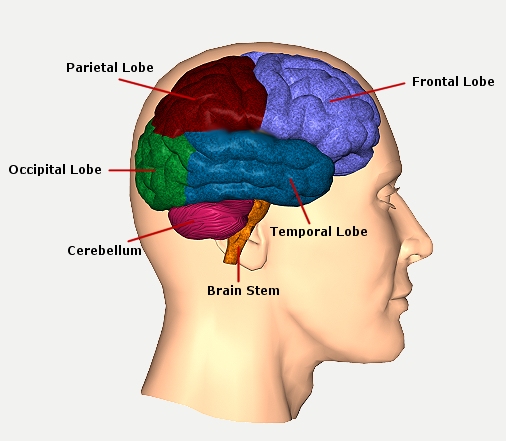
The head injuries started in my fifties and who knows, perhaps they were connected with shortness of breath. I know my most recent concussion were related to being out of breath. I went to look for something, forgot my oxygen, and ended up passed out for the floor. Unfortunately Mike was gone for a few days so when I came to I had to crawl over to my bed and get up there to lay down. I never forgot my oxygen again!

The aspect of disability I find both surprising and annoying is when others find it natural or even necessary to feel sorry for me. Some old friends have even stopped communicating with me. Talk about feeling written off! When I heard there is a new TV show called “Not Dead Yet” I thought, that’s me!

What I would like to share with all of you who think I’m done or doomed (aren’t we all?) is that, yes, my brain has changed, but sometimes it feels like it might be for the better.

I know I may have sometimes sounded pathologically optimistic here, but these days I rather enjoy my present state of mind. When I’m sitting staring out at our incredible views of the Sangre de Cristo mountain range, which I do a lot of, there is a certain non-reality that is a bit like being high without drugs. That I like. I also believe that in some strange way I may have become less judgmental and more intelligent by exchanging certain parts of my brain for a less precise and exacting attitude. Call it more flexible or easygoing, but I find that soothing. Perhaps my brain got tired of holding grudges.

Of course living with Mike has helped me a lot. I am definitely the worrywart in this partnership. We Carters are first-class worriers, expertly trained by a number of previous generations. I will never forget a few years ago when I was sitting in the living room listing my well-established list of worries for Mike. He had heard this list too many times, and I guess he was tired of it, so this time he sat back in his easy chair and said, “Who cares! Is worrying about these things going to change anything?” That made a lot of sense to my bruised and shaken brain…