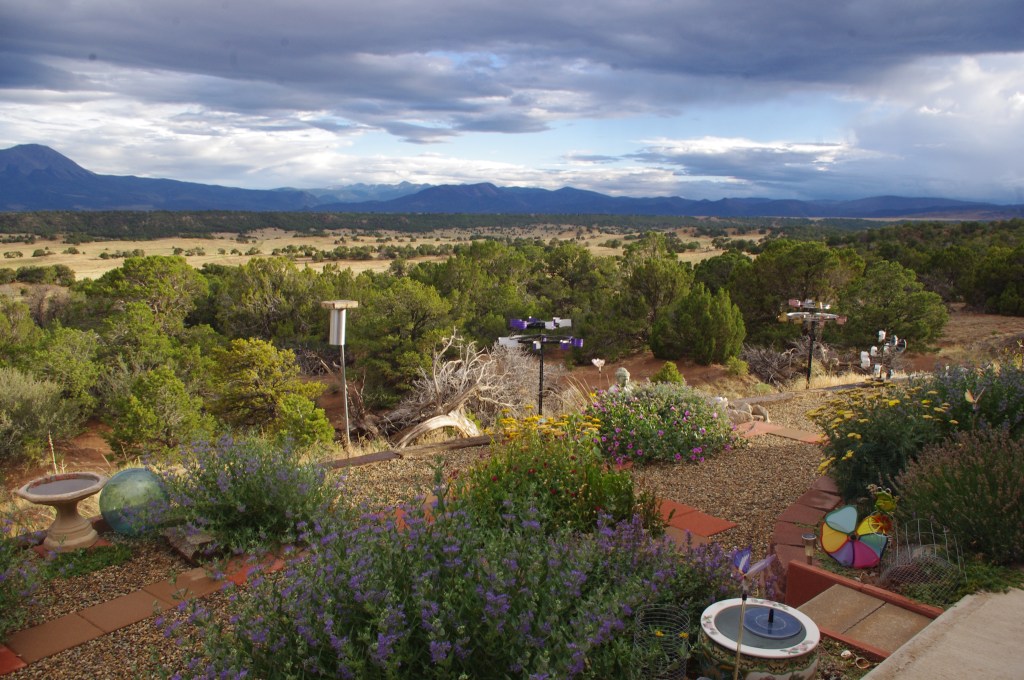
After two inches of rain in the past few weeks (!) my garden is smiling every day now. It seems the worst is over from the critters eating everything that blooms.
First of all, we just fledged our second set of Rocky Mountain Blue Bird chicks this week!
My Russian Sage and Purple Hissup are in full bloom now…
Andfalling under the believe-it-or-not category, my Red Riding Hood Penstemon is blooming again after only being planted this May!
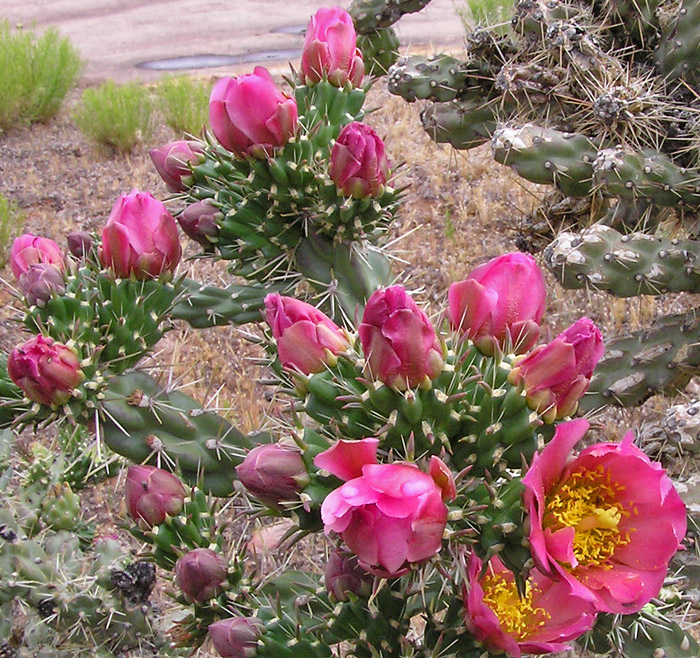
Everything else is smiling brightly, even the cholla cacti I transplanted here a couple years ago!
They’re not blooming yet, but I look forward to seeing them bloom next July!
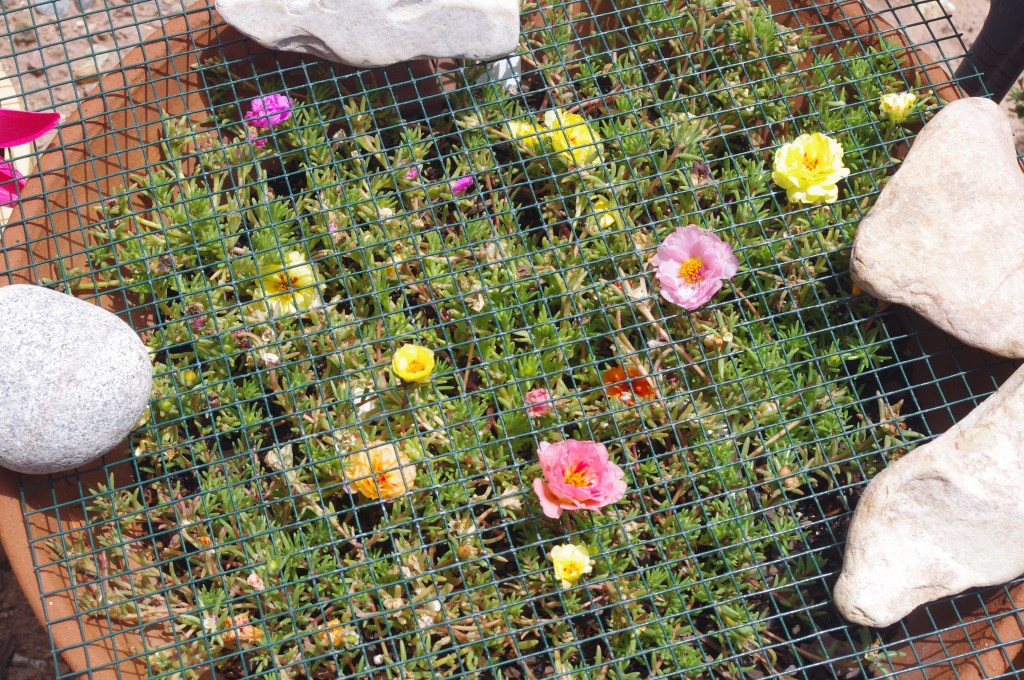
My Portulacas are even smiling through their protective cage top. Be careful or the critters will climb up there and eat you!
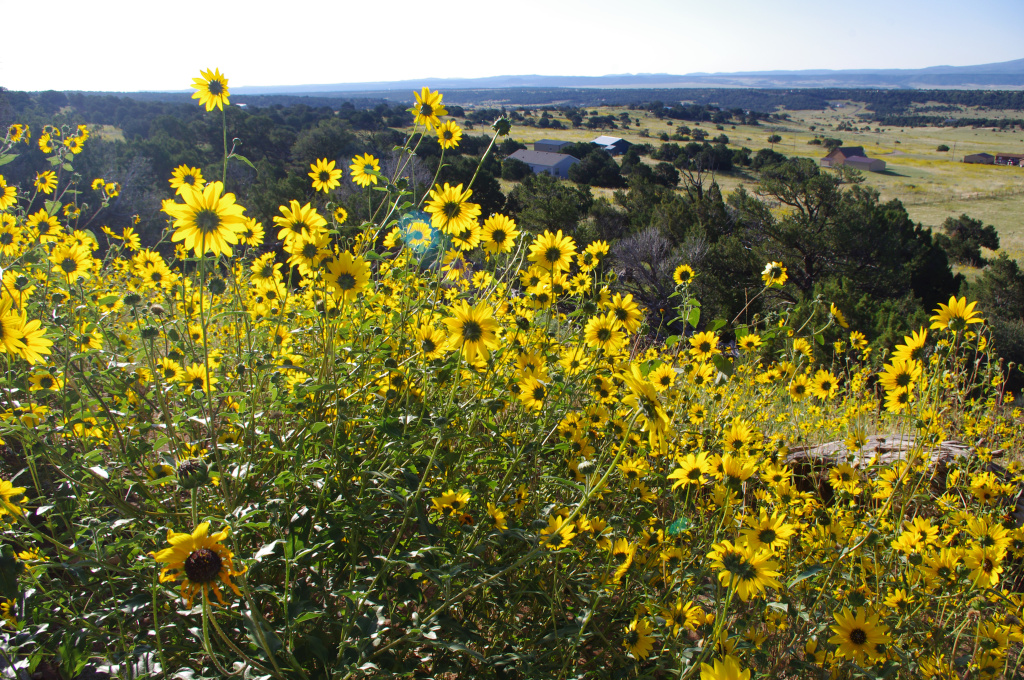
And then there are our native Navajo sunflowers, volunteering again this July!
One week ends another begins, but both seem the same. It’s that sameness that wears on us. The near term is the same, and the future seems clearly uncertain. It’s impossible to make travel plans, not just for now but for the fall and winter. Some people have started referring to 2020 as the “Lost Year.” Imagine how those in my family feel, having lost my Dad right before “the virus” took over our lives.
I am saddened to learn that COVID-19 may be taking a toll on Americans’ heart health even if we’re not infected with the virus. According to new research, cases of ‘broken heart syndrome’ are on the rise among those without any specific illness. This occurs when part of the heart becomes enlarged and is unable to pump blood effectively, preceded by intense emotional or physical stress.
Everybody deals with this kind of stress differently. I think it’s easier for us gardeners. We have something in our lives that brings us daily joy. We can go outside each morning and enjoy the summer blooms! The fact that our plants need us, even marginally, also helps. Let’s face it, we all need to feel needed. This is why we all need to find positive distractions from this sad time in all of our lives.
I relate to these issues more than most. I sometimes pass out from lack of oxygen and am not certain if I will take my next breathe. I struggle daily to find the good in everything, like the 4th of July celebrations on TV last week. I want to feel good about my country again and positive about our future, but it isn’t easy if I watch the news too much.
So I go outside and walk around my garden. I hang out with the birds and bees, literally! I watch the birds taking a carousel ride on Mike’s great purple wind sculpture.
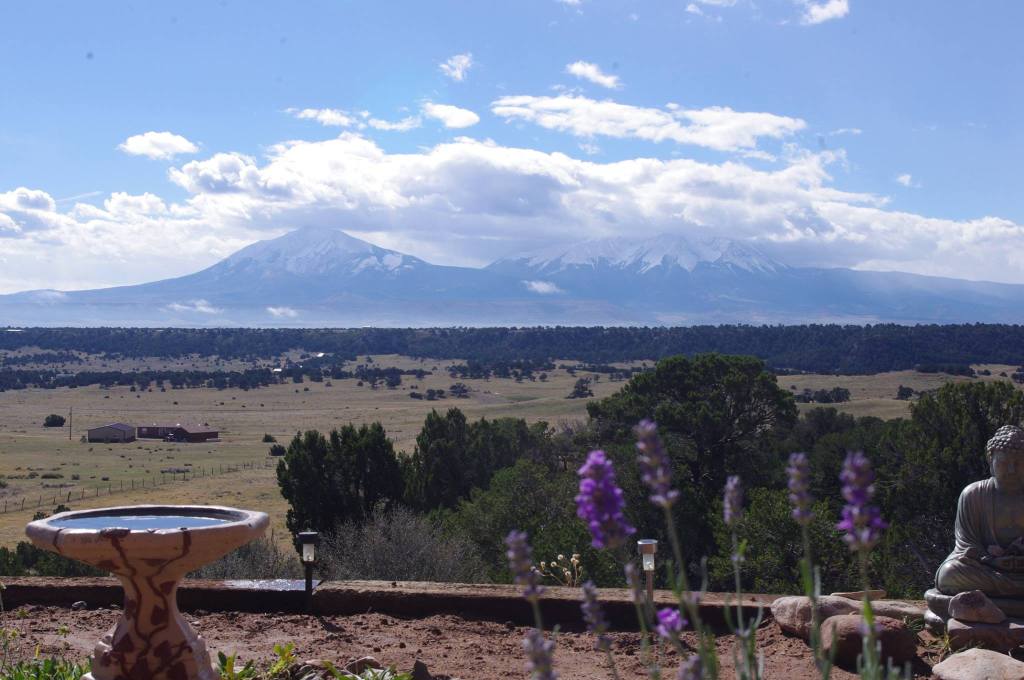
I sit quietly and observe the end to another glorious day, as the sun sets over Mount Mestas to our West.
Sometimes I take photos of the sunny still life developing on my bedroom wall as the sun comes up each morning. My appreciation of my eye sight is increased one hundred-fold as it diminishes with worsening cataracts.
These are the moments that sustain me… What are yours?
Lavandula (common name lavender) has 47 known species of flowering plants in the mint family, Lamiaceae. It is native to the Old World and is found from Cape Verde and the Canary Islands, Europe across to northern and eastern Africa, the Mediterranean, southwest Asia to southeast India.
Certain cultivars of lavender do GREAT in my high (7,000 feet) and dry Colorado foothills garden. I believe they survive because they are woody plants and smell funny to critters who might want to eat them.
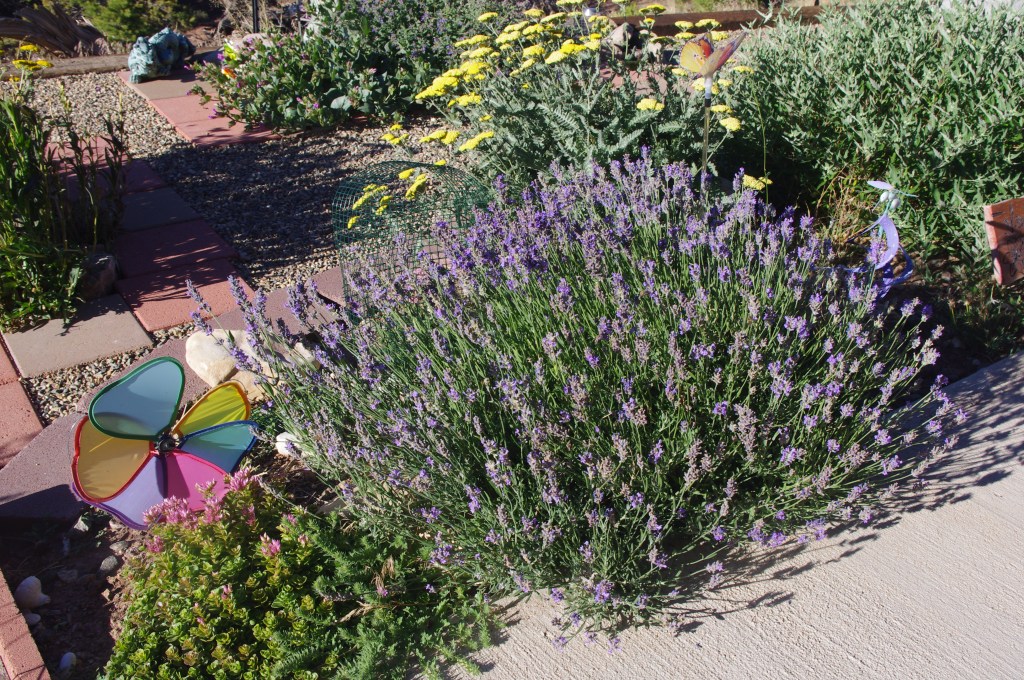
This is Lavendula angustifolia next to a flowering Stonecrop. This one is three years old now!
According to my favorite place to buy plants in Rye Colorado, that just quit selling retail 😦 there are two types of lavenders that are hardy in Colorado,
“Lavandula angustifolia (the English lavenders-called English, but originally from the Mediterranean) and Lavandula x intermedia (the English hybrids). Other lavenders, like French, Spanish, and various cultivars you may find sold at Home Depot are not hardy here! We have talked to so many customers who ask “Why does my lavender die?” and it turns out they planted a type that is not winter hardy. Please don’t make that mistake. The ones we grow are all hardy to Zone 5, and some brave gardeners have had luck with them at 8000′ elevation.”
“Lavandula angustifolia ‘Hidcote Blue’: Along with Munstead, Hidcote Blue tops the list of most hardy lavenders. Hidcote has a deeper violet blue flower and tighter flower clusters and more compact habit than other English lavenders, and it’s our go-to lavender for xeriscape and rock garden plantings. Winter hardy, deer resistant, drought tolerant– this lavender is a good choice for the Front Range. 18″ tall. Zone 5.”
I believe this one is Lavendula intermedia. It’s only two years old.
“Lavandula x intermedia ‘Phenomenal’: Silver foliage is covered with a cloud of lavender blue flowers for most of the summer. It’s a very tough variety, even outperforming Hidcote and Munstead in many trials. Grows to 30″ tall and 3′ wide. If you want a lavender with landscape pizazz, this is the one for you. Edible, fragrant, deer resistant, xeric….we can’t say enough good things about this one. Zone 5.”
Most of the plants sold at places like Home Depot and Lowe’s will not survive the winter here! Those plants are grown in places like Arkansas. Also, be sure not to water lavender much. It can lead to brown flowers and root rot!
Note: Can you tell I was raised by a botanist?My Dad hopes so! Much more fun to think about than Covid-19!
After five years of trying to get a Colorado foothills garden going, I have discovered how much I LOVE Penstemons!
First of all, I have a very early blooming native, I believe it is Penstemon buckleyi, that volunteers as one of the earliest blooms in my garden!
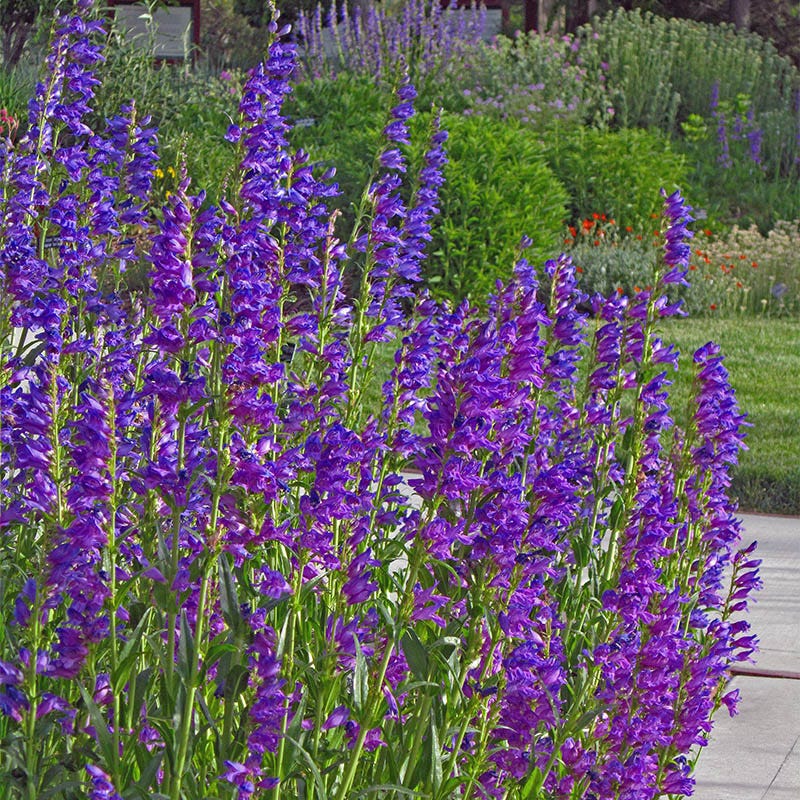
Then I started some Penstemon Strictus (Rocky Mountain Penstemon) four years ago and look at them now! They also bloom quite early, in mid-May. They spread nicely too!
This year I bought two new versions that are supposed to be red. My garden is almost all purple at this point in time.
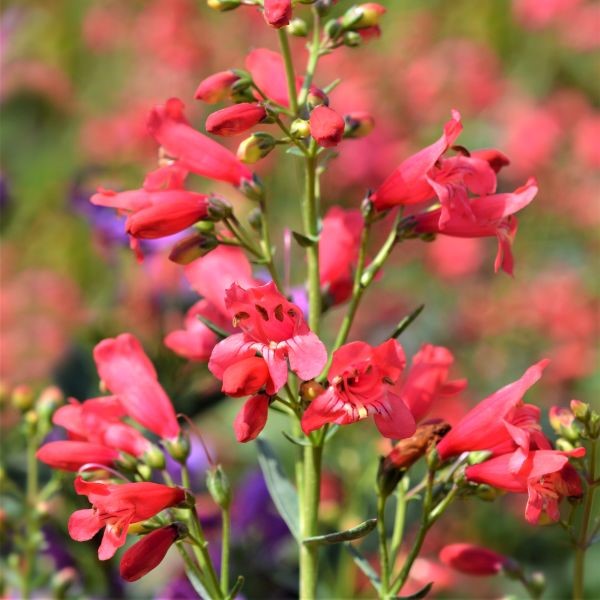
Amazingly, the Red Riding Hood variety (Schmidel?) is already in full bloom!
I also bought twoPenstemon pinifolius and put them in. According to my book exclusively on Penstemons, “Penstemon pinifolius is an attractive low-growing evergreen plant with showy, scarlet flowers in June to August.”Mine are just tiny this year. I hope they bloom next year!
My point is that these are the kind of plants to grow here because they are natives! The critters don’t eat them (at least not so far…). They spread nicely and fill up their space by a foot or two, and they love it here!
Want to learn lots more about penstemons? This is a wonderful book for that purpose:Penstemons: TheBeautiful Beardtongues of New Mexico.
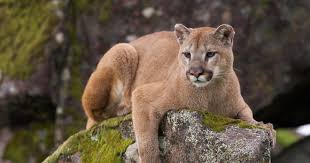
Just a few days ago Mike was out hiking when he heard a loud sound just ten feet to his left.
He glanced over to see a deer struggling with a mountain lion on top of him! Mike was so stunned he stood there for about 20 seconds and then started walking away quickly. He never made eye contact with the big cat.
Last night Mike found a five foot snake out on our patio. Snakes might be just the thing to get rid of those varmits who keep eating my flowers!
Six years after leaving the suburbs of Fort Collins (50 miles from the Wyoming border), for a new lifestyle west of Walsenburg (50 miles from the New Mexico border), I feel I have a good sense of what that kind of major change feels like.
The first thing you must do if you are considering a similar change is to let go of any idealized illusions you may have about finding pastoral perfection. You may eventually find it, but it will take some work!
Think of this move as a complete ‘leap of faith” That’s what it felt like to me! And in case you didn’t get the memo yet, in this lifetime, perfection is a mirage… I didn’t have any delusions of grandeur, I was just plain scared. What if I hated it??? It was definitely a precipitous move on my part. I just didn’t know what to expect. On the other hand, Mike was certain this was the right move for us. So we did it anyway, with all of my anxieties and fears fully intact…
When we arrived in Walsenburg with our full-to-the-brim U-Haul truck, we moved into a century-old miner’s home, the only ‘decent’ rental in Walsenburg or La Veta in June 2014, and yes, it was as dirty and disgusting as it sounds. Then we started to work on finding an architect and a blueprint for the passive solar home we had been planning in our heads for years. We had already bought a few acres of land twelve miles west of town on a hill overlooking the Spanish Peaks. But because there was only one building inspector for the WHOLE COUNTY…
it took over five months just to get a proper heat-absorbing slab on our land.
But after ONLY eight more months, our 1,400 square foot passive solar home was completed! Building in this rural area is DIFFICULT and agonizingly slow! Did this surprise us? Somewhat. Timing was the source of much of our frustration and stress.
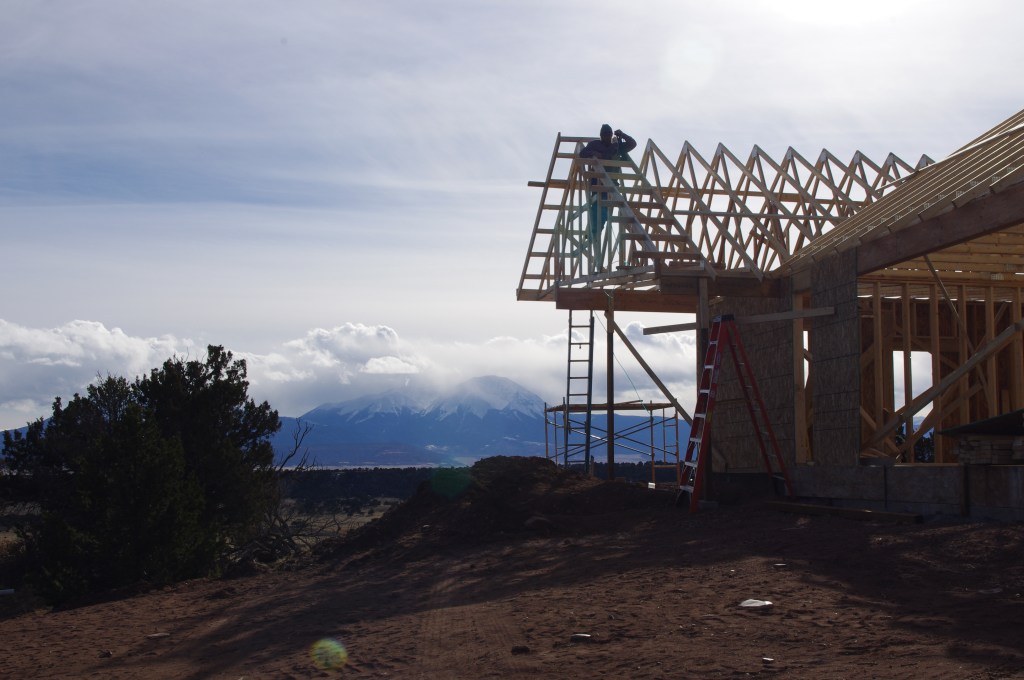
Our view of the Spanish Peaks the day they put up our roof!
But we (and our relationship!) survived, and the final product was as close to perfection as I have ever experienced. We joked around about the following cartoon before we moved down here:
But, as it turns out, this is actually true for us. For months after we moved in we would sit and stare at the mountains right outside our windows, drinking in complete silence and serenity every time we looked out.
It felt like we had moved into a deluxe foothills retreat as nice as anywhere we had ever stayed before. Almost daily I experienced inexplicable fear that the resort management would be coming around soon to kick us out!
With Mount Mestas to the west.
TO BE CONTINUED…
Looking to learn more about our big move to rural Colorado experience?











 Adventures of the NEW??? Old Farts