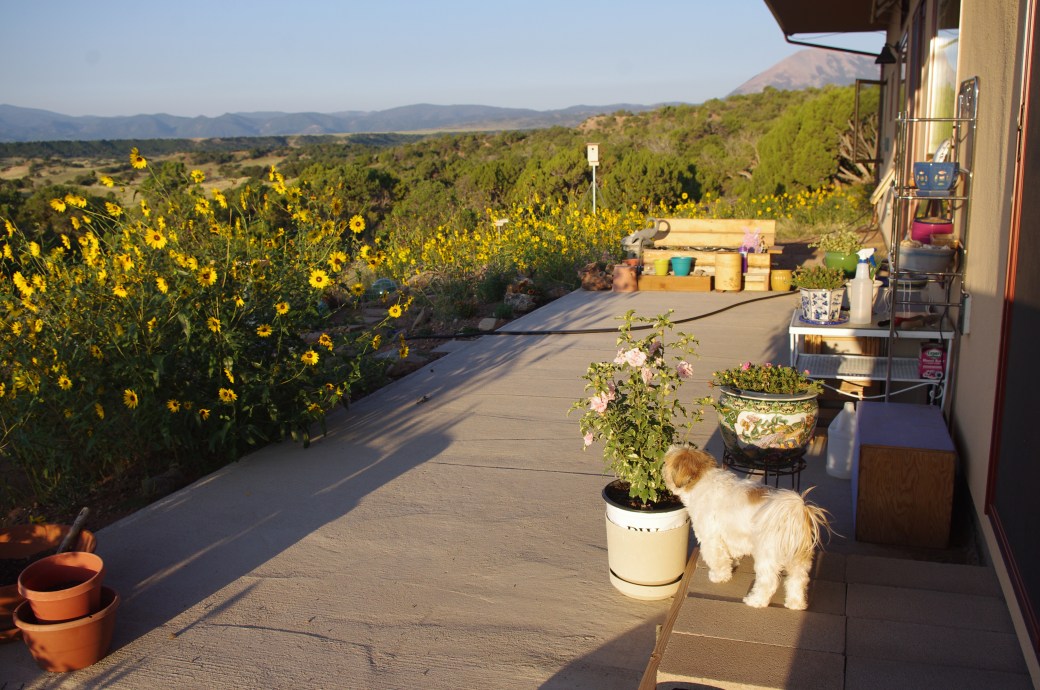
appreciating nature
 It seems we always search for some plausible explanation even though we know we all have to die of something, sometime. I have had
 Best Boomer Bloggers: Fall 2017 Edition

Wow, autumn really crept up on me this year! One day it was summer and then boom, it was fall, and most of the beautiful leaves were almost gone! I’m not sure how that happened. It must be that whole time flies as we get older thing. Is everybody ready for winter, because it is just around the corner. We already had our first hard frost a couple weeks ago here at 7,000 feet in Colorado, and Oktoberfest is long over. It must be time for me to host another edition of the Best of Boomer Blogs!
First I would like to welcome a new member to our group. Rebecca Forstadt Olkowski. Rebecca sees herself as “a purveyor of all things fun and a die-hard foodie. I love to travel and write from anywhere on the planet I happen to land, even if it’s my own backyard in Los Angeles. One of my favorite areas of the world to travel are the historic cities and countrysides of Europe.” For her first presentation here, from her blog BabyBoomster.com she says:
Taking care of our vision over 50 is particularly important even if you don’t wear glasses or contacts. There are hidden diseases that are age-related that can easily be prevented. I include products and services to keep your eyes healthy and bright.
Next up, Meryl is worried that she might be impacting Broadway. I’ll let her explain: A minor problem Meryl Baer of Six Decades and Counting faced this past week, made her think there might be something wrong with her. Could she have bad karma? She’s not sure what that is, but she might have it. Read about her dilemma in Bad Karma?

Carol Cassara, over at Heart Mind Soul, noticed a different kind of stress this week: Sometimes social media can create more stress than we might have ever imagined. Part of that stress is our tendency to want to respond to every comment, every post that rings our chimes. Carol Cassara has a great suggestion for making life more peaceful.
On The Survive and Thrive Boomer Guide, Rita R. Robison, consumer journalist, writes about the importance of getting your medications checked each year. Although Oct. 21, was “Check Your Meds’ Day,” it’s important to take all of your medications – including prescription and over-the-counter medication, plus vitamins and other dietary supplements – to a pharmacist or physician for a “brown-bag” review. That allows them to check for potential harmful drug interactions and possibly eliminate unnecessary drugs.
 Fellow blogger Tom Sightings says, sometimes retirement doesn’t play out exactly the way we envisioned when we were younger. Retirement is a destination, but it is also a journey, and with any journey it makes sense to stop and review where we’ve been and where we’re going. So check out Tom’s 5 Questions to Ask Yourself After You Retire. Go see if you’re on track to realize your own retirement dreams.
Now for a word from our sponsor:
I have been struggling lately with various expected and unexpected problems. As it turns out, even when you are happily retired, the problems just keep coming!

Luckily the beautiful sunrises and sunsets keep coming too…
Boomers discuss the power of NOW!

One of the things I love about bringing together current posts from a few popular boomer blogs, is their occasional synchronicity of thought. From the apparently mundane, to the future of our world, we are certainly still giving lots of thought to the circumstances we find ourselves in in our 60s.
 One challenge we face is keeping our brains working well, at least most of the time! We have known for years that games can help to keep our brain active. Now Carol Cassara directs us towards online games and these games aren’t just for the young. Many Boomers enjoy them, but who knew online games have brain benefits?

GROWING PLANTS INSIDE AND OUT GIVES MY LIFE MEANING!
We had two posts this week about one of my favorite pastimes, gardening. What could be more positive and gratifying than helping plants grow inside and out? Unfortunately Meryl Baer can’t seem to make this happen. She says: Folks have many talents and skills, some the luck of our DNA and others cultivated and nurtured over the years. Meryl Baer of Six Decades and Counting does not consider gardening one of her many skills. She tries and sometimes succeeds, but this year proved disappointing, as she points out in Gardening Guru I Am Not.
 On the other hand, over at the Survive and Thrive Boomer Guide, Rita R. Robison, consumer journalist, writes about how much she loves her garden. See Robison’s articles on how to make tomato sauce, her garden in full production, eggplant goodness, and tips for cooking collards. Rita encourages everyone to plant a garden to enjoy organic vegetables. They’re good for your health, and gardening gets you off the computer and into the yard exercising.
Tom Sightings has been focusing on the BIG PICTURE lately, always a dangerous pastime. He has taken several road trips, spending a lot of time behind the wheel of his car, giving him time to think. This week he focuses on What’s Important, two important issues, plus a postscript that might just save your life. HINT: I don’t know what I would do without my shower grab bar!

DIKE & WEST PEAK A FEW MILES SOUTH OF LA VETA COLORADO
My week was spent dealing with a couple health issues (like continuing to breathe!) and wondering why this post about life in a very small town went viral by my standards. Are we all so anxious to believe that life can be slow, caring, and friendly again? Judging by the number of boomers moving here, YES! We almost never have a hurricane, but the wind can be incredible here!
Find Your Own Personal Freedom
I can hear you now. In response to my last post about freeing your mind, some of you are saying, “But I can’t afford that kind of freedom! How might it affect my relationships with my family and friends if I become completely me?” Yep, there’s the rub…
First of all, most of us haven’t a clue who we really are by the time we’re forty. We have made so many compromises to conform to society, family, and every other person around us for decades. We all know the rules. They are ingrained in our soul at this point. The Buddhist call this “armoring”: the persona we put on each morning in order to interact peacefully with those around us. This is how we keep our Self in check.
Have you ever sat and thought about who you might be without all your own rules of behavior? What time would you get up? Who would you spend your time with? What might you do each day with no rules at all? As we age we come to know, it’s now or never…
 I started my own leap-of-faith back when I was living single. I had lost my job and I was living on severance, so there were only a few parameters controlling my days, my mind or my energy. Besides looking for a job and worrying about money, I spent my time reading a number of liberated thinkers like Gloria Steinem: “Revolution From Within: A Book of Self-Esteem,” I also began experimenting with the idea of personal freedom. The largest stumbling block for me was my family. Getting past so many rules in my head was daunting. I knew I had to find the courage within to go against most of the rules I was raised with and create my own solutions this time. As you might guess, my parents and siblings aren’t always pleased with the “new and improved me.”
Eventually, I did change my way of thinking enough to attract a partner who also believed in following dreams and personal freedom. It really helps if you can share your life with a partner whose vision is solid and whose goals are similar to yours.
Can that much freedom be bad for a person?
That is such a personal question. Ask yourself: Who would I be without my job and all the rules I now live by? The rules are there for a reason, to make us feel more comfortable with the freedoms we have given up to be in society. Freedom is not a common commodity in this world, even here in the USA.
The Money Trap:
 Most of us are permanently distracted with fears about running out of money, but could it be worse to run out of time? Time for what? Time to live our lives the way we choose. Time to wake up each day free of all those rules about what we ‘should’ do today, and not just those annoying “shoulds,” but the even more insidious, unconscious “have-tos.” Start monitoring your thoughts today and see how automatic most of them are!
 I was required to write one full-length “term paper” in high school. I chose to study the world of Henry David Thoreau and his life. This was a mind expanding experience for a woman in her teens. I absorbed his wisdom, but I didn’t have the courage to follow his lead until decades later. By age 49 I found that I had followed all the rules and lost my job and career anyway. I married according to the rules and found myself more miserable than I had ever been. I knew I needed a new way of seeing and being in the world, or I would end up as miserable as most do.
 So I gathered all my collective wisdom and courage together and took what felt like a gigantic leap of faith; faith in my own ability to live a life better than my upbringing could offer me, faith in my own inner wisdom, intelligence and skill set accumulated over decades, faith that I could do much better than the mediocre existence I had experienced up until then. Since those difficult, challenging days of solitude and constant questioning, my life has been transformed. I no longer fall back on the old rules in my head, I seek out more innovative and creative solutions to my day-to-day problems. I also find fewer problems, since I stopped living on brain autopilot. Sometimes I think my brain injury in 2008 shook me up enough to begin to see everything differently… but in a good way!

This is what worked for me. This is what a personal revolution looks and feels like, from the inside. How you spend your time is worth more than money!
Caution: Once you begin this process, it may snowball into your best life ever!
Teach kids how to connect with Mother Earth!
“A garden symbolizes what a faith community is, connections, caring for the planet and caring for life in urban areas where people don’t have the opportunity to grow food or be in nature.” — Claire Baglien
The Benefits of Starting a School Garden Program
By Abby Quillen
“A garden is a grand teacher,” horticulturist Gertrude Jekyll wrote. School administrators obviously agree because the nation is in the midst of a school gardening boom. The number of school gardens nearly doubled between 2013 and 2015. More than 7,000 American schools now have a garden.
Most teachers start a school garden program in elementary schools, and grow flowers or veggies. Some include unique features, such as chickens, orchards, and aquaponics systems (where students raise fish and use the fishes’ waste to feed plants). Teachers use gardening activities to teach nearly every discipline, including health, nutrition, science, math, environmental studies, language arts, art, and social studies. Students in one California school sow native plants to learn what the state looked like prior to European settlement. In other schools, kids test soil composition, learn about food chains and ecosystems, measure plants as they grow, calculate the perimeter and area of garden beds, and keep gardening journals.
Researchers examining how gardening impacts students have found that school gardens–sometimes called “living classrooms”–cultivate more than just plants. Students who participate in school gardens are on average more engaged in what they’re learning, boast higher science test scores, and eat more fruits and vegetables than their non-gardening peers.

Cultivating Young Minds
Teachers who integrate gardening into lessons say it is a powerful, hands-on learning tool that engages kids better than typical classroom instruction. Quantitative data supports these observations. Middle schoolers who took part in the Edible Schoolyard Project at a large urban California school improved both their overall GPAs and their math and science grades.
In a review of 12 studies, students who gardened performed better on standardized science tests than their non-gardening peers in all 12 studies. Fifth-grade gardeners in one study scored nearly 15 percent higher on the standardized science test than a control group. REAL School Gardens, an organization that builds gardens for low-income schools, says students at their partner schools improve 12 to 15 percent on standardized tests after gardening is integrated into school curricula.
Fertilizing Social and Emotional Development
Caring for plants together and waiting for them to grow also teaches kids about cooperation, responsibility, patience, and delayed gratification. In a study of a year-long garden program for third, fourth, and fifth graders, students improved teamwork skills and markers of self-understanding, a term used to describe a person’s ability to comprehend his or her own actions. Nature-based activities, including gardening, also help kids relieve stress, improve attention spans, and ease symptoms of ADHD.
Most kids love learning in the garden. In an evaluation of seven qualitative school garden studies, the majority of kids in every study said they enjoyed gardening at school. Elementary–aged students in one survey reported feeling “happy, relaxed, calm, and safe” while working in their school garden. And it’s not just students who benefit emotionally and socially from school gardens; teachers who are trained to do garden activities with their students report higher morale and job satisfaction.
Planting Healthy Lifestyles and Environmental Consciousness
Learning to garden as a kid can shape life-long habits. School gardens can improve children’s eating habits, at least in the short term. In an analysis of studies on the subject, researchers concluded “gardening increased vegetable consumption in children, whereas the impacts of nutrition education programs were marginal or nonsignificant.” Advocates hope the healthier food preferences inspired by school gardens will last into adulthood and help curb the current obesity trends. In the past three decades, childhood obesity has more than doubled, and 42 percent of Americans are expected to be obese by 2030.
Gardening may also inspire an increasingly urban population–81.5 percent of American kids live in urban areas–to take care of the environment. Many kids put their hands in dirt and relate with the natural world for the first time in school gardens. A number of studies show kids who participate in nature-based activities in elementary school are more likely to have an affinity for nature as adults.
“In the end, we will conserve only what we love, we will love only what we understand, we will understand only what we are taught.” — Baba Dioum