appreciating nature
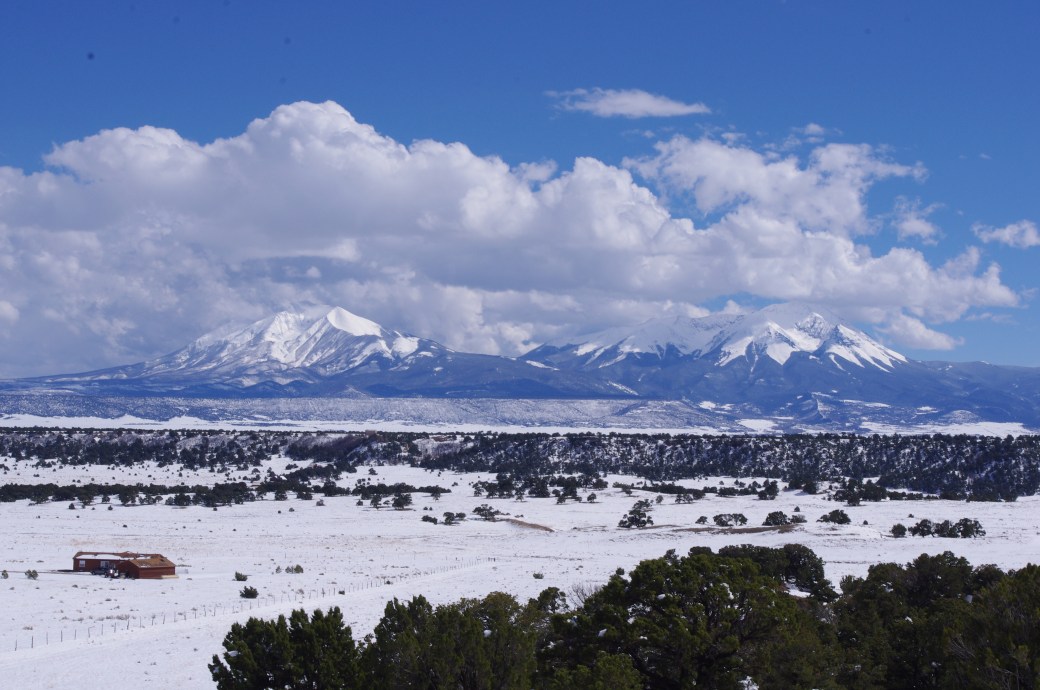
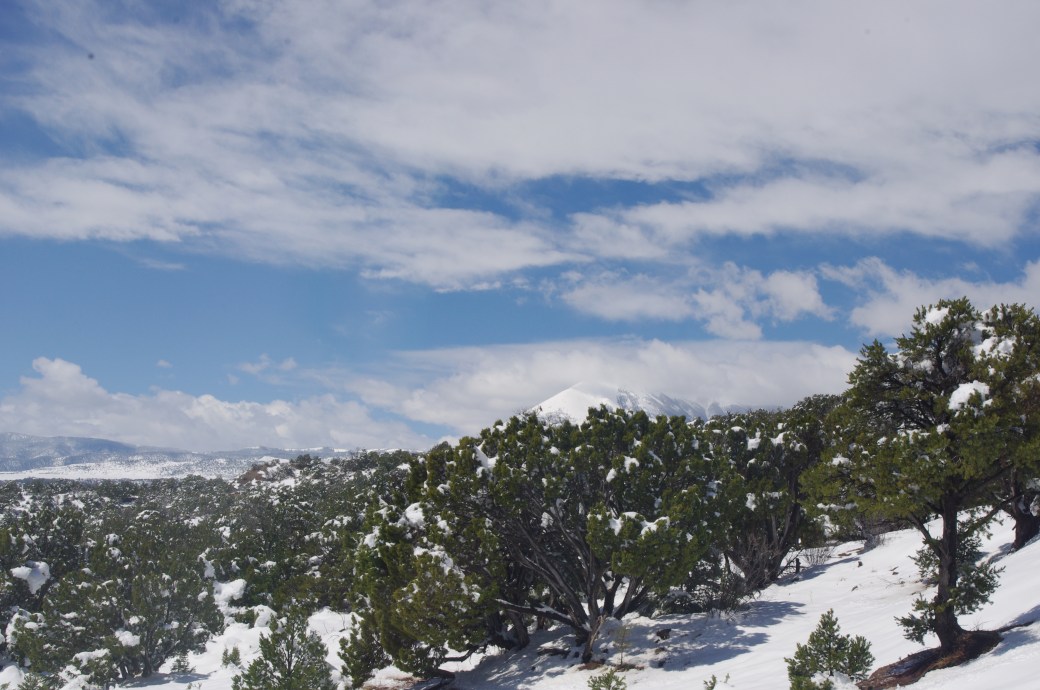

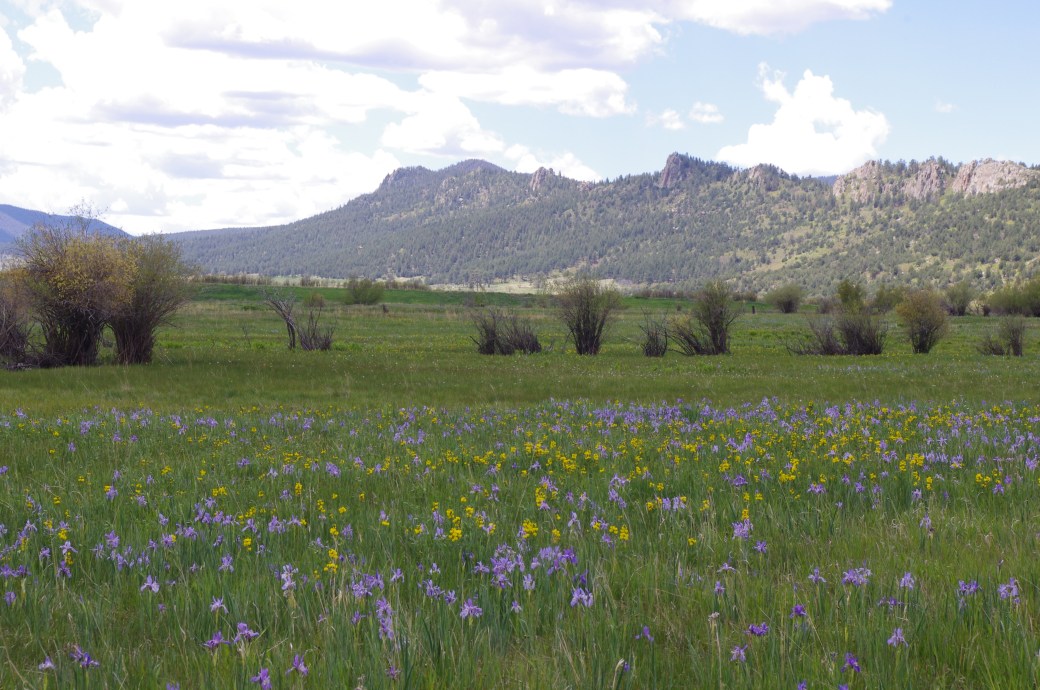 I took these photos last June, west of here in a high mountain meadow. The same can be said of the photo in the header of this blog, an amazing spread of spring flowers which only appear when we get some hardy spring snowstorms!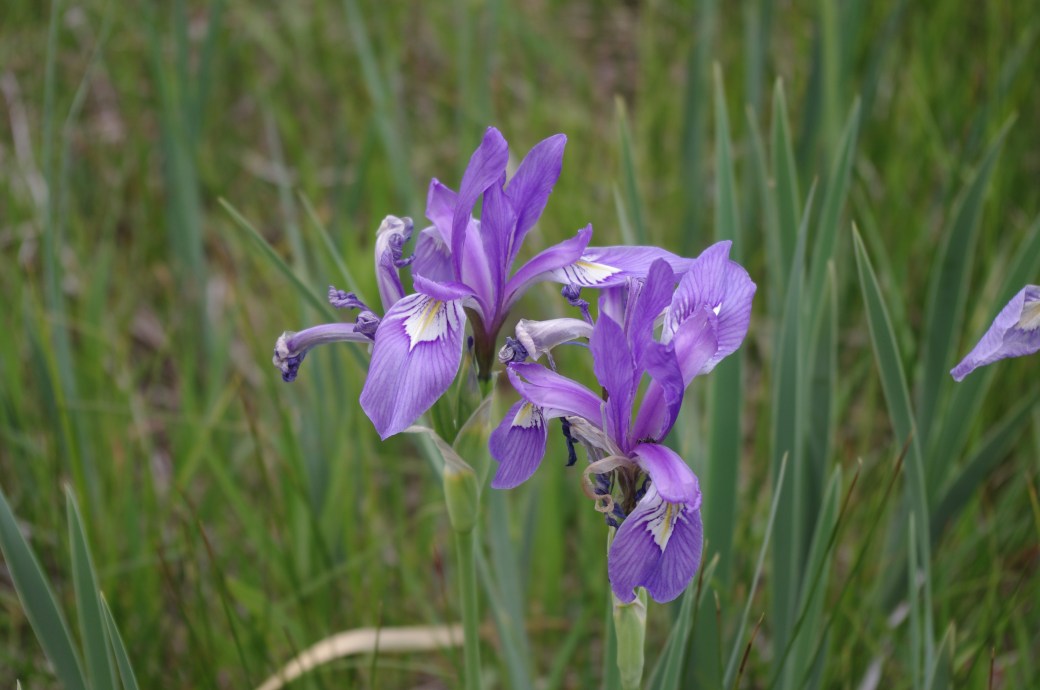
Morning in “Be-Here-Now” Land
After almost two years living in the foothills a few miles west of Walsenberg Colorado, I still struggle to find a way to help you understand how living here is so amazingly different from the suburbs of Fort Collins. Possibly you can imagine, this has been culture shock after culture shock for a couple of city people.
In fact, I wake up every morning and wonder for just a moment or so, where am I? Then I look out my glass doors at this:

…and I know this is no dream. This is one larger-than-life reality!
I try to explain to my friends who are still up in Fort Collins working, how this lifestyle change has changed me. But since they only come down for a day or two at a time, they cannot really understand how living here feels.
At first I was mainly freaked out. This world is so very different than what I’m used to that it scared me, especially since we had essentially put all our eggs in one basket on this one!
I see now why it was so hard for my original, stressed-out self to deal with this place. This is a whole world away from what most consider “life in America.” We have very few chain stores, and no reason to go shopping unless you need a few groceries. We have one movie theater showing one movie three times a week.
At times I feel like I moved to a different country (especially since this ridiculous presidential campaign started!) Now when I watch the national news I think, “Wow, those people are crazy… what a horrible way to live!”
Recently I heard someone down here say:
Most people don’t realize how much stress they have until they slow down enough to lose some of it.
That’s where I’m at now.
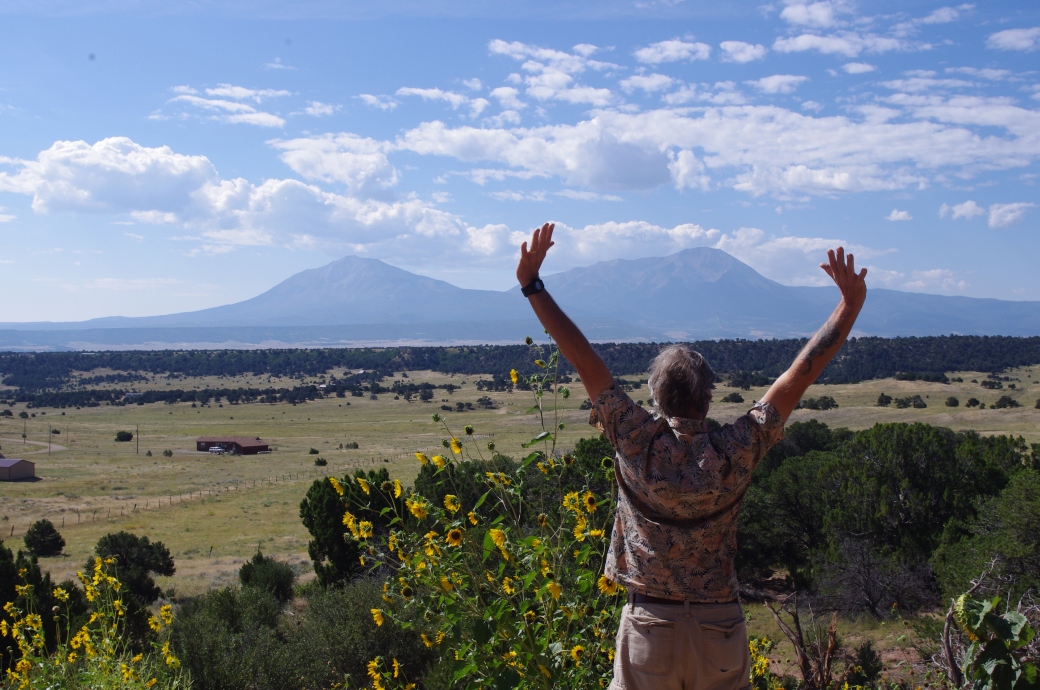
I get up most days and take a hike around our house, looking for interesting animal tracks. I’ve just started getting into bird watching, my cat is encouraging me. I have finally slowed down enough to have the time to think a lot about what I need to do before I die, and seeing the world is not on that list at present. I’d rather spend the rest of my life directly experiencing the American Southwest.
Although I’ve always had Buddhist leanings, I now feel more drawn to Native American philosophies. I imagine them travelling through the valley below us on their way to Bent’s Fort to sell animal pelts and get the latest news. I love to imagine someone from the 1800’s walking into our home now, and being shocked by the modern conveniences of today. But we should not let our easy lives convince us that we are more wise than those who came before us. Perhaps we are the idiots who will ruin the best life ever experienced on planet earth…I certainly hope not.
I am filled with gratitude that I can now live like this forever. Please go learn more about our move from Fort Collins to here in my new memoir!
My Beautiful Broken Brain
“Within your own mind is a treasury, an ocean of pure bliss, consciousness, intelligence, creativity and love…” — David Lynch

Recently I viewed a fascinating new Netflix documentary which follows the life of a 34 year old woman after she experiences a severe stroke. Lotje Sodderland was a digital producer at a hip London creative agency when she suffered a stroke that decimated her language skills and threw her sensory perception into disarray.
Lotje found that most of the practitioners who tried to help her recover her abilities to speak, see properly, write and read, began by defining her by what she could not do after her stroke. She instead chose to focus on a few positive changes within her brain, ones which provided her with new skills and talents.
At the end of this film she offers advice back to those who have treated her brain injury, telling them to help the patient not only return to previous abilities, but also appreciate sometimes subtle changes in consciousness, which can benefit the patient. For example, Lotje experienced an amazing new ability to experience colors and sounds like never before.
I found this new take on brain injuries quite refreshing, much like the story behind Melody Gardot’s transformation following her brain injury. She’s an American woman who only discovered her unique ability to create and sing music after suffering a serious head and spinal injuries.
Initially prompted by her physician who believed music would help her brain injury improve, Gardot began writing music after her accident. Music is thought to help the brain form new pathways. At first, Gardot learned to hum and was eventually able to sing into a tape recorder. She made good progress and was eventually able to write her own original songs. She had no idea before her accident that she was a musician, but today she’s playing concert tours all around the world.
Both of these examples show the unique fragility of the mind, but also the limitless resources that can be found as those with brain injuries get used to their new brain, their new existence and their dynamic relationship with their own consciousness.
I have discovered a few major changes to my own brain and levels of consciousness since suffering a serious traumatic brain injury in 2008, and a concussion last September. Yes, these injuries have hurt my ability to remember many words and faces. I do find that quite frustrating at times. The benefits for me are a greatly enhanced ability and need to meditate regularly. My brain gets exhausted quite easily, especially after an hour or so of conversation.
Another change is in the intensity of my dreams. They are so real now, I can’t imagine forgetting them. They pop into my mind all day long, making me feel so strongly like I actually spent time with those I only dreamt about spending time with…
 This experience sometimes leaves me wondering, like the Chinese philosopher Chuang-Tzu, am I a butterfly flying around dreaming that I’m a woman, or a woman dreaming that I’m a butterfly? This is what a conk on the head did for me!
How did I end up here, feeling so fortunate?
It’s a long story, one I can now share with you in my new memoir!
What’s not to like about living in Walsenburg and rural southern Colorado
Don’t get me wrong, there are a number of negatives in moving from a city to a rural area, so much so that I often wondered why we did it after we moved here in June 2014.
(Postscript July 2018: I forgot to mention wildfires that burn up half the county!)
We first rented a 100-year-old home in Walsenburg, while building our rural home. At the time, this was the only decent rental available in the whole area! Yes, during that first year I had many doubts about whether this area was the best choice for me.
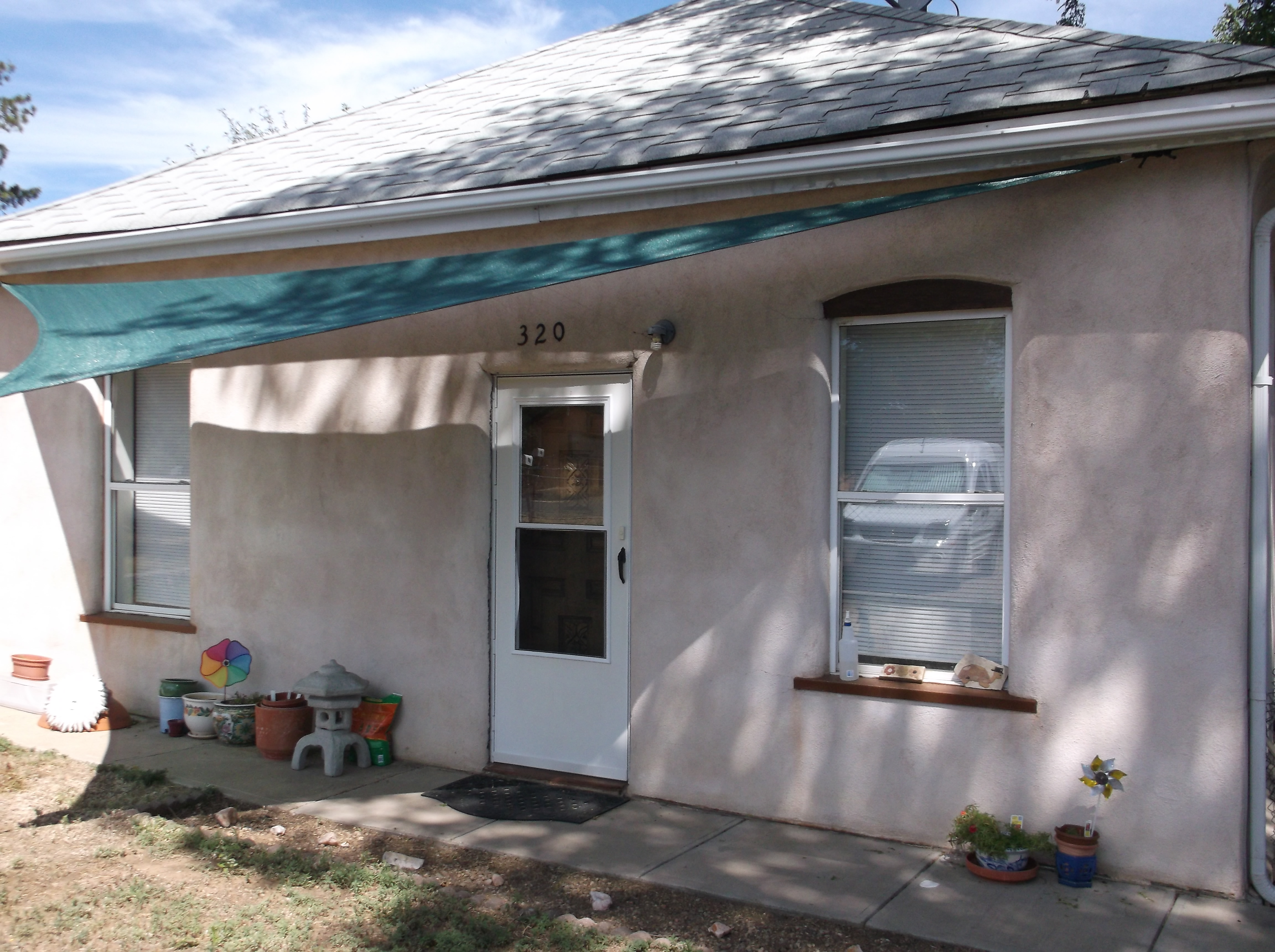
Driving through Walsenburg, you will see a sad little town that has certainly seen better days. To quote the city of Walsenburg page:
“Incorporated on June 16, 1873, Walsenburg was the first statutory city and seventh incorporated municipality in the Territory of Colorado. Walsenburg, an irregular plateau broken by numerous narrow fertile valleys in the east, rising to the Culebra Range of the Sangre de Cristo in the west and the Spanish Peaks in the south. Elevation is 6,126 feet. Average annual precipitation is 15.8 inches. 300+ days of sunshine.”
The town enjoyed its highest population numbers (around 5,000 souls) in the 1930s through the 60s when coal mining was king. It now has fallen below 3,000. We do have two grocery stores, a few motels, three fast food places, and a few good restaurants. Two highlights are the La Plaza Inn, built in 1907, and the historic Fox Movie Theater.
In retrospect, I wish I hadn’t worried so much about enjoying my new life here. Sure it is inconvenient to have to drive to larger towns for certain things and some medical care, but the real point is that living here is good for my health. It took a while, but I eventually understood the subtle and not so subtle effects of stress on my body, spirit, and mind. It was only after living without city stress for a while, that I saw what a toll it was taking on me. Only in this quiet, natural setting have I learned to be present with this moment, a goal I have held for years.

It’s true I didn’t enjoy living in Walsenburg. I found the town depressing. But now that we live in the foothills west of there, I like going into town. It no longer bums me out. I just needed to realize that we have traded the many conveniences of living in a city for incredible natural beauty and glorious silence in a world with so little of that.
When I consider the negatives of where we live now, the worst is the terrible wind storms we can have, with fine dust blowing everywhere. This is a semi-arid climate so it dries out everything including your skin.
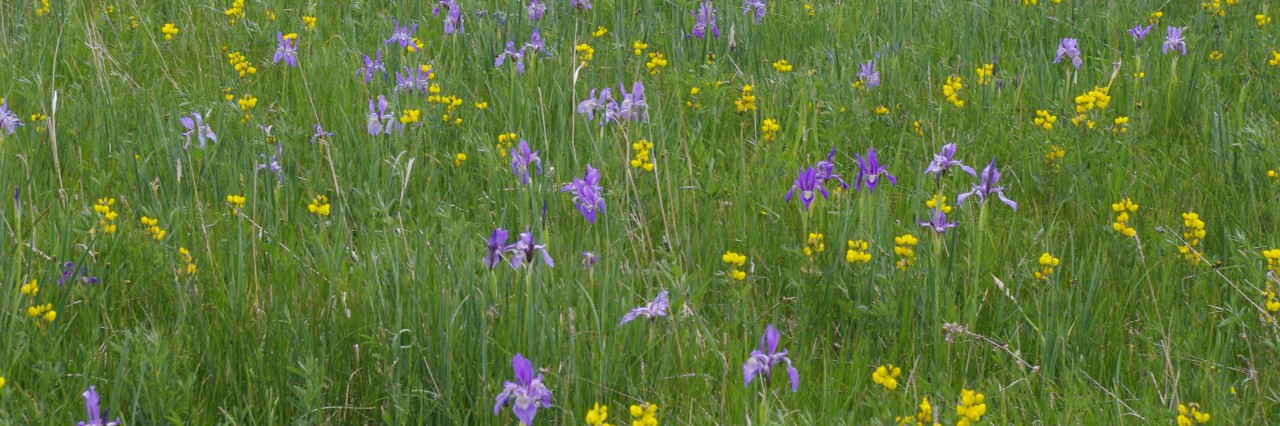
We have to be ever mindful of the seasonal moisture here and plant only plants native to this area. The wildflowers can be beautiful down here, (please see the yellow flowers on the header of this blog), but it all depends on the rain and snow cycles.
 I’m a newcomer to rural southern Colorado. After two years I decided to compile a short journal about the ups and downs of moving from a good-sized city to rural America to build a passive solar retirement home in the foothills: A Memoir of Retirement: From Suburbia to Solar in Southern Colorado Please share this information with your friends if they are considering similar life changes. Feel free to contact me directly to discuss any of these challenges, and to order your own signed copies of any of my books! –Laura Lee (email me: MidlifeCrisisQueen@gmail.com)
Why I left the “best cities in America” to live in rural southern Colorado
Denver and Colorado Springs the best cities in America? I can hardly stand to drive up there now! I know those places may be good for businesses and careers, but for actual ‘quality of life’? Forget it!
The air is so dirty up there you can smell it. The traffic and noise is unbelievably bad unless you compare it to other cities like LA. I find it interesting that young people love the high-stress atmosphere of cities like Denver. High anxiety just makes me tired these days.
When I last visited Denver and Colorado Springs, I could feel the stress building in my body immediately. First just getting there is so stressful, because of the intense traffic from Pueblo north on I-25. Then the air starts smelling really bad, and my fellow drivers start crowding in on me, pressuring me to drive faster than I feel is safe. Most city dwellers would disagree with me, but the point is we humans don’t fully realize how much stress we live with daily, until we try living without it.
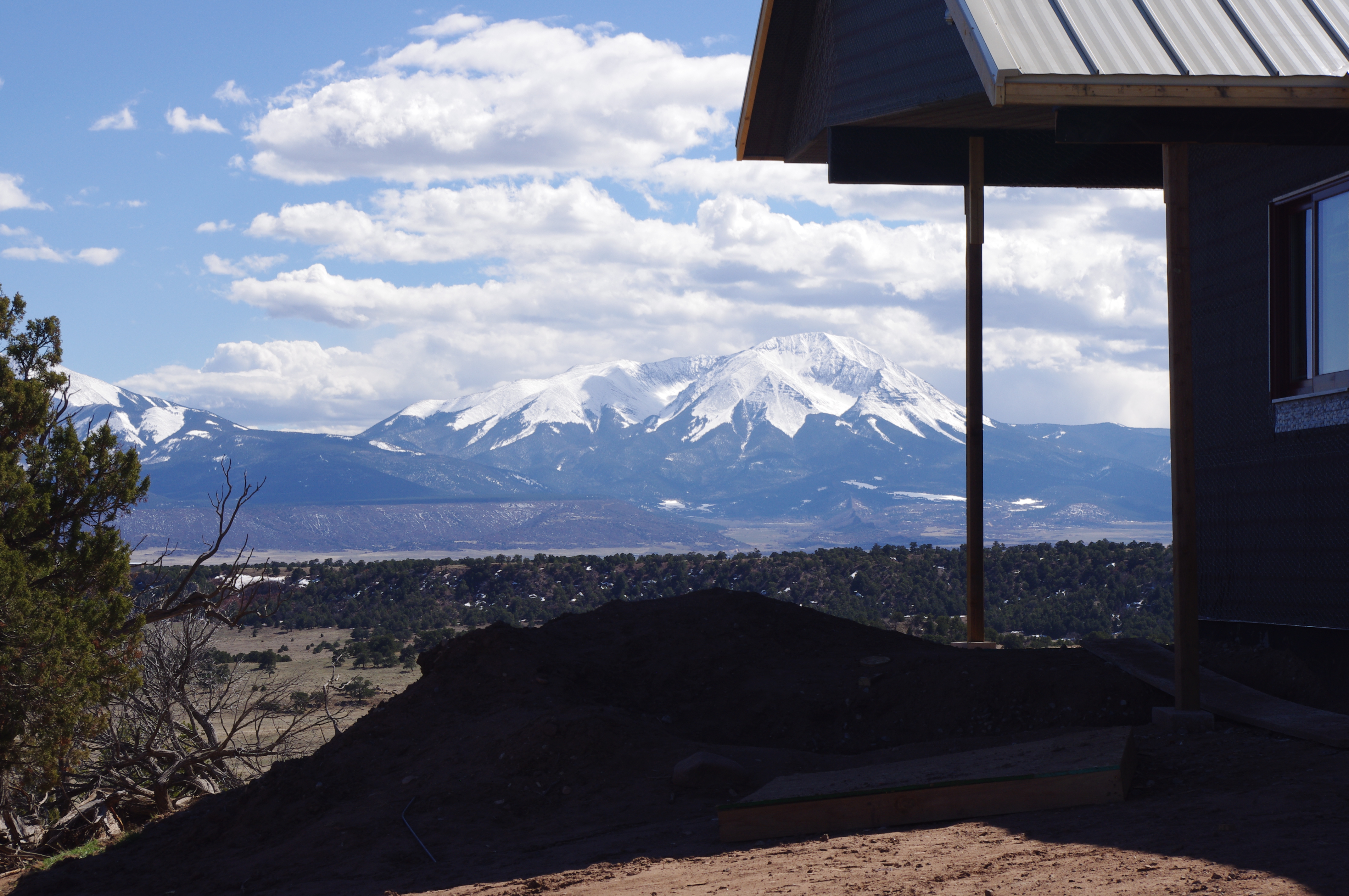
The view from our new home!
I moved to Walsenburg Colorado in June 2014 to build a solar home down here. The culture shock was strong and immediate. Each morning when I went outside, I would think, “Where am I?” The pace of life here felt so foreign. Now I call it slow and comfortable, but back then it took me a while to appreciate the lack of constant pressure, noise and traffic. Yes, the trains were noisy in town, but I’m originally from Kansas so I like the sound of trains.
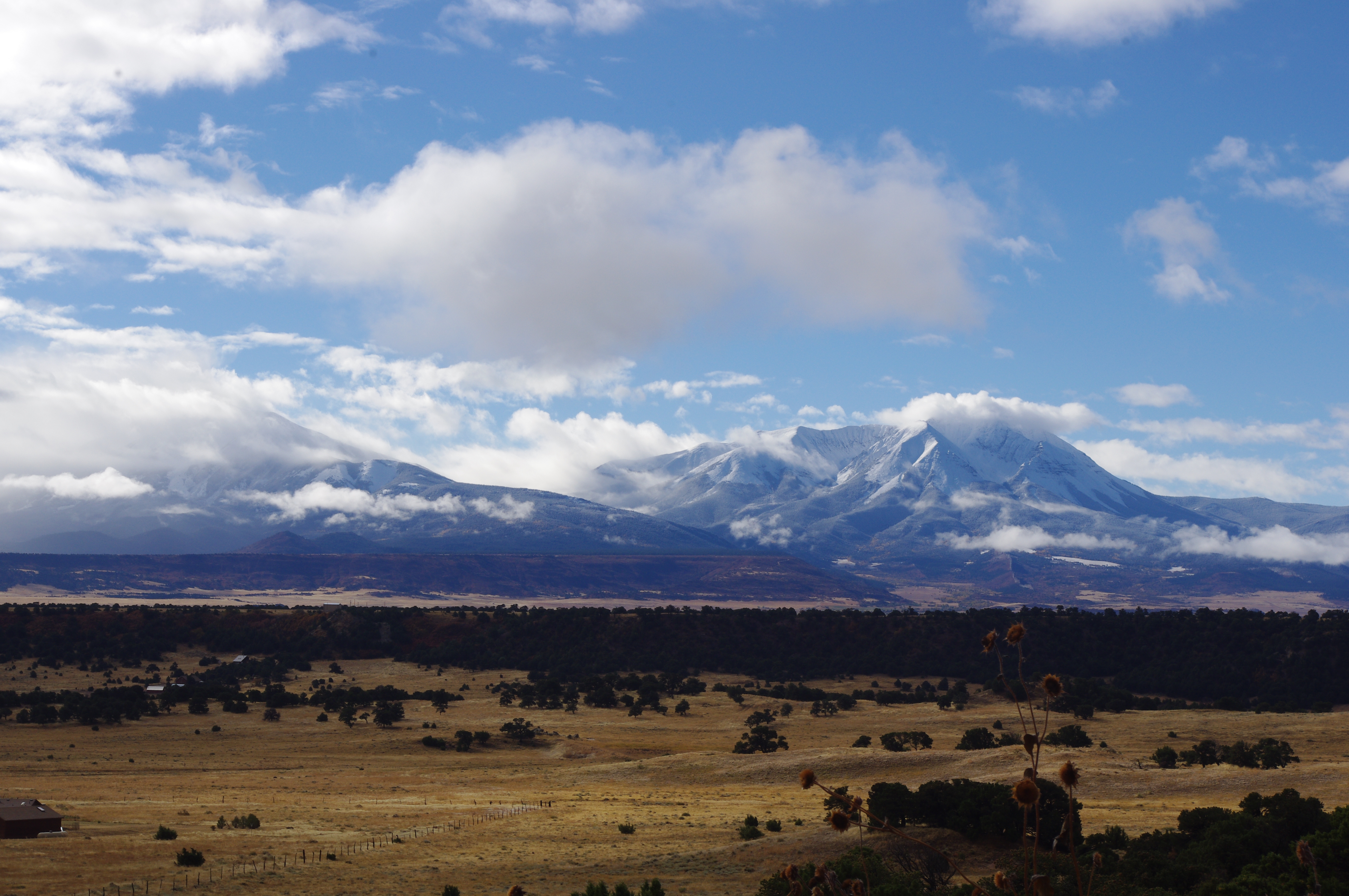 When our new home was finished, a stressful process in and of itself, we moved out to the foothills. Now I spend hours just staring at those incredible mountains, with their ever changing cloud and weather patterns.
The silence and beauty of this area takes my breath away daily, but in a good way… “Goodbye city life!”


