getting off the grid mentally
 After I watched the Oscars, I decided to see a couple movies that I had skipped over before. I skipped “Bohemian Rhapsody” because I figured it was a concert movie and I wasn’t completely sure who Queen was anyway. I know I can be pretty out of it sometimes… I skipped “First Man” because I have never been that interested in space flight. It sounded like a “male movie” to me. Mike convinced me to reserve these two at the public library, just in case we were missing something good. He was right. As most of you know, Bohemian Rhapsody is a 2018 biographical film about
  Then I watched “First Man” last night. The two things I took away from this film: exactly how courageous our first astronauts were, and the price they and their families paid for that courage. Who knew that Neil Armstrong had a two and a half year old daughter who died of a brain tumor in 1961? Although Neil Armstrong was obviously the hero of this story, I focused on his wife, played wonderfully by Claire Foy. Didn’t these guys get any kind of counseling for what they were going through? Their wives sometimes seemed like the real heroes, sitting at home with their children wondering if they still had a husband. And when their husbands did come home, how traumatized were they? Since back in the sixties men were raised to hide all emotions except anger, the wives bore the brunt of all of those confusing and repressed feelings. I was left wondering if either our astronauts or their families had any idea of what they were getting into when they signed up for this mission.
How we steal the bright side from ourselves everyday: Try some cognitive reframing

The most fortunate are those who have a wonderful capacity to appreciate again and again, freshly and naively, the basic goods of life, with awe, pleasure, wonder and even ecstasy. — ABRAHAM MASLOW
Although I learned this psychological tool decades ago, I am always re-learning its usefulness in my own life. What is cognitive reframing? Here’s a definition from an article by social worker Amy Morin:
“Reframing is a technique used in therapy to help create a different way of looking at a situation, person, or relationship by changing its meaning. Also referred to as cognitive reframing, it’s a strategy therapists often use to help clients look at situations from a slightly different perspective.”
I have found that choosing a “different perspective” can also be the opposite of what I automatically go to in my own mind.
The point is that we can and do choose how we see ourselves and our lives everyday.
If we were raised with a critical or negative view of ourselves and how the world works, the way we will see our lives may be destined to be critical or negative, but that is not the only way to see ourselves. That is not the only reality behind our circumstances.
Here is an example from my own life:
In my present life I may tend to focus on all of the difficult challenges Mike and I have faced since we decided that we needed to leave Fort Collins behind for many good reasons. I may choose to focus on how much money we left on the table by selling our Fort Collins home before prices went way up up there, how expensive and stressful it was to build down here in a rural area, etc, making me critical of our past decisions. Or, I may choose to see exactly how fortunate I have been in spite of many tough misfortunes in the past few decades; to be here now, retired comfortably and happily, and most importantly together!
In addition there are the greater misfortunes of Mike’s horrible experience with CFS for decades, my inability to find another job in libraries at age 49, my traumatic head injury at age 53, and many more difficulties that just come up as we age. Considering all of these factors, we are more than fortunate. How can we be anything but filled with GRATITUDE that we made it to this soft place to fall in this beautiful place?
That is how reframing works, and it can be used in all parts of your life on a daily basis…

leading to overwhelming feelings of gratitude, a feeling we could all use more of!
Colorado Rocky Mountain High!
Boomers: Contrary to popular belief, not the American generation who had it made…
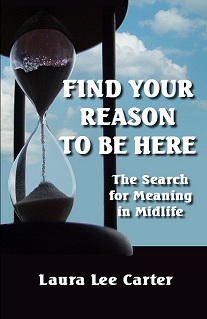 Ever since I heard from a fellow writer about a troll who goes around trashing boomers for ruining their life, I have been thinking about how the generation we are born into affects how we choose to live our lives and how we see ourselves. I have been studying this issue for years now, and wrote about the boomers’ place in history, how our lives compared to our parents, and how we are different psychologically, in my book Find Your Reason To Be Here: The Search for Meaning in Midlife, published in 2013.
“Our generation began with a literal BANG! when the USA used two nuclear bombs against Japan in 1945. Then in 1962, as children, we witnessed the Cuban Missile Crisis, a time when there existed roughly enough nuclear weapons on earth to erase human civilization one thousand times over. Our parents sat on the edge of their seats, wondering if the human race would simply disappear from this earth in nuclear holocaust. One cannot help but wonder what the long-term emotional consequences are of experiencing this type of worldwide threat as a small child. This is an important question that may be hard to pin down but cannot be ignored.” (page 7 in my book)
We were also the beginning of the “Age of Permanent Distraction” we see today:
“At times it seems we [boomers] were nothing but guinea pigs in a long line of mind-clutter experiments. As in no previous generation, our brains have been filled with far too much mindless television, in-your-face commercialism, and non-stop media coverage. We were the first generation to grow up with television. From the music of the early years, most notably rock ’n’ roll, transistor radios and then “boom boxes” allowed us to distract ourselves constantly by carrying around our music everywhere we went.” (page 9 in my book)
Contrary to some young ones who believe we had it made in our youth, with great jobs opportunities, spoiled rotten while we gobbled up natural resources as fast as we could with no regard for the future, our generation was found to be “the gloomiest generation” by the Pew Research Center in 2008.
Most boomers are under serious financial strain today, worrying more often than their parents did about money, and suffering a number of stress-related illnesses as a consequence. Many of us are also feeling financially stretched because we are supporting both our children and our aging parents. More than half of boomers still provide financial support to at least one adult child.

The death rate among Americans 45-54, increased dramatically between 1999 and 2013 compared to other developed countries.
“The increased deaths were concentrated among those with the least education and resulted largely from drug and alcohol “poisonings,” suicide, and chronic liver diseases and cirrhosis. This midlife mortality reversal had no parallel in any other industrialized society or in other demographic groups in the United States.”
Stress is perhaps the single most important psychological factor affecting boomer health today, contributing to higher midlife suicide rates than any other developed country. Poor self-esteem is another important stress-related factor that can and does lead to a number of chronic health problems. Poor self-esteem can cause us to indulge in addictive behaviors like excessive shopping, overeating, and gambling, and overuse of alcohol, tranquilizers, antidepressants, and sleep aids. People with low self-esteem also are less likely to maintain stable social relationships.
But I guess the statistic that concerns me the most about my generation is that most of us have little or no savings for retirement. No wonder so many of us are depressed. The future doesn’t look good for most of us.
New Rules for Retirement: Do it NOW!
No one gets out of this alive. With retirement, you have more time to do the things you love, but the extra time is wasted unless you use it productively and actually live your dreams. Make that phone call to let someone know you are thinking of them. Better yet, go visit. Mend fences, hug, show appreciation, be kind to people. Don’t be complacent; you never know when the people you thought would be there forever will be gone.
Money is overrated. Money is a tool. To see it as anything else is folly. Yes, we all need some, but money is a means to an end, not an end in itself. Spend wisely and then let it go.
Time is your most valuable asset. You only get so much, and that is it. You can’t hoard it. You can’t get it back. You can’t turn back the clock. The best you can do is to start investing your time wisely.
Stop searching for happiness. The only place you can be happy is in the present. Stop chasing tomorrow and fully experience happiness today.
Your bucket list is crap. Putting things on a bucket list can be just another way of deferring your aspirations. Sure, go ahead and make a list but remember: Life goes on while you are busy making other plans.
Comfort is overrated. Keep pushing yourself and trying new things. Challenge yourself to more growth, not less. If you get disabled in one area, develop other ones!
Go with your feelings. No need to justify anything you want to do. It is OK to do things solely because you want to. Take dance lessons. Learn to play the zither. Who cares about the critics?
You are responsible. You get to choose how you respond to everything. Yes, everything. Your response to anything is a choice. You get to choose what matters. You didn’t get this far to keep jumping through other people’s hoops. Don’t forget the importance of yourself.
You can’t make others happy. You can listen. You can be kind. You can smile. You can respect. You can offer assistance. You can contribute tools, but everyone is responsible for their own happiness.
Let it go. Everyone has regrets, but don’t live a life of sorrow. The past is gone; find a way to come to terms with it. If you need to call up those from your past, do it and get it over with. Today is all we really have.
Stop complaining. Most people don’t care about your problems; some are happy you have them. Complaining only serves to keep negatives at the center of your life.
Your aspirations mean nothing if you don’t make an effort to realize them. Take action to get the things you want TODAY.
Ambition can be a killer. I hate to break it to you, but you aren’t going to be No. 1 in everything you do. Breathe, and be satisfied, with the act of living today. Don’t let blind ambition cause you to lose sight of what is important. Savour all of life’s moments, even the bad ones, because you only get so many and you may wish you had paid more attention.
Take care of yourself. You aren’t much use to yourself or anyone else if you don’t. Looking out for your health and happiness is not the same as being selfish. This is fundamental.
It is OK to fail. Failure is part of life. Failure teaches us valuable lessons. In fact, we learn more from our failures than our successes.
You don’t have to wait for an apology to forgive. We have all been wronged at one time or another. Waiting for an apology from someone who may never offer one is a waste of life. Who cares? Hell, if this is a gray area and it’s possible the other person is waiting for an apology from you, apologize first. What does it matter? Life is too precious to play those kind of games.
Negativity wastes life. Being positive and optimistic in the present has a favorable impact on the future. Yes, bad things happen, but so do good ones. Remember, what you focus on grows.
Be curious. See both sides. Stubbornness is not strength. When given new information, intelligent people research it further. Is it true? Spend the time to read, develop and evolve your opinions. We grow when we can admit we are wrong. Your life stagnates when you are wrong, but you refuse to admit it.
A Revealing “Empty Chair” Exercise

An amazing combination of evening light and clouds last night!
I had the best time yesterday staring out at our incredible view here in southern Colorado. I was also looking at Mike’s chair, which was empty because he was in town visiting friends. Having quite a bit of experience with Gestalt and “empty chair” therapy, I suddenly thought,
“If you could have anybody from your present or past sitting there right now, who would you choose?”

Charlie Cat relaxing in Mike’s chair
This of course requires a good imagination and sense of pretend, but it can also be quite revealing. I ran through the list in my mind quickly, people from my past who I miss and would love to talk to now. Sad to say, none of them made the grade.
You will never believe who came up for me! I would LOVE to sit down with Barack Obama and discuss our world today. What it must look like to him, after trying so hard to correct injustices from our past and improve the lives of average Americans. How does that feel to him? How does he see Trump?
An honest discussion would be so fascinating!
Do you have four really good friends?

The topic of the lead story on today’s CBS Sunday Morning, “Going It Alone”, is one of my favorite life-long lines of research: loneliness. There we meet a man who, at age 27, chose to not speak to a single human being for 17 years! He eventually concluded, at age 72, that if you have four really good friends, who understand and appreciate your authentic self, you are truly lucky.
According to a recent Cigna study, loneliness is at epidemic levels in our country.
Their 2018 survey of more than 20,000 U.S. adults revealed some alarming findings:
- Nearly half of Americans report sometimes or always feeling alone (46 percent) or left out (47 percent).
- One in four Americans (27 percent) rarely or never feel as though there are people who really understand them.
- Two in five Americans sometimes or always feel that their relationships are not meaningful (43 percent) and that they are isolated from others (43 percent).
- One in five people report they rarely or never feel close to people (20 percent) or feel like there are people they can talk to (18 percent).
- Americans who live with others are less likely to be lonely (average loneliness score of 43.5) compared to those who live alone (46.4). However, this does not apply to single parents/guardians (average loneliness score of 48.2) – even though they live with children, they are more likely to be lonely.
- Only around half of Americans (53 percent) have meaningful in-person social interactions, such as having an extended conversation with a friend or spending quality time with family, on a daily basis.
- Generation Z (adults ages 18-22) is the loneliest generation and claims to be in worse health than older generations.
How much do YOU need quality connections?
This all brings back my own gradual transition in my 30s and 40s from a true loner, who didn’t trust anyone completely, to a happily married woman in my 60s. After a traumatic betrayal in my 20s I also gave up on people. I did allow a few acquaintances in after counseling in my early 30s, but trust was not my best quality.
My first marriage was a lonely tangle of struggle, criticism and disempowerment. I gradually realized that I would probably be spending the rest of my life alone unless something changed. What changed was a divorce in 2001 and then job/career loss in 2004. Living on severance with only two good friends I saw maybe once a month plus my dogs, I faced loneliness most of the time, providing ample opportunity to consider my options for my future.
At age 49 I decided loneliness was my worst problem and I did not want to live the rest of my life if it was going to be this lonely indefinitely.

 Mike supported me in a way I have never experienced before, with unconditional loyalty, affection and appreciation. He offered full support to my dream of becoming a professional writer at age 50, back in 2005. This I did with enthusiasm, first as a freelance writer, then as a blogger and finally as an author. In fact, his support led to my second book:
  Adventures of the NEW??? Old Farts