Getting off the grid
 More than
The human race always moves towards FREEDOM
 I saw an interesting exchange of ideas on Meet the Press this past Sunday. One speaker I found most outstanding was Isabel Wilkerson, the author of “The Warmth of Other Suns: The Epic Story of America’s Great Migration.”
What a wise, informative, and well-spoken woman! I found this discussion interesting on a lot of different levels, but I could personally relate to it in terms of our own recent ‘migration’ out of the city…

“You can’t separate peace from freedom, because no one can be at peace unless he has his freedom.” – Malcom X
Yes, our move was mainly based on the idea of increasing our own freedom from densely populated cities, and all of the restrictions included in that lifestyle. Life can be GREAT in rural America!
At the beginning of the show, Ms. Wilkerson stated that, “Any migration is about freedom.” She spoke of the desperation so many blacks in the south felt to escape, and yet in some cases they were treated like criminals just for wanting to move north.
 Another part of the conversation I enjoyed was with the author of Hillbilly Elegy: A Memoir of Family and Culture in Crisis, J. D. Vance. He spoke of the part of the American dream which so often includes a desire for upward mobility. And yet moving to somewhere that is economically different requires that you socialize with others who are not like you. His example was when he attended Yale after growing up in the rural south.
At first I related to Mr. Vance’s experience in terms of my own life. I went from a public high school and a middle-class upbringing to attend an exclusive college with the sons and daughters of America’s millionaires in the early 1970s. What did I have in common with these children of privilege?
Then I began to think about our recent move to an old, relatively poor, mostly Latino town in southern Colorado after living in expensive, predominantly European-American suburbs for most of my life.
Some say the best way for those of us who live in the United States to advance past our many prejudices is to spend time with those whose lives are quite different. Moving here has been a step in that direction for me.
Living in a small, poor town has helped me make the small step past diversity towards commonality. At first I found this experience quite alienating. As the obvious outsider, I could not predict how others would respond to me. Those who look like me are mostly tourists in Walsenburg. They come, they hopefully spend some money, and they leave. But slowly, as I got to know more local residents personally, it became clear that we all want the same things for ourselves and our families. None of us is really so different than the other.
Are any of us really so different? Life, liberty and the pursuit of happiness summarize well the goals of every human being in this world I think.
Learn more about my move to rural Colorado…
A New Years Idea for Change: Change the way you see, judge and treat yourself!
This was my ONLY New Year’s Resolution from 2015, and I do believe I have made a bit of progress on this one! Such marvelous writing!
“I resolve to accept the idea that I need not change anything about myself this year (or maybe ever) except the way in which I judge myself. I need not change anything about myself except the harsh criticisms I chronically unleash upon myself. I need not change anything except the warped lens through which I watch my every move. I need not change anything except the fun house mirror which I carry with me everywhere and whose distorted reflections I believe are real.
I resolve to accept the idea that my main problem is not my face, body or résumé but my frame of mind. Granted, that’s a pretty big problem, as this frame of mind affects every aspect of my life and might be making me too depressed right now to even realize that I’m depressed, much less able to imagine changing. Anything. Ever. At all.
 But this is the great thing about holidays: They’re temporal gateways, urging us collectively to enact virtual rituals. Today is not just any random day. It’s a shift, proclaimed around the world. And into that gaping chasm between old year and new, that crevasse over which we now walk a short bright temporary bridge, we can hurl those warped lenses and fun house mirrors, all of us. Down that gap we can yell our last harsh words about ourselves, and hear their echoes dissolve into gibberish then ebb into that vast, inviting silence as we hasten, set free, to that smiling, untried other side.”
HAPPY NEW YEAR & GOOD LUCK!
An excerpt from: http://spiritualityhealth.com/blog/anneli-rufus/whats-one-and-only-new-years-resolution-people-low#sthash.UKyIsWIo.dpuf by Anneli Rufus
You cannot control how others receive your energy
Perhaps I will always remember this holiday as the one where I finally accepted the truth about other peoples’ reaction to me. Ah, if I could have totally accepted this truth decades ago, my life would have been so much easier:
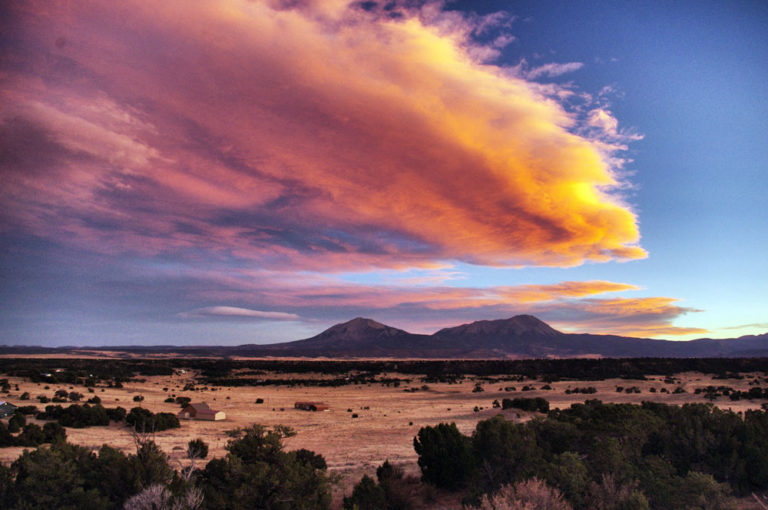
You cannot control how other people receive your energy. Anything you do or say gets filtered through the lens of whatever they are going through at that moment, which is NOT ABOUT YOU.
Just keep doing your thing with as much integrity and love as possible.
This includes everything I write about here and in my books. Just because I have chosen to learn enough to understand the psychology of midlife transition or passive solar technology, and appreciate the freedom this knowledge has given to me, does not mean anyone else has a clue what I’m talking about.
Even my parents, who taught me much of what I learned as a child, the ones I thought knew EVERYTHING when I was young, have no idea where I’m coming from with most of my ideas and thoughts today. They are living in their own reality and often do not appreciate mine, but that is not about me.
 On some level I’m ashamed that it has taken me this long on this beautiful blue planet to appreciate this truth. But on the other hand, it is so freeing to let each of us be where we are right now.
We continue to search for whatever makes our lives feel better.
City life, rural life, stress & heart health
I find the gradual transition I have been through in the past few years, from city life, to small town and rural living, fascinating. I did not know until I researched it, that the entire world is moving from rural to urban quickly.

According to a 2011 report from LSE Cities and the Deutsche Bank called Urban Stress and Mental Health:
“Urban living is on the rise whereas rural living is becoming the exception – in all parts of the world and at an ever-increasing rate. The rapid pace of urbanization is an important marker of the societal transition at large that has occurred over the past 30 years. Our world is shifting towards an urban, small-family or single household, and at the same time, an aging society. In the next 30 years we will be faced with the growing challenges specific to our cities’ aged single urban populations.
However, urban living is not only about getting older, it is also about being in a constant state of stress. Stress is the unspecific physiological and psychological reaction to perceived threats to our physical, psychological or social integrity. Urban living can be threatening if you haven’t enough space of your own, if you experience insufficient security or live under unstable economic conditions. Stress increases with the anticipation of adverse situations and the fear of not having the adequate resources to respond to them. From an evolutionary point of view, stress is the mechanism that prepares us for any ‘fight-or-flight’ reaction, and also causes us to evolve in order to better adapt to our environment. Although not harmful per se, stress may jeopardize our health when stress exposure is chronic or when complete recovery is not possible.”
In our first year of living in a town of under 3,000, my stress level fell precipitously. It felt amazing at times. With only two stoplights in the whole county(!) and almost no traffic, I found nobody in Walsenburg CO to be in a rush, unless of course they were tourists. There were never parking problems or lines anywhere. But since my natural stress level was geared to noise, traffic, aggressive behavior and threats from strangers everywhere, it took me a while to adjust. I had to tell myself to mellow out constantly.

In our second year here we moved out to the country on a few acres and began living in a quiet, clean, peaceful, naturally beautiful setting, but my body was still geared to a higher level of alertness and anxiety than my surroundings warranted. It took time to relax by practicing meditation, yoga, and simply sitting quietly more.
I needed to learn again that my emotions were tied to my heart. When my world felt like a threatening place, even unconsciously, I was daily putting my heart at risk. Health practitioners worldwide now see stress as a major risk to cardiovascular health. Cortisol and epinephrine are two hormones that, along with others, raise blood pressure and blood sugars in the body, threatening the heart. Another reason stressed-out people are vulnerable to heart disease is that they rarely eat well, sleep well, and exercise.
In short, I cannot believe how much my life has changed since leaving city life behind. I did not know the level of stress I was living with everyday until it was gone. And even then it took me quite a while to truly relax and enjoy the lack of stress in my life.
Learn more about this major life transition by reading my memoir…
Are you moving towards your life goals?
When was the last time you put some serious energy into contemplating your life goals? Not what needs to happen in the next year or two, but what needs to happen for you to feel satisfied in the long run.
After I lost my job and 25 year career back in 2004, I spent months contemplating my life up until then. After decades of work as an academic librarian, I was suddenly set free to consider every option. This was a wonderful gift, well disguised as misfortune.
My first book Midlife Magic: Becoming The Person You Are Inside is a summary of the feelings I went through at that time. Here I share my own story of transformation from divorced, unemployed and miserable, to my best life ever, explaining how midlife change, changes everything.
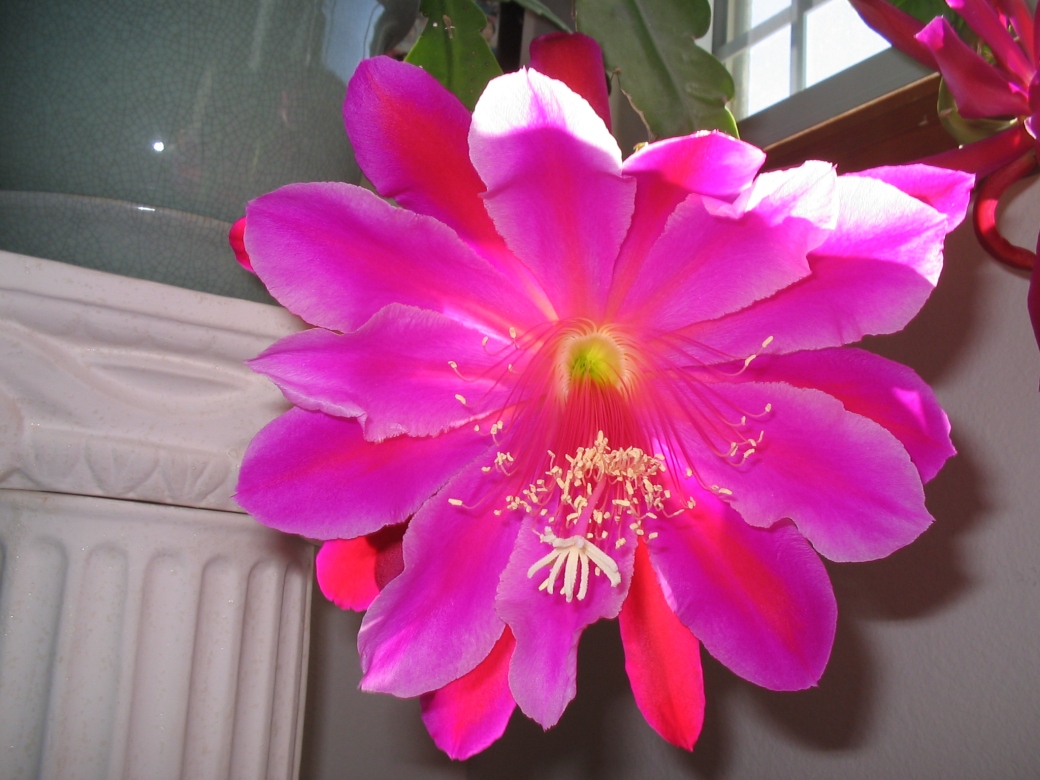
Yesterday I went through a list I made back then, a list of my new priorities after I stopped and considered my life at age 49. Here are a few things I wanted more of before I died: love, acceptance, appreciation, access to pure silence, to be surrounded with solar warmth, natural beauty, music, wildflowers, peace, contentment, relief from guilt and shame, and respect for my own integrity.
Such a wonderful feeling to know that I have somehow brought so many of these blessings into my life through my own stubbornness and courage. The way I describe this transition now, on the “About The Author” page of my new book:

“Her midlife crisis began with a divorce and then progressed to the loss of her library career, misfortunes she now finds supremely fortuitous, as everything wonderful in her present life flowed from these difficult experiences.”
 Adventures of the NEW??? Old Farts