My Salute to Caregivers Everywhere!

One thing I have learned from first caring for my husband when we first met, is that providing care for those who need extra help almost always involves guilt of some kind.
So many of us understand the importance of this work…

Back when Mike and I first met, he suffered from Chronic Fatigue Syndrome (CFS) regularly. This meant trying to find doctors who understood this generally misunderstood and mistreated illness. The worst of the docs always blamed the victim by saying that CFS was caused my mental illness and had no biological basis. Thankfully the CDC eventually showed these MDs to be quite wrong. (Description of CFS at the CDC)

But in the meantime Mike had to go on regular short-term disability from his jobs. I had no previous experience with caring for others. I found that he generally felt guilty of having this terrible illness, and I felt guilty that I was not a more patient and compassionate caregiver.

Since moving down south six years ago, Mike’s health has improved dramatically. He rarely suffers days of CFS. And it’s a good thing because my health has gone downhill quickly. My main problems now are extreme hypoxia, defined as: “deprivation of adequate oxygen supply at the tissue level,” difficulties with consciousness and balance from a previous traumatic brain injury, and quickly failing eyesight (cataracts). And, I would like to add, DEPRESSION:

because I never had any major health problems before age 60. My how quickly things can and DO change! Luckily Mike is a marvelous caregiver! No guilt involved.

In addition to all of this, my Dad recently died from a short illness right before the announcement of the COVID-19 pandemic and lockdown in mid-March. This meant that my Mom, who had never lived alone in her 86 years of life, was suddenly quite alone and grieving terribly. Thankfully, my sister and her husband live nearby and provide every kind of loving care for her everyday. But with my health tenuous at best, (we have 3 known cases of Covid-19 in our county and over 20,000 in the Denver metro area where my Mom lives), I haven’t been able to go help out with my Mom’s care.

This means my sister is absolutely EXHAUSTED both physically and emotionally from helping Mom out day-to-day while I sit down south feeling breathless and guilty. I’m sure you can imagine how all this feels for both of us…

She does not blame me or anyone else, she and her husband are just completely worn out! There must be so many of you who are living through similar circumstances right now, with no easy answers, but lots of difficult circumstances to deal with everyday.

That is why I feel the need to salute all of you who have put your own life on hold while you care for the millions of friends and family members who desperately need your help. I love every single one of you for your bravery and dedication!
The Coronavirus Marriage Test: Who the hell am I living with here?

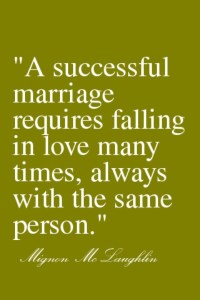
With all the conversations about how sheltering in place has led to binge-eating, binge-drinking, and increasing mental health challenges, one topic I have latched onto is divorce in the time of Coronavirus. Of course, forced proximity for long periods of time can breed contempt, but crises like these also cause us to suddenly come to terms with our pending mortality.

Do I really want to spend the rest of my life with this person?” Just like a big fat midlife crisis, the fear of sudden death can lead to positive life changes.

From my perspective, this sudden forced increase in intimacy is like instant retirement. As I think back, one of the most important reasons for my divorce at age 45 was the realization that this marriage would not survive either a sudden, serious illness in myself or long periods of unrelenting time together. Our love was not that strong and my “wasband” at that time was a total blamer and shamer. These days he reminds me of our esteemed President Donny dumb dumb. The man never heard of the concept of taking responsibility for his choices or actions, EVER!

I eventually came to call my first marriage ‘criticism central.’ That is when I knew I had to get out!

But then on the other hand, it is good to know that our recent enforced togetherness has in some cases led to resolution rather than dissolution. Some couples in the process of getting a divorce now say that being stuck together caused them to resolve their differences and decide to stay together. They dismissed their case.

Like I said, sudden intimacy, much like retirement, either improves your opinion of your partner or makes you want to yell, “Get me out of here!”

I am happy to report Mike and I still don’t hate each other….

Being alone: how much is enough?

I can highly recommend an article in the December/January issue of AARP magazine entitled: “Is there a cure for LONELINESS?” Positive human connections are a part of being human. I have been studying this topic up-close-and-personal for most of my life. The main theme of this excellent AARP article is that social isolation can have measurable medical causes and remedies.

Did you know that genome researchers can now see signs of social isolation in your white blood cells? The blood cells of very lonely people “appear to be in high alert, responding the way they would to a bacterial infection.”

Another social connectedness researcher recognized our “human need to be embedded, connected and integrated in a social network…When that network is missing the consequences are very real in terms of mental and physical health.”

These researchers were not studying those who are natural introverts who love to be alone. They are studying those do not wish to feel so alone in the world and may go days without talking to anybody who knows or cares about them.

Did you know there is a 32% increased risk of early death for those living alone, according to a study of 3.4 million people? Social isolation can be a killer, and not just figuratively. Loneliness may actually cause premature death by damaging the heart. Research suggests that feeling loneliness may double a person’s risk of dying of cardiovascular disease. Older Americans are at the greatest risk for social isolation, which can lead to physical illness, depression and even dementia.

My place of meditation & serious contemplation at age 49

This was foremost on my mind when I did a major life review in my late 40s. After I got divorced and then lost my job/career at age 49, I sat for a few months in my self-created sunroom and thought about my highest priorities for the years I had left before me. What did I need most to survive my future? I had been an introvert and a loner my whole life and dealt with this issue a number of times in counseling. Did I want to be alone forever?

That is when I decided that I would put all of my energy into finding the best partner for me. I didn’t want to face forever alone. I figured I couldn’t be alone in my loneliness. There must be at least one person I can truly enjoy spending lots of time with. Once I became totally focused on this goal, I met Mike. He lived ten miles away, but I never would have met him without Match.com We spoke for over ten hours the first time we met!

Now, fifteen years later, I cannot imagine where or even who I would be without Mike. So loyal, loving and like me. We are both introverted and loners to some extent, but we also actively choose not to live alone. We love each others’ company and also know when we need to spend some time alone. We give each other LOTS OF SPACE. We have become the guardians of each others’ solitude. This works well for us.

I have decided now, at almost 65, that we all need a witness to our lives; people to look after and those who look after us. Our survival and well-being depend on not only ourselves, but also loving, supportive others. Yes, I could have lived alone forever, but did I really want to?

My book “How to Believe in Love Again” explains the process I went through to change my attitudes about living without love…

Surprise! None of us get out of this alive…

“America is the only country in the world that looks upon death as some kind of personal failure.”

As we age, it is natural to contemplate more often the inevitable consequence of life, our own death. I know that since I experienced a serious brain injury at age 53, with hours of spontaneously moving in and out of consciousness, death has become a fascinating topic for me. I often wonder if unconsciousness is what death feels like. If so, it may not be so bad.

Then as I entered my 60s and personally experienced too many new ailments and disabilities, I wondered again when and of what I would die. I also learned something important about our culture: Even if we Americans don’t see death as a personal failure, we most certainly see illness as one. Ever since I moved from the healthy column to the older, not so healthy column, I have noticed many treat me quite differently. But aren’t I the same person with equal potential?

This all reminds me of a patient I treated in my counseling internship in a rehab hospital. When this elderly woman became ill and ended up in the hospital, the only question on her lips was,

“What did I do to deserve this?”

That has been the realm of religious leaders and philosophers forever. How do we make sense of this thing called life and death? That must be where our judgment of those “failures” who have the indecency to die comes from. When we are still among the living and healthy, it rarely seems likely that we will die someday.

I am reminded of a very cynical MD I met once in Boulder decades ago. I remember him telling a story about one of his theoretically healthy patients. The doc was given the unenviable task of telling this person that they had cancer. The patient’s response?

“I can’t have cancer! I run ten miles a day!”

If you like to play the odds game, the top 10 causes of death in the USA are heart disease, cancer, unintentional injuries, chronic lower respiratory diseases, stroke, Alzheimer disease, diabetes, influenza and pneumonia, kidney disease, and suicide.

Please note number ten on this list, the rate of suicides among Americans. This rate has risen since these statistics came out in 2017. And speaking of suicide, let’s give Camus the final word on this topic:

“There is but one truly serious philosophical problem, and that is suicide. Judging whether life is or is not worth living amounts to answering the fundamental question of philosophy…These are facts the heart can feel; yet they call for careful study before they become clear to the intellect.” -Albert Camus

How unreasonable love is!

Yesterday I was struck by exactly how unreasonable love can be. What is this feeling that often goes against all reason and just is?

As far as I’m concerned, the definitions of love are completely inadequate. One definition is: “an intense feeling of deep affection.” Another is “a great interest and pleasure in something.” Or “to feel a deep romantic or sexual attachment to (someone).” How inadequate is that?

Reasonable is taking into consideration your own interests first, something most of us do unconsciously and continuously. “What in this for me?” I learned early to notice how so many people I met consider what they can get out of a new friendship before they jump into it. These people are very fair weather friends. I tend to avoid them.

I spent my first few years of college at Colorado College, a very expensive private school in Colorado Springs. There I met a number of very wealthy kids who first wanted to know if your family had a condo in Aspen BEFORE they decided to like you. Who knew there were such people in the world?

That’s when I learned to be much more careful in choosing my friends. Then, for young women, there is always the question whether the men liked you for sex and nothing else. Unfortunately that took me quite a while to figure out. Who knew some men are just pigs?

At age 64, I have known so many friendships, and most have not lasted very long. These experiences left me doubtful whether any of these “friends” ever really cared for me at all. In other words, I don’t expect true love and loyalty in this lifetime. I have experienced too many disappointments in this department.

Then yesterday I had a very frank conversation with Mike on this topic. We have been together for almost fifteen years now and still I doubt. We have been through serious, debilitating illness with Mike in our early years, and the same with me recently. I wondered why he would choose to sacrifice to be with me when he could certainly do better at this point in life. His love and loyalty astounded me. Finally I have found a lover and friend who actually loves me…in sickness and in health.

Love and integrity are so hard to find. If you find them in your personal relationships, return them in full force…

Petscans and waiting to see if you have cancer…

I find I have nothing to say at the moment. Have you ever had to wait to see if you have cancer? That’s where I’m at. I had a Petscan Tuesday afternoon and of course there seems to be no doctor who isn’t on vacation or just “off” who can call me and tell me the results.

What is a Petscan? Mayo Clinic:

A positron emission tomography (PET) scan is an imaging test that helps reveal how your tissues and organs are functioning. A PET scan uses a radioactive drug (tracer) to show this activity. This scan can sometimes detect disease before it shows up on other imaging tests. The tracer may be injected, swallowed or inhaled, depending on which organ or tissue is being studied. The tracer collects in areas of your body that have higher levels of chemical activity, which often correspond to areas of disease. On a PET scan, these areas show up as bright spots.

A PETscan is useful in revealing or evaluating several conditions, including many cancers, heart disease and brain disorders. 

American medicine at work. I ask you, could our system be anymore fucked up??? I truly doubt it… So I meditate, I sleep, I listen to great music and try not to think about death, and what it might mean to those who truly love me.

A couple strange things about Petscans. Did you know that the radioactive isotope they put in your veins is so strong that it can impact anyone in the room with you? Really! For a minute I thought the tech who put it in was kidding! And then there’s that cocoon they put you in inside of that tiny hole. Close your eyes and you hardly know you’re there unless your nose starts to itch, badly. But I survived all that and now I wait because no doctor is willing to take the time to give me a call…

Postscript: A small spot of “unusual cell growth” was found in my lungs. Further tests next week…