My life now: The post-concussion dizzies

I’ve been taking some time away from my online life lately. Recently, 12 weeks since my latest serious concussion, I suffer with disorientation and extreme dizziness, not unlike that horrible feeling when the world is spinning around because you drank too much. (I only drank that much once in my life, Chinese Mao Tai, 150 proof, it’s a long story…) This of course is complicated by my hypoxia and need to be on oxygen all of the time. All in all I am the classic dizzy dame lately, LOL.

I have always prided myself on my nibble mind. Not so much now. These days slow and steady wins the race, with lots of brain rest in between. Needless to say, this is not how I pictured myself in my mid-60s. How embarrassing and difficult to embrace. But like everything else I have faced in my life, I try everyday to learn something from this present state of mind. I find I am mostly learning and re-learning compassion for all of us who suffer with physical and mental pain. Recently I saw a program about Christopher Reeve, one of my personal heroes. He said one of the most difficult parts of his accident and injury was to accept that this was his life now. Extreme limitations in abilities and a gigantic change in self-image can be devastating, I know this on a personal level. Now I know I will never go ice skating again or even run or hike or any of the things I did my whole life. Sometimes I wake and find I’ve been dreaming about running or skating really fast.

My thoughts naturally turn to my bucket list, but even arranging an easy vacation like a cruise may not be possible because of my need for constant supplemental oxygen and my apparent natural vertigo at this point. Did you know only certain types of oxygen machines are allowed on airplanes? Who knew? There are still a number of places I would still like to see, but can I? I would so like to travel more. Our first trip this year will be to sea-level to see how well I can breathe there.

Then, of course, the old “Why is this happening to me?” questions arise. I know exactly how useless these questions are. Everyone at some point in their life must wonder this. Sometimes the medical explanations are adequate, but in my case my pulmonologist and I are both stymied. It just is what it is, and life goes on within you and without you.

The advantages of brain injury (Say what?)

Since my fate seems to be living with some fairly serious brain problems, I have been searching lately for the bright side of this apparently grim future I face. Some might find this attitude pathologically optimistic, but what the heck! If you can’t change it, why not go in search of the bright side?

First of all, I feel so just plain lucky to be living in this beautiful place with my loving little family, who understand endlessly my occasional forgetfulness, confusion and regular fatigue. My pup Rasta is especially sympathetic as he’s pushing 13 himself and can’t hear, can barely see or smell. He spends most of his days either sleeping or looking for a warm lap.

I have always run my mind a hundred miles an hour as a general rule, but not now. I tend to get busy early in the morning and wear out around ten or eleven. Then, for a change, I can be patient with myself… sometimes. I can settle down and meditate restfully for a while because I really cannot do anything else. I can now shut off my mind easier and just cruise mentally. I’m slowly learning my limits and now I try to only focus on one thing at a time.

Only so much brain space means less worrying and a lot less fear of death. Why? Because I have experienced hours of unconsciousness at this point and it isn’t such a bad thing. My mind simply shuts down with too much stimulation, and that limit is easy to reach. I have always enjoyed one-on-one conversations in my past, now that’s about all I can tolerate or enjoy. I enjoy focusing fully on others, just for shorter periods of time. After a nice talk with a friend, I love spacing out alone and contemplating our conversation. In fact I enjoy contemplating everything more.

I notice some of my senses are now heightened. My love of music, colors, and tastes are much more intense. I guess this is a function of where my head injuries were. Mine have been equal opportunity injuries both on the back and the sides of my brain.

Again I come back to one of my favorite quotes about the changes we may go through as we age:

“…we all know how this ends, so rushing through life is senseless. As our inner life grows ever more luminous, the chatter of the speed-and-greed world slowly fades, leaving us with greater peace, tranquility, quiet and contentment.” — Arthur Rosenfeld

American drinking: Do you drink to feel good, or to take the edge off of feeling bad?

“From 1999 to 2017, the number of alcohol-related deaths in the United States doubled, to more than 70,000 a year—making alcohol one of the leading drivers of the decline in American life expectancy…” — “Alcohol-related deaths increasing in the United Statesby the National Institutes of Health, January 2020

“The damage done by alcohol is profound: impaired cognition and motor skills, belligerence, injury, and vulnerability to all sorts of predation in the short run; damaged livers and brains, dysfunction, addiction, and early death as years of heavy drinking pile up.” — “Drinking Too Much in America” in The Atlantic

I was raised by two serious alcohol drinkers. I have always wondered if my Mom’s tendency to drink to deal with her anxiety and depression led to breast cancer at an early age. Her brother died of alcoholism. I admit it, after watching my parents drink so much, I developed an aversion to that level of intoxication. I have never found it attractive or funny, perhaps partially because I don’t get drunk, I just fall asleep.

As a part of my counseling training, we spent time learning about alcoholism and addiction. At the first meeting I raised my hand and said, “I only have one question. I cannot get drunk, I fall asleep instead. Why is that?” There I learned exactly how genetic alcohol addiction is. Certain genetic groups can tolerate far higher levels of alcohol and therefore can drink more to achieve intoxication. The normal response to alcohol, which is a depressant, is tiredness and sleep.

Yes, I know. Some of us now us THC products to deal with anxiety and depression. I am one of them, and I see no reason to argue about which is better for you. But I would argue that THC kills a lot less Americans than alcohol, and yet drinking is also one of our favorite topics to joke about. To me, alcohol addiction is not funny. It’s deadly to both the alcoholic and those around them, especially on the highway.

Studying addiction and counseling was my first choice as a new college kid at Colorado College. But then the discussion always comes up, do you have to be a addict to help addicts? I still have no answer to that one except to say few of us aren’t addicted to something, even if it’s sugar, salt or something else. That’s how our brains work.

This fascinating article looks at why we drink as an evolutionary adaptation to stress, and why American drinking has increased quite a bit, especially since 9/11: The Atlantic: “Drinking Too Much In America”

What does a brain injury feel like?

In my last post I spoke of “enforced introspection.” Because of a few health concerns in the past few years, I have been living in a type of enforced introspection. I was reminded of this situation on Thursday with another accident and rude awakening. I went too long without my oxygen tube and passed out on the floor. This has happened a few times in the past few years.

What happens is not completely known to me, because I don’t remember anything when I regain consciousness. When I gathered my wits about me, I called for Mike, but he had just left for a while. I struggled to my feet eventually and got my oxygen. Wow, what a big bump I had on the back of my head! That’s the best indication I have of how hard I fell.

My health situation is complicated because I know the problem isn’t just an oxygen deficit. The combination of low oxygen and previous brain injuries, especially a traumatic brain injury in 2008 (brain bleed) make my consciousness level less dependable than what most others experience. This is my first life experience with a disability, and I would say I am not adjusting well. My but I can be so stubborn. My brain is not amused.

I have always been my own brand of unique and taken some pride in that, but this is a uniqueness I could do without… I now realize that previous brain injuries (TBI) have made me much more vulnerable to future ones!

The only thing interesting about this brain deficit is observing my varied levels of consciousness. For instance, right now, as I write this, I notice that the spelling part of my brain is not happy. I forget how to spell some of the simplest words, but as I keep trying, they come more easily. It all leaves me in a bit of a dream world, but in a good way. It doesn’t freak me out, because unconsciousness is not scary to me until I wake up and wonder what the hell happened?

I called my brother to tell him about my fall and he said, “What can you do about this?” As far as I can tell there is nothing to do except be sure to stay on oxygen all the time, but my spaced-out nature makes that more challenging than it sounds.

Stop trying? I’ll keep fighting until I can’t fight anymore!

What does “new age” even mean?

I enjoy listening to a music channel on Direct TV named “New Age.” That got me thinking, what does “new age” even mean? The first person to coin the term was Helena Petrovna Blavatsky, cofounder of the Theosophical Society, in the late 19th century. She announced a coming New Age as a form of Western esotericism, but the term “New Age” has antecedents that stretch back to southern Europe in Late Antiquity. Following the Age of Enlightenment in 18th century Europe, new esoteric ideas developed in response to the development of scientific rationality. What is “esotericism”?

Esotericism is the state or quality of being esoteric—obscure and only understood or intended to be understood by a small number of people with special (and perhaps secret) knowledge.

Skipping forward to the Baby Boomers, the “New Age” burst into public consciousness in a buzz of media attention around crystals, chakras, reincarnation, and channeling in the 1980s, but had its immediate roots in the 1960s counterculture. “New age spirituality” is actually a descriptive category in religious studies, appropriated by practitioners of a kind of spirituality that sprang up in the 1960s and 1970s, especially in the USA and Britain.

So then, what is spirituality? One definition is that it involves the recognition of a feeling or sense or belief that there is something greater than yourself, something more to being human than pure sensory experience. That greater whole is cosmic or divine in nature. An opening of the heart is an essential aspect of being spiritual.

An open heart is a state of being where you feel open, accepting and expansive. Love flows through you without obstruction. Many long to experience an open heart, but at times we may feel too scared and vulnerable to reveal ourselves in this way, especially to ourselves.

This reminds me of a special meditation taught at Naropa Institute (now University) in Boulder Colorado, where I studied for my masters in Transpersonal Psychology and Counseling. At that time, meditation was an important part of my training, and one meditation was to open your heart to all of the pain in this world at this moment. Quite the challenge. Feeling compassion for the entire world of suffering is life changing, so is feeling complete compassion for your Self in this moment. If you were raised like me, to feel no compassion for your own struggles, but simply demand more from yourself forever, compassion is the medicine you need right now.

To me, New Age means a new way of seeing and experiencing the world in contrast to our parents and grandparents. It is a unique opportunity to see and love the world and your Self wholeheartedly. Your upbringing will determine how difficult that may be for you.

“Here’s what is truly at the heart of WHOLEHEARTEDNESS: Worthy now. Not if. Not when. We are worthy of love and belonging now. Right this minute. As is.” — Brene Brown

Escaping Anxiety

I have discovered a magazine I really enjoy lately: Travel & Leisure. I like their first-hand accounts of experiencing a new place. First of all, I have been to many of the places described in this journal. I have also always been a bit of a master at taking vacations in my own head. The Internet has made that so much easier. And at a time when so many of us are seeking escape from our predictable daily lives, I look forward to the next issue of this magazine to help me decide where I want to go next.

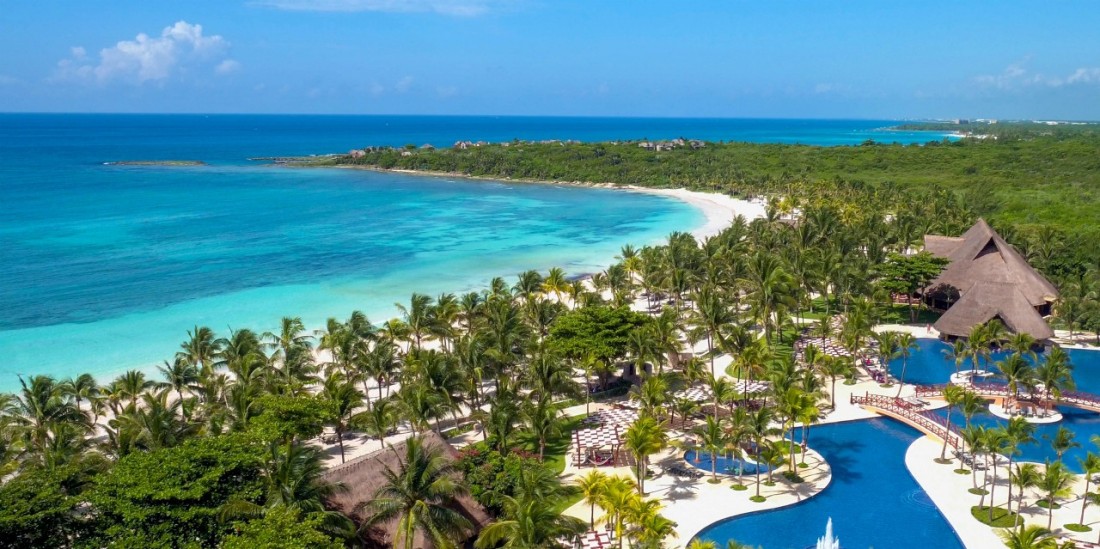
Yesterday, I started reading an article about escaping anxiety at a Riviera Maya healing resort. The writer spoke of “living with anxiety for many years; my mind wanders constantly.” Luckily, this author found themselves relaxing into “extreme calm” surrounded by nature, chimes, horns, drums, and gongs.

When I spoke to Mike about this, he immediately pointed out that “going on vacation can be quite anxiety-producing.” Mike, always the realist. Yes, first choosing a trip to take, buying tickets, flying, etc. can be quite stressful, especially with my new handicap, being on oxygen full-time. Did you know that most portable oxygen machines aren’t allowed on airplanes? Who knew?

So is a trip the best way to escape anxiety? Well, that depends on where your anxiety comes from. I learned the most about my lifelong case of anxiety (really fear of others) by moving away from society.

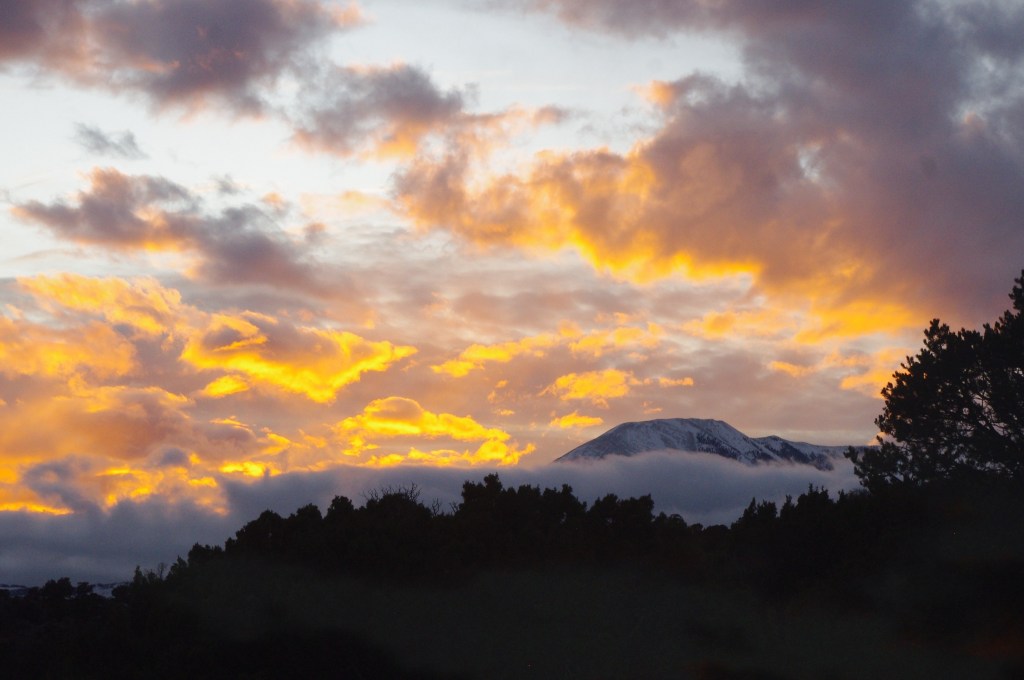
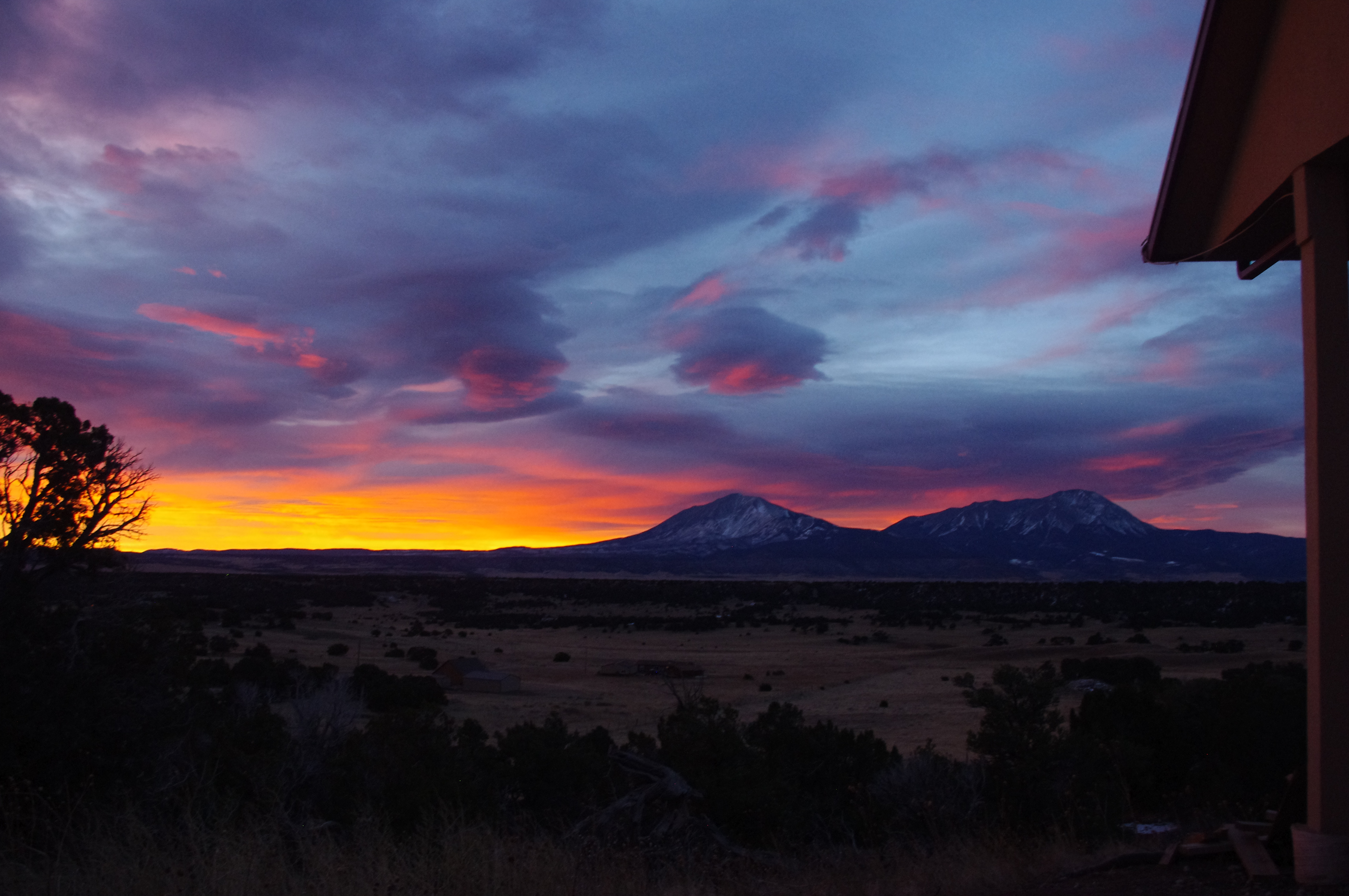
Almost seven years ago now, Mike and I built a passive solar home out in rural southern Colorado. On our three acres with very few neighbors, I finally found myself truly relaxing after a few years. I believe living close to nature instead of others was the main ingredient in this process. Yes, we have some serious snowstorms and amazing wind storms down here, but I feel secure and comfortable looking up at the Spanish Peaks each morning. Nature feels so much more safe to me than most other human beings.

What was most interesting to me was my eventual perception of the nearly unconscious vigilance I apparently felt my whole life in cities. That slowly melting away out here. Whenever I’m in cities now, I feel that subtle fear slowly creeping back. I believe it is the simple equation of having too many people per square mile, the constant possibility of someone disturbing us or worse. When I’m at home, that need for keeping a careful watch over my life and my loved ones slowly recedes and I find peace like I have never known before.

So, where does someone like that go on vacation?