Help & humor: Facing divorce later in life

No, this isn’t about me… A close friend of Mike’s is facing this now in his sixties, and that got me thinking. For many boomers, divorce has not been so uncommon. And now, in our 50s and 60s, it is still quite possible. You are NOT alone!

D-I-V-O-R-C-E

Among U.S. adults ages 50 and older, the divorce rate has roughly doubled since the 1990s, according to a Pew Research Center report. Statistically speaking we’re healthier and probably going to live longer — possibly thirty years longer than our parents or grandparents did. The surge in later-in-life or “gray divorce” is possibly an unintended consequence of how long we are living today.

When I think back to my first marriage, which ended in 2001, it was quite clear to me after seven years that this union had no chance of going the distance. One way I knew was that I could not possibly imagine my husband taking good care of me in sickness and old age. The genuine, abiding love and loyalty just wasn’t there. Yikes! It was time to try one more time to find that kind of enduring love before it was too late.

At that time I enjoyed the phrase: “DIVORCE IS EXPENSIVE, FREEDOM PRICELESS!

I was 46 then and still feeling vibrant enough to be willing to take on the risks and possible rewards of dating again, but only after a few years of contemplation and mourning. In fact, I started my own local dating service in 2004 and it was LOTS OF FUN! I named it “Intriguing Possibilities!” I figured after losing my last job and a divorce, I needed a job and a date! Long story short, that is how I met Mike, and I’m so glad I did.
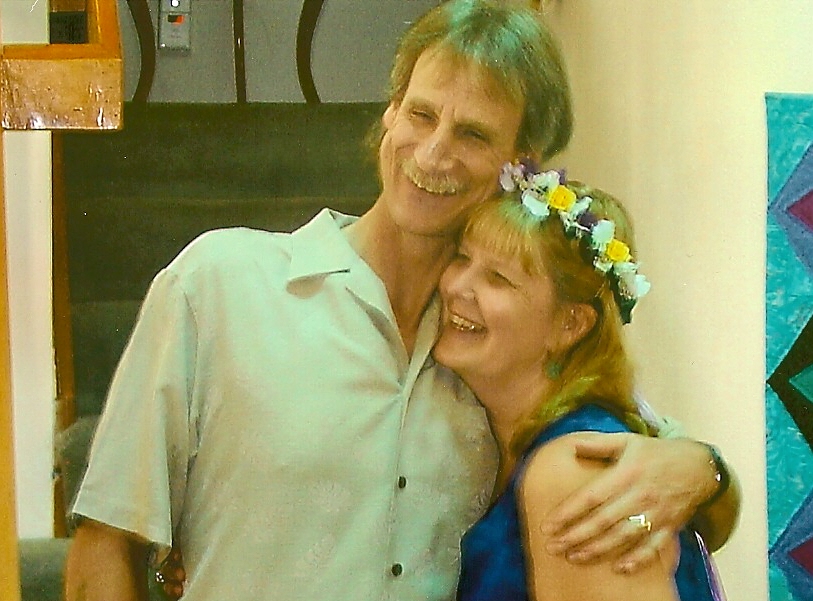
What a lucky day that was! We lived only ten miles apart, but would not have met without Match.com. We knew very soon that this was no ordinary love connection, and fifteen years later we never speak of divorce. We know that we’re going out feet first & together! And so I now have a very tough time imagining being single in my sixties, although I do know that ANYTHING CAN HAPPEN AT ANY TIME.

But during my own unique version of a midlife crisis in my mid-40s (I lost my husband, my career and almost my home), I found that I had also lost my faith in love, completely! It was time to do some work on myself to change that situation.

For further explanation of what worked for me in my 40s, please check out my second book: How To Believe in Love Again: Opening to Forgiveness, Trust, and Your Own Inner Wisdom

I also know now that the older you are when you choose your next partner, the more likely you will be able to choose wisely. Without the distorted lens of sex appeal or surface stuff, finding an appropriate life partner becomes about how much you enjoy spending “quality” time with your new love. My advice: stay picky and hold out for a deep and abiding love this time. They’re still out there!

Postscript: In my twenties my Mom kept asking me, “What do you have against men with money???”

Accepting the sadness of aging

MY PARENTS IN BETTER DAYS….

In one week my parents will celebrate their 68th wedding anniversary. I rejoice in the fact that they are still with us and together. I celebrate that fact, and yet the most difficult emotions I experience lately are watching them struggle and slowly fade away from their previous levels of clarity and vitality. This is so hard for them. They are still clear enough to understand what is happening to them. They have both lived long, positive and productive lives. We all must accept our eventual demise, and yet I resist.

I also know that resistance is futile. I know in my mind that acceptance of the realities of life and death are so fundamental, and make it all easier in the long run. But how can my mother die? How can my Dad, who has always been the wise teacher to so many, be at the end of his life? When I speak to him about this he says that as a botanist, he sees himself as an old Oak tree and he knows that old trees must die to make way for new seedlings. So philosophical and yet so sad.

My sister Diane Carter recently received recognition from Long-Term Living Magazine as one of the ten most influential people in the past 40 years in the field of long-term care. She gives her all every day to help my parents negotiate the American medical establishment and protect them from its many shortcomings. She understands what is happening to our parents and explains it to me. I know it is all real and true and yet I still hate it. This is the toughest reality I have ever faced, but face it I must.

Just about every person I know now is dealing with some version of this sadness. Perhaps the best we can do is to be there for each other as we face the end of an amazingly vibrant and caring generation, our parents.

Here’s another way to look at death:

”To fear death, my friends, is only to think ourselves wise, without being wise, for it is to think that we know what we do not know. As far as we can tell, death may be the greatest good that can happen to us, but we fear it as if we knew quite well that it was the greatest of evils. What is this but the shameful ignorance of thinking that we know what we do not know?”   – Socrates

Do Stereotypes About Aging Influence You?

Now that I’m in my 60s, I find adjusting to how others see me can be pretty tough at times. I still feel like the same 40 or 50-year-old inside, but looking in the mirror is sometimes shocking.

The first time a waiter at a restaurant turned to Mike and I and said, “Would you two like the senior discount?” I thought, “Is he talking to me?”

The way these internalized attitudes about aging affect us physically is a focus within a growing field in social psychology called “mind-body studies.” In the next few months, the World Health Organization will publish the results of a global investigation of ageism — discrimination toward elders, similar to racism and sexism. This report will address how we might fight ageist discrimination and prejudice. The report will also outline the myriad ways that ageist attitudes can and do affect the health and well-being of us and our elders.

I find research in this area fascinating! For example, researchers have found that “words used to describe older people, found in a database of historical American English, have become increasingly negative in the past 200 years, possibly because aging has come to be seen as a medical condition.” Positive words like wise, sage, accomplished, learned, creative, insightful have increasingly been replaced with declining, dependent, senile, dying, decrepit and incompetent.

When these negative age stereotypes are used against an elder population, subjects show a decline in performance in memory tests and other areas. Those exposed to positive age stereotypes showed improvements. On so many different tests, findings suggest a strong correlation between exposure to positive stereotypes and an improved view of Self as we age.

This reminds me of one of my favorite lifelong sayings:

“Language is practical consciousness.” -Karl Marx

Carefully analyze the words we use to describe ourselves and others! The way we honestly see ourselves and others has meaning. How do others refer to you? Does that impact how you see yourself?

As any wordsmith will tell you, WORDS DO MATTER.

As Psychologist Becca Levy put it:

“Stereotypes about aging are so pervasive. They can easily be assimilated from the surrounding culture, become a part of an individual’s self-definition, and ultimately affect how that person’s body operates — a process called “stereotype embodiment.”

Dr. Levy has linked negative aging attitudes to such measures as walking speed in elders, a greater likelihood to develop dementia, and even a reduction in life span. Want to learn more about this important area of research?

http://www.sciencenewsdigital.org/sciencenews/august_3__2019/MobilePagedArticle.action?articleId=1507169#articleId1507169

A LITTLE BUDDHIST HUMOR…

Finding Health in an Unhealthy World

In a world filled with glaring contradiction, unfairness and stress, where can we turn for comfort? Too many of us turn to food, pharmaceuticals and other forms of self-medication. The possible distractions are endless, but many are unhealthy or even self-destructive.

New research is showing another alternative:

Spending a minimum of 2 hours in the great outdoors (parks, green space, your own backyard) every week boosts both your physical and mental health.

What roles do nature and exposure to natural surroundings play in improving our health? We know that spending time in nature makes us feel good, but does it measurably affect our well-being? Study after study has shown the answer is yes.

In fact, social determinants of health—including where we’re born, live, work, play and age collectively have a far greater impact on our health outcomes than the healthcare delivery system. Healthcare services account for just 10% of longevity, while social and environmental factors account for twice that at 20%, your genetic makeup accounts for 30%, and lifestyle choices and behaviors a whopping 40%. 

Ever since I left suburbia and moved a lot closer to a natural setting, I have been changing. My mental health has improved with ever increasing mindful meditation and peace. My vigilance and fear have gradually diminished, and yet I struggle to explain how this move has changed me. I only know when I return to cities I notice a difference between me and those who struggle with traffic, congestion and overpopulation every day.

Now we have new research proving what I have learned on my own. Sure, this may all seem like a no-brainer, but if you are looking for a new form of tranquility, accept the obvious and find comfort in nature. It’s free and clean!

How our self-image must change as we age

Somehow I never pictured myself with oxygen equipment. For most of my life I have felt strong, healthy and very self-sufficient. That was how I saw myself as I traveled the globe, collecting sometimes difficult but important life experiences and M.A. degrees.

Life certainly has an amazing way of surprising us!

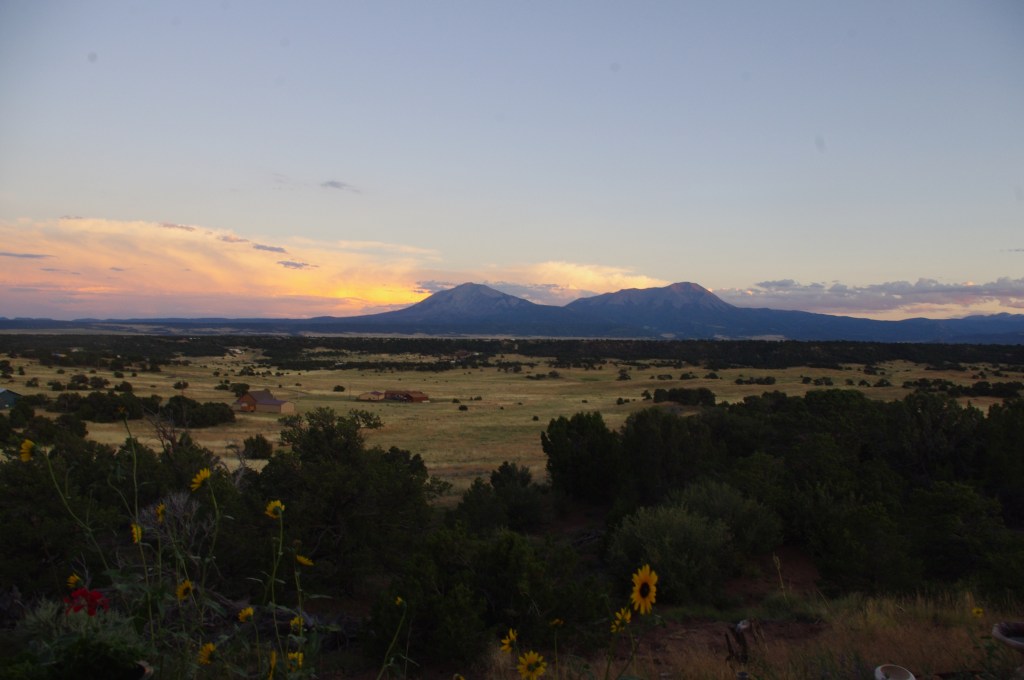
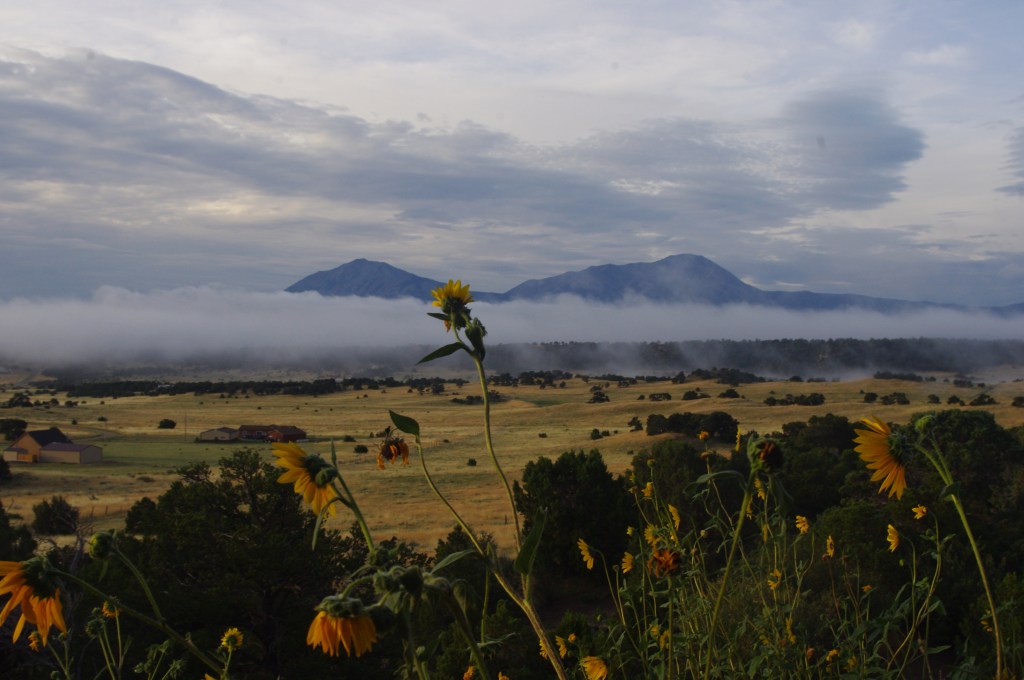
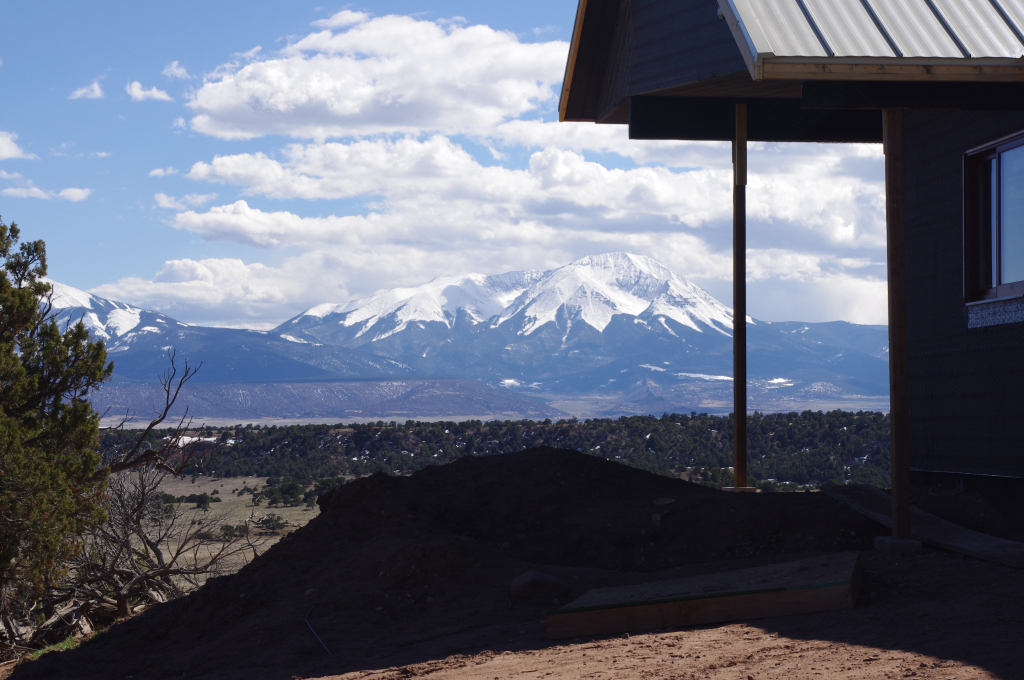
The view from our new solar home!

Ever since I moved down to southern Colorado in 2014 and then up to seven thousand feet in 2015, breathing has been a struggle, leading to many doctor’s appointments, cat scans and even a recent lung biopsy. No, I don’t have cancer, just damaged lungs from decades of bronchitis and bad air. What a great thing to find out as we settled into our forever home near the Sangre de Cristo Mountains.

I fought hard for a couple of years, not accepting that I needed oxygen full-time to live a normal life. I thought I would eventually adjust to our thin air, using all of my inborn stubbornness. If you know me, you know how stubborn I can be! Accepting reality has never been my forte. But finally, twenty tests and a sleep study later, I have resigned to my new reality. I will probably be on oxygen for the rest of my life.

Acceptance releases everything to be what it already is!

Some say just move to a lower elevation. My answer is a resounding NO! Living away from cities, listening to the marvelous natural silence and looking at the mountains constantly has changed me completely in ways impossible to describe to others. I feel so content, safe and grateful here in spite of my breathing struggles.

I know what’s happening in the “world” but I can also completely ignore it here, close to nature and what matters most to me…

How our definition of “success” changes throughout our lifetime

I am sure most of us have been in search of ways to “succeed in life” ever since we became conscious human beings. What a great goal, and yet we have been constantly trying to hit a moving target. How many times have you re-defined success in this lifetime?

In my 64 years on this planet, this re-definition process has divided into three main stages of life:

In our early years we are simply busy learning all that we can to be able to succeed in traditional ways like finding a dependable mate and a career of some kind. This stage tends to error on the side of self-consciousness and appearances, focusing too much on what others think we should do.

In our middle years we develop our career and perhaps a family, maybe buy a home, and strive to feel well-established and secure.

Midlife Crisis: I for one experienced a major midlife crisis around age 49. The bottom fell out of all my best-made plans, with a divorce and then job/career loss. Other forms of midlife disillusionment may include serious illness, the death of a loved one, or some combination of these various misfortunes. This may compel us to question many of our previous assumptions about how we have defined our own life success. At this point we might ask:

Will I feel like a success in my life if I continue down this path?

Will I be content in the end if I maintain these priorities?

Aging is nature’s way of answering these questions for us, slowly but surely. For me, my emphasis on career fell away quickly when I realized that my highest priority was finding one genuine, honest, loyal love in this lifetime. After that I became a writer and author, best known as the “Midlife Crisis Queen” online. Then my husband and I decided to choose an entirely different lifestyle by moving to rural Colorado, away from most city stress.

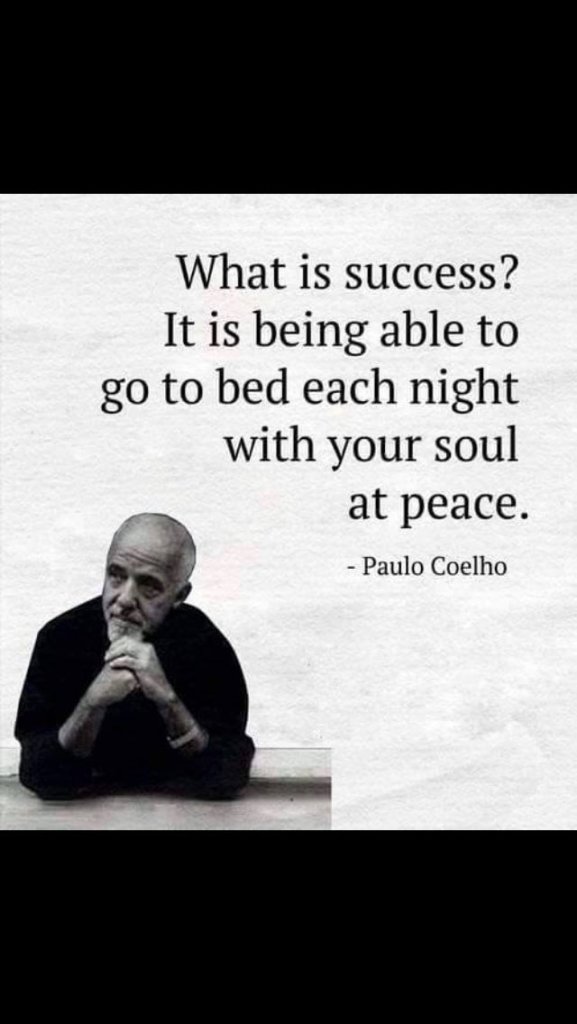
After five years of quiet meditation in the peace of the Sangre de Cristo mountain range, I find I have learned much more about how easily I was convinced to live someone else’s life in the past, making many mistakes in my previous priorities. Now I know, the best things in life aren’t things. And, in the end, it all came down to this:

The hardest battle you will ever face in life is to be no one but yourself, in a world that is trying its hardest to make you like everybody else…