I spent a couple days with my elderly parents this past weekend. It was great fun seeing their old friends from decades ago, and reminiscing with them about our childhood. I LOVED my tap dancing lessons in third grade and running around the miniature golf course at Renfro’s in Emporia Kansas. Good times!
But I would be remiss if I did not also share some other observations I made while hanging out with Mom and Dad. On the second day I felt both of their disappointments with life, and not just with the physical failings which inevitably come with advanced aging.
Disappointment comes with life and the deeper you dig into life, the more likely you will eventually see how disappointing the human race can be.
When I look at my own life, I find the human race disappointing in its lack of intelligence and loyalty. I abhor its cruelty and just plain craziness. My greatest disappointments have been with friends and lovers that I thought I could trust and their failures to be true friends. I believe the world could be such a better place if we led with intelligence and loyalty instead of judgment, selfishness and cruelty.
But in the end, we all may find disappointments with how things have turned out. The trick then is to cope in some healthy way with those disappointments by giving everyone a break. After all we are all only human, frail and flawed as that condition implies. I know I have also treated others badly at times and I apologize now for my human state. As we age, coping with disappointments is our job. One of my goals is to forgive everyone including myself by the time I die.
One great tool I have found in reaching this goal, is replacing disappointments with GRATITUDE:
In the past one hundred years, Americans have witnessed the greatest increase in life expectancy and longevity in human history. In 1935, when Social Security became a government program and established the retirement age at 65, the life expectancy for American men was 60 and for women, 64. Those born in the early twentieth century were not expected to live past age 65, and most didn’t. Life expectancy in the United States increased a full 20 years between 1930 and 2010. The average American today who lives to be age 65 is expected to survive well past 80.
U.S. Life Expectancy
at Birth, 1930–2010
Birth Year
Both Sexes
Male
Female
2010
78.7
76.2
81.1
2000
77.0
74.3
79.7
1990
75.4
71.8
78.8
1980
73.7
70.0
77.4
1970
70.8
67.1
74.7
1960
69.7
66.6
73.1
1950
68.2
65.6
71.1
1940
62.9
60.8
65.2
1930
59.7
58.1
61.6
(Source:
National Center for Health Statistics, National Vital Statistics Reports,
http://www.cdc.gov/nchs)
It is difficult for most of us to fully comprehend how much the average life span has increased, even just in our own lifetime. The average lifespan for a man born in 1900 was only 48 years and 52 for women. It may help to recall how young most of our great-grandparents and grandparents were when they died. The dilemma becomes, what to do after we stop working full-time?
Senior Binge Drinking on the Rise
From the recent data, it sounds like binge drinking of alcohol is gaining popularity among Americans over 65. Now there’s something to do! Binge drinking is defined as consuming five or more alcoholic drinks at one sitting. For this study, data was collected on nearly 11,000 U.S. adults 65 and older who took part in the National Survey on Drug Use and Health between 2015 and 2017. Of those, 10.6% had binged in the past month, the study found. That was up from previous studies. Between 2005 and 2014, between 7.7% and 9% of older Americans were binge drinkers. Blacks and people with less than a high school education were more likely to do so, researchers found.
Elder Suicides Continue to Increase
Another bit of data which came out last year from the Centers for Disease Control and Prevention, showed that suicide rates for women 45 to 64 increased nearly 60% between 2000 and 2016. For men of the same age the suicide rate increased almost 37% over that time. Overall, suicide rates in the U.S. increased 30% between 2000 and 2016. A separate CDC analysis released this month found that suicides have risen in almost every state.
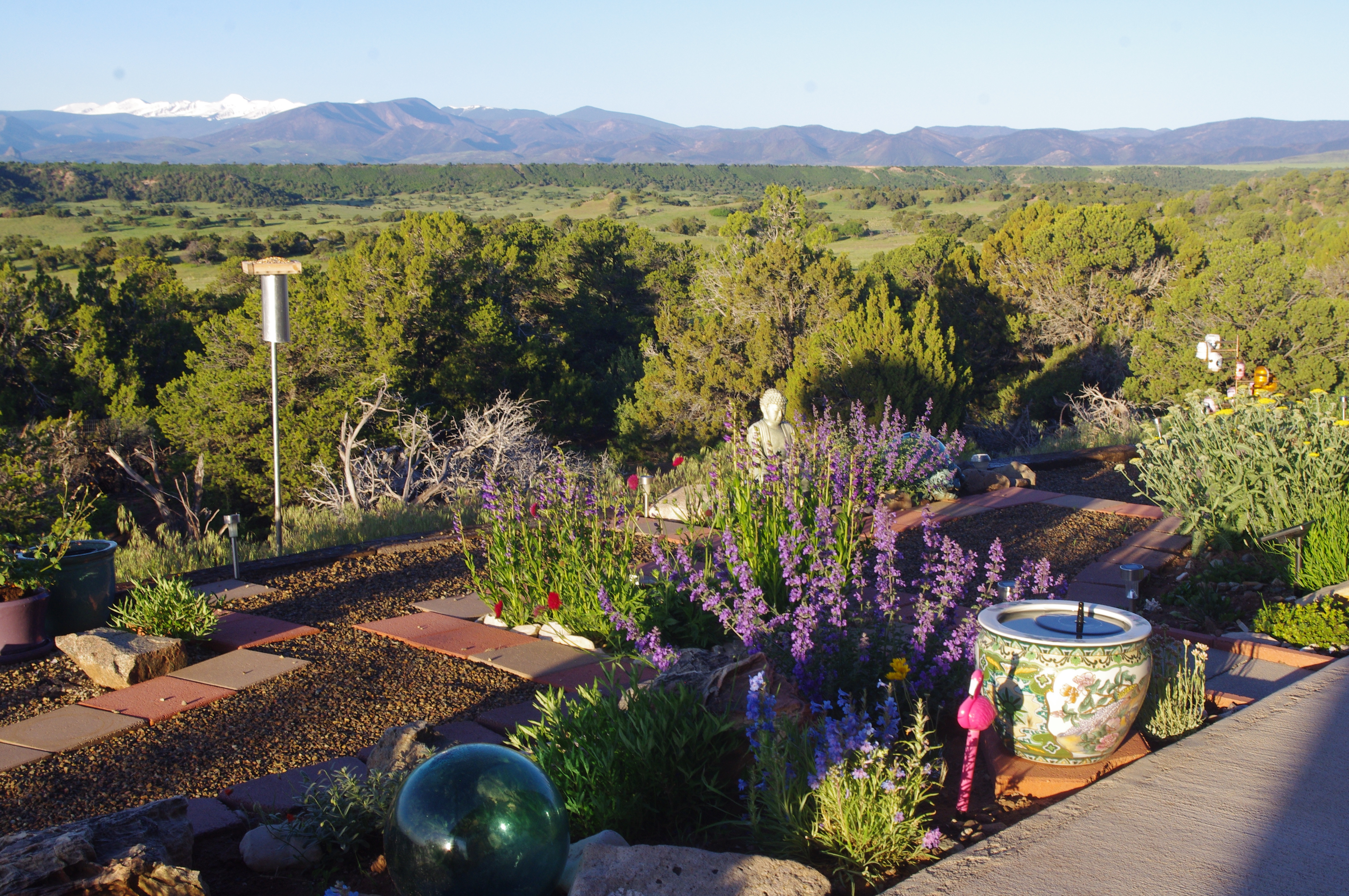
My new “Sky Garden,” built by my brother, Mike and me!All in our mid-60s!
Were You Ever Taught How Not To Work?
It seems safe to say that many of us aren’t finding positive ways to enjoy our “golden years.” I think this is partially because we were never taught what to do with ourselves beyond working all day. In fact we never learned to value “not working” in productive, positive ways. The learning curve has been a little steep for me, and I worked freelance for a decade before we moved here to retire. How do we learn to love and value non-moneymaking endeavors?
I have learned from Mike the value of having a myriad of healthy avocations. I enjoy cooking, gardening, photography, meditation, reading and writing books, movies, yoga, weather research and other forms of freedom and creativity, but first I had to let go of my early lessons in extreme “productivity.” It took me quite a while to feel really OK about enjoying my hobbies thoroughly. I had to remember that no one was watching or judging me.
Why don’t you try doing what makes you feel creative and happy perhaps for the first time in your life. Experiment. Mess up sometimes. That is how we learn the most about what gets us going.
Learn how to take advantage of that extra decade or two you have available to you for the first time in human history!
This and many other lessons are available in my book:
After changing just about everything in my own life around age 50, I spent ten years studying the psychology of midlife change. In order to pass that learning on to my readers, I wrote this book. I had no idea back in 2004, when my own midlife mayhem began, that I was experiencing a perfectly normal and even healthy response to so many midlife challenges. I soon learned: Midlife is a new rite of passage for the human race, beginning with boomers.If you are willing to take some risks, you can change just about everything. However, some serious soul surgery and personal change will be required.
If you would like a paper copy please contact me at: MidlifeCrisisQueen@gmail.com
Just finished watching the new film “Five Feet Apart” about teenagers with Cystic Fibrosis, and as one who has my own difficulties breathing, I can heartily recommend it!
Since I have been pretty healthy my whole life, I wonder why at around age sixty various systems have begun failing. I even feel sorry for myself when I cannot enjoy the higher elevations anymore. At present I wait to see the results of a recent lung biopsy. Why me? Why now?
But when I see a film like this, I can only feel super lucky to have been all the places I’ve been in my 64 years, had all of those great and not-so-great relationships, and done pretty much whatever I wanted to.
What can you say about two teenagers who fall deeply in love for the first time in their lives, and aren’t supposed to touch each other? This film is tastefully done, with great dialogue and music. It makes you think about life and death and why we are all here. See it. You won’t regret it!
I find I have nothing to say at the moment. Have you ever had to wait to see if you have cancer? That’s where I’m at. I had a Petscan Tuesday afternoon and of course there seems to be no doctor who isn’t on vacation or just “off” who can call me and tell me the results.
What is a Petscan? Mayo Clinic:
A positron emission tomography (PET) scan is an imaging test that helps reveal how your tissues and organs are functioning. A PET scan uses a radioactive drug (tracer) to show this activity. This scan can sometimes detect disease before it shows up on other imaging tests. The tracer may be injected, swallowed or inhaled, depending on which organ or tissue is being studied. The tracer collects in areas of your body that have higher levels of chemical activity, which often correspond to areas of disease. On a PET scan, these areas show up as bright spots.
A PETscan is useful in revealing or evaluating several conditions, including many cancers, heart disease and brain disorders.
American medicine at work. I ask you, could our system be anymore fucked up??? I truly doubt it… So I meditate, I sleep, I listen to great music and try not to think about death, and what it might mean to those who truly love me.
A couple strange things about Petscans. Did you know that the radioactive isotope they put in your veins is so strong that it can impact anyone in the room with you? Really! For a minute I thought the tech who put it in was kidding! And then there’s that cocoon they put you in inside of that tiny hole. Close your eyes and you hardly know you’re there unless your nose starts to itch, badly. But I survived all that and now I wait because no doctor is willing to take the time to give me a call…
Postscript: A small spot of “unusual cell growth” was found in my lungs. Further tests next week…
I’ve been feeling a little lost since the summer solstice last week. We had company and while they were here my puppy Rasta began to look very ill. It turned out to be eye problems, with probable glaucoma in one eye. He was barely moving and looked terrible. I had no idea how painful glaucoma can be! We are now giving him painkillers and thinking about taking him to a dog ophthalmologist. (Who knew?)
This was all so traumatic for me. Rasta and I are very close, and in a place where I have so few real friends, I depend on him so much. Since we lost Charlie our cat just a few weeks ago I have been thinking about death too much I guess. Just about everyone in my family is elderly and have a number of health challenges including myself. When did my whole world change? When did I begin wondering when my dog, my family and I will die? Nice summer solstice theme, huh? I do feel fortunate to have had my parents and siblings for so much of my life…
I often am surprised to find out how old I am. How about you?
The past few weeks since my brother John left, have been quite trying. First I got bronchitis, then our kitty Charlie died, and now Mike has bronchitis. When it rains, it pours! Then yesterday I took a bad fall onto concrete directly on my knee. These kinds of experiences leave me wondering “What’s next?” but in a bad way…
Neither Mike nor I had ever had to euthanize a pet before. We couldn’t believe what was happening at the time, but Charlie was suffering so much with no solution but death. And yes, Mike had to bury Charlie himself down below our home. It seems we have started our own pet graveyard.
The thought that stuck with me after watching our cat first get a shot to help him relax, and then one to help him let go of life, was exactly how close we all are to death at any moment of our life. It hit me with radical clarity how we spend our whole life misunderstanding and fearing that moment of death, and then it is over so quickly. The line is truly fine and gloriously final.
Then my mind continued to the thought: Most of our conceptions at the beginning of life were quite haphazard. How many of our deaths will be the same?
That is why I love spending time in my garden right now. The silence except for the bird calls, the morning chill, the bright flowers that pop up one morning and leave just as suddenly. This is the natural cycle of life and death on planet earth. This is what we signed up for when we were conceived. We come, we experience and we go.
“We’re all just walking each other home…” – Ram Das





 Adventures of the NEW??? Old Farts