Are all illnesses caused by our minds?

You cannot control how other people receive your energy. Anything you do or say gets filtered through the lens of whatever they are going through at the moment, which is NOT ABOUT YOU.

I met a new person this week who has me quite perplexed. After speaking to her for only a few minutes, she offered me quite a bit of advice. She diagnosed my problems as, “You need to get out of your head to attract good health and healing.” Her swiftness and certainty was disturbing and mildly annoying considering the fact she does not know me at all. She apparently believes all physical ailments are simply a manifestation of emotional problems. Solve those and the illness disappears. This left me wondering, if I told her I have lung cancer, would she recommend better counseling?
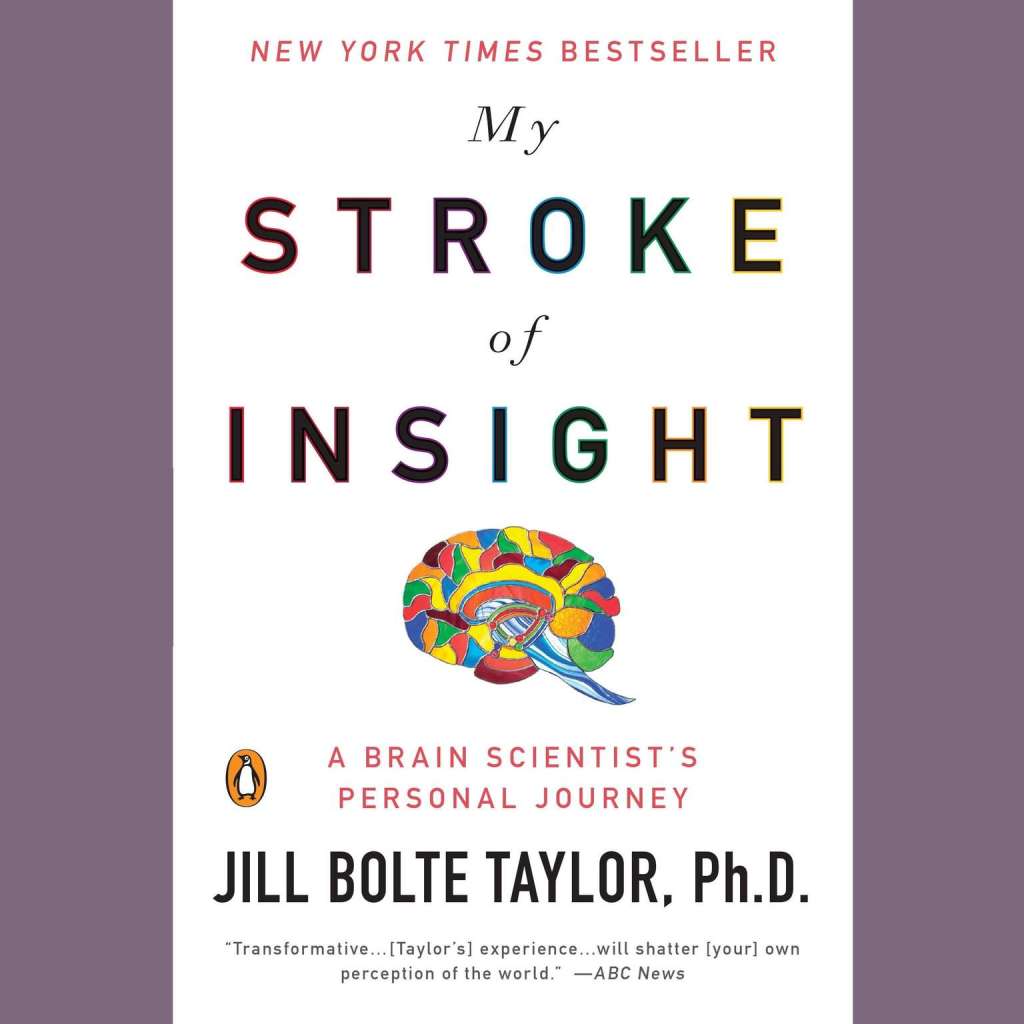
To deal with my confusion I spent some time today talking with my favorite health professional about my exchange with this self-defined “healer.” She first emphasized to me that there is no certainty in the field of medicine. That is why they call themselves “practitioners.” Even what may seem like a perfect diagnosis after months of testing and analysis still has no certainty. So for someone who describes herself as a “healer” to decide after just a few minutes of conversation that she knows how to “fix” me is absurd. That same health professional I once told to “Walk a mile in my shoes!” when she suggested that she knew how it felt to be constantly out of breathe while dealing with a severe head injury. Since then my friend has read and recommended the book: “My Stroke of Insight: A Brain Scientist’s Personal Journey” by Jill Bolte Taylor Ph.D., who experienced a massive stroke at age 37. Now I believe my friend has a much better understanding of what I deal with every single day.

Blaming the victim?

I never forgot an image from my counseling internship at a rehab hospital 25 years ago. I went in to speak to an elderly lady and the first thing she said was, “Why is this happening to me? Doesn’t God love me anymore?” In other words, what did I do to deserve this illness? First of all, we all will die of something. I do not believe we “cause” everything that happens to us. Did Jill Bolte Taylor, a Harvard-trained brain scientist, cause her own stroke? Did I choose or cause myself decades of bronchitis and extreme breathing difficulties? Did I somehow choose to almost die numerous times from hypoxia? What about genetics, air pollution, and my choice to live a stress-filled life in a number of foreign countries?

What do we hope for when we make ourselves vulnerable to others?

What I need from others when I tell them about my difficulties in breathing and concentration is caring concern, non-judgment and, most of all, compassion. I crave exactly what David Richo lists in his book “How to Be an Adult in Relationships.” Drawing on the Buddhist concept of mindfulness, David recommends we offer others our attention (observing, listening, and noticing the feelings at play), acceptance of them just as they are, appreciation of their gifts, limits, longings and affection.

After a lifetime of carefully observing how others respond to pain, I was disappointed with this recent acquaintance. Some run away from pain or change the subject. Others immediately try to “fix” me. When they suggest that they have simple answers to complex problems I have been dealing with for decades, I know they do not know of what they speak.


Lessons in disability & compassion in action

Oh the things we can learn when accidents happen. After a lifetime of glorious health, I am now learning how challenging physical disabilities can be. From a healthy 60 year old a few years ago, I have become breathless and often confused. That popular phrase “I can’t breathe!” is a daily reality for me now and these difficulties have led to numerous falls and concussions. I am now working with a pulmonologist and a neurologist for lung disease and post concussion syndrome that causes great dizziness at times.

What does illness and suffering teach us? Compassion for others who suffer. The first time I spoke directly to Mike (my husband of 16 years) after meeting him through Match.com, he told me he suffered from Chronic Fatigue Syndrome (CFS). At that time I hadn’t the slightest idea what that was or how it might impact our lives. At first he tried to hide some of his symptoms from me, avoiding me when he felt especially bad. It was only later that I learned the crushing cruelty of this at-that-time undiagnosable disease that haunted Mike for decades. He went from a strong 35 year old who could run up mountains, to chronic fatigue that worsened with physical activity, but did not improve with rest, difficulties with memory, focus, concentration and dizziness that worsened with any movement from lying down, sitting or standing. Imagine how depressing that would be for you. And worse, few physicians would believe him. They showed no compassion and would simply say, “You’re just depressed” or “See a psychiatrist.” From this, Mike learned deep compassion for those who suffer with unexplainable illnesses and disabilities. This quote from Gandhi describes Mike’s life perfectly now:

“The best way to find yourself is to lose yourself in the service of others. The difference between what we do and what we are capable of doing would suffice to solve most of the world’s problem.” – Mahatma Gandhi

One of my favorite sayings has been this for decades:

and Guanyin, the Chinese Goddess of Mercy, my daily reminder of compassion in action.

These are some of the most important lessons we can learn in life, and we are learning them well

Please prepare now for unexpected outcomes

I’m sad to learn that my friend Rena Kaplowski died yesterday, even though she went the way she wished, in her sleep. Her passing has been a bit of a wakeup call for me and perhaps should be for millions of us. Rena had just turned 67 when she suffered a devastating stroke. Weeks of unconsciousness and intensive care followed, and she had just been moved to a rehab center when she passed.

Rena had not signed an advance directive form like Five Wishes which allows each of us to guide important medical care decisions that might be made if we should become seriously ill, decisions like whether we would like to be given life-support treatments. You may think that your loved ones and doctors will know what you want when you are very ill, but in reality, everyone has different wishes and it’s important to make them clearly known. Expressing your wishes in an advance directive helps to empower your family and other loved ones, and your doctor to make the best decisions when the time comes, and avoid disagreements about what to do next. Completing a form like “Five Wishes” can help you and your loved ones gain peace of mind around difficult end-of-life decisions.

The best time to fill out an advance directive form is now, before you face a health crisis. Because life is unpredictable, it’s best to be prepared. Anyone over the age of 18 can use the “Five Wishes” form. It is also a good idea to review and possibly update your Five Wishes advance directive when you experience significant life events like marriage, divorce, having children, or being diagnosed with a major illness. “Five Wishes” was written with the help of the American Bar Association’s Commission on Law & Aging and is used widely in all 50 states. Federal law requires medical care providers to honor patient wishes as expressed.

Remember, you will always make your own health care decisions if you are able to talk with your doctor and understand what is being said. This directive only takes effect when you are too ill to understand or communicate. If you are unable to make your own decisions or speak for yourself, an advance directive and the person you chose to be your healthcare agent, can help direct your care with your doctor.

It always feels good to do good, from homeless to a home in southern Colorado

Around a year ago, my brother-in-law drove down to Sedona Arizona to pick up my brother John. He didn’t drive and he was at the point where he could no longer live in a lean-to near Oak Creek. The weather was too cold in the winter and too hot in the summer, and the creek came up so high sometimes that it was too deep to get across for him to get into town. John has a bad case of emphysema and terrible lower back pain. He thought he would move up here to take care of my Mom after my Dad died last year.

A few weeks after moving in with Mom, he realized that that arrangement would not work long-term so he called me in Walsenburg. As luck would have it, a close friend had a house in La Veta that was empty for the winter, so John moved in to caretake. When spring arrived, my friend decided to rent that house out so John had to move, but where? He didn’t want to live with us. We have a thing about “being a burden” in our family, so he found what he thought would be a temporary place in a local motel. Being the perfect renter, the management of the place soon wanted him to act as night manager, but John wasn’t interested in that. He just wanted a small place of his own.

After he moved to Walsenburg we made sure he signed up for affordable housing asap, but were truly surprised when they found him his own apartment this past month. It is clean, quiet and extremely affordable, but had no furniture. Soon after that we ask our friends if they had any extra furniture. In no time John had a recliner, a couch, a nice rug and a bed. John is a humble man who does not expect much from those around him. He just wants a nice place out of the rain and snow to listen to NPR and play his guitar. Now he has that for the first time in years. We couldn’t be happier and we almost got him to smile!

Is our life better than previous generations?

I suppose the thought that stays with me after reading about my ancestors’ journey through life, is how difficult their lives were compared to ours, and yet so many of us struggle with our own challenges today. What has changed between previous generations and ourselves?

‘… and which is worst of all, continual fear, and danger of violent death; and the life of man, solitary, poor, nasty, brutish, and short’ (Leviathan, i. xiii. 9) — Thomas Hobbes, 1651

I am certain that our lives today are so much easier in so many ways compared to my great grandmother and grandmother. In fact, let’s face it, most of us are living much better than most in human history.

I feel so lucky to be alive today! How do we appreciate these differences without undervaluing our own daily challenges?

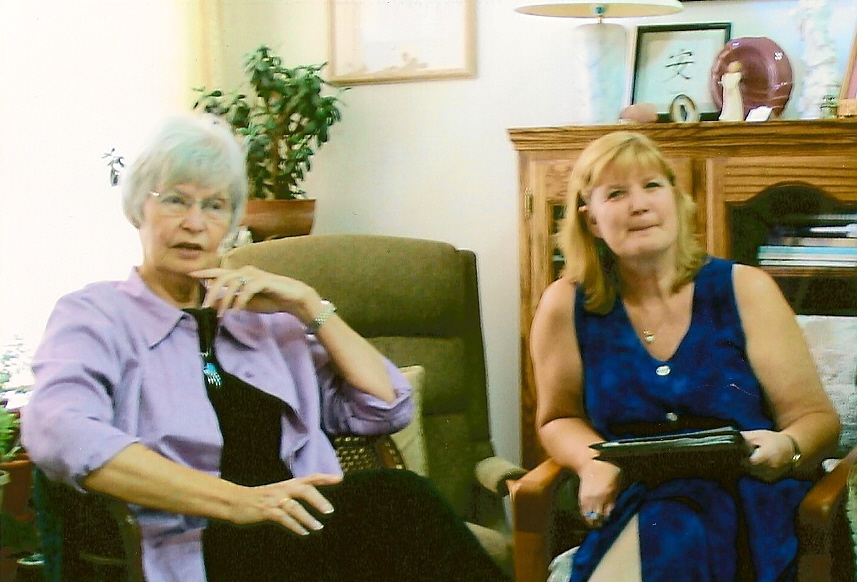
Mom and I at my wedding in 2005

For example, I know there were members of my mother’s family who suffered from mental illness and dementia in their later years. So much was not known about these illnesses fifty or one hundred years ago, and with misunderstanding came criticism, stigma and heavy judgment. My Mom’s first cousin was sent to the Kansas Mental Hospital where he killed himself by consuming pesticide!

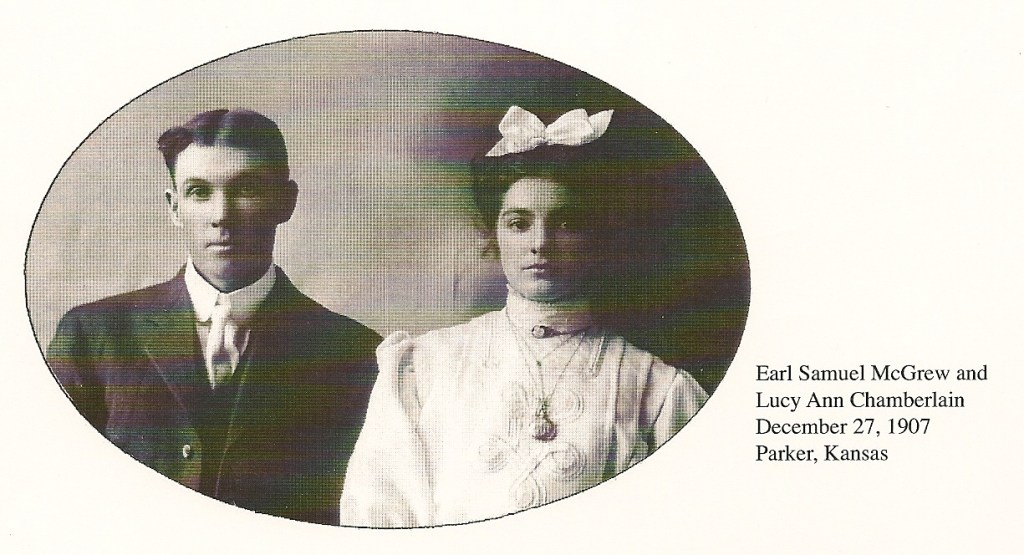
Dementia sent my Great Grandfather McGrew to the Kansas mental hospital at the end of his life…

Today there is counseling and many new drugs to ease our physical and mental pain. There are people like Stephen Levine to help us accept ourselves more fully instead of torturing ourselves with harsh self-judgment. I know I would not be half as healthy and happy as I am today, if I had not had some excellent counseling in my thirties. Since I suffer from a shortness of breath, I wonder what happened to others back then with lung disease. And what about head injuries?

Do you see how lucky we are to have a better education, better science education and many more options because we were born in this age? Have you seen that new TV commercial that says:

Do you know anyone with polio or smallpox? Vaccines work.

It is so hard to watch so many suffer because they refuse to believe that we HAVE MADE PROGRESS! Our lives can be better through education, science and yes, even chemistry. That some refuse to use these tools to better their lives is a travesty and a human tragedy of personal choice…

Can we let go of a lifetime of pain & suffering?

I’m now witnessing first hand a concept from psychology that I have always believed and yet still wondered about. I am observing in those near death what seems to be an endless outflowing of anger and bitterness at the end of life. Both of my parents were what I would call uptight people. My Dad was definitely an angry controlling person and both of my parents could be called obsessive about getting everything ‘right’ and keeping up appearances for others. Everything had to appear ‘proper.’

Instead I observed that my Mom took mountains of criticism from my Dad throughout their nearly 70 year marriage. She rarely got angry or even replied to this barrage of constant critique. She would drink quite a bit of wine, complain to us, and then simmer in bitterness and rage, while she continued to devote her entire life to helping him reach his goals. The tension in our home was palpable. As you might guess, his kids were collateral damage, each absorbing their share of criticism, anger and love that was always quite conditional.

“Letting go of our suffering is the hardest work we will ever do.” — Stephen Levine

Where does all of that bitterness and anger go in the long-term? Can we resolve these tension in some way before we die? I am wondering about this for my Mom, who is extremely depressed and confused at age 88, after the death of my father last year.

At this point I will yield the floor to Stephen Levine, an American poet, author and teacher, well-known for his work with the terminally ill and/or those deeply affected by loss. Stephen chose to work with this population because they were most ready and even sometimes eager to confront their own deepest misery and, by doing so, heal life-long burdens of self-disgust and punishment. Stephen found that by first acknowledging our deepest levels of pain and suffering and then confronting it with love and compassion for Self and others, most found a way to finally let it go. What a marvelous burden to release before death. In a few cases, Stephen found that this gigantic release of emotional pain was so healing that his patients found remission from their cancer or other life-threatening illnesses.

He felt that our minds fight with our hearts, fear versus love, but by accepting all our past pain and suffering, the sensation in our heart may be that it will burst.

To this Stephen responds: “Let your heart break. Let go of the suffering that keeps you back from life. Now your heart is so open and the pain right there. You are doing now just what you need to do, feel so much compassion for yourself and what you are going through…”

Stephen Levine died in 2016 just south of here. To learn much more about him and his work please consider reading his books. My favorite is “Healing Into Life and Death.” Here is a link to his webpage and his wife’s words at his death: https://levinetalks.com/

My experience has been that unless we commit to major emotional change in ourselves, all of the hostilities and suspicions we have held down within our psyche for our entire life, do come out in the end. Sometimes in some awful ways. For me, this type of emotional healing has taken some great re-parenting therapy through counseling and decades of learning and re-learning deeper levels of self-love and acceptance. This process continues as my parents leave behind their earthly presence.

Sometimes being with my Mom is too much for me, and I must respect my feelings about this. My Mom seems so lost in the contradictions of her life. Feelings of love, anger, pain and dementia confuse and overwhelm her such that she can see no way out. I just wish she could have come to some resolution and healing with Stephen by her side.