What, Me Worry?

Ever since I wrote this post about taking a worry vacation, I’ve been thinking more about why we worry. Of course there is a reality to why we worry. When I watch the tiny birds outside my window, I think about their worries. They need to be ever vigilant or some other animal might eat their food or even eat them!

In the history of our ancestors on this planet, it would seem the hyper-vigilant of the species must have survived longer than the lazy ones. But in this day, I have very little to worry about.

I realized yesterday that I live in a time and a place where I have less to worry about than just about anyone else in the history of planet earth. I’m warm, I’m safe, I’m well-fed and I’m happy. Yes, many of us have hit the sweet spot, and yet still we worry.

I wonder what percent of why we worry is based on completely faulty reasoning. Some say we worry to feel in control because our attention is turned to solving a certain problem. While we think we are solving the problem, we have the illusion that we have control over it. Worry can be reinforcing. We think due to the fact that we worried properly, we got the desired outcome.

The faultiness of this logic became far too obvious to me when I recently learned that I could not live without supplemental oxygen. It had never occurred to me that I would ever have trouble breathing. I had maintained a healthy lifestyle at 5,000 foot elevation and certainly never smoked. Then, after a few years living at 6,500 -7,000 feet, a doctor observed that I might be hypoxic. Very observant. But it still took a couple years and too many different medical tests to prove to me that I needed to live on full-time oxygen.

See how that theory about worrying properly worked out? Ah humanity! How we labor to convince ourselves that we’ve got this, and yet we still all have to die of something…

Since then I have tried to keep my heart open to change, because it’s coming whether we like it or not. These are my watchwords now:
“Even in seemingly dormant times, we are in transition. Losses and gains are in constant play. We are the change-agent, and we are changed. Even without toil, we transform. So wisdom advises us to open our hearts to transition; to honor fully what is passing, to learn from all that unfolds, and to welcome what arrives at our door each day with courage and curiosity.”

Can you risk a whole afternoon without worry?

Sometimes it seems like I was born with a lot on my mind. Starting with the “terrible twos” I have been perpetually asking why. I think too much, I worry even more, and I can still never figure out what may happen next. I guess I was raised to expect the worst, or else this is simply the human condition – more brains than we know what to do with!

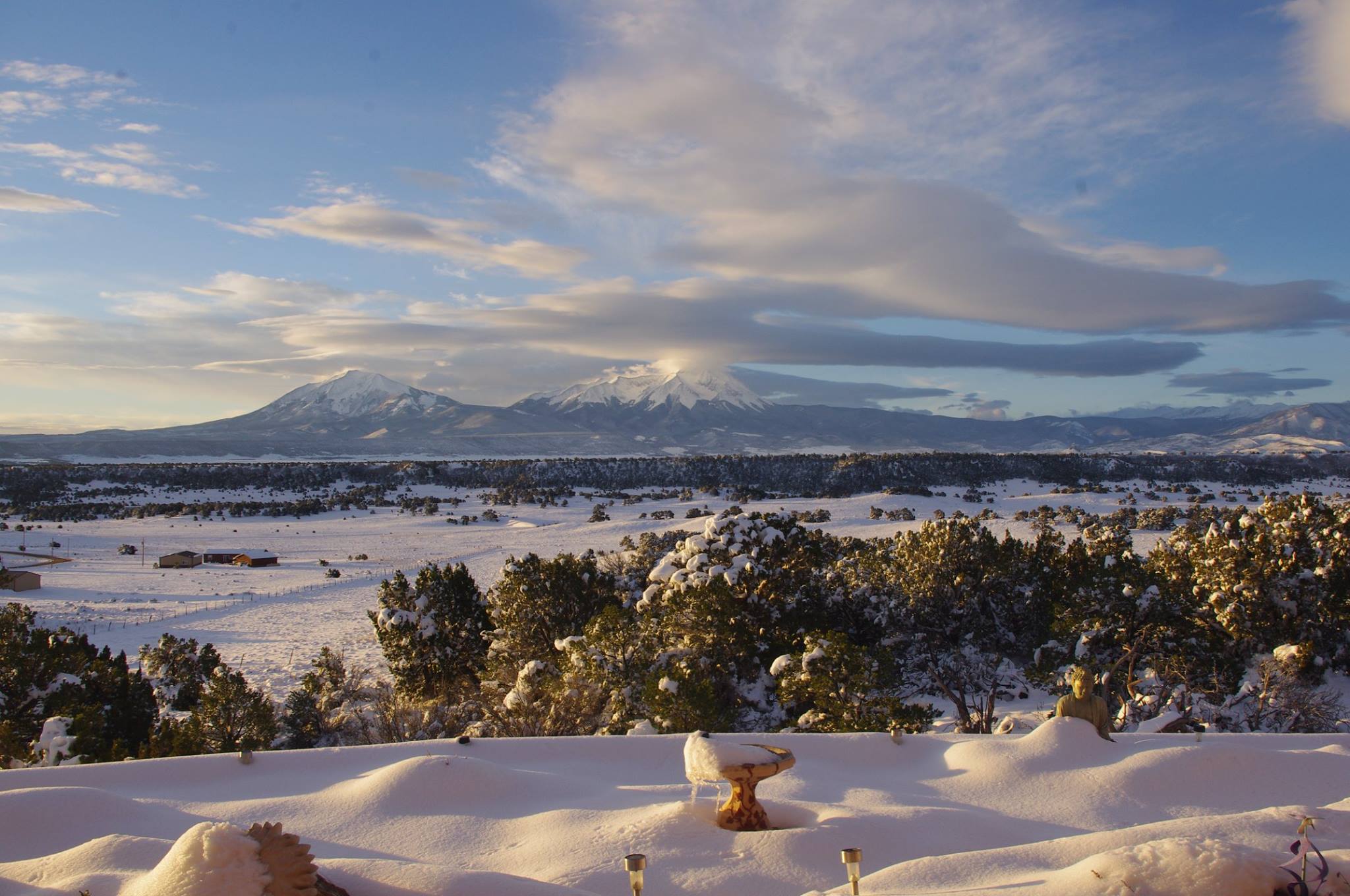
So on this blissfully relaxed snowy day, miles from almost all human beings, I wonder what might happen if I stop thinking and worrying and embrace the peacefulness of this moment in time.

Should I risk this level of non-vigilance? What might happen if I stop thinking for a while? What if I feel as free as the falling snow for just one afternoon? There’s always tomorrow to get back to my worries…

Courage is the mastery of fear

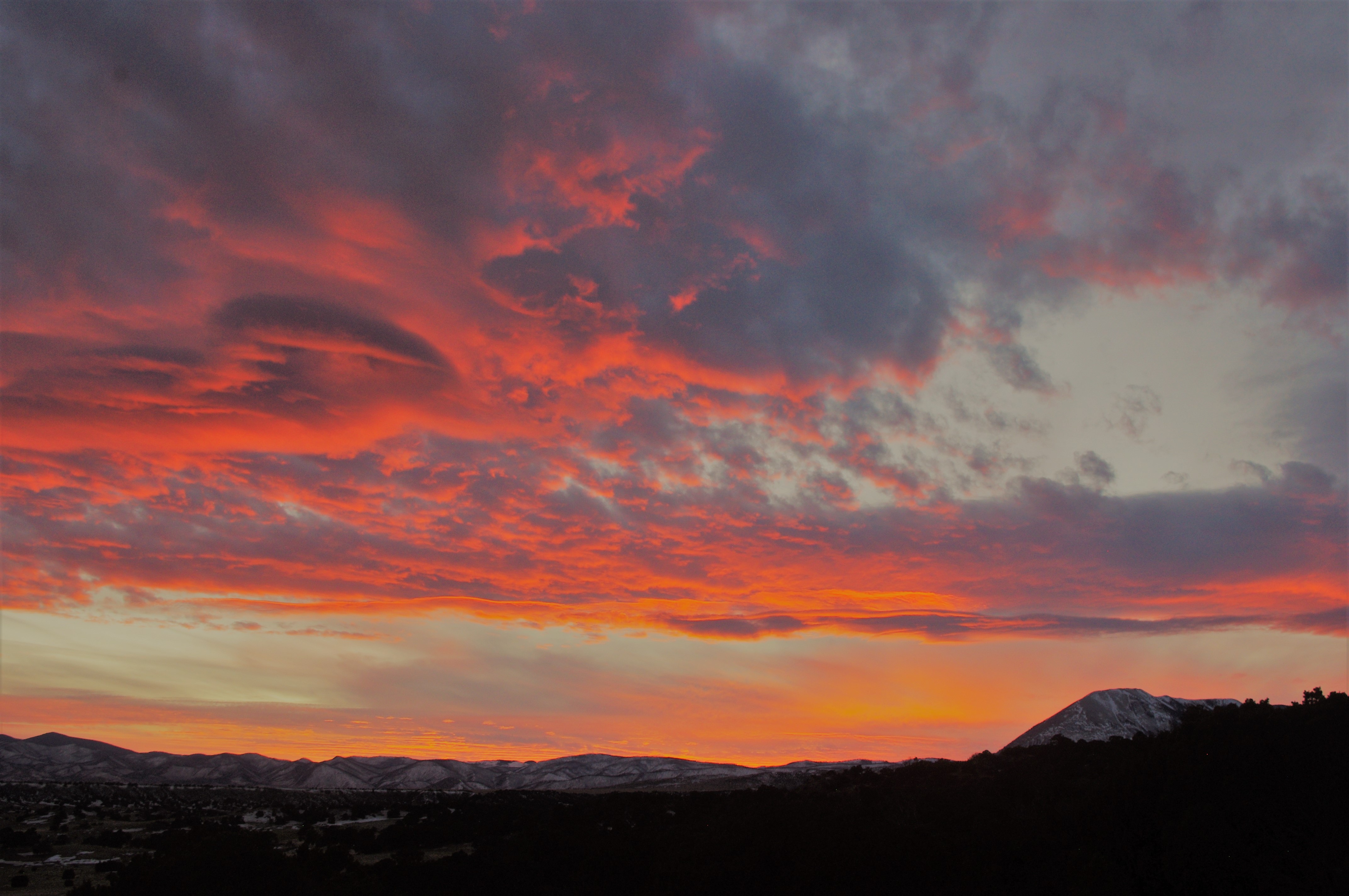
Morning rituals help me center myself for each new day. Since moving out into the southern Colorado foothills with few neighbors, I feel privileged to be able to view an unobstructed sunrise every morning as a part of that ritual.

Often I think, “It won’t be amazing today” and then I turn around in my bed and see something like this.

Living here has made me even more grateful for my life and that it has led to this place full of love and acceptance. It has also led to some tough physical challenges for me. The simple act of breathing has become more and more difficult. I can no longer live without supplemental oxygen. For a while we wondered if it was lung cancer.

There is nothing like the ‘c’ word to make you sit up and take notice, and the challenges of simply breathing every day naturally call my attention to my own mortality. Many years ago I was a follower of Stephen Levine, a well-known poet, author and teacher best known for his work with those with life-threatening illnesses. For over twenty-five years, Stephen and Ondra Levine provided emotional and spiritual support to those who were dying and their caregivers. I highly recommend his books to you. I went to hear him speak in Boulder once for an all day event. That was the beginning of my own internal conversation about my own death. I still enjoy listening to his meditation called:

“Take each breath as if it were your last”

I used to feel so afraid of death. Then my experience of moving quickly in and out of consciousness with a traumatic brain injury provided some strange reassurance. Death is simply the final loss of consciousness. Death is inevitable and really quite simple. I accept it now, and try to love each day that I have left to be alive.

I need to imagine myself in the future doing what I love. For me, now, that is a radical act of courage.

What feels bad can be perfect in the long run!

Only at the ripe old age of 65 do I now see how much I have suffered from apparently terrible experiences, which turned out to be the key to all of my present happiness. It does take a really long time to see this, but if you keep living your best life and paying attention, you will learn this eventually.

My worst experience happened at age 24 when my lover of two years left me for the friend I had introduced him to. To my 24-year-old mind and heart, this was the worst thing that could ever happen. I loved him so much and he just dumped me like a bad habit. Decades later I spoke to him about this experience we shared, and he told me his terrible depression ruined so many relationships for him.

And yet I still “carried a torch” for him: “The idiom to ‘carry a torch’ for someone first appeared in the 1920s. To carry a torch for someone means to remain in love with someone even though they have rejected you, to pine away with unrequited love.”

Just a few months after he rejected me a second time at age 49, I met Mike and fell “head-over-heels” in love. “This phrase originated in the 14th century as ‘heels over head’, meaning doing a cartwheel or somersault.”

Yes from our first date, which lasted over ten hours (!) Mike and I were partners for life, seeing the world in similar ways and even perceiving the world at about the same rate of speed! How lucky were we to find each other, when we lived ten miles apart along the same road that ran from Loveland to Fort Collins Colorado.

Sixteen years later I can assure you, that was our lucky day!

But somehow I still kept thinking about my loss at age 24. Finally, just recently, I realized how much of a delusion my old love was for me. With all proof to the contrary, I still thought he should love me. And worse, I denied that his depression was so great that it might have ruined our life together. Instead I now live a friendly, stable, balanced life with a man who loves me completely and absolutely.

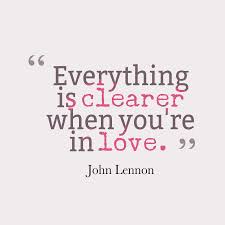
Love is not rational. The heart wants what it wants. But few would deny that being with Mike for the past sixteen years has been wonderful for me.

We have found a beautiful place to live and a peaceful, happy existence together. That is what fortunate is all about

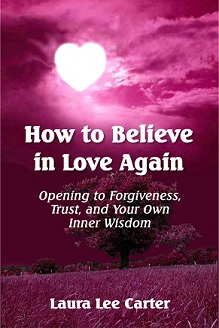
How to Believe In Love Again: Opening to Forgiveness, Trust and Your Own Inner Wisdom is my book about turning what you believe about love around. Find out how to change your belief system and then finally find a lifetime of unconditional love and compassion! Learn how to forgive yourself for past mistakes and gain a new sense of self-trust and respect. Then go out and find a new kind of love next time!
Please feel free to e-mail me with your questions: MidlifeCrisisQueen@gmail.com
E-books are available through Amazon

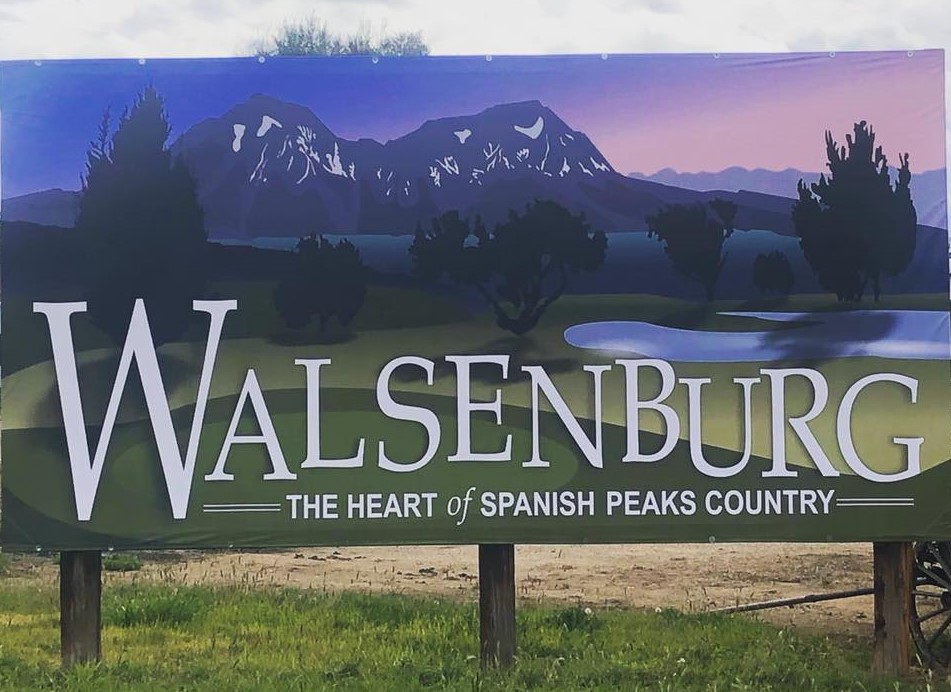
Walsenburg and La Veta Colorado, Living Between Two Very Different Worlds

For the past five years, just over 40 million Americans moved each year, or about 13 percent of us. Most moves are local, either within the same county or within the same state. Within-county moves accounted for 65 percent of all moves in 2019, while moves between counties in the same state accounted for 17 percent, according to the federal government’s Current Population Survey (CPS) data.

We moved from one of the northern most counties of Colorado (Larimer) to one 50 miles from the New Mexico border in 2014. Larimer County’s population has grown over 30,000 residents since then, while Huerfano County may have gained 200 residents. The only reason Huerfano has not lost residents since 2014, when it reached less than 6,400, is the beauty of the rural areas west of Walsenburg.

When we moved here from a nice suburb of Fort Collins, I experienced extreme culture shock, and most of the residents we talked to could not believe we had chosen to leave Fort Collins for here. I gravitated to hanging out in La Veta even though we lived in Walsenburg while having our solar home built in the foothills, halfway between La Veta and Walsenburg. I did not find Walsenburg residents particularly friendly to outsiders, and La Veta people seemed a little more welcoming. I later learned that most long-term residents here don’t like newcomers and don’t think they’ll stay, so they choose not to invest in friendships with them. I’m sure you see the self-perpetuating prophecy in this. La Veta was not super friendly either, but at least I did meet some nice people there.

Six years later, I continue to try and understand this area and its resistance to newcomers and new businesses. At first it really bothered me, especially when our next door neighbor offered friendship at first and then decided to hate us within six months for no apparent reason. After a few years I didn’t care as much because we were so happy in our solar perch with phenomenal views in every direction. As of today I only have one close, local friend and she plans to move back to San Diego soon.

We have had to adjust to many differences between city and rural life, but being able to order almost anything on the Internet has made all the difference! I would say if you are very independent of mind and truly celebrate natural silence and beauty you may end up loving it here. However, trade offs must be made. None of our restaurants are stellar and most are closed down now. No pizza deliveries here! You need to like cooking and have a few different avocations than city people, avocations like hiking, camping, gardening, photography and the arts.

As far as the differences between Walsenburg and La Veta go, Walsenburg has one of the highest crime rates per thousand in the U.S.

“The 2016 crime rate in Walsenburg, CO is 628 (City-Data.com crime index), which is 2.3 times higher than the U.S. average. It was higher than in 98.0% U.S. cities.”

Just about everyone I have met there has been robbed. I cannot find a crime rate for La Veta, but it’s very low. The main difference you will find in Huerfano County is that land prices east of La Veta average around $5,000/acre or less, and those in the higher mountains can be well above $50,000/acre.

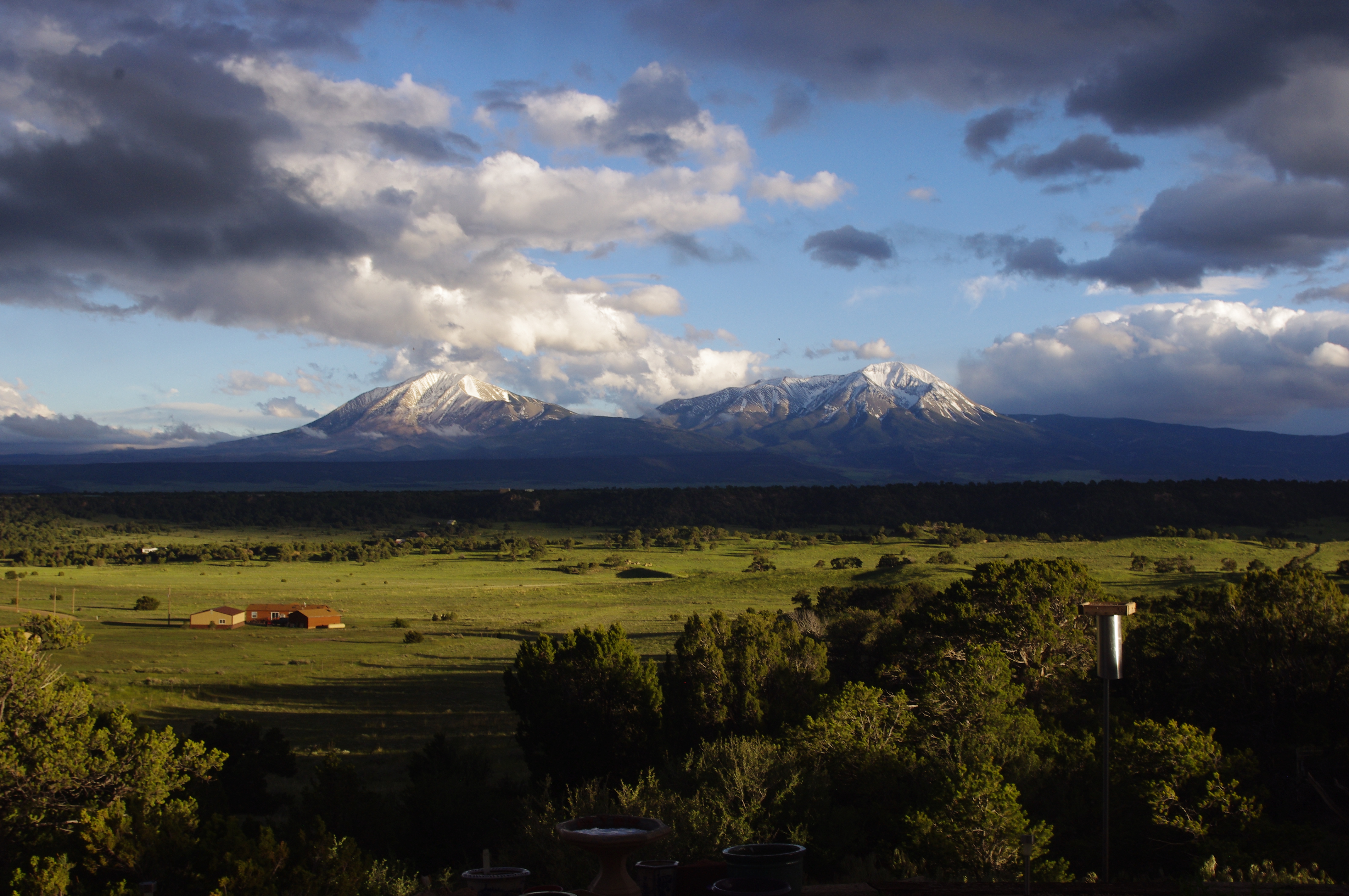
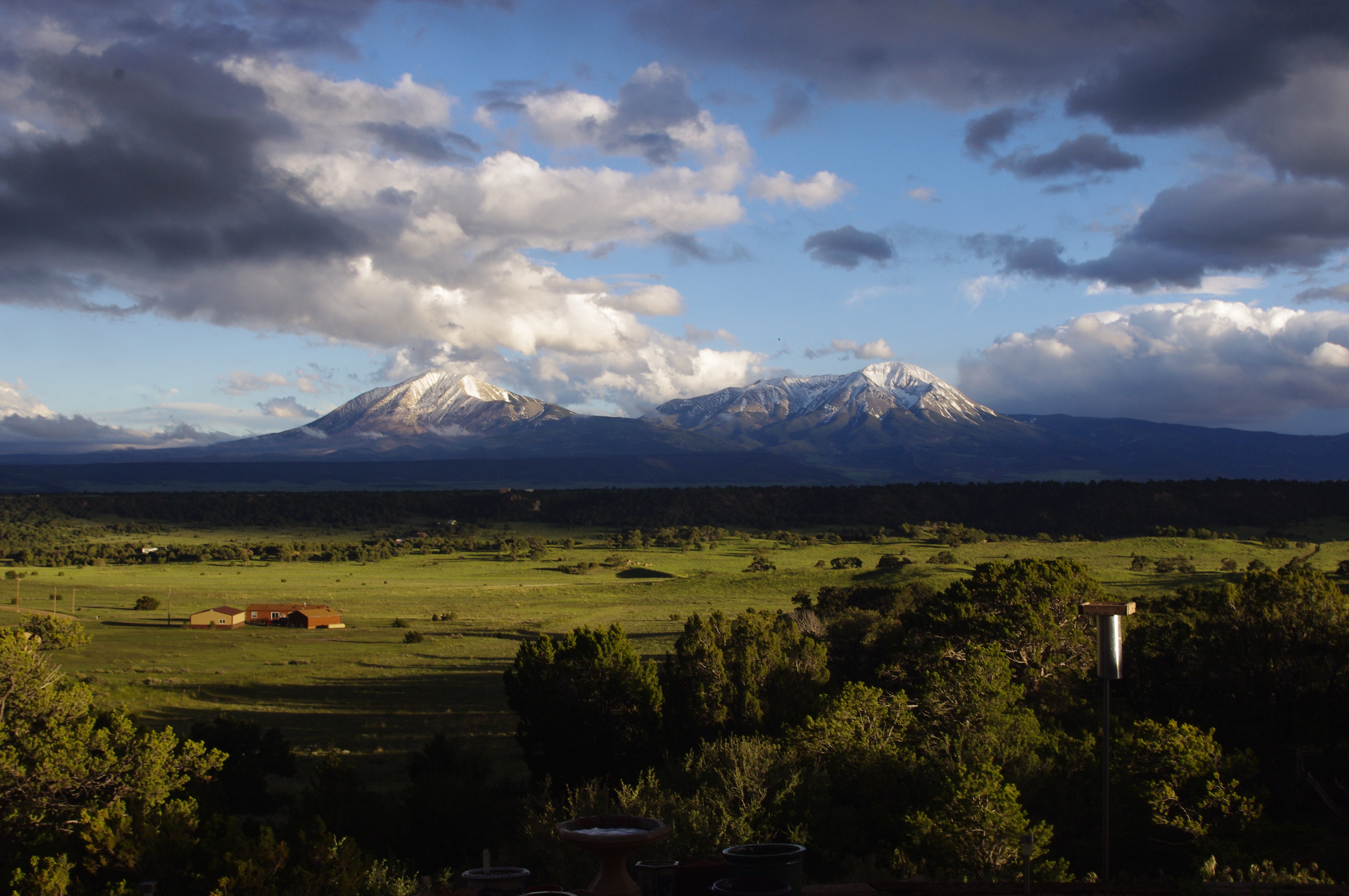
Springtime view from our solar perch!

The apparent draw to this area, including ourselves, is that you can still find inexpensive rural land with tremendous views for reasonable prices. Just remember there are very few decent jobs here and most of this county is above 7,000 feet, which can challenge the breathing of many lowlanders.

Want to learn more about moving here? I kept a journal of this process:

Why we decided to move here after first checking out Ecuador (!)

The difficulties of renovating our old home and leaving our old life behind.

The culture shock of very small town living.

Building a passive solar home in a rural area,

and so many other challenges & adjustments to be made when you choose living rural.

Check it out here:

A Memoir of Retirement: From Suburbia to Solar in Southern Colorado