What’s looking happy in my mid-summer Spanish Peaks garden?

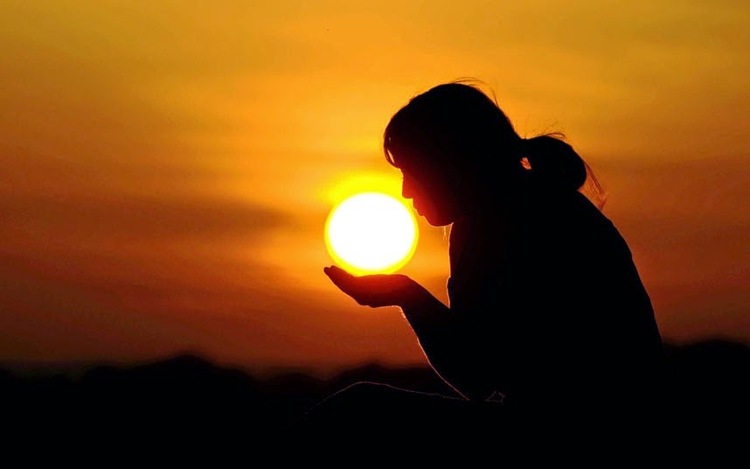
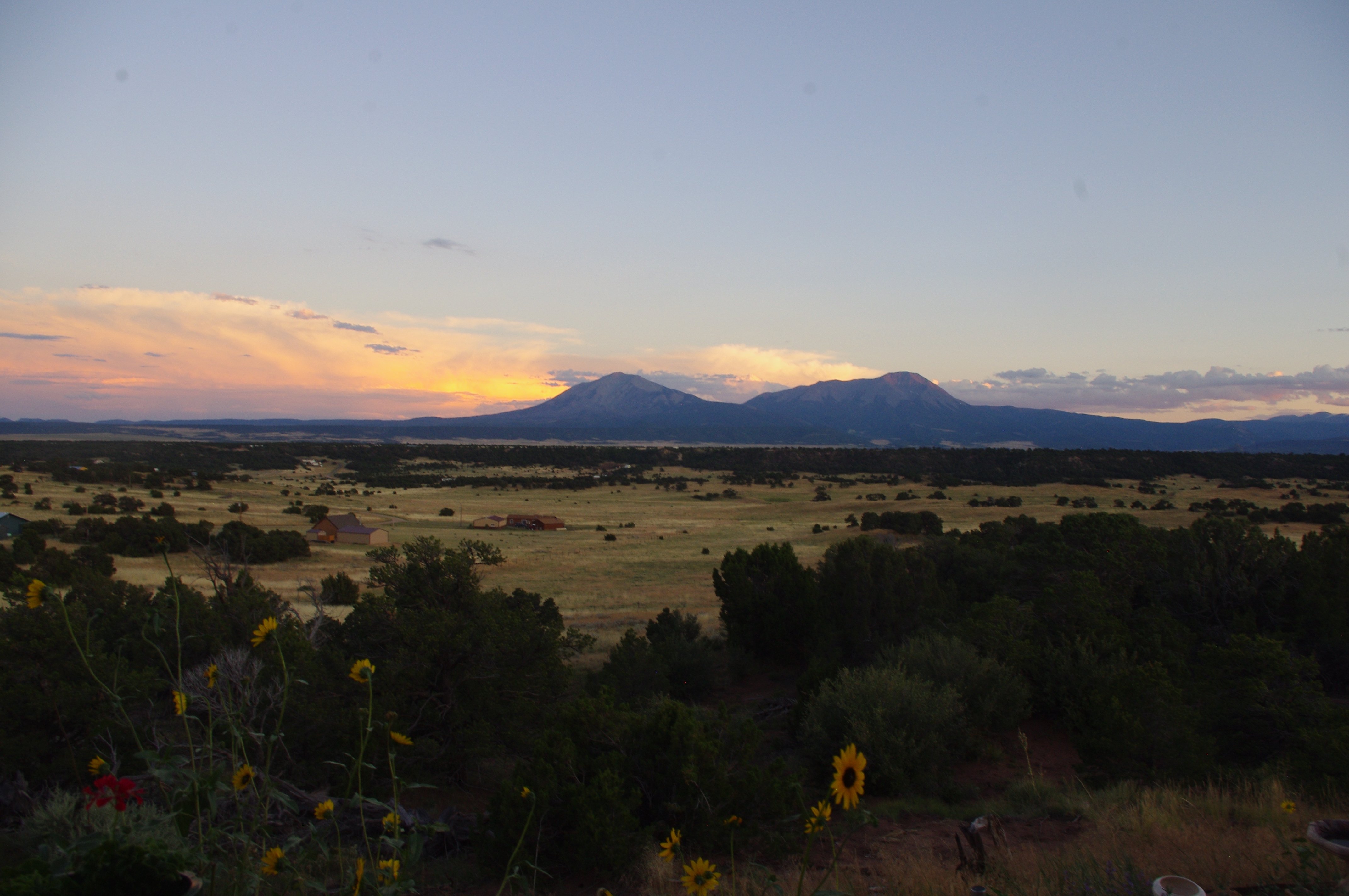
A sunset view from my garden!

When everything else in life seems crazy, it’s back to the garden for me. I’m sure some of you can relate…. We have received some nice rain showers this July, bringing us up to 13.5 inches of rain so far this water year (October to September). Compared to last year’s 9 inches, we are doing great! So, what’s looking super happy in my garden right now?

My Blue Mist Spirea is so happy here! They bloom the end of July

The Blue Mist Spirea bushes for one! I have five of these because I found out last year how happy they can be here with no deer to bother them.

The Gallardia or Blanket Flower is also quite content. I have always had great luck with these nearly native orange and yellow plants. But this year I tried a new variety that is all red. I am quite pleased with the results! It just keeps on blooming.

Colorado Four-O’clock, a tough native to do in!

Another shocker is that my native Mirabilis Multiflora or Colorado Four-O’clock is coming back again with a vengeance after a horrible time last summer with the wildfires around here. I have one plant (a taproot variety) on the edge of my garden, that was there before we started building here. Then when we hardscaped the garden this spring, I was afraid we had killed it, but nope. It’s a beauty again this year! Impossible to transplant, but also tough to kill.

Now do you see why I love gardening? With time and patience, there’s always something new to wonder about and be surprised by…

Petscans and waiting to see if you have cancer…

I find I have nothing to say at the moment. Have you ever had to wait to see if you have cancer? That’s where I’m at. I had a Petscan Tuesday afternoon and of course there seems to be no doctor who isn’t on vacation or just “off” who can call me and tell me the results.

What is a Petscan? Mayo Clinic:

A positron emission tomography (PET) scan is an imaging test that helps reveal how your tissues and organs are functioning. A PET scan uses a radioactive drug (tracer) to show this activity. This scan can sometimes detect disease before it shows up on other imaging tests. The tracer may be injected, swallowed or inhaled, depending on which organ or tissue is being studied. The tracer collects in areas of your body that have higher levels of chemical activity, which often correspond to areas of disease. On a PET scan, these areas show up as bright spots.

A PETscan is useful in revealing or evaluating several conditions, including many cancers, heart disease and brain disorders. 

American medicine at work. I ask you, could our system be anymore fucked up??? I truly doubt it… So I meditate, I sleep, I listen to great music and try not to think about death, and what it might mean to those who truly love me.

A couple strange things about Petscans. Did you know that the radioactive isotope they put in your veins is so strong that it can impact anyone in the room with you? Really! For a minute I thought the tech who put it in was kidding! And then there’s that cocoon they put you in inside of that tiny hole. Close your eyes and you hardly know you’re there unless your nose starts to itch, badly. But I survived all that and now I wait because no doctor is willing to take the time to give me a call…

Postscript: A small spot of “unusual cell growth” was found in my lungs. Further tests next week…

Boomers: Why or Why Didn’t We Go To College?

One thing I never want to happen, but I know does, is that potential new friends here may decide we cannot relate because I spent so much time at the university. To tell you the truth, this discrepancy never even occurs to me.

My own observation about boomers and college:

Those who didn’t go to college often wish they had had the chance.

Those who did go sometimes wonder why they bothered.

How many boomers went to college anyway? Census data estimates that 28.8 percent of Baby Boomers have earned a Bachelor’s degree or higher, while another 28.9 percent have attended some college classes.

It seems family views and monetary pressures were the largest influence on why many of us attended college. Because my Dad was a professor, everyone in my family got free tuition at Colorado College. We all went there at some time including my Mom.

I guess I always assumed that those who didn’t go to college didn’t want to, but I see now how parental encouragement or total non-encouragement played an important role. Mike’s father didn’t offer any support or encouragement. It was the old, “the Navy training was good enough for me, so it’s good enough for you!” And this was during the Vietnam War! I also learned from Mike that a lot of us learn more easily from doing, not listening to some long-winded professor. Some of us are physical and visual learners.

Overjoyed at college graduation… back when I had all the answers!

I was raised by a college professor and a teacher. I was totally brain-washed that college is good for you. My Dad and Mom were the first kids in their family to go to college, and I would have to say it was “very, very good to them.” It was also a career-maker for me, and I truly appreciate that fact, but that isn’t where I learned the most important lessons in my life. Not even close. In the end, I attended graduate school for a specific career.

I think we learn our most important lessons by living our lives and paying close attention to what works for us, and what doesn’t. What careers or work environments bring out the best in us? What jobs feed on our own natural abilities and talents? Unfortunately I had to wait until I quit work altogether to learn the most about my natural interests and talents.

Gardening: An old friend who has come in handy in retirement!

Ask yourself today: What would you do if you had all the time in the world? What activities make you lose touch with time and place and take you away to your own great place in your head? Now I only do what gets me going and I have the time to observe exactly what that is. For me now it is gardening, anything with vivid colors, photography, cooking, yoga….

Seeking solace in nature

The mornings are when I seek solace in my garden. No matter how difficult my sleep has been, or how disturbing the world seems, when I walk outside and hear the silence of nature, I find reassurance that we are all OK.

My previous backyard and garden

I have come to realize that this is a feeling most will never know, and one that you must fully experience to know in your heart. Recent and not so recent studies have shown that a prolonged and solid connection with nature soothes us and reduces our stress. I had small glimpses of this in my backyard in Fort Collins, but I could still hear road traffic in the distance. I could still feel the tension in those around me, the need for city vigilance.

Now I know, finally at the age of 64, the peace that only nature can offer. I hope you also experience this in your daily life.

What are you doing this Summer Solstice?

The word “solstice” is derived from the Latin words “sol+systere,” meaning “when the sun stands still.”  This year the Summer Solstice is on June 21st, 5:54 PM EST, which makes it the longest day of 2019. Following this solstice, the days will get shorter and the nights longer. As one who worships the sun, I see this solstice as a time to reflect on personal growth and the meaning of our seasons, a time of cleansing and renewal, love and personal growth. This is the moment when there is the most light available to us. In terms of consciousness, this is when we can be most present to ourselves and who we hope to be — the Sun represents the light of all life and consciousness.

Many traditions throughout time have celebrated the solstices — Ancient Egypt, the Aztecs of Mexico, Chinese, indigenous peoples of the Americas, and Europeans. Western civilizations have for centuries celebrated this first day of summer, often called midsummer or St. John’s Day. The Chinese mark the day by honoring Li, the Chinese Goddess of Light. Throughout history, with so much light showered down upon the Earth, it was seen as one of the most powerful days of the year for spiritual growth and healing.

Summer Solstice Stone Hedge

To this day, revellers still gather at Stonehenge to see the sun rise. The Heel Stone and Slaughter Stone, set outside the main circle, align with the rising sun.  And many of the ancient traditions continue – Bonfires are still lit to celebrate the Sun at its height of power and to ask the Sun not to withdraw into winter darkness.

In North America, many Native American tribes held ritual dances to honor the sun. The Sioux were known to hold one of the most spectacular rituals- The Sun Dance. Usually performed during the June solstice, preparations for the Sun Dance included cutting and raising a tree that would be considered a visible connection between the heavens and Earth, and setting up teepees in a circle to represent the cosmos. Participants abstained from food and drink during the dance itself. Their bodies were decorated in the symbolic colors of red (sunset), blue (sky), yellow (lightning), white (light), and black (night).

Why not create your own rituals this year, with an intention to create new ways to re-connect with Nature and improve your life? Bring light and love into this world in your own positive and creative ways.

“Both the Winter and the Summer Solstices are expressions of love. They show us the opposition of light and dark, expansion and contraction, that characterize our experiences in the Earth school so that we can recognize our options as we move through our lives.” – Gary Zukav

Wishing you abundance and light this Summer Solstice!


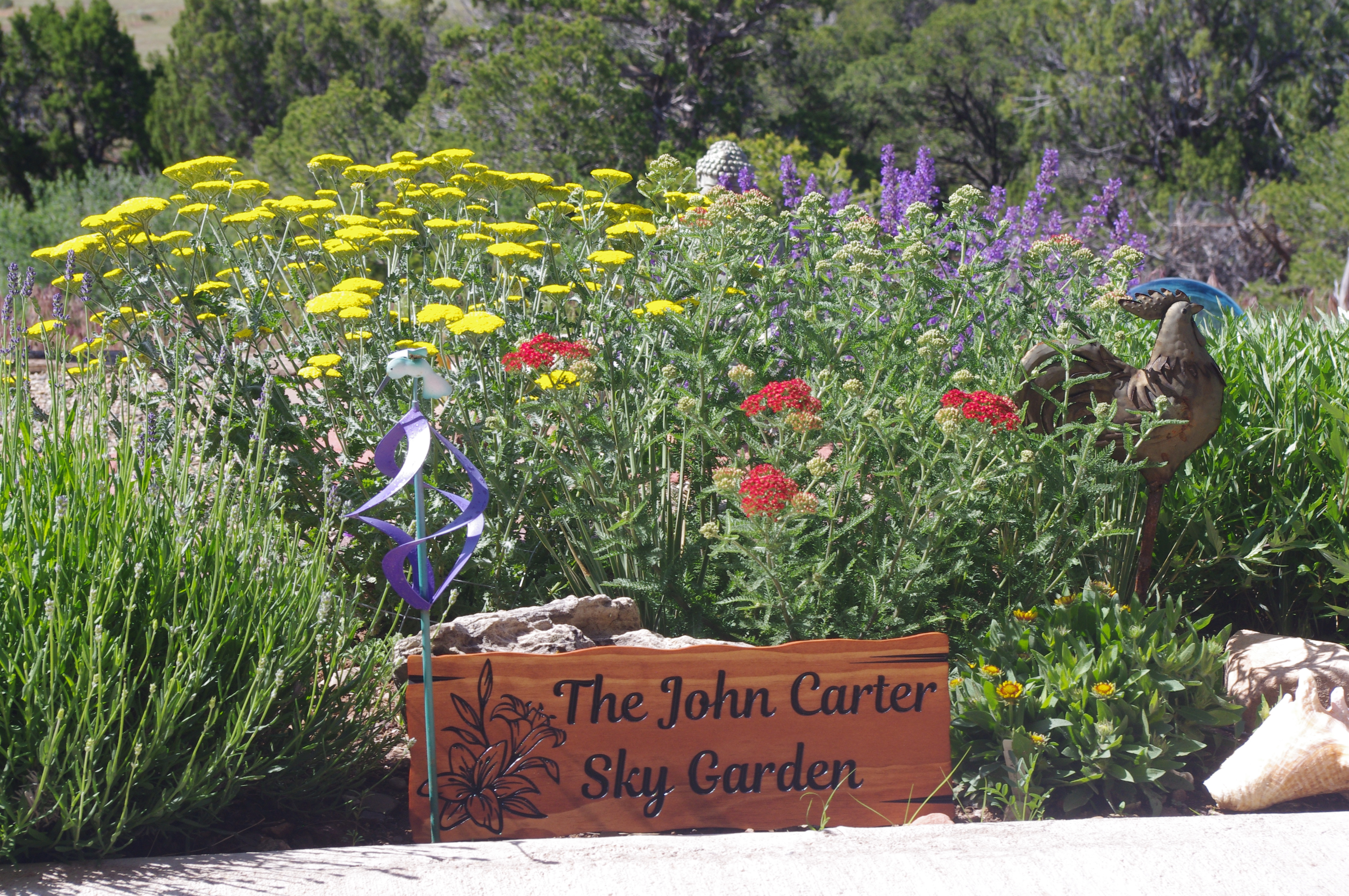
It’s official! Our garden has a new name!

My garden is amazing to me this year! After the very dry spring of 2018, with evacuations and then a terrible wildfire, the Spring Fire burned over 100,000 acres, this spring has been a dream. Plants that I had almost forgotten about came back in full force! Plants that got eaten back by deer or bunnies came roaring back with no deer in sight.

Then my brother John, the self-proclaimed “dirt guy,” made a trip up here in May to finish up…

After a number of other trips up here from Sedona in the past few years to help us plan out and finish our new garden facing the Spanish Peaks, I decided to name this garden for him. He put a lot of heart and soul into his work here and it shows!