Not age limits. Let’s use neuropsychological tests

Did you know that our country was one of the first in world history to create and do psychological testing on our candidates for military service in World War I? When you are fighting right next to others in trenches, mental stability is quite essential. Psychological and neurological testing is used in numerous ways today to qualify candidates for all kinds of jobs, why not for the most important jobs in the world?

Neuropsychological Testing is a test to measure how well a person’s brain is working. The abilities tested include reading, language usage, attention, learning, processing speed, reasoning, remembering, problem-solving, mood, and more.

With all the talk about age and abilities around our presidential candidates, etc. I would like to explain why age is not necessarily the issue here. Candidates like Donald Trump refer to terms like mild cognitive impairment (MCI) as if we had no way to impartially test for these problems without prejudice. There are excellent ways to test this. I know because I was tested recently.
I had one of these two hour tests last year, administered by a consulting neuropsychologist. Areas tested include attention and processing speed, verbal memory, visual memory, executive function, constructional praxis, apathy, depression, anxiety and sleep. My first observation was how exhausting it was for my brain. I had to sleep for a day afterwards to recover. But I already knew my worst problem was how quickly my brain wears out, and when it’s tired there no solution but rest. I also learned that as a person with mild cognitive impairment, I should not be working or running for any office.

I am certain the American public would benefit by testing such important personages as candidates for president and Congress in this way. What most do not understand and what I had to find out the hard way is that a person’s ability to serve is certainly not about age. It’s about cognitive strength or impairment. We have great tests for that. Let’s use them.

What do we ‘owe’ our parents & ancestors?

As we age and our parents pass away, we may be stumped with questions about our parents’ lives, the choices they made, and how our existence may have affected them. I know I am. I sometimes wonder why my siblings and I were so disappointing to my parents, and what ancestors further back might have thought of the choices we made in our lives.

The Carter Family in 1966

My siblings and I were raised to feel that we owed quite a bit to our parents. My father, the first to go to college in his family, gave us the best educational opportunities to prepare us to become “something great.” The pressure was on to get a superior education and become exemplary in our chosen field. In response my sister excelled and become a role model in the areas of nursing, gerontology and long-term care. I had a career as an academic librarian and writer, and my brother John resisted Dad’s pressure as best he could. We all knew in the end John was a great disappointment to Dad, and I wasn’t exactly his star child either. I think he always wondered what happened to us. Why weren’t we as driven and successful as him.

The real question is, did we owe our lives to our parents? Historically I believe the answer is a resounding yes. Many believe the primary job of children is to be successful, make a lot of money and take care of their parents when they get elderly. That wasn’t the expectation in my family, thank goodness. I think my Dad believed that the success of his children reflected on him, and vice versa. He always wondered what happened to me and especially John.

John building my garden here in 2019

As a psychologist I think I now understand what happened. Children naturally resist being told what to do. They may respond by doing the opposite, or in John’s case, doing exactly what he wanted to do. My siblings and I were plenty intelligent to do whatever we chose to do in life, but our self-esteem was irrevocable damaged by our parents belief that continually blaming and shaming children helps to toughen them up for the “real world.” Big mistake, but the damage was already done by our teenage years. That’s when my brother John told Dad to “fuck off” and left home for good. We rarely saw him after that.

Parents please listen, damaging your child’s self-esteem is a terrible way to prepare them for any world. It can easily destroy their lives. My sister and I were able to find good counseling over the years to remedy the destructiveness of our parents. That was the only way we could recover from such a tough childhood. John never did.

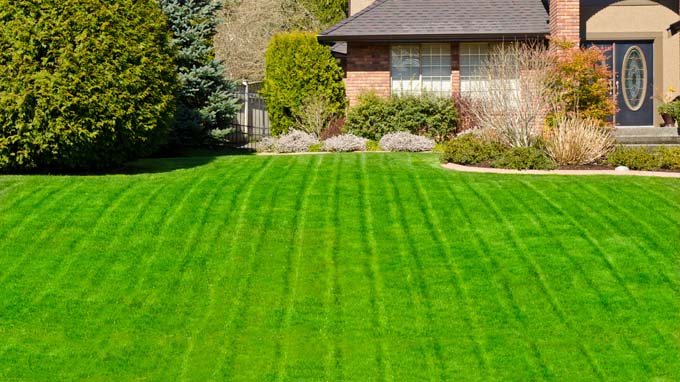
The Legacy of American Lawns & “Lawn Nazis”

I got a few interesting responses to my last post about re-wilding areas destroyed by farming or other forms of human landscape “improvements.” The 4th episode of PBS “Human Footprint” this week caused me to think further about our American addiction to lawns and lawn care.

Did you know one 400 acre golf course uses 358,000 gallons of water every day? We have more than 40 million acres of turf in the United States that use over 80 millions pounds of fertilizer per year.

Grass is the most resource intensive plant in our country today.

In a country where we so highly value productivity, lawns are the ultimate in unproductive.

The story goes that we can apparently blame the Brits originally. The old idea of owning your own manor and “estate” added to our own brand of individualism in the USA caused many of us to want to own a home on maybe a quarter acre in suburbia. Our home was our castle, and the surrounding space was our territory to improve and maintain. Although some grasses have American-sounding names like Kentucky bluegrass, most of the turf-grass species we plant in the United States are native to Europe.

We also have a strong tradition from our earliest days of feeling like we had “too much land” (after we stole it from the native Americans). If we farmed it, or ranched it, or timbered it for five years than that land was ours. This set the precedent that we should not just sit on land, we should “improve it.” Every place humans inhabit is made artificial in some way, and in our country that usually involves lawns.

The Lawn is the Ultimate Male Status Symbol, showing how deeply grass is rooted in the American psyche.

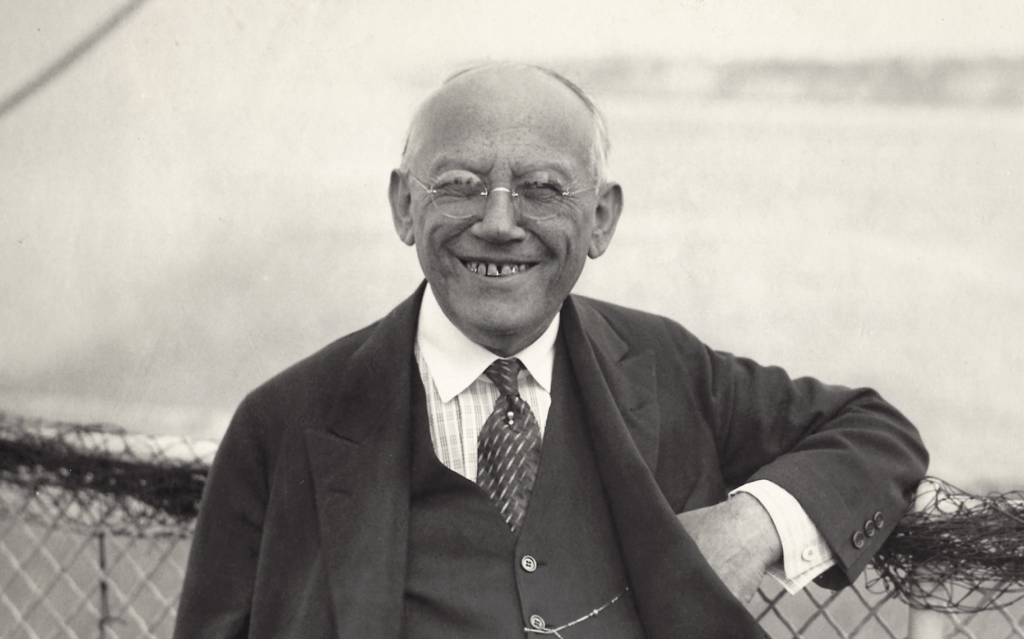
Thinking about these American traditions reminded me of how proud my Grandpa Carter was of his small home and yard outside of Kansas City, Kansas. He took so much pride in keeping it perfect with his walking mower and lots of watering. And my own Dad the botanist, a lifelong advocate of leaving things natural, still worked hard to keep a nice lawn around his home.

The younger generations may not be so convinced that lawns are a good thing.

To quote that PBS special: “Grass is a signal. Just having it says that we are part of a community.”

And yet, as Nancy Hill pointed out after reading my last piece, those who don’t choose to maintain traditional yards in suburbia may be ostrasized by HOAs and other nasty neighbors. Covenants can be legally enforced. I had never before heard of the term “Lawn Nazis.” In a country that prides itself in offering “freedom of choice,” when it comes to the land around our own homes, we can be forbidden to plant native plants or go natural.

Finding the Strength to Let Go of Self

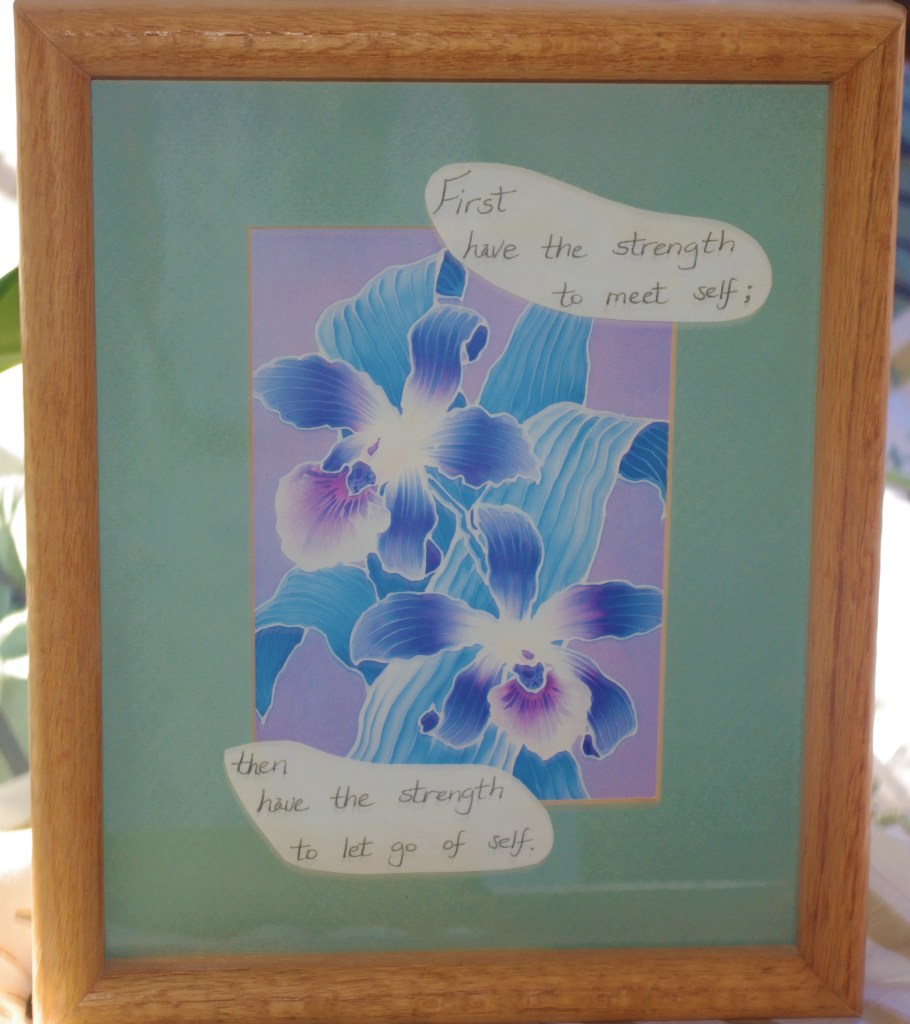
I believe our lives are a process of finding and confronting our true Self, and then slowly letting go of it as we age. Some might prefer the word ego in this scenario. I have had this message on my wall for decades:

What is the ego or sense of Self?

ego: a person’s sense of self-esteem or self-importance, the part of the mind that mediates between the conscious and the unconscious and is responsible for a sense of personal identity.

The way I relate to my sense of Self is to know that as a child and young adult my ‘job’ was to develop my sense of who I was inside, what did I think and value? How should I treat others? How did others see me? This naturally leads to a strong sense of self-consciousness, sometimes painfully so. Then came the time to figure out what I planned to do in the world. How did I hope to change my world? These are the purposes of young adulthood up until our forties or so.

Developing a strong sense of self or ego is a good and necessary part of being human. There is nothing wrong with having a strong ego, but it needs to be regulated. Problems arise when ego affects your decision making process, turning you into a victim, or when it makes you feel superior to others in order to justify your bad behavior. A toxic ego is one that does not learn from bad behavior, but instead blames others, often descending into negativity, resentment, and even violence.

For the past twenty years, my spiritual path has been that of the second part of life. I have been searching for the strength to let go of self. A part of this process is simply getting comfortable with self compassion and death. Although we might think we have a strong sense of self when we are younger, if we are very honest we may find much self-criticism inside. This is all a part of the ego. Like we really did have the power to change any part of our world…

Being close to nature is your best path to realizing your place in the history of time. Please note, there are no other animals or plants that believe they are changing the world. There are no other beings that fear death. They know what their part is, to be born, to live and then die. I have found a gradual process of getting used to the idea of death is the best path for me. At first is was so hard to be with so I would push it away and deny its power. Since I started facing some powerful signs that I won’t be around forever (lung disease and brain injuries) in the past few years, my acceptance has grown like my garden outside my door, bright and beautiful.

Where have all the Boomers gone? And why?

I was reorganizing my retirement funds recently and that got me thinking: How are other retired Baby Boomers doing? In that process I learned about why we have fewer and fewer workers for highly skilled jobs…

Baby Boomers, born between 1946 and 1964, make up 28% of the United States population, making them one of the largest living adult generations, second to millennials. In 2011, the first round of Baby Boomers—those Americans born between 1946 and 1964—turned 65.

From now until 2030, 10,000 Baby Boomers will be retiring every single day!

The COVID pandemic, shall we say, encouraged early retirement. According to the Pew Research Center, the rate of retirement for Boomers accelerated with COVID-19, with nearly 29 million Boomers retired in 2020, three million more than in 2019.  

Seventy-five million Boomers are expected to retire by 2030, paving the way for what is now being called “The Great Retirement,” as opposed to the “Great Resignation.”

Retirement Savings

“The Great Retirement” is an unprecedented flood of retirees exiting the workforce earlier than planned, triggered by the pandemic which heavily affected those 60 and older. Whether it was to enjoy life, health concerns, or a changing work environment, this part of the workforce has seen an uptick in retirement. In spite of these numbers, many Boomers find it hard to retire. Why? Many baby boomers are worried about their finances. Nearly two-thirds expressed concern about not having enough savings to quit their job. Shockingly, at least to me, the median retirement savings of Baby Boomers today is just $144,000 to $202,000.

Health & Death Rate Among Boomers

The largest generation in American history, Boomers are likely to remain that way for the foreseeable future. What wasn’t foreseen was how long Baby Boomers would live. When the first Boomers were born, the average life expectancy was 63 years old. Among Boomers recently that was 79 years, but that is falling.

Unfortunately we, as a generation, are not as healthy as our parents were at our age. Why? One culprit is obesity-associated chronic diseases caused by a gigantic dietary shift. Beginning in the 1950s we were introduced to fast, convenient, processed foods with plenty of additives and preservatives. Today we have increased deaths from chronic liver disease, suicide, cirrhosis of the liver, along with poisonings all caused by addiction. I’m sure you have heard about recent death spikes related to opioid abuse, alcohol abuse, and heroin abuse. The implications of this epidemic are massive.

As we all know, addiction is a symptom of bigger issues—the underlying causes of addiction need to be treated. Our generation, known for questioning authority and seeking equality, has lived through significant family changes brought on from two-parent working households, increased divorce rates, increased career mobility, increased technological advancement, and increased psychological awareness. How have these factors impacted our long-term well-being?

My thoughts

As someone who lives in a poor, rural county in southern Colorado, whose average age is 55, I can say I have known many more people who have died here in the past 9 years than I have ever known before. It seems a fairly regular event to hear of another person’s death. Some move here to retire and find the higher elevation too much of a challenge (kind of like me). Many came here to die and do. We certainly have our share of addiction problems and depression. I now see retirement as more of a quality of life challenge. It isn’t about money, addiction or even how long I live, but more about spending my last years in appreciation for what I have right here before me everyday.