Sometimes it seems like I was born with a lot on my mind. Starting with the “terrible twos” I have been perpetually asking why. I think too much, I worry even more, and I can still never figure out what may happen next. I guess I was raised to expect the worst, or else this is simply the human condition – more brains than we know what to do with!
So on this blissfully relaxed snowy day, miles from almost all human beings, I wonder what might happen if I stop thinking and worrying and embrace the peacefulness of this moment in time.
Should I risk this level of non-vigilance? What might happen if I stop thinking for a while? What if I feel as free as the falling snow for just one afternoon? There’s always tomorrow to get back to my worries…
Morning rituals help me center myself for each new day. Since moving out into the southern Colorado foothills with few neighbors, I feel privileged to be able to view an unobstructed sunrise every morning as a part of that ritual.
Often I think, “It won’t be amazing today” and then I turn around in my bed and see something like this.
Living here has made me even more grateful for my life and that it has led to this place full of love and acceptance. It has also led to some tough physical challenges for me. The simple act of breathing has become more and more difficult. I can no longer live without supplemental oxygen. For a while we wondered if it was lung cancer.
There is nothing like the ‘c’ word to make you sit up and take notice, and the challenges of simply breathing every day naturally call my attention to my own mortality. Many years ago I was a follower of Stephen Levine, a well-known poet, author and teacher best known for his work with those with life-threatening illnesses. For over twenty-five years, Stephen and Ondra Levine provided emotional and spiritual support to those who were dying and their caregivers. I highly recommend his books to you. I went to hear him speak in Boulder once for an all day event. That was the beginning of my own internal conversation about my own death. I still enjoy listening to his meditation called:
“Take each breath as if it were your last”
I used to feel so afraid of death. Then my experience of moving quickly in and out of consciousness with a traumatic brain injury provided some strange reassurance. Death is simply the final loss of consciousness. Death is inevitable and really quite simple. I accept it now, and try to love each day that I have left to be alive.
I need to imagine myself in the future doing what I love. For me, now, that is a radical act of courage.
Only at the ripe old age of 65 do I now see how much I have suffered from apparently terrible experiences, which turned out to be the key to all of my present happiness. It does take a really long time to see this, but if you keep living your best life and paying attention, you will learn this eventually.
My worst experience happened at age 24 when my lover of two years left me for the friend I had introduced him to. To my 24-year-old mind and heart, this was the worst thing that could ever happen. I loved him so much and he just dumped me like a bad habit. Decades later I spoke to him about this experience we shared, and he told me his terrible depression ruined so many relationships for him.
And yet I still “carried a torch” for him: “The idiom to ‘carry a torch’ for someone first appeared in the 1920s. To carry a torch for someone means to remain in love with someone even though they have rejected you, to pine away with unrequited love.”
Just a few months after he rejected me a second time at age 49, I met Mike and fell “head-over-heels” in love. “This phrase originated in the 14th century as ‘heels over head’, meaning doing a cartwheel or somersault.”
Yes from our first date, which lasted over ten hours (!) Mike and I were partners for life, seeing the world in similar ways and even perceiving the world at about the same rate of speed! How lucky were we to find each other, when we lived ten miles apart along the same road that ran from Loveland to Fort Collins Colorado.
Sixteen years later I can assure you, that was our lucky day!
But somehow I still kept thinking about my loss at age 24. Finally, just recently, I realized how much of a delusion my old love was for me. With all proof to the contrary, I still thought he should love me. And worse, I denied that his depression was so great that it might have ruined our life together. Instead I now live a friendly, stable, balanced life with a man who loves me completely and absolutely.
Love is not rational. The heart wants what it wants. But few would deny that being with Mike for the past sixteen years has been wonderful for me.
We have found a beautiful place to live and a peaceful, happy existence together. That is what fortunate is all about…
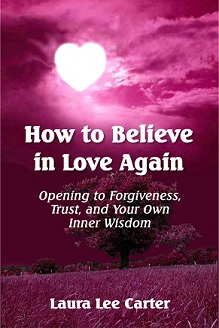
How to Believe In Love Again: Opening to Forgiveness, Trust and Your Own Inner Wisdom is my book about turning what you believe about love around. Find out how to change your belief system and then finally find a lifetime of unconditional love and compassion! Learn how to forgive yourself for past mistakes and gain a new sense of self-trust and respect. Then go out and find a new kind of love next time!
Please feel free to e-mail me with your questions: MidlifeCrisisQueen@gmail.com
To continue my train of thought from my last post, I choose to believe that we humans are uniquely supplied with a brain and conscience so that we might go beyond our reptilian or primal brain. Yes, we must maintain our innate and automatic self-preserving behavior patterns, which ensure our survival and that of our species. But I know we can be so much more!
A part of my learning at Naropa University in Boulder, was the study of higher levels of consciousness, most notably with Ken Wilber. There I learned of the research into what can happen in the human mind when we are able to shut off the constant thinking, wondering and worrying, reaching beyond this primal state of mind.
Buddhist monks have shown us that we can achieve an infinitely expanded true self through deep meditation. This is in accordance with Buddhist philosophy, which focuses on being liberated from one’s insignificant self consciousness to attain a higher state of being, thereby reaching an “infinitely expanded true self”.
The Buddha taught that consciousness is “like a stream of water” with different layers or levels. Mind consciousness is the first level, using up most of our energy. Mind consciousness is our “working” brain that makes judgments and plans; it is the part of our consciousness that worries and analyzes. The brain is only two percent of the body’s weight, but it consumes twenty percent of the body’s energy. So using mind consciousness is very expensive. Thinking, worrying, and planning take a lot of energy.
“We can economize this energy by training our mind consciousness in the habit of mindfulness. Mindfulness keeps us in the present moment and allows our mind consciousness to relax and let go of the energy of worrying about the past or predicting the future.” – Lion’s Roar
As strange as it may seem, my own trauma brain injury in 2008, helped me to access this higher level of consciousness more easily. Partially because I don’t have the energy to think and worry as much as I used to, I can simply slip into a state of mindfulness as I choose. Call it what you will, this is a great relief! I tire quickly with too much interaction or “thinking” and then I give up and just live in the present.
I have also found living close to nature to be quite mind liberating. City life kept me in a constant, often unconscious, state of anxiety and vigilance. It took me a few years of living away from cities and most other people to relax that vigilant mind state and just be here now. Sometimes I may still feel sudden city anxiety, but I quickly recognize it as not needed and let it go.
To learn more about all of this, I can highly recommend the Buddhist magazine Lion’s Roar and this particular article called: “The Four Layers of Consciousness”
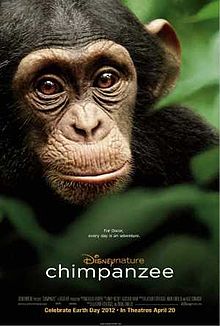
Those who know me, know that I find most human behavior exemplified in the 2012 Disney Nature film Chimpanzees. Go watch it and you will learn the simplicity of how most of us behave and why. Protecting our young is the female role in nature. Aggression against others is the male role, especially when it comes to defeating our enemies. This is human nature or our natural behavior when confronted with the many challenges of life.
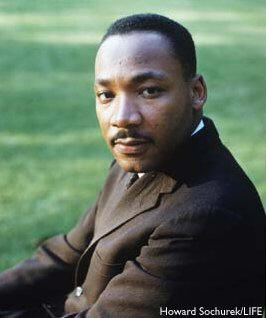
What is not natural is non-violence in the face of violent opposition. In fact it seems counter-intuitive and certainly not in our best interests. And yet, Gandhi defeated the most powerful colonial power on earth with these methods. Martin Luther King also championed this response to hate-filled, deadly mobs. Even that Capital policeman who seriously considered shooting at the rioters who were attacking him on January 6th, decided that his best means of defense under the circumstances was to tell them he was human and had children instead. This probably saved his life.
But this method did not save the lives of Gandhi or Martin Luther King. The “might makes right” assassins murdered them both. They were both quite clear that this would probably happen. Witness the many strong American advocates for racial justice. Medgar Evers, Malcolm X and Martin Luther King knew that they would probably die at the hands of assassins, but this did not deter them from walking the talk everyday. Not one of them lived to be 40 years old. These were the human leaders who decided to believe in something far more audacious than brute force. It wasn’t about more powerful guns and bombs for them. It was about taking a stand against those who had no sense of fairness, equality and integrity. Those who felt boundlessly insecure about their place in the world. Those who simply said: “might does make right.”
Democracy is also a force that stands stubbornly above the simple and stupid assumption that whomever has the most guns wins. Democracy is based on the idealistic assumption that we can each have our say at the voting booth and then have a peaceful and civilized transition of power in our country.
Amazingly, this system has worked for decades, until a few ill-informed, hate-filled white-supremacists led by the craziest president in American history, decided might makes right. That mob crime scene at our capital was a sacrilege, a violation of all we find sacred about this country. I cannot imagine the day I would break down the doors and windows of my capital and destroy so many symbols of our democratic system of government. In other countries these traitors would be summarily shot.
How ironic that the system these anarchists hate so much, is the exact same one that will save their lives!
I see now that my own parents never bothered to get to know me as an adult. Perhaps they thought mistakenly that they knew me as their child, even though they barely knew me through adolescence. And the sad part is, now it is too late.
I know now that my Dad, who died this past March, did not know me at all. He thought I was not-so-smart, a very bad planner and certainly not ambitious. As it turns out his idea of ambition and mine were just quite different. Most unfortunately, my Dad, the well-known Colorado botanist, never appreciated my interest and skill with native plants. Mike overheard him comment in….
… my beginner garden back in March of 2018, “This is just going to be a bunch of weeds!”
He thought I had no idea what a native plant was, or how to grow them. Little did he know that I was already planning with Mike the terraced hardscaping of this slanted slope, and what would grow best here in terms of water needs, critters, etc. Yes, a few of my experiments have not worked out, but overall…
I am quite proud of the product of Mike, John Carter and my own burgeoning efforts! (June 2019)
And as far as my other ambitions go, I have always refused to see myself as a loser. My brother John and I are the first Carter generation of what I now call “spiritual seekers.” Making lots of money and receiving accolades from many was never in the plan.
Finding eventual spiritual peace with Self, others & nature was the plan.
Mom and me in 1985
This past Christmas with my mother was a revelation to me. As she slowly recedes into dementia, I now see she will never “know” me either. I am still her “little Laura Lee,” her youngest daughter. She loves to look at pictures of us together when I was a baby, her last one.
This leaves me wondering how often it is that parents invest the time to truly know how their kids turned out. Is it a fear that their children didn’t turn out so well, that keeps them from asking? Are they afraid it will seem too intrusive, like an invasion of privacy? Or do they just prefer not knowing.
Please don’t assume that you already know your child completely and stifle your impulse to truly know them on a deeper level while you are still around. Don’t assume you know them intimately. Ask them open ended questions like:
“What are you searching for in your life? What means the most to you right now?”











 Adventures of the NEW??? Old Farts