Do you have four really good friends?

Laura standing at build site before slab 2014

The topic of the lead story on today’s CBS Sunday Morning, “Going It Alone”, is one of my favorite life-long lines of research: loneliness. There we meet a man who, at age 27, chose to not speak to a single human being for 17 years! He eventually concluded, at age 72, that if you have four really good friends, who understand and appreciate your authentic self, you are truly lucky.

According to a recent Cigna study, loneliness is at epidemic levels in our country.

Their 2018 survey of more than 20,000 U.S. adults revealed some alarming findings:

  • Nearly half of Americans report sometimes or always feeling alone (46 percent) or left out (47 percent).
  • One in four Americans (27 percent) rarely or never feel as though there are people who really understand them.
  • Two in five Americans sometimes or always feel that their relationships are not meaningful (43 percent) and that they are isolated from others (43 percent).
  • One in five people report they rarely or never feel close to people (20 percent) or feel like there are people they can talk to (18 percent).
  • Americans who live with others are less likely to be lonely (average loneliness score of 43.5) compared to those who live alone (46.4). However, this does not apply to single parents/guardians (average loneliness score of 48.2) – even though they live with children, they are more likely to be lonely.
  • Only around half of Americans (53 percent) have meaningful in-person social interactions, such as having an extended conversation with a friend or spending quality time with family, on a daily basis.
  • Generation Z (adults ages 18-22) is the loneliest generation and claims to be in worse health than older generations.

How much do YOU need quality connections?

This all brings back my own gradual transition in my 30s and 40s from a true loner, who didn’t trust anyone completely, to a happily married woman in my 60s. After a traumatic betrayal in my 20s I also gave up on people. I did allow a few acquaintances in after counseling in my early 30s, but trust was not my best quality.

My first marriage was a lonely tangle of struggle, criticism and disempowerment. I gradually realized that I would probably be spending the rest of my life alone unless something changed. What changed was a divorce in 2001 and then job/career loss in 2004. Living on severance with only two good friends I saw maybe once a month plus my dogs, I faced loneliness most of the time, providing ample opportunity to consider my options for my future.

At age 49 I decided loneliness was my worst problem and I did not want to live the rest of my life if it was going to be this lonely indefinitely.

Mike snuggling with Rasta 2013

My solution? Since I could not find another job in libraries, I started my own offline dating service where I interviewed local midlifers who were also looking for love after widowhood or divorce. In that way I studied our group problem and decided it wasn’t just me. Then when I found many more cool single women looking for partners, I joined Match.com to attract more cool men for my women. Yep, the first man I met this way was my future husband and partner in crime, Mike. We have been joyfully married fourteen years now.

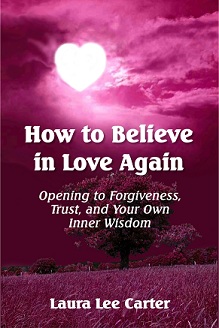
How to Believe in Love Again! blog sizeMike supported me in a way I have never experienced before, with unconditional loyalty, affection and appreciation. He offered full support to my dream of becoming a professional writer at age 50, back in 2005. This I did with enthusiasm, first as a freelance writer, then as a blogger and finally as an author. In fact, his support led to my second book: How To Believe In Love Again: Opening to Forgiveness, Trust, and Your Own Inner Wisdom, the story of how I transitioned from a sad, miserable loner to a trusting, loving person who admits to a need for support from others. 
Since then I am rarely lonely, but moving to this rural area in 2014 has been a challenge in that department. I so rarely meet someone here I can truly relate to, partially because of differences in upbringing and education levels. In the past I made friends at work and in my exercise classes. I still miss a few good friends I made at the Senior Center in Fort Collins.

I’m now retired so I have tried to make friends in my La Veta yoga class, which I attended for a few years, but to no avail. I have also tried a few other groups like writing groups, support groups, etc. No friendships have emerged. Quality connections are hard for me to find in this environment, but I will continue my efforts. Afterall, I just need one or two more friends to have “four really good friends!”

A few things I can never do again…

The interview with Linda Ronstadt on CBS Sunday Morning this week was poignant. She learned that she had Parkinson’s Disease in 2000 and has since lost her ability to sing. She is however making the most of it:

“These days she spends much of her time reading. “I can’t do a lot of things that are active,” she said. “I can’t spend very much time on my feet, or even very much time sitting up. I have to kind of lounge around. But I’m lazy, so it’s a good thing that I lounge! So, I’m glad to have the leisure time. I have a huge stack of books that I need to read.” 

 Does she think much about singing now?

“Oh, I can sing in my brain; I sing in my brain all the time. But it’s not quite the same as doing it physically. You know, there’s a physical feeling in singing that’s just like skiing down a hill, except better, ’cause I’m not a very good skier!”

This is how I feel about so many activities I did in my previous life as a long-distance walker and high elevation hiker. Not to mention the many things I loved like yoga before my arm and shoulder began hurting constantly.

Laura and rasta close upThis is one part of aging that is very hard to take, and yet it reminds me how fortunate I was to have at least experienced these things at some point in my life. And for all of you who feel what I call ‘pathologically optimistic’ about my limitations, between a traumatic brain injury, fractured ribs and COPD which barely allows me to live at 7000 feet, these disabilities will not be changing in this lifetime.

What I find particularly difficult to deal with are the doubters and blamers I sometimes run into. They have no compassion for my losses, but instead blame me for my injuries. They judge me instead of supporting my difficulties, perhaps because they have not experienced any serious limitations yet themselves.

I felt quite strong through most of my 50s. I injured my brain and my ribs on a bike ride through Fort Collins in 2008. My 60s have been extremely challenging so far, and it doesn’t help when I feel criticized and judged for my limited ability to be active. Now I must carefully pick and choose which activities I can complete and enjoy. Everything takes more breathe and effort than in the past.

We will all experience disabilities as we age. We will all die. Please don’t blame others for reminding you of that.


It’s time to say “Yes, we’re angry” and fix things!

I saw a fantastic “Brief but Spectacular” essay on the PBS News Hour last night. In case you missed it, go see it now!

cindi leiveHere, journalist and women’s advocate Cindi Leive, “Glamour” magazine’s editor in chief for 16 years, reflects on the well-known phenomenon of men interrupting women and engaging in other dismissive treatment, at everyday places of work all the way to the Supreme Court. 

To quote the beginning of her talk on Women and Power:

“We don’t really embrace female rage, which is why bestselling books for women about work are usually called things like “Lean In” and “Not Screw You, Kevin, for Taking Credit for My Work After You Interrupted Me 12 Times in That Meeting,” which is a book I would buy.

There’s a very well-known phenomenon that most women have experienced and social scientists have studied whereby men enjoy interrupting women, often without realizing they’re doing it. Even female Supreme Court justices are interrupted three times as often as their male peers.

I mean, that’s RBG. Women apologize more than men. Hillary Clinton, by the way, is the only presidential candidate ever to use the phrase “I’m sorry” in her concession speech.”

Does any of this ring true for you?

Sometimes I feel like I spent my entire life apologizing for my very existence! It became a natural part of my speech pattern. I only truly found my own rage at this situation during my midlife crisis when I realized how many cards were stacked against me as a young girl trying to make a difference in the world. It became perfectly clear when a sad and inadequate boss of mine fired me for being too certain of myself at age 49. Yes, he was canned soon after that, and yes, I have been embracing my rage ever since…

“If we tell women, don’t be enraged about the fact that you have been denied a promotion, don’t be enraged at the rates of sexual assault in this country, we’re never going to get anywhere.

We have to say, yes, we’re angry, and now we’re going to fix it.”

I had to spend a few years in counseling and at anger workshops in my 30s before I realized exactly how angry I was. I had spent a lifetime fearing the expression of anger towards anyone. When I finally started having anxiety attacks where I couldn’t breathe or speak when my full anger arose, I learned how to take charge of my rage, instead of it taking charge of me. I owned it and let it out finally!

Interestingly, starting my own blog “Midlife Crisis Queen” in 2007 (now deleted) helped me to begin expressing my full range of emotions, but that wasn’t enough either. So I started the “Midlife Queen Blows Off Steam.” My byline was:

larger things left unsaid

These days I am certainly in charge of all of my emotions including my anger. My “ouch time” has shortened dramatically! Unfortunately Mike sometimes bears the brunt of this new discovery, but I always explain and apologize if I feel I am being unfair to him. I must learn to direct my rage towards those who actually cause it!

I like to think we are all making progress in this department, both men and women. Women historically have only been allowed their pain and depression, and not their anger. Men have been delegated only anger as an expression of frustration. I still find my unhappy moments begin as a deep sadness, but eventually may develop into outrage at the many unfair situations I face.

Observe yourself and you will discover how you deal with life’s frustrations!

Asking for help. How do we learn to let in positive support and encouragement?

Sometimes finding support can be so simple, you wonder afterwards why you waited so long to seek it…

why so hard to ask for helpI started attending the Walsenburg Women’s Growing Circle a couple weeks ago. This is a warm and friendly sharing group with emotional support and some guided meditation. That then opened up a great new opportunity in Helen’s tough but wonderful yoga class at the Washington Underground. I find the women in this group and my new class so much more warm and welcoming than those I have spent the past few years with in a La Veta class. I find that I often made some of my best friends in exercise classes, and it looks like this class will be no exception. So I feel so much more optimistic about solving my two main problems here: a great environment for balance and strengthening exercises, and making new friends.
This brought up again a problem I have always had, asking for help from others. This issue is magnified five hundred percent in the new memoir: Educated. She also suffered from an extreme fear of asking for help, to the point of not even asking for medical assistance with a broken ankle. I would say I spent the first few years of counseling in my thirties working on my fear of asking for assistance from anyone.

So, you might ask, what’s the big deal about just asking. When we ask for help we make ourselves vulnerable. When I was a young woman, there was no feeling I hated more than feeling vulnerable. The times I had made myself vulnerable had been so painful and disappointing. I certainly wasn’t willing to trust enough to ask again. Just the act of going to a counselor for help took me until my early thirties, even though I liked the idea of it and desperately needed it. Note the paragraph or so in Educated: A Memoir, where Tara finally tells her story to a woman at the university counseling center:

“I didn’t understand it then, and I don’t understand it now, but there was something nourishing in setting aside that time each week, in the act of admitting that I needed something I could not provide for myself.”  — pg. 316

I see now how lucky I was in my early thirties to find the best therapist for me, one who I could finally trust and in that way learn how trust works in human relationships. Re-parenting therapy is powerful stuff if you find the right therapist and then take the necessary time and energy to experience it fully.

asking for helpAnd now I know I would have never been able to trust enough to fall in love again at age 49 if I hadn’t worked so hard at accepting my need for the healthy help of others, and allowing some vulnerability into my life back then. Going it alone is always an option. Just make certain you are doing it as an empowering choice, and not out of anger and future fear of betrayal.
Authenticity: Confronting the hard work of being present in your own life

How refreshing to be surrounded by women at all stages of personal development like I was the other night! It reassured me once more that the soul surgery I have done on myself, which then led to the creation of my various books on midlife transformation, was truly not in vain.

Here’s an example of that writing from my book: Find Your Reason to be Here: The Search for Meaning in Midlife

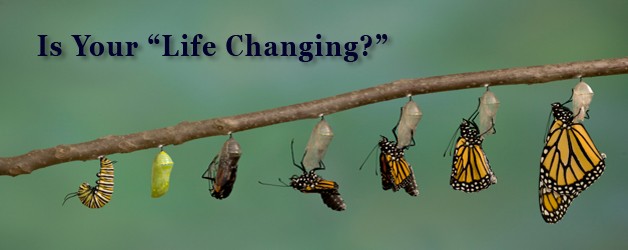
pupa tp butterfly life changing

Often we need to feel our deepest pain before we are willing to risk the painful process of growing up. Breakdowns can empower us to grow into our highest self.    A few years ago I presented a talk to a group of unemployed people in their middle years. When I was finished, the first person to raise her hand asked me, “Do you believe we have to hit bottom in our lives before we truly begin to change?” My answer at the time was, “I did.” 

The fact is that most of us will not begin to change until we become uncomfortable enough to admit defeat. Most of us need to be absolutely convinced that the “plan” we’ve had for life is simply not working. The way this usually comes about is through major life changes that demand our complete attention. Divorce, serious illness, the death of a loved one, and long-term unemployment, especially in our 40s and 50s, seem to be the most common events that lead to the end of our naïve belief that we have control over everything that happens in our lives. And these events become ever more common as we age. These unforeseen and often unforeseeable occurrences can inform us in no uncertain terms that changes in our plan are now in order.

Sooner or later, everyone sits down to a banquet of consequences.

We may first try to defend against the onset of pain and confusion by denying or ignoring this sudden lack of certainty or security in our lives. We may seek to escape into bad relationships, drug addiction, religious faith, or even artificially extreme feelings of independence, as we defend against our need to include others in our lives.

Eventually we may discover that, even though it seems completely counter-intuitive at this tough spot in life, accepting and embracing the chaos and uncertainty we feel surrounded by is our first, best step towards peace. Stop, sit down quietly, and begin to feel the enormity of this apparent crisis, which may also be one of the most important opportunities of your adult life. Can you trust in the power of your own psyche to survive this crisis and in that way heal itself?

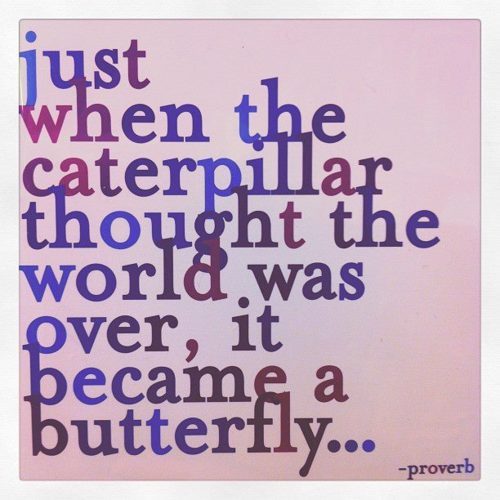
caterpillar butterfly quote

Know that this is the beginning of your own personal rite of passage into older adulthood. This is the natural, normal stage of human development studied by psychologists since Carl Jung, when he experienced it himself. Recognize that you are not the first to feel chaos and uncertainty in your middle years. You are in a well-documented transition period of personal change, growth, and human evolution. And the best way to move through this life stage smoothly is to embrace the new information and knowledge you will be given.

By allowing this in, you have the ability to access the unique instruction this moment has for you. Instead of attempting to run from it, embrace the uncertainty. Begin to believe this moment is giving you access to your own unique brand of power, one you may have never known or acknowledged before. Begin to see that you alone know, somewhere inside, what needs to happen next. Spend the time necessary to listen to the small, still voice within, the one you may have been ignoring for decades. Recognize this voice—perhaps for the first time—as your inner guide, brimming with accumulated information and wisdom. This source knows where you need to go next. It will instruct you in how you must change, grow, and evolve into your best self in this moment. The sooner you begin to believe in its power and trust this valuable inner resource, the sooner you will follow its instructions and find more structure, certainty, and peace in your life.

My main complaint about rural living

I really do try to stay positive. I have even been occasionally accused of being pathologically optimistic. Yes, me! I know complaining isn’t particularly useful, but after four and half years of trying hard to find a few good friends here, I need to talk about this issue.

friends help friends pandasFirst of all, I am a master at spending time alone. I have a healthy appreciation of  solitude. I love to let my mind wander wherever it wishes without any outside distractions. I have kept a journal since junior high and lived alone most of my adult life. I am fundamentally a loner who has spent years learning how to welcome special relationships into my life. I now have an amazing partner. We connect very well, and I love talking to him about just about anything for hours. But I also need a few like-minded friends….
making friendsFriends who write and appreciate good writing and art. Friends to talk about films with or gardening or what birds they’ve been seeing at their feeders lately. Friends to share my hopes and fears with, to talk about philosophy or psychology or history with. Friends I respect and who respect me. Friends who understand the solemn bonds of friendship. Friends like I still have up north in Fort Collins.

I cannot find friends like that here, and I have really tried! So many here come and go with the seasons, others work all the time and don’t have time for friends. Many are older with serious health problems, and most apparently already have their friends and don’t want anymore. Yes, there seem to be as many excuses as people I have met.

Please don’t respond to this post with, “I haven’t had any problem making friends here.” If that is your experience good for you! I need friends who are there for more than small talk. I don’t just want to talk about my husband, or the weather or finding services here. I seek a higher level of discussion exemplified by this blog. I seek those who think about deeper issues like meaning, life, death, philosophy and psychology. Please let me know if you can relate to this plea. Perhaps we could be friends.