Life in the fast (and slow) lane

We just took a trip up to Denver for a few days, and I mean “a trip.” I never get used to the many changes that happen as we drive up there. As far as Pueblo, the highway is pretty mellow, but north of there we quickly get into “get the fuck out of my way” traffic. That’s how I differentiate city traffic from life down here. Suddenly everyone around me is in a gigantic hurry, swooping down on me and sitting on my bumper. This just doesn’t happen much down here, especially on the county dirt roads…

My Mom is doing OK in her senior patio home, although she misses Dad terribly. She says she’s lonely and a little depressed. I get so nervous when she drives in Denver. It’s beginning to be too much for her now. She’s looking forward to moving to assisted living after Covid restrictions lift. Soon I hope. Even going to the store is stressful and exhausting for her.

For me, being with my Mom is always a reminder of the environment and rules I grew up with, especially because she seems to think I’m still ten years old. Heaven forbid I might make some choice or decision on my own! Sometimes I really can’t believe that I’m 65. I’m sure she never believes it. We also have to remind her ever few minutes what day it is and what she’s doing today. It’s sad and yet she is quite comfortable with no real health issues besides a slow dementia.

Yes, it is difficult to see my Mom this way, and yet in her more coherent moments she sees that she has had a great life and appreciates that fact daily. She says she is ready to downsize her life and have others around to help all the time. Thank goodness she can choose and afford the help she needs.
What, Me Worry?

Ever since I wrote this post about taking a worry vacation, I’ve been thinking more about why we worry. Of course there is a reality to why we worry. When I watch the tiny birds outside my window, I think about their worries. They need to be ever vigilant or some other animal might eat their food or even eat them!

In the history of our ancestors on this planet, it would seem the hyper-vigilant of the species must have survived longer than the lazy ones. But in this day, I have very little to worry about.

I realized yesterday that I live in a time and a place where I have less to worry about than just about anyone else in the history of planet earth. I’m warm, I’m safe, I’m well-fed and I’m happy. Yes, many of us have hit the sweet spot, and yet still we worry.

I wonder what percent of why we worry is based on completely faulty reasoning. Some say we worry to feel in control because our attention is turned to solving a certain problem. While we think we are solving the problem, we have the illusion that we have control over it. Worry can be reinforcing. We think due to the fact that we worried properly, we got the desired outcome.

The faultiness of this logic became far too obvious to me when I recently learned that I could not live without supplemental oxygen. It had never occurred to me that I would ever have trouble breathing. I had maintained a healthy lifestyle at 5,000 foot elevation and certainly never smoked. Then, after a few years living at 6,500 -7,000 feet, a doctor observed that I might be hypoxic. Very observant. But it still took a couple years and too many different medical tests to prove to me that I needed to live on full-time oxygen.

See how that theory about worrying properly worked out? Ah humanity! How we labor to convince ourselves that we’ve got this, and yet we still all have to die of something…

Since then I have tried to keep my heart open to change, because it’s coming whether we like it or not. These are my watchwords now:

“Even in seemingly dormant times, we are in transition. Losses and gains are in constant play. We are the change-agent, and we are changed. Even without toil, we transform. So wisdom advises us to open our hearts to transition; to honor fully what is passing, to learn from all that unfolds, and to welcome what arrives at our door each day with courage and curiosity.”

Can you risk a whole afternoon without worry?

Sometimes it seems like I was born with a lot on my mind. Starting with the “terrible twos” I have been perpetually asking why. I think too much, I worry even more, and I can still never figure out what may happen next. I guess I was raised to expect the worst, or else this is simply the human condition – more brains than we know what to do with!

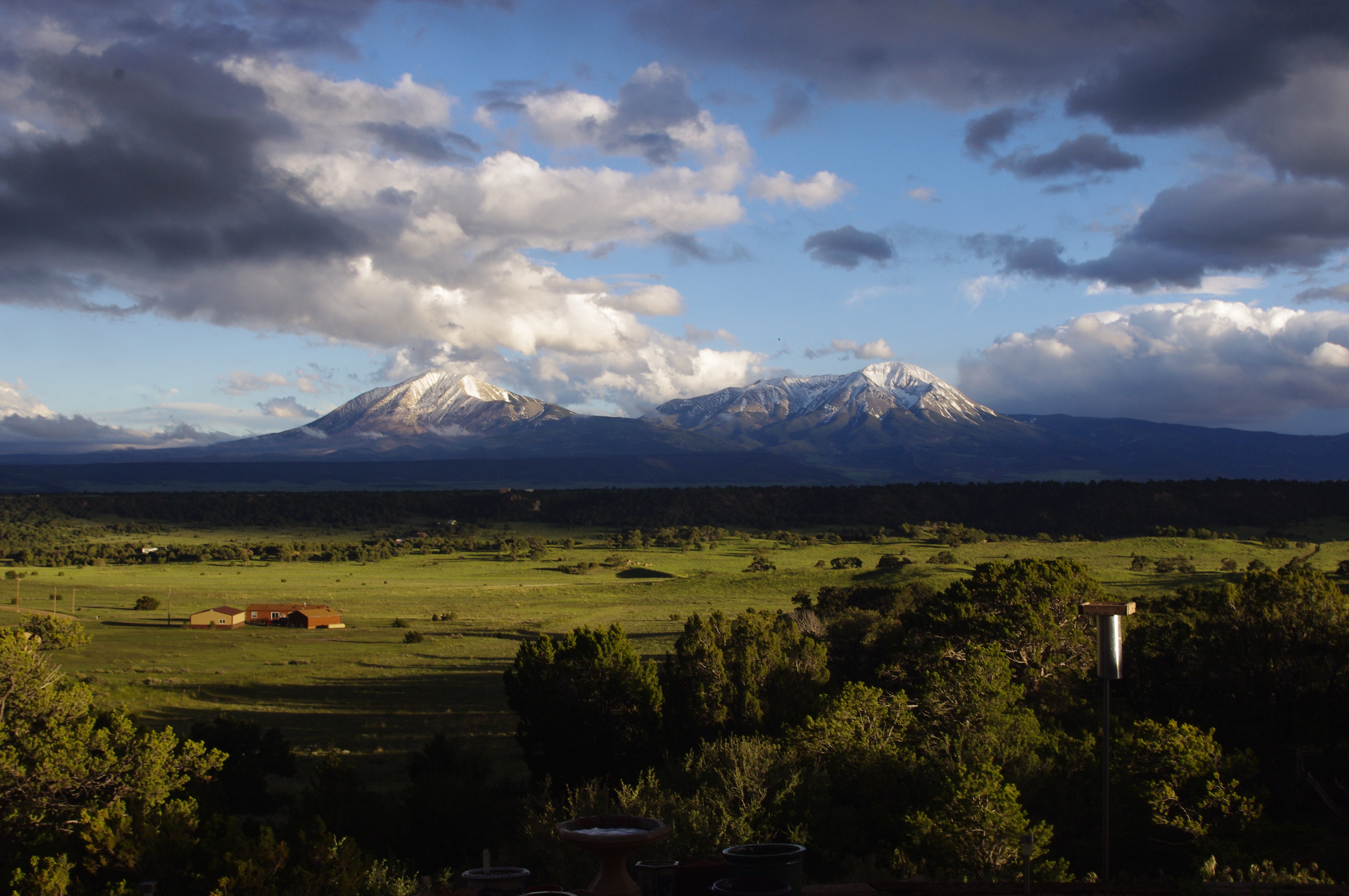
So on this blissfully relaxed snowy day, miles from almost all human beings, I wonder what might happen if I stop thinking and worrying and embrace the peacefulness of this moment in time.

Should I risk this level of non-vigilance? What might happen if I stop thinking for a while? What if I feel as free as the falling snow for just one afternoon? There’s always tomorrow to get back to my worries…

Courage is the mastery of fear

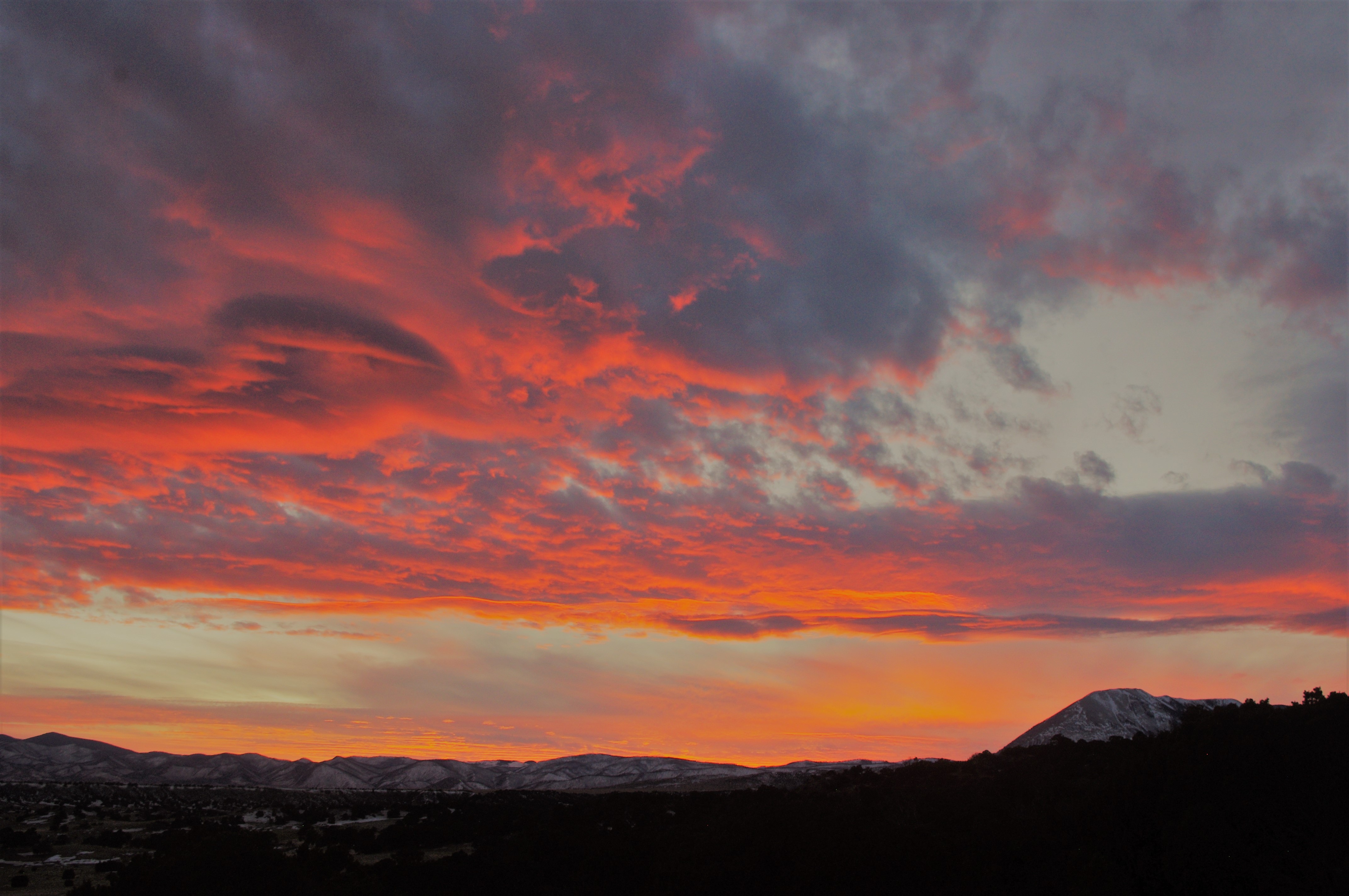
Morning rituals help me center myself for each new day. Since moving out into the southern Colorado foothills with few neighbors, I feel privileged to be able to view an unobstructed sunrise every morning as a part of that ritual.

Often I think, “It won’t be amazing today” and then I turn around in my bed and see something like this.

Living here has made me even more grateful for my life and that it has led to this place full of love and acceptance. It has also led to some tough physical challenges for me. The simple act of breathing has become more and more difficult. I can no longer live without supplemental oxygen. For a while we wondered if it was lung cancer.

There is nothing like the ‘c’ word to make you sit up and take notice, and the challenges of simply breathing every day naturally call my attention to my own mortality. Many years ago I was a follower of Stephen Levine, a well-known poet, author and teacher best known for his work with those with life-threatening illnesses. For over twenty-five years, Stephen and Ondra Levine provided emotional and spiritual support to those who were dying and their caregivers. I highly recommend his books to you. I went to hear him speak in Boulder once for an all day event. That was the beginning of my own internal conversation about my own death. I still enjoy listening to his meditation called:

“Take each breath as if it were your last”

I used to feel so afraid of death. Then my experience of moving quickly in and out of consciousness with a traumatic brain injury provided some strange reassurance. Death is simply the final loss of consciousness. Death is inevitable and really quite simple. I accept it now, and try to love each day that I have left to be alive.

I need to imagine myself in the future doing what I love. For me, now, that is a radical act of courage.

Questions about stevia? Answers here!

I did this research back in 2007 and wrote it up then. Interestingly, no magazine would publish this article, because their sponsors were companies like Coca-Cola. It’s called industrial espionage and it goes on all the time!

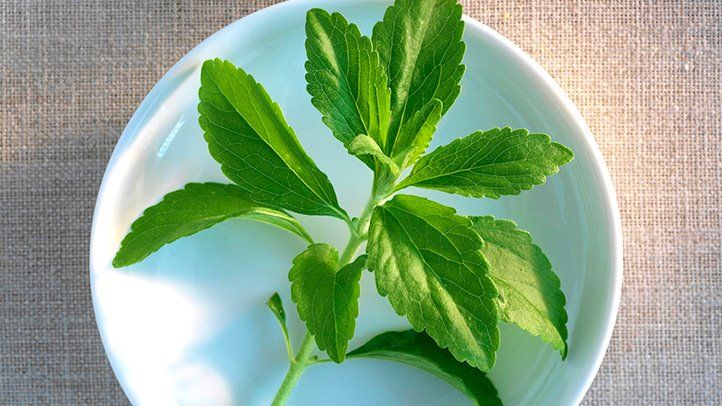
The Mysterious Natural Sweetener Stevia

With its extracts having up to 300 times the sweetness of sugar, but no caloric value, the South American herb stevia would seem to be the perfect solution as we all search for low-carbohydrate and low sugar food alternatives.  Stevia is now showing promise in medical research into the treatment of obesity and diabetes because it tastes so sweet and yet has a negligible effect on blood glucose levels, in some cases enhances glucose tolerance.

So why aren’t we all using stevia instead of food additives like aspartame? Political controversy have limited stevia’s availability in the United States since 1991, when the USDA labeled stevia as an “unsafe food additive” and restricted its import. Even though this herb has been used as a natural sweetener for centuries by the Guarani Indians of Paraquay and now claims over 40% of the Japanese sweetener market, the FDA contradicted its own guidelines under which “any natural substance used prior to 1958 with no reported adverse effects should be recognized as safe.”

Stevia occurs naturally, requiring no patent to produce it. As a consequence, since the import ban in 1991, consumers of stevia continue to believe that the FDA acted in response to industry pressure. Stevia remained banned until after the 1994 Dietary Supplement Health and Education Act forced the FDA to revise its stance to permit stevia be used as a dietary supplement, but not as a food additive.

In an interesting coincidence, Coca-Cola Company and Cargill have now developed a stevia derived patent-pending calorie-free food and beverage sweetener called Rebiana, which they plan to obtain approval for as a food additive within the United States by 2009. It seems stevia may only be safe when Coca-Cola decides to patent it and starts adding it to their own products.

 Suddenly, when big business can make big money on it, it becomes magically safe for the rest of us.

I would only add, be sure what you buy is real stevia and not something with all sorts of additives!

To learn more: https://www.healthline.com/health/food-nutrition/stevia-side-effects