How we steal the bright side from ourselves everyday: Try some cognitive reframing

reframing your life

The most fortunate are those who have a wonderful capacity to appreciate again and again, freshly and naively, the basic goods of life, with awe, pleasure, wonder and even ecstasy. — ABRAHAM MASLOW

Although I learned this psychological tool decades ago, I am always re-learning its usefulness in my own life. What is cognitive reframing? Here’s a definition from an article by social worker Amy Morin:

“Reframing is a technique used in therapy to help create a different way of looking at a situation, person, or relationship by changing its meaning. Also referred to as cognitive reframing, it’s a strategy therapists often use to help clients look at situations from a slightly different perspective.”

I have found that choosing a “different perspective” can also be the opposite of what I automatically go to in my own mind.

The point is that we can and do choose how we see ourselves and our lives everyday. 

If we were raised with a critical or negative view of ourselves and how the world works, the way we will see our lives may be destined to be critical or negative, but that is not the only way to see ourselves. That is not the only reality behind our circumstances.

Here is an example from my own life:

In my present life I may tend to focus on all of the difficult challenges Mike and I have faced since we decided that we needed to leave Fort Collins behind for many good reasons. I may choose to focus on how much money we left on the table by selling our Fort Collins home before prices went way up up there, how expensive and stressful it was to build down here in a rural area, etc, making me critical of our past decisions. Or, I may choose to see exactly how fortunate I have been in spite of many tough misfortunes in the past few decades; to be here now, retired comfortably and happily, and most importantly together!

In addition there are the greater misfortunes of Mike’s horrible experience with CFS for decades, my inability to find another job in libraries at age 49, my traumatic head injury at age 53, and many more difficulties that just come up as we age. Considering all of these factors, we are more than fortunate. How can we be anything but filled with GRATITUDE that we made it to this soft place to fall in this beautiful place?

That is how reframing works, and it can be used in all parts of your life on a daily basis…
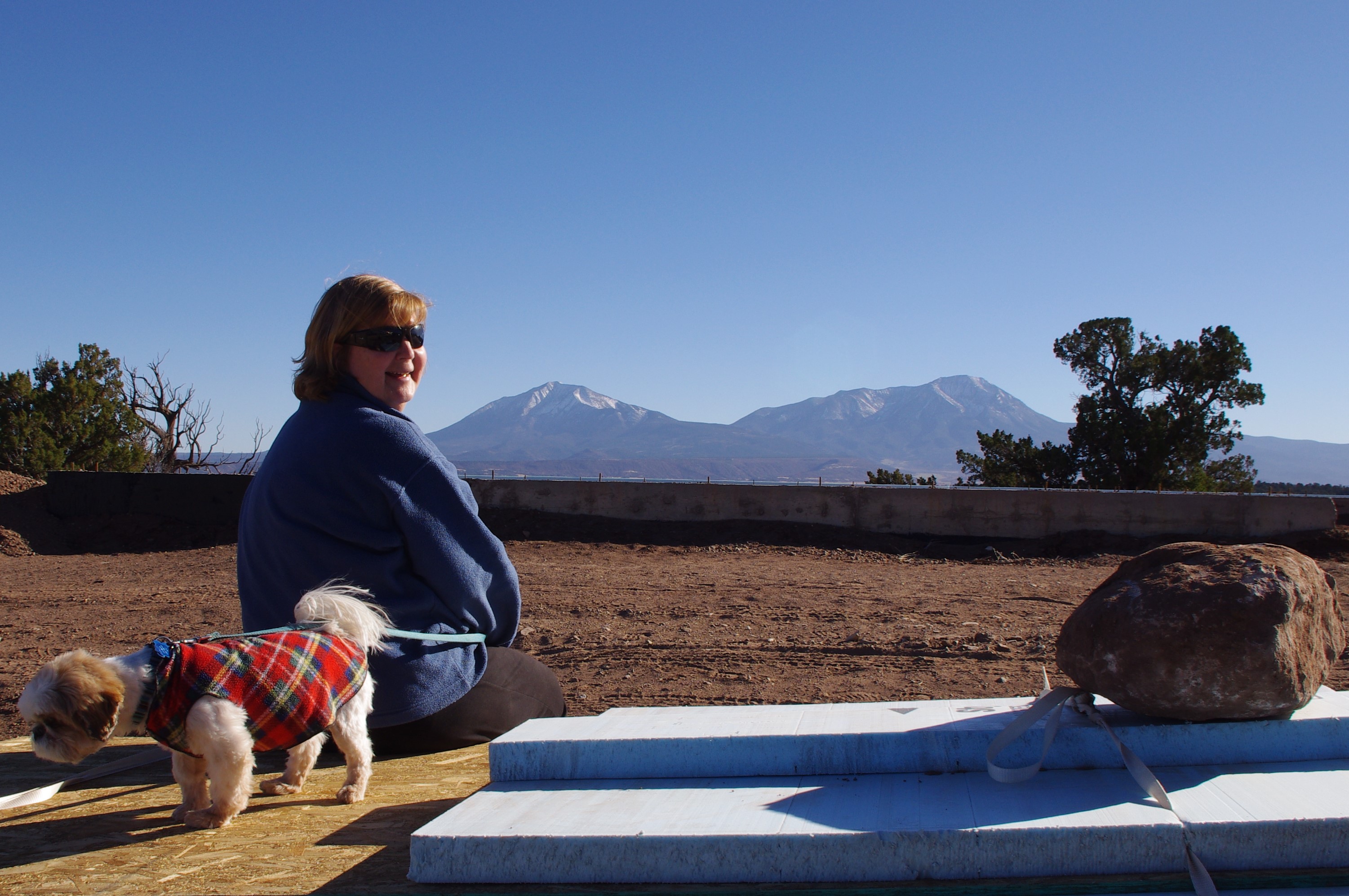
laura and rasta on insulation 2014 (2)

leading to overwhelming feelings of gratitude, a feeling we could all use more of!

Colorado Rocky Mountain High!

It’s time to say “Yes, we’re angry” and fix things!

I saw a fantastic “Brief but Spectacular” essay on the PBS News Hour last night. In case you missed it, go see it now!

cindi leiveHere, journalist and women’s advocate Cindi Leive, “Glamour” magazine’s editor in chief for 16 years, reflects on the well-known phenomenon of men interrupting women and engaging in other dismissive treatment, at everyday places of work all the way to the Supreme Court. 

To quote the beginning of her talk on Women and Power:

“We don’t really embrace female rage, which is why bestselling books for women about work are usually called things like “Lean In” and “Not Screw You, Kevin, for Taking Credit for My Work After You Interrupted Me 12 Times in That Meeting,” which is a book I would buy.

There’s a very well-known phenomenon that most women have experienced and social scientists have studied whereby men enjoy interrupting women, often without realizing they’re doing it. Even female Supreme Court justices are interrupted three times as often as their male peers.

I mean, that’s RBG. Women apologize more than men. Hillary Clinton, by the way, is the only presidential candidate ever to use the phrase “I’m sorry” in her concession speech.”

Does any of this ring true for you?

Sometimes I feel like I spent my entire life apologizing for my very existence! It became a natural part of my speech pattern. I only truly found my own rage at this situation during my midlife crisis when I realized how many cards were stacked against me as a young girl trying to make a difference in the world. It became perfectly clear when a sad and inadequate boss of mine fired me for being too certain of myself at age 49. Yes, he was canned soon after that, and yes, I have been embracing my rage ever since…

“If we tell women, don’t be enraged about the fact that you have been denied a promotion, don’t be enraged at the rates of sexual assault in this country, we’re never going to get anywhere.

We have to say, yes, we’re angry, and now we’re going to fix it.”

I had to spend a few years in counseling and at anger workshops in my 30s before I realized exactly how angry I was. I had spent a lifetime fearing the expression of anger towards anyone. When I finally started having anxiety attacks where I couldn’t breathe or speak when my full anger arose, I learned how to take charge of my rage, instead of it taking charge of me. I owned it and let it out finally!

Interestingly, starting my own blog “Midlife Crisis Queen” in 2007 (now deleted) helped me to begin expressing my full range of emotions, but that wasn’t enough either. So I started the “Midlife Queen Blows Off Steam.” My byline was:

larger things left unsaid

These days I am certainly in charge of all of my emotions including my anger. My “ouch time” has shortened dramatically! Unfortunately Mike sometimes bears the brunt of this new discovery, but I always explain and apologize if I feel I am being unfair to him. I must learn to direct my rage towards those who actually cause it!

I like to think we are all making progress in this department, both men and women. Women historically have only been allowed their pain and depression, and not their anger. Men have been delegated only anger as an expression of frustration. I still find my unhappy moments begin as a deep sadness, but eventually may develop into outrage at the many unfair situations I face.

Observe yourself and you will discover how you deal with life’s frustrations!

Asking for help. How do we learn to let in positive support and encouragement?

Sometimes finding support can be so simple, you wonder afterwards why you waited so long to seek it…

why so hard to ask for helpI started attending the Walsenburg Women’s Growing Circle a couple weeks ago. This is a warm and friendly sharing group with emotional support and some guided meditation. That then opened up a great new opportunity in Helen’s tough but wonderful yoga class at the Washington Underground. I find the women in this group and my new class so much more warm and welcoming than those I have spent the past few years with in a La Veta class. I find that I often made some of my best friends in exercise classes, and it looks like this class will be no exception. So I feel so much more optimistic about solving my two main problems here: a great environment for balance and strengthening exercises, and making new friends.
This brought up again a problem I have always had, asking for help from others. This issue is magnified five hundred percent in the new memoir: Educated. She also suffered from an extreme fear of asking for help, to the point of not even asking for medical assistance with a broken ankle. I would say I spent the first few years of counseling in my thirties working on my fear of asking for assistance from anyone.

So, you might ask, what’s the big deal about just asking. When we ask for help we make ourselves vulnerable. When I was a young woman, there was no feeling I hated more than feeling vulnerable. The times I had made myself vulnerable had been so painful and disappointing. I certainly wasn’t willing to trust enough to ask again. Just the act of going to a counselor for help took me until my early thirties, even though I liked the idea of it and desperately needed it. Note the paragraph or so in Educated: A Memoir, where Tara finally tells her story to a woman at the university counseling center:

“I didn’t understand it then, and I don’t understand it now, but there was something nourishing in setting aside that time each week, in the act of admitting that I needed something I could not provide for myself.”  — pg. 316

I see now how lucky I was in my early thirties to find the best therapist for me, one who I could finally trust and in that way learn how trust works in human relationships. Re-parenting therapy is powerful stuff if you find the right therapist and then take the necessary time and energy to experience it fully.

asking for helpAnd now I know I would have never been able to trust enough to fall in love again at age 49 if I hadn’t worked so hard at accepting my need for the healthy help of others, and allowing some vulnerability into my life back then. Going it alone is always an option. Just make certain you are doing it as an empowering choice, and not out of anger and future fear of betrayal.
Authenticity: Confronting the hard work of being present in your own life

How refreshing to be surrounded by women at all stages of personal development like I was the other night! It reassured me once more that the soul surgery I have done on myself, which then led to the creation of my various books on midlife transformation, was truly not in vain.

Here’s an example of that writing from my book: Find Your Reason to be Here: The Search for Meaning in Midlife

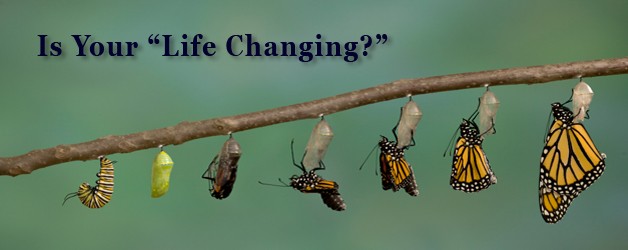
pupa tp butterfly life changing

Often we need to feel our deepest pain before we are willing to risk the painful process of growing up. Breakdowns can empower us to grow into our highest self.    A few years ago I presented a talk to a group of unemployed people in their middle years. When I was finished, the first person to raise her hand asked me, “Do you believe we have to hit bottom in our lives before we truly begin to change?” My answer at the time was, “I did.” 

The fact is that most of us will not begin to change until we become uncomfortable enough to admit defeat. Most of us need to be absolutely convinced that the “plan” we’ve had for life is simply not working. The way this usually comes about is through major life changes that demand our complete attention. Divorce, serious illness, the death of a loved one, and long-term unemployment, especially in our 40s and 50s, seem to be the most common events that lead to the end of our naïve belief that we have control over everything that happens in our lives. And these events become ever more common as we age. These unforeseen and often unforeseeable occurrences can inform us in no uncertain terms that changes in our plan are now in order.

Sooner or later, everyone sits down to a banquet of consequences.

We may first try to defend against the onset of pain and confusion by denying or ignoring this sudden lack of certainty or security in our lives. We may seek to escape into bad relationships, drug addiction, religious faith, or even artificially extreme feelings of independence, as we defend against our need to include others in our lives.

Eventually we may discover that, even though it seems completely counter-intuitive at this tough spot in life, accepting and embracing the chaos and uncertainty we feel surrounded by is our first, best step towards peace. Stop, sit down quietly, and begin to feel the enormity of this apparent crisis, which may also be one of the most important opportunities of your adult life. Can you trust in the power of your own psyche to survive this crisis and in that way heal itself?

caterpillar butterfly quote

Know that this is the beginning of your own personal rite of passage into older adulthood. This is the natural, normal stage of human development studied by psychologists since Carl Jung, when he experienced it himself. Recognize that you are not the first to feel chaos and uncertainty in your middle years. You are in a well-documented transition period of personal change, growth, and human evolution. And the best way to move through this life stage smoothly is to embrace the new information and knowledge you will be given.

By allowing this in, you have the ability to access the unique instruction this moment has for you. Instead of attempting to run from it, embrace the uncertainty. Begin to believe this moment is giving you access to your own unique brand of power, one you may have never known or acknowledged before. Begin to see that you alone know, somewhere inside, what needs to happen next. Spend the time necessary to listen to the small, still voice within, the one you may have been ignoring for decades. Recognize this voice—perhaps for the first time—as your inner guide, brimming with accumulated information and wisdom. This source knows where you need to go next. It will instruct you in how you must change, grow, and evolve into your best self in this moment. The sooner you begin to believe in its power and trust this valuable inner resource, the sooner you will follow its instructions and find more structure, certainty, and peace in your life.

Happy forget your mistakes and start over day!

IMGP7713

A brand new year just for you!

There’s a great hashtag on Twitter today: “Start over in 5 words.” Yes, I know, we can’t usually erase all evidence of the many stupid things we’ve done and start over, but just for this one special day let’s try it! And since I seem to be stuck in “life review” lately, Why not?

I can think of literally a million stupid things I’ve done. Ah, let me count the ways I have proven my own stupidity… but then, many have done the same to me. I see my twenties as a whole world of stupidity now. How was I ever SO NAIVE? I got taken advantage of in just about every way possible, mainly because others could get away with it! They must have been amazed to find such a apparently smart and yet stupid girl. I, of course, blame this on my parents (hahahaha…) Unfortunately the stupidity didn’t stop there, as you will know if you have ever seriously looked back at your life from your sixties.

This brings us to my favorite reward for decades of aging: SELF-COMPASSION. Get into to it and you will see that you weren’t really all that stupid, just inexperienced in life. You didn’t see any of that coming! Hell, you didn’t even know yourself back then. We were all messed up in our twenties and probably lucky to just survive them. Reward yourself for your survival and the fact that you now thrive in a whole new world of loveliness. At least we learn in life and can now celebrate the rewards of so much self-struggle.

be kind to yourself

Forget your mistakes for this first day of a whole new year and celebrate your lovely survival to enjoy this day!

Gratitude, Pure and Simple!

As I prepare to pen this final post of the year 2018, I would have to say my heart is filled with gratitude. My life has been blessed with a wonderful family who all still live. My Dad, at almost 90, is as healthy as I might hope for, and my Mom, although she struggles everyday for clarity, is as generous and loving as ever.

My brother who lives in the woods in a lean-to, loves his life at age 65. He knows exactly what it means to live “wild and free.” Talks with him always remind me of Henry David Thoreau. He shares his own version of genius with the rest of us.

My sister is an international star in the field of long-term care, who else to manage my parents’ many health concerns? Diane knows what she’s talking about when it comes to end-of-life issues. She teaches us all what she knows.

great Mike photo of snow and Spanish Peaks

And finally, as I look out over our majestic fields of snow, I love where I live with my favorite people and pets. The sun struggles to come out and warm our passive solar home today, reminding me everyday how dependent we are on its power and warmth.

every day is the best day of the year

I am forced to ask everyday: How did I ever get so lucky? 

An abundance of LOVE is felt…