Personal Freedom

 One aspect of Kya’s life I found easy to relate to, was how she observed or read about animal behavior to inform her about human behavior. This comes through clearly as she describes the behavior of the lawyers during her trial. Ever since I saw the short nature documentary film
Inspiration for uncertain older writers (like me!)

Have you heard yet the story of Delia Owens? I happened across her story on CBS Sunday Morning yesterday and felt new encouragement. She’s 70 and a loner from way back. Her new and first novel is Where the Crawdads Sing, although she has published non-fiction before (like me). This novel is tough to categorize; it’s a love story, a murder mystery, a courtroom drama, and an ode to the outdoors – all in one. It took her the better part of a decade to write, inspiration coming whenever it came.
I love the way she waits for wisdom even in her sleep:
“I sleep at night with a little pad of paper in my bed with a flashlight and a pen, and I wake up in the middle of the night and write something down,” she said. “Something that I think is brilliant! And then when I wake up in the morning I’ll look at it and half the time I can’t read what I wrote.” A thousand such moments became little scraps of gold, like this one:
“Sand keeps secrets much better than mud.” That one made it into her book.
I found her whole story so inspirational. I also constantly find ideas or quotes popping into my head, especially in the shower, the source of my greatest inspiration. I must have a million snippets of paper like that, and never use these in my books, and the freedom of writing fiction also excites me.
We’ll see if any of these ideas go anywhere, but in the meantime, I love the fantasy!
Puzzle, a near-perfect midlife movie!
If the best measure of the perfect story is to show realistically how the main character can change and grow, than this is the perfect product. I’m happy to see more films recently focused on introvert loners who blossom out into the world in a beautiful way, and this is one of those. We all have unique skills we may not know we have, this is that story.
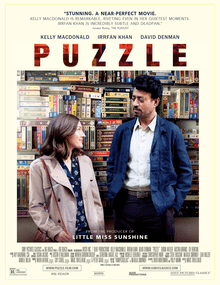 Agnes (played by Kelly Macdonald) has had no opportunities to develop herself or her unique skills. She is a middle-aged housewife with no self-confidence living in a small town. She is devoted to her church and her husband and grown sons’ needs, hardly ever noticing her own. That is until she realizes how much she loves doing jigsaw puzzles. So she makes a trip into New York City to buy new puzzles, completely out of her comfort zone. While there she happens to see a sign requesting a puzzle pardner. Agnes is a true introvert, not comfortable with strangers, but she loves doing puzzles so much she takes a chance and meets up with Robert (played by Irrfan Khan).
They eventually enjoy many deep, intellectual conversations as Robert keeps encouraging Agnes to become her full Self, brilliant as she is. As he does her priorities change. She discovers the rebel within who soon becomes angry and assertive, discovering and caring most about her own needs for the first time in her life.
Who knew there is a national and world jigsaw puzzle competition? Who knew that “puzzles are a way to control the chaos of the randomness of the world.”
An appropriate sidelight: “Kelly Macdonald’s career began while she was working as a barmaid in Glasgow. She saw a leaflet advertising an open casting session for Trainspotting and decided to audition, winning the part of Diane…”
LOVED this great quote from Wikipedia about this film:
“They [the puzzlers] fall in love out of their mutual respect and for the ability to see countless random events in their lives taking the shape of a perfect picture similar to the fragments of a jigsaw puzzle. This is due to their realization that at the end of the day there are only right choices no matter how many wrong pieces might have been fit into wrong places. This helps them to discover their inner selves…” Wikipedia on Puzzle (2018)
How we steal the bright side from ourselves everyday: Try some cognitive reframing

The most fortunate are those who have a wonderful capacity to appreciate again and again, freshly and naively, the basic goods of life, with awe, pleasure, wonder and even ecstasy. — ABRAHAM MASLOW
Although I learned this psychological tool decades ago, I am always re-learning its usefulness in my own life. What is cognitive reframing? Here’s a definition from an article by social worker Amy Morin:
“Reframing is a technique used in therapy to help create a different way of looking at a situation, person, or relationship by changing its meaning. Also referred to as cognitive reframing, it’s a strategy therapists often use to help clients look at situations from a slightly different perspective.”
I have found that choosing a “different perspective” can also be the opposite of what I automatically go to in my own mind.
The point is that we can and do choose how we see ourselves and our lives everyday.
If we were raised with a critical or negative view of ourselves and how the world works, the way we will see our lives may be destined to be critical or negative, but that is not the only way to see ourselves. That is not the only reality behind our circumstances.
Here is an example from my own life:
In my present life I may tend to focus on all of the difficult challenges Mike and I have faced since we decided that we needed to leave Fort Collins behind for many good reasons. I may choose to focus on how much money we left on the table by selling our Fort Collins home before prices went way up up there, how expensive and stressful it was to build down here in a rural area, etc, making me critical of our past decisions. Or, I may choose to see exactly how fortunate I have been in spite of many tough misfortunes in the past few decades; to be here now, retired comfortably and happily, and most importantly together!
In addition there are the greater misfortunes of Mike’s horrible experience with CFS for decades, my inability to find another job in libraries at age 49, my traumatic head injury at age 53, and many more difficulties that just come up as we age. Considering all of these factors, we are more than fortunate. How can we be anything but filled with GRATITUDE that we made it to this soft place to fall in this beautiful place?
That is how reframing works, and it can be used in all parts of your life on a daily basis…
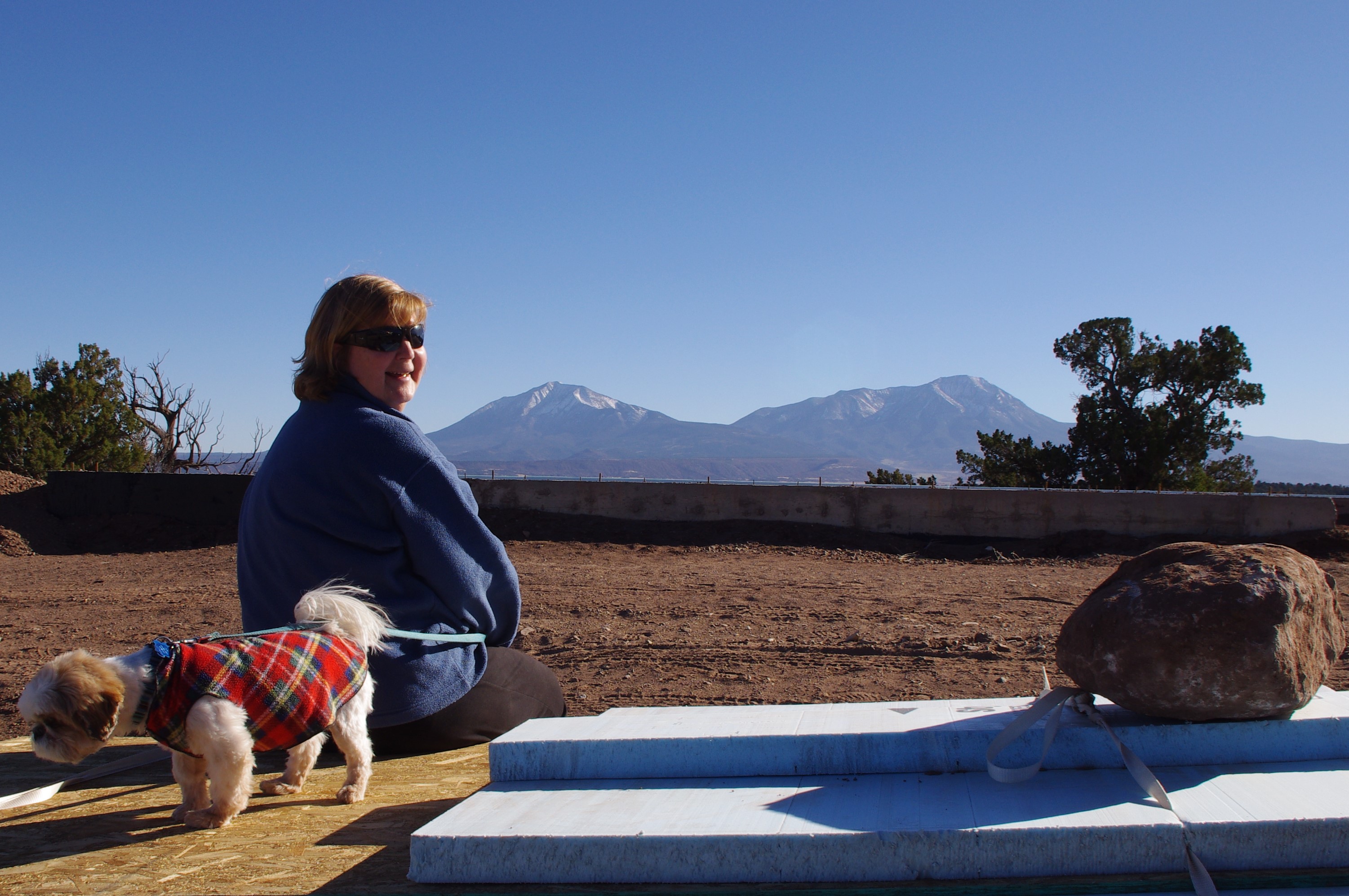
leading to overwhelming feelings of gratitude, a feeling we could all use more of!
Colorado Rocky Mountain High!
New Rules for Retirement: Do it NOW!
No one gets out of this alive. With retirement, you have more time to do the things you love, but the extra time is wasted unless you use it productively and actually live your dreams. Make that phone call to let someone know you are thinking of them. Better yet, go visit. Mend fences, hug, show appreciation, be kind to people. Don’t be complacent; you never know when the people you thought would be there forever will be gone.
Money is overrated. Money is a tool. To see it as anything else is folly. Yes, we all need some, but money is a means to an end, not an end in itself. Spend wisely and then let it go.
Time is your most valuable asset. You only get so much, and that is it. You can’t hoard it. You can’t get it back. You can’t turn back the clock. The best you can do is to start investing your time wisely.
Stop searching for happiness. The only place you can be happy is in the present. Stop chasing tomorrow and fully experience happiness today.
Your bucket list is crap. Putting things on a bucket list can be just another way of deferring your aspirations. Sure, go ahead and make a list but remember: Life goes on while you are busy making other plans.
Comfort is overrated. Keep pushing yourself and trying new things. Challenge yourself to more growth, not less. If you get disabled in one area, develop other ones!
Go with your feelings. No need to justify anything you want to do. It is OK to do things solely because you want to. Take dance lessons. Learn to play the zither. Who cares about the critics?
You are responsible. You get to choose how you respond to everything. Yes, everything. Your response to anything is a choice. You get to choose what matters. You didn’t get this far to keep jumping through other people’s hoops. Don’t forget the importance of yourself.
You can’t make others happy. You can listen. You can be kind. You can smile. You can respect. You can offer assistance. You can contribute tools, but everyone is responsible for their own happiness.
Let it go. Everyone has regrets, but don’t live a life of sorrow. The past is gone; find a way to come to terms with it. If you need to call up those from your past, do it and get it over with. Today is all we really have.
Stop complaining. Most people don’t care about your problems; some are happy you have them. Complaining only serves to keep negatives at the center of your life.
Your aspirations mean nothing if you don’t make an effort to realize them. Take action to get the things you want TODAY.
Ambition can be a killer. I hate to break it to you, but you aren’t going to be No. 1 in everything you do. Breathe, and be satisfied, with the act of living today. Don’t let blind ambition cause you to lose sight of what is important. Savour all of life’s moments, even the bad ones, because you only get so many and you may wish you had paid more attention.
Take care of yourself. You aren’t much use to yourself or anyone else if you don’t. Looking out for your health and happiness is not the same as being selfish. This is fundamental.
It is OK to fail. Failure is part of life. Failure teaches us valuable lessons. In fact, we learn more from our failures than our successes.
You don’t have to wait for an apology to forgive. We have all been wronged at one time or another. Waiting for an apology from someone who may never offer one is a waste of life. Who cares? Hell, if this is a gray area and it’s possible the other person is waiting for an apology from you, apologize first. What does it matter? Life is too precious to play those kind of games.
Negativity wastes life. Being positive and optimistic in the present has a favorable impact on the future. Yes, bad things happen, but so do good ones. Remember, what you focus on grows.
Be curious. See both sides. Stubbornness is not strength. When given new information, intelligent people research it further. Is it true? Spend the time to read, develop and evolve your opinions. We grow when we can admit we are wrong. Your life stagnates when you are wrong, but you refuse to admit it.
It’s time to say “Yes, we’re angry” and fix things!
I saw a fantastic “Brief but Spectacular” essay on the PBS News Hour last night. In case you missed it, go see it now!
 Here, journalist and women’s advocate Cindi Leive, “Glamour” magazine’s editor in chief for 16 years, reflects on the well-known phenomenon of men interrupting women and engaging in other dismissive treatment, at everyday places of work all the way to the Supreme Court.
To quote the beginning of her talk on Women and Power:
“We don’t really embrace female rage, which is why bestselling books for women about work are usually called things like “Lean In” and “Not Screw You, Kevin, for Taking Credit for My Work After You Interrupted Me 12 Times in That Meeting,” which is a book I would buy.
There’s a very well-known phenomenon that most women have experienced and social scientists have studied whereby men enjoy interrupting women, often without realizing they’re doing it. Even female Supreme Court justices are interrupted three times as often as their male peers.
I mean, that’s RBG. Women apologize more than men. Hillary Clinton, by the way, is the only presidential candidate ever to use the phrase “I’m sorry” in her concession speech.”
Does any of this ring true for you?
Sometimes I feel like I spent my entire life apologizing for my very existence! It became a natural part of my speech pattern. I only truly found my own rage at this situation during my midlife crisis when I realized how many cards were stacked against me as a young girl trying to make a difference in the world. It became perfectly clear when a sad and inadequate boss of mine fired me for being too certain of myself at age 49. Yes, he was canned soon after that, and yes, I have been embracing my rage ever since…
“If we tell women, don’t be enraged about the fact that you have been denied a promotion, don’t be enraged at the rates of sexual assault in this country, we’re never going to get anywhere.
We have to say, yes, we’re angry, and now we’re going to fix it.”

 Adventures of the NEW??? Old Farts