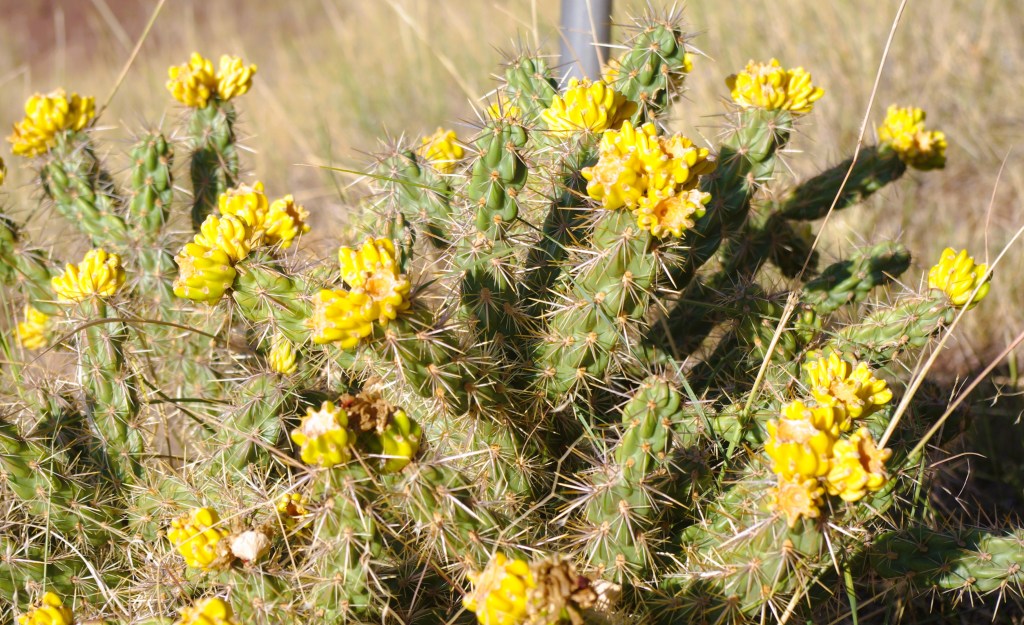
Cholla Cactus Fruit!

In this part of southern Colorado we have millions of Cholla Cane Cactus plants growing everywhere.

At the beginning of July you can sometimes find millions of these plants blooming along I-25 south of Pueblo!

They were so beautiful and new to me when we moved down here in 2014, that I clipped off a few and planted them in my own garden. I planted this first one under our Rocky Mountain Blue Bird house five years ago, so no one would disturb the baby chicks in there.

As it turns out, their yellow fruit are also quite attractive!

These juicy, yellow fruit have a sour salty flavor. Once the spines are removed they can be eaten raw. Another favorite way to prepare them is in a fruit smoothie. Their salt content can help people in the early stages of dehydration (assuming water is available) by replenishing salts lost to sweating.

Native American discovered that the Cholla Cactus provided a variety of medicinal applications. It’s fruit serves as a diuretic to alleviate urinary tract discomfort, the sap offers anti-inflammatory benefits, the roots are believed to prevent kidney stones, and the buds act as a natural laxative.

I love growing new plants down here and learning about them!

“Words” from a Broken Brain

For as long as I can remember, I have always loved words. Even before I learned English, I made up my own language to communicate with my cat and doll. Words meant so much to me. They seemed like magic. With the right words you might get others to understand your most important and secret feelings. With words you could begin to understand other peoples’ worlds. They were the key to everything!

As I grew I kept loving them more and more. Even though, or perhaps because, I was a book worm at heart, words were my own kind of magic. So I read everything I could, especially about other women’s lives. I wondered how they made it through the difficult world I saw outside my door. Words were my key to understanding my world. Then I learned how words could resolve misunderstandings and bring people closer together, another form of word magic. I always wanted to learn more.

Eventually I became a librarian with a whole building full of words. So many stories from all over the world, explaining why we do the things we do. I wanted to learn everything in those books! I began to wonder if I might write a book someday, but then I would find a book that expressed my ideas or feelings better than I could and say, “See, I hasn’t meant to be a writer.”

My own version of a midlife crisis at age 49 changed my mind. I felt like I had to write to understand and explain to others what I was experiencing. This phenomenal transition was too important for others to miss out on. That is when I became a writer. I started a blog that took off, with thousands of followers who seemed to understand what I was talking about. Words helped me to expand my world, all around the world! I had friends in Europe, Asia and Australia who understood the exceptional opportunity of changing everything in midlife.

Since then much has changed in my life. A traumatic brain injury in 2008 began to stand in the way of my wonderful relationship with words. I did get back to writing and still loved it, but then I learned, through a few concussions, that I needed to live on oxygen fulltime. And the concussions took their toll. Now I can only properly handle fewer and fewer words. A conversation with another can only go on for an hour or so before my brain gets tired and needs some silence to rest up for more time with others. Some days I have trouble remember the most basic words, like yesterday I had a hard time remembering the word for “dimples.”

For all of these reasons I will not be writing here much longer. My joy in writing is diminishing slowly. The concentration required seems to hurt my mind, especially being on the computer so long. After writing something like this I have to stare off into space for a while to recuperate.

But I do still love words and will continue that relationship for as long as I live. And I will also continue to admire when other writers get it so right. I believe this writer got it right in describing my favorite vision of life after death:

“There is a moment when your dreams and memories merge together to form a perfect world. That is heaven. Each heaven is unique. This is the world of you. The land is filled with all you hold dear, and the sky is your imagination.” – From the end of the movie “1883” written by Taylor Sheridan

Time for Aspen Leaf-Peeking Again!

We took a beautiful drive yesterday up to Westcliffe and then east towards Colorado City to see the autumn leaves before they get knocked off with the first snow storm in the mountains…

As it turns out the high peaks of Sangre de Cristos on the way up to Westcliffe are already covered in snow, with the aspen turning right below that.

Then we headed east and witnessed lively colors every time we went around a new curve!

Looks like it’s time for Octoberfest again in La Veta!

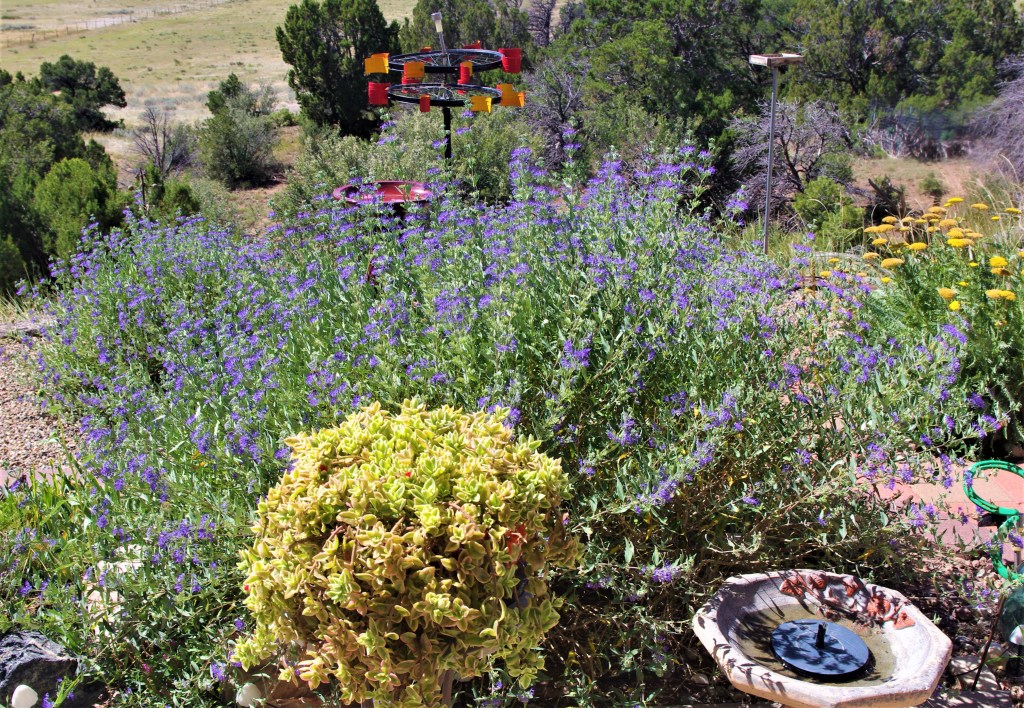
August Colorado Foothills Garden Scenes

Although just north of here has received more than abundant rainfall this summer, we are very low on our Water Year measurement at only 11 inches so far, with less than two months to go. That has been pretty tough on my xeriscape garden & landscape.

But my Blue Mist Spirea bushes are bigger and brighter than ever!

And curiously, all the big sunflowers have sprouted on a hill below our home on the east side.

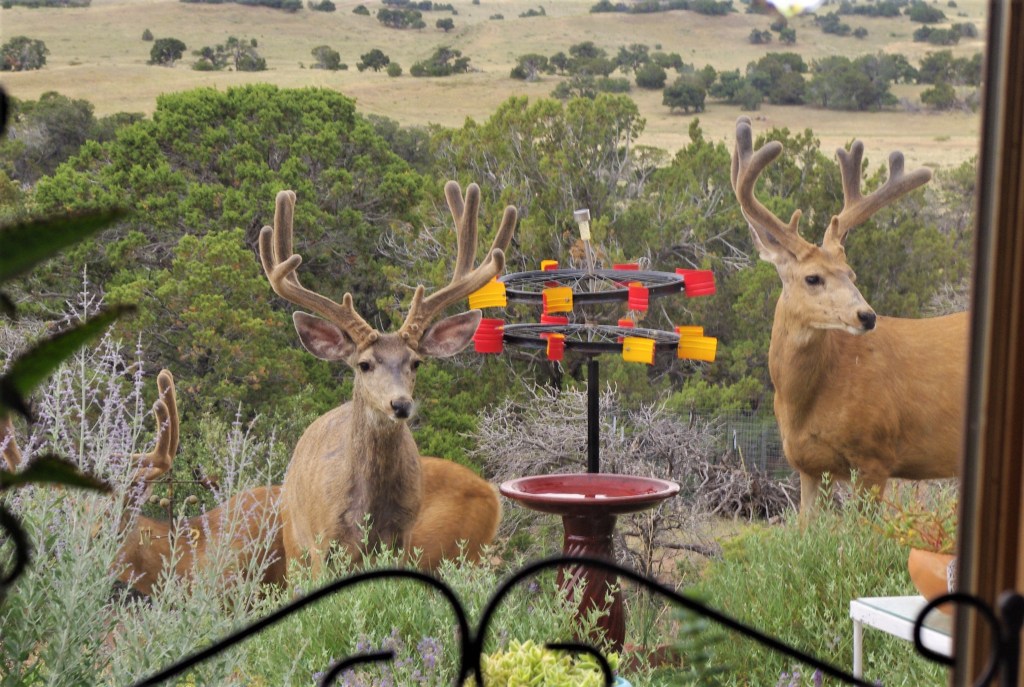
Our fountain & bird bathes continue to attract all kinds of birds, bunnies, chipmunks, bobcats, badgers…

and, of course, deer. It’s so fun to look outside at various times during the day and enjoy their antics.

This year is in stark contrast to the much wetter August of 2021, when we had had twice as much precipitation by this time in the water year! GO SEE PHOTOS HERE:

Observing two different dementia experiences

I just realized yesterday that in the past few years my sister and I have been witnessing two different dementia experiences up-close and personal. Since my father’s death in March 2020, both our mother and our brother have been slowly losing touch with reality. While my sister has taken care of our mother in a “quality” assisted living facility in Denver, Mike and I have been doing our best to assist my brother in a small rural town in southern Colorado. Another aspect of these different experiences is that my mother has retirement funds to spend on her care, while my brother receives all of his care through us, Medicare, and Medicaid.

Our brother John, Christmas 2021

The experience I am most familiar with is that of my brother. He came here at the end 2020 from a lean-to he had been living in near Oak Creek north of Sedona for a number of years. He knew he could no longer live that life with no assistance if he needed it. He had a few health problems then, but he was generally doing well. Since then he has started on supplemental oxygen and various other drugs and supplements. Only in the past year of so has he begun complaining constantly of “total brain fog” and terrible memory lapses.

Our mother (on right) at my father’s 90th birthday party, February 2019

Since our Dad died in 2020, right before the “COVID years,” Mom was forced to live alone for a while. She entered assisted living two years ago as her memory continued to fail her. Hers seems to be more like classic Alzheimer’s disease with gradual memory loss. She no longer cares how she looks or what she wears, and only occasionally reflects on her many losses. However, she is still quite aware that her memory is failing her. This really is the long goodbye for us…

Luckily my sister and I have each other and our husbands to share our concerns and losses, but it is still quite a challenge to watch our family fall apart before our eyes. As my sister says, with her decades of experience in the fields of long term care and gerontology,

“Everyone tells you that aging is tough, but you don’t really get it until it happens to you…”

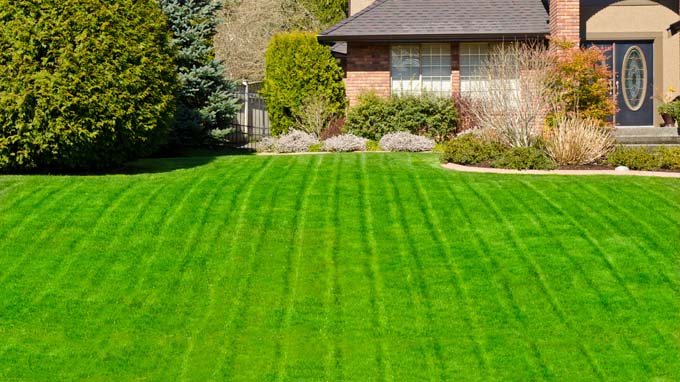
The Legacy of American Lawns & “Lawn Nazis”

I got a few interesting responses to my last post about re-wilding areas destroyed by farming or other forms of human landscape “improvements.” The 4th episode of PBS “Human Footprint” this week caused me to think further about our American addiction to lawns and lawn care.

Did you know one 400 acre golf course uses 358,000 gallons of water every day? We have more than 40 million acres of turf in the United States that use over 80 millions pounds of fertilizer per year.

Grass is the most resource intensive plant in our country today.

In a country where we so highly value productivity, lawns are the ultimate in unproductive.

The story goes that we can apparently blame the Brits originally. The old idea of owning your own manor and “estate” added to our own brand of individualism in the USA caused many of us to want to own a home on maybe a quarter acre in suburbia. Our home was our castle, and the surrounding space was our territory to improve and maintain. Although some grasses have American-sounding names like Kentucky bluegrass, most of the turf-grass species we plant in the United States are native to Europe.

We also have a strong tradition from our earliest days of feeling like we had “too much land” (after we stole it from the native Americans). If we farmed it, or ranched it, or timbered it for five years than that land was ours. This set the precedent that we should not just sit on land, we should “improve it.” Every place humans inhabit is made artificial in some way, and in our country that usually involves lawns.

The Lawn is the Ultimate Male Status Symbol, showing how deeply grass is rooted in the American psyche.

Thinking about these American traditions reminded me of how proud my Grandpa Carter was of his small home and yard outside of Kansas City, Kansas. He took so much pride in keeping it perfect with his walking mower and lots of watering. And my own Dad the botanist, a lifelong advocate of leaving things natural, still worked hard to keep a nice lawn around his home.

The younger generations may not be so convinced that lawns are a good thing.

To quote that PBS special: “Grass is a signal. Just having it says that we are part of a community.”

And yet, as Nancy Hill pointed out after reading my last piece, those who don’t choose to maintain traditional yards in suburbia may be ostrasized by HOAs and other nasty neighbors. Covenants can be legally enforced. I had never before heard of the term “Lawn Nazis.” In a country that prides itself in offering “freedom of choice,” when it comes to the land around our own homes, we can be forbidden to plant native plants or go natural.