On Monday the 7th we broke a record with a high of 92 degrees here in southern Colorado…
On Tuesday we had a high of 35 with a record low for September and rain turning to sleet and then snow this afternoon. The forecast? Snow all night into tomorrow afternoon.
By Wednesday morning we had received six inches of snow on September 8th-9th! Amazing!
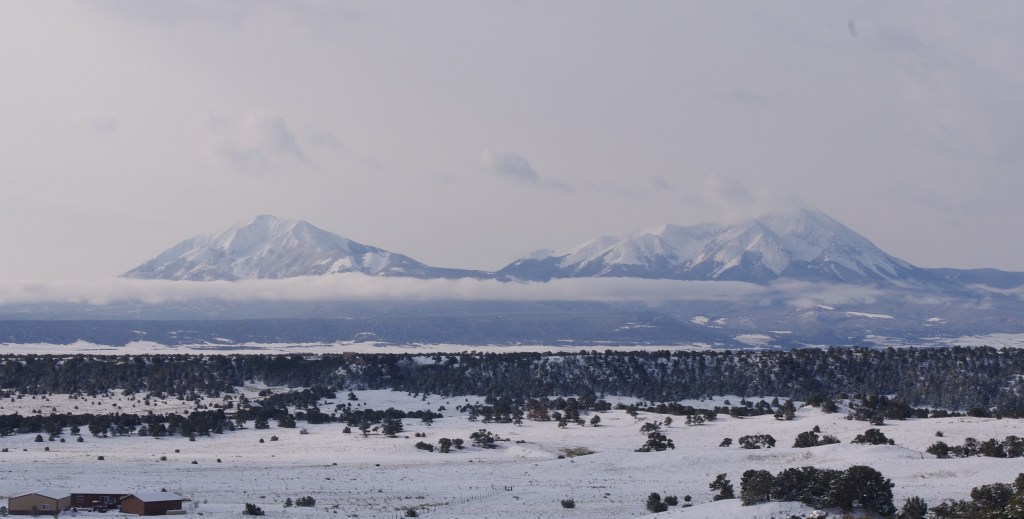
Thursday morning, September 10th, snow has returned to the Spanish Peaks!
HAPPY 15th ANNIVERSARY TO MIKE AND I!
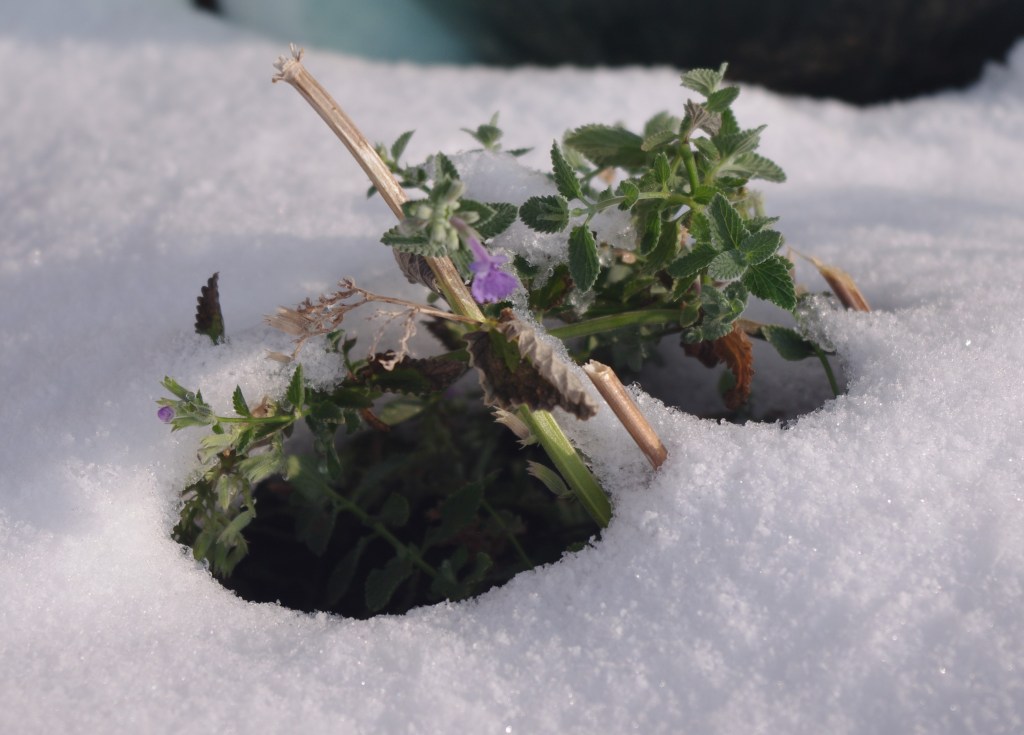
This catmint flower is my definition of resilience!
It struck me the other day, as I was enjoying 20/20 vision for the first time in my entire life (get some cataract surgery!), and feeling particularly relaxed and happy, that most of us don’t realize that we do make perhaps unconscious choices everyday. Do you choose to feel constantly worked up about Covid-19, that crazy guy at the top, upcoming elections, etc.? Would you like to seek more positive distractions?
Think about it this way, most of us have it better than just about everyone else in the world today, AND better than most in human history! I thought, “Do we need to constantly find more to worry about? We’ll all be dead soon, so lighten up!
That same day I received a review copy of a book I can highly recommend to those of you who would like suggestions on how to turn your attention to spiritual things that create space for you to pause and reflect, nourish your mind, and make useful tools to assist you in your personal development journey. The Mind Remedy: Discover and Use Simple Objects to Nourish Your Soul by UK psychologist Ruth Williams allows us to explore our thoughts, ideas, emotions, and memories through objects that are touching, thought-provoking and soul-stretching. From dream catchers to worry beads, this beautifully crafted book shares the origins, meaning and practice of creating 20 different enlightenment tools to increase feelings of well-being. These tools are divided into different headings like “Finding Connection”, “Inner Peace”, “Self-Discovery” and “Finding Your Roots.”
For example, here is a sample of the page on creating your own worry beads. Sometimes we need something tactile to sooth us…
“Simple things really can nourish the mind. When we anchor the unseen processes of the mind to something that we can hold in our hands, then the intangible becomes real. Healing feels within reach because we can touch the object that will carry us there…”
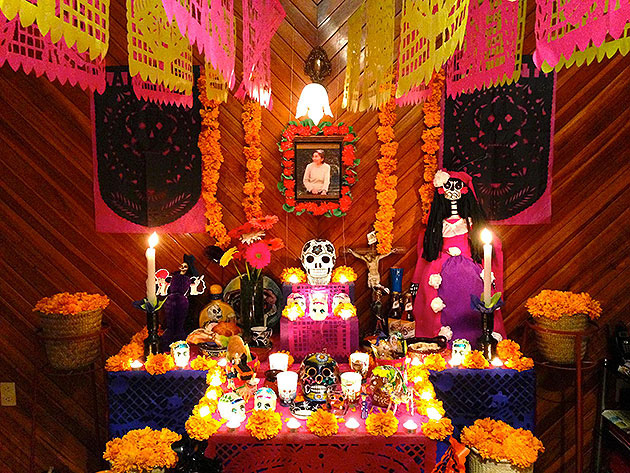
From time immemorial, we humans have been joining together to mourn or memorialize our dead. This is a tradition we seem to need, to get together and recognize the death of a loved one. In the past this would be called a funeral. Today it can be any kind of ceremony to gather together and grieve the passing of someone special to us.
My father died on March 10th of this year, right before “the virus” began to run and ruin our lives. We had hoped to have a special ceremony for Dad at the Denver Botanic Gardens, a place where he often lectured and was well known as one of our state’s foremost botanists. That could not happen. And now, six months later, we still wish we could do something to get together and commemorate his life and his passing. Then I realized, hundreds of thousands of Americans are feeling the exact same way. Because of this horrible pandemic, so many of us cannot even grieve in the usual ways. At least my Dad did not have to die alone, but we were then left with no way to get together and mourn him. I’m so glad we did at least have a fantastic 90th birthday party for him. That was a wonderful coming together of those who loved my father and knew his was a life worth celebrating!
I am struck again by how fundamentally social we are as a species. From New Orleans jazz funerals to Tibetan sky burials, we always find our own ways to deal with love and loss. We need that time to fully embrace our return to the earth from which we came. What could be more natural than dying, and yet it always seems so sudden and unexpected…
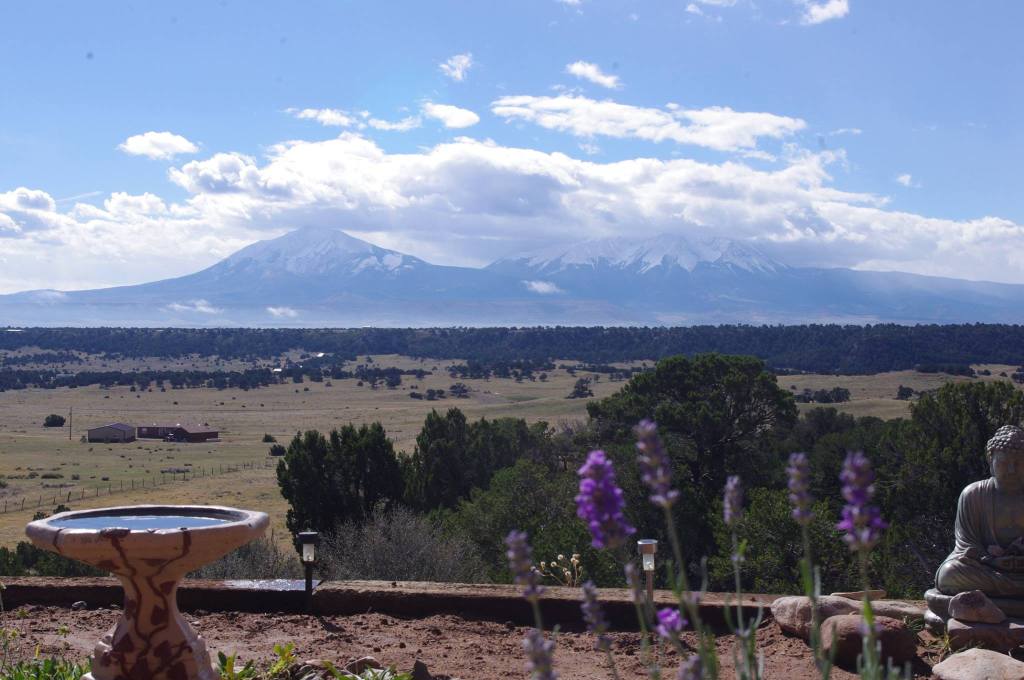
One of my favorite aspects of moving here has been that I finally feel good about my future after death. I now know I wish to have my ashes spread over this peaceful and quiet place, the land below our home here in rural southern Colorado. Perhaps my Dad would like that too, since we live in one of his favorite ecosystems, the Pinon-Juniper woodland.
“Yes, it’s beautiful to exhale after you inhale. At the right time, when the chest is full, breathe out and let go.” – Norman Fischer, “Suffering Opens the Real Path”
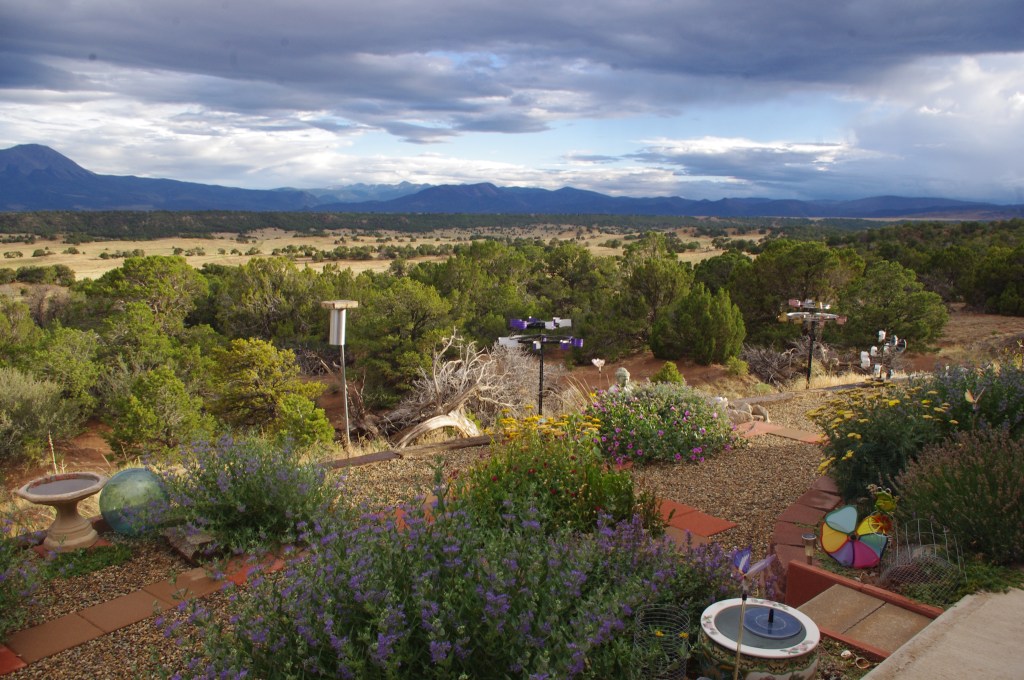
After two inches of rain in the past few weeks (!) my garden is smiling every day now. It seems the worst is over from the critters eating everything that blooms.
First of all, we just fledged our second set of Rocky Mountain Blue Bird chicks this week!
My Russian Sage and Purple Hissup are in full bloom now…
Andfalling under the believe-it-or-not category, my Red Riding Hood Penstemon is blooming again after only being planted this May!
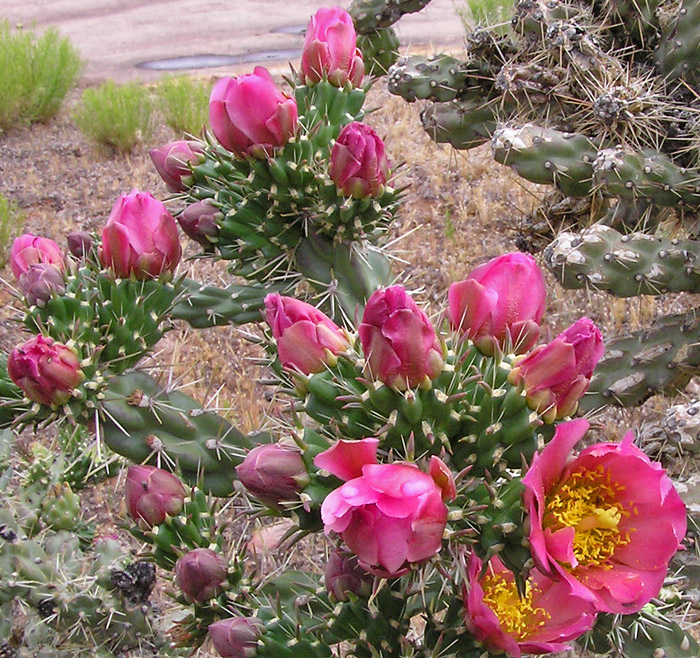
Everything else is smiling brightly, even the cholla cacti I transplanted here a couple years ago!
They’re not blooming yet, but I look forward to seeing them bloom next July!
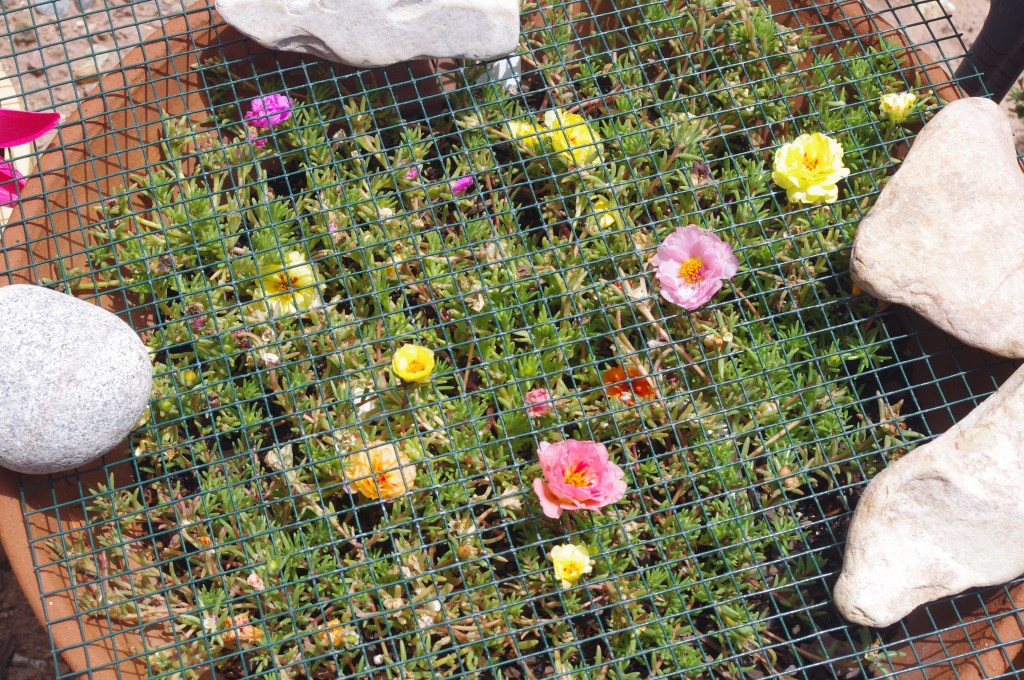
My Portulacas are even smiling through their protective cage top. Be careful or the critters will climb up there and eat you!
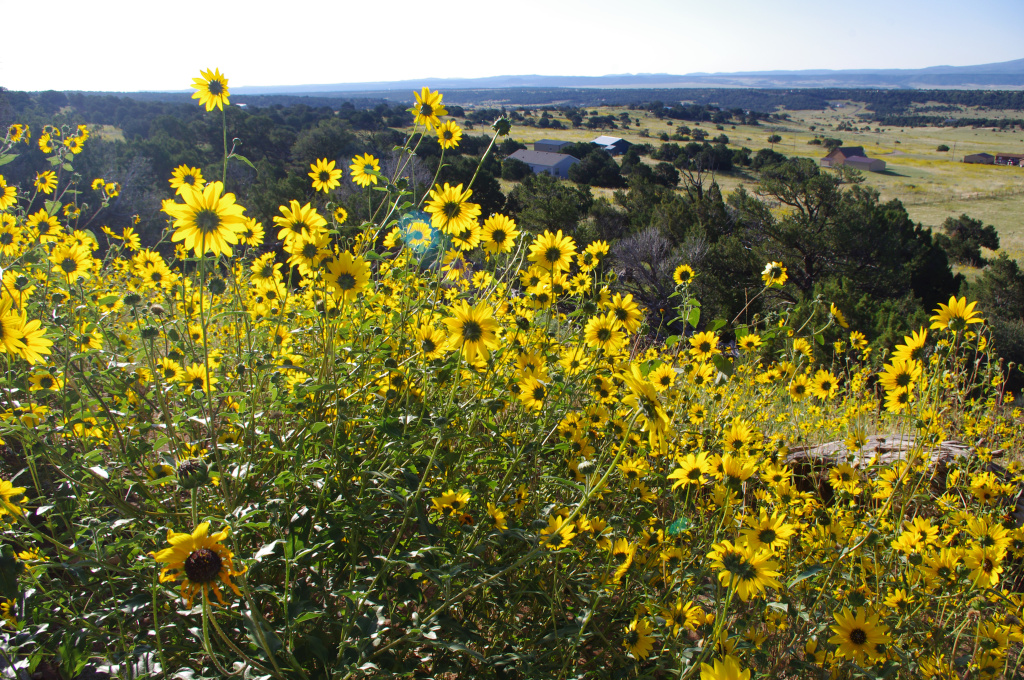
And then there are our native Navajo sunflowers, volunteering again this July!
One week ends another begins, but both seem the same. It’s that sameness that wears on us. The near term is the same, and the future seems clearly uncertain. It’s impossible to make travel plans, not just for now but for the fall and winter. Some people have started referring to 2020 as the “Lost Year.” Imagine how those in my family feel, having lost my Dad right before “the virus” took over our lives.
I am saddened to learn that COVID-19 may be taking a toll on Americans’ heart health even if we’re not infected with the virus. According to new research, cases of ‘broken heart syndrome’ are on the rise among those without any specific illness. This occurs when part of the heart becomes enlarged and is unable to pump blood effectively, preceded by intense emotional or physical stress.
Everybody deals with this kind of stress differently. I think it’s easier for us gardeners. We have something in our lives that brings us daily joy. We can go outside each morning and enjoy the summer blooms! The fact that our plants need us, even marginally, also helps. Let’s face it, we all need to feel needed. This is why we all need to find positive distractions from this sad time in all of our lives.
I relate to these issues more than most. I sometimes pass out from lack of oxygen and am not certain if I will take my next breathe. I struggle daily to find the good in everything, like the 4th of July celebrations on TV last week. I want to feel good about my country again and positive about our future, but it isn’t easy if I watch the news too much.
So I go outside and walk around my garden. I hang out with the birds and bees, literally! I watch the birds taking a carousel ride on Mike’s great purple wind sculpture.
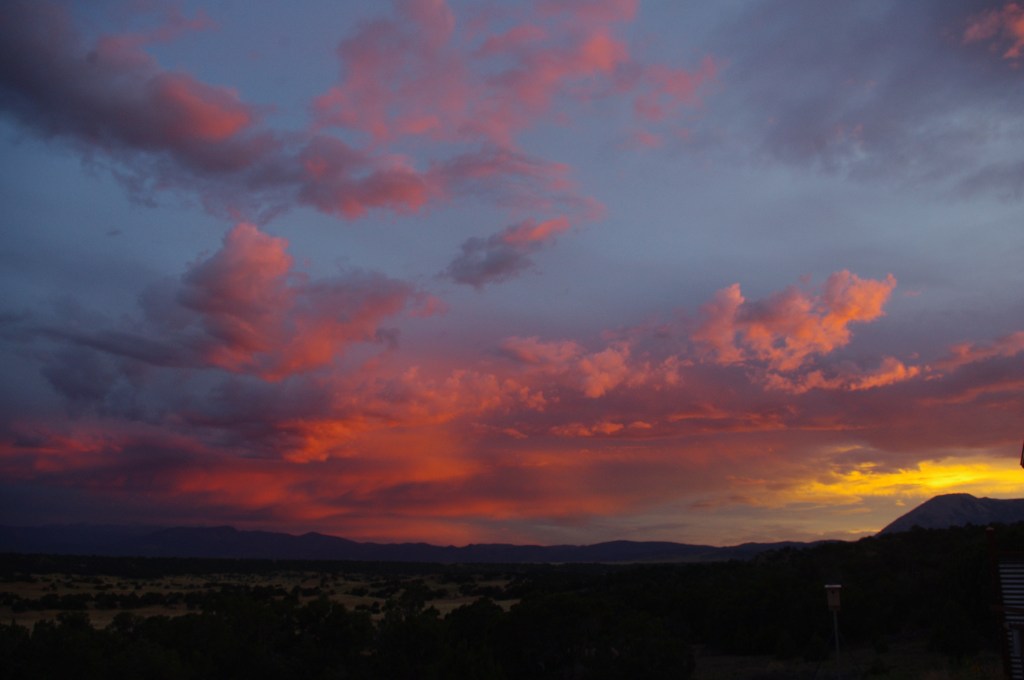
I sit quietly and observe the end to another glorious day, as the sun sets over Mount Mestas to our West.
Sometimes I take photos of the sunny still life developing on my bedroom wall as the sun comes up each morning. My appreciation of my eye sight is increased one hundred-fold as it diminishes with worsening cataracts.
These are the moments that sustain me… What are yours?
Lavandula (common name lavender) has 47 known species of flowering plants in the mint family, Lamiaceae. It is native to the Old World and is found from Cape Verde and the Canary Islands, Europe across to northern and eastern Africa, the Mediterranean, southwest Asia to southeast India.
Certain cultivars of lavender do GREAT in my high (7,000 feet) and dry Colorado foothills garden. I believe they survive because they are woody plants and smell funny to critters who might want to eat them.
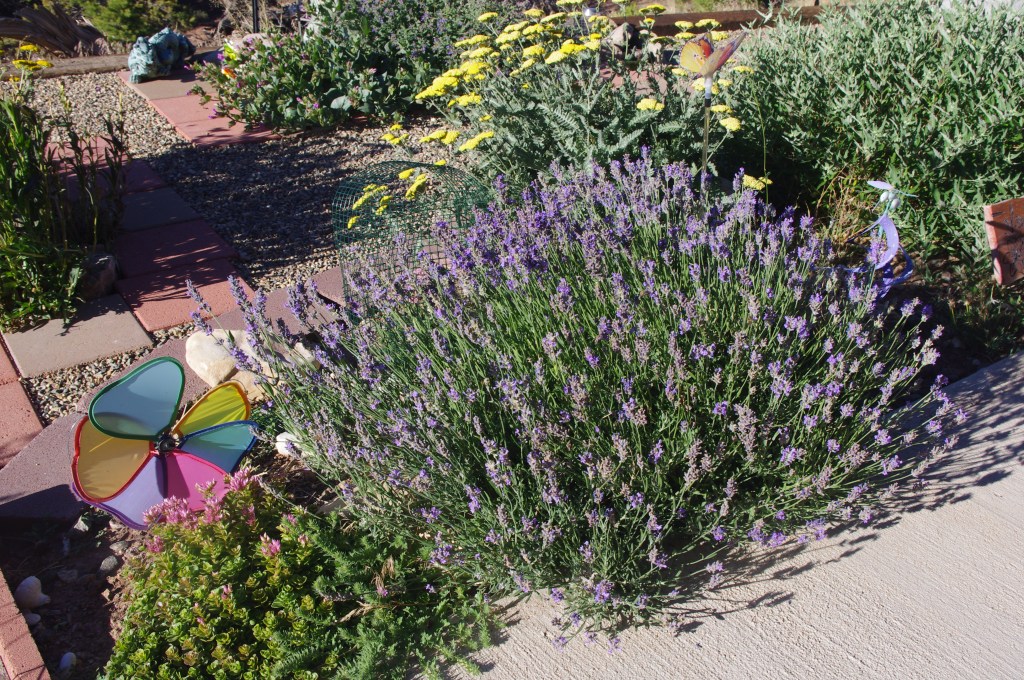
This is Lavendula angustifolia next to a flowering Stonecrop. This one is three years old now!
According to my favorite place to buy plants in Rye Colorado, that just quit selling retail 😦 there are two types of lavenders that are hardy in Colorado,
“Lavandula angustifolia (the English lavenders-called English, but originally from the Mediterranean) and Lavandula x intermedia (the English hybrids). Other lavenders, like French, Spanish, and various cultivars you may find sold at Home Depot are not hardy here! We have talked to so many customers who ask “Why does my lavender die?” and it turns out they planted a type that is not winter hardy. Please don’t make that mistake. The ones we grow are all hardy to Zone 5, and some brave gardeners have had luck with them at 8000′ elevation.”
“Lavandula angustifolia ‘Hidcote Blue’: Along with Munstead, Hidcote Blue tops the list of most hardy lavenders. Hidcote has a deeper violet blue flower and tighter flower clusters and more compact habit than other English lavenders, and it’s our go-to lavender for xeriscape and rock garden plantings. Winter hardy, deer resistant, drought tolerant– this lavender is a good choice for the Front Range. 18″ tall. Zone 5.”
I believe this one is Lavendula intermedia. It’s only two years old.
“Lavandula x intermedia ‘Phenomenal’: Silver foliage is covered with a cloud of lavender blue flowers for most of the summer. It’s a very tough variety, even outperforming Hidcote and Munstead in many trials. Grows to 30″ tall and 3′ wide. If you want a lavender with landscape pizazz, this is the one for you. Edible, fragrant, deer resistant, xeric….we can’t say enough good things about this one. Zone 5.”
Most of the plants sold at places like Home Depot and Lowe’s will not survive the winter here! Those plants are grown in places like Arkansas. Also, be sure not to water lavender much. It can lead to brown flowers and root rot!
Note: Can you tell I was raised by a botanist?My Dad hopes so! Much more fun to think about than Covid-19!









 Adventures of the NEW??? Old Farts