I got a few interesting responses to my last post about re-wilding areas destroyed by farming or other forms of human landscape “improvements.” The 4th episode of PBS “Human Footprint” this week caused me to think further about our American addiction to lawns and lawn care.
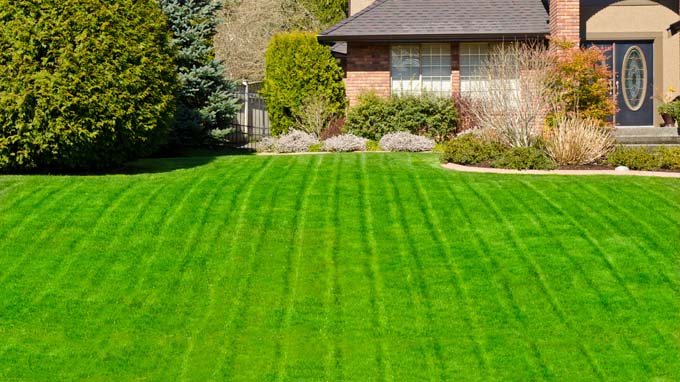
Did you know one 400 acre golf course uses 358,000 gallons of water every day? We have more than 40 million acres of turf in the United States that use over 80 millions pounds of fertilizer per year.
Grass is the most resource intensive plant in our country today.
In a country where we so highly value productivity, lawns are the ultimate in unproductive.
The story goes that we can apparently blame the Brits originally. The old idea of owning your own manor and “estate” added to our own brand of individualism in the USA caused many of us to want to own a home on maybe a quarter acre in suburbia. Our home was our castle, and the surrounding space was our territory to improve and maintain. Although some grasses have American-sounding names like Kentucky bluegrass, most of the turf-grass species we plant in the United States are native to Europe.
We also have a strong tradition from our earliest days of feeling like we had “too much land” (after we stole it from the native Americans). If we farmed it, or ranched it, or timbered it for five years than that land was ours. This set the precedent that we should not just sit on land, we should “improve it.” Every place humans inhabit is made artificial in some way, and in our country that usually involves lawns.

The Lawn is the Ultimate Male Status Symbol, showing how deeply grass is rooted in the American psyche.
Thinking about these American traditions reminded me of how proud my Grandpa Carter was of his small home and yard outside of Kansas City, Kansas. He took so much pride in keeping it perfect with his walking mower and lots of watering. And my own Dad the botanist, a lifelong advocate of leaving things natural, still worked hard to keep a nice lawn around his home.
The younger generations may not be so convinced that lawns are a good thing.
To quote that PBS special: “Grass is a signal. Just having it says that we are part of a community.”
And yet, as Nancy Hill pointed out after reading my last piece, those who don’t choose to maintain traditional yards in suburbia may be ostrasized by HOAs and other nasty neighbors. Covenants can be legally enforced. I had never before heard of the term “Lawn Nazis.” In a country that prides itself in offering “freedom of choice,” when it comes to the land around our own homes, we can be forbidden to plant native plants or go natural.











 Adventures of the NEW??? Old Farts