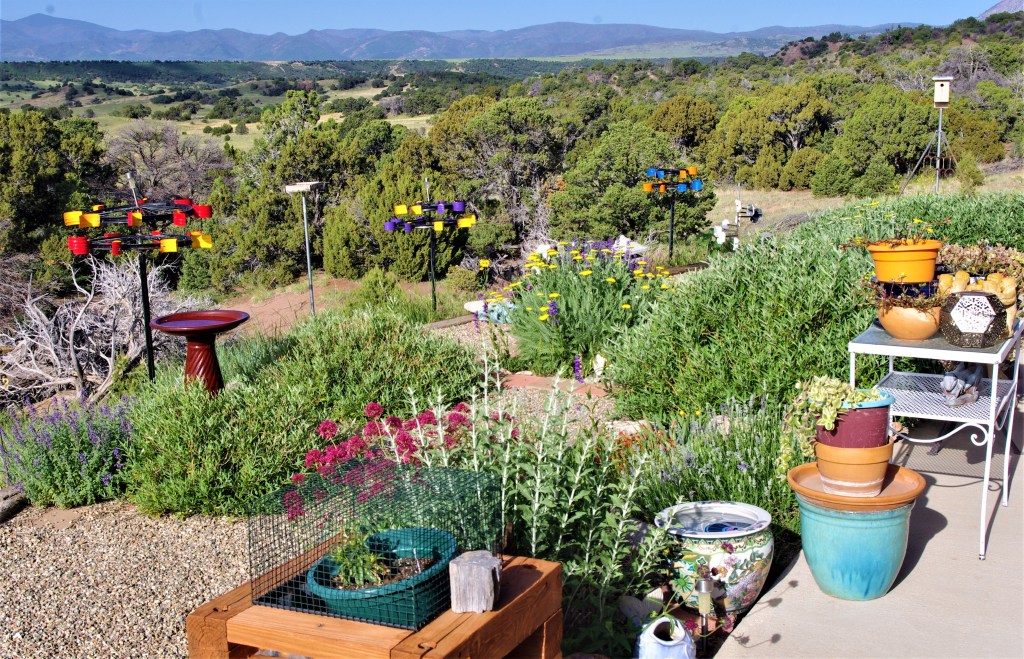
I haven’t been out to my garden lately because of a painful hip and various illnesses in our family. But this morning was glorious, with temperatures in the 60s and great light, so I took a walk around and this is what I found.
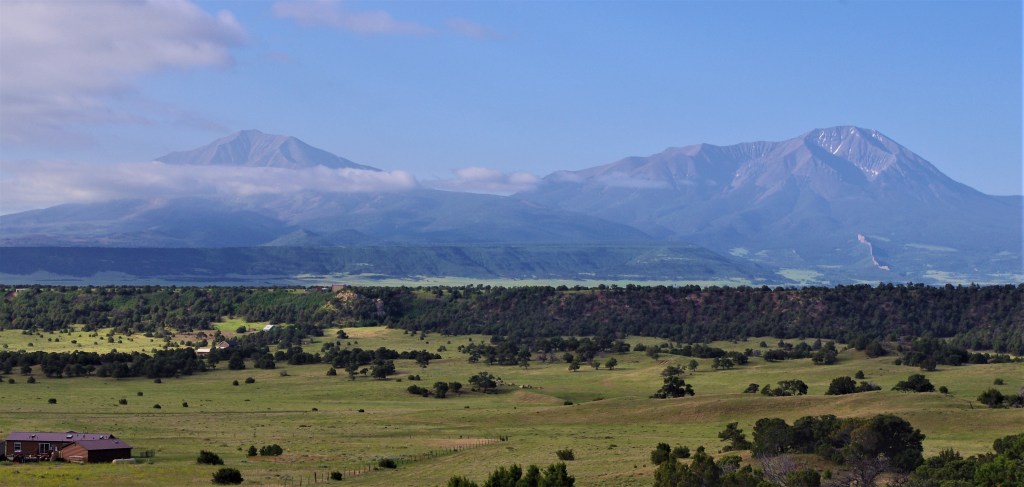
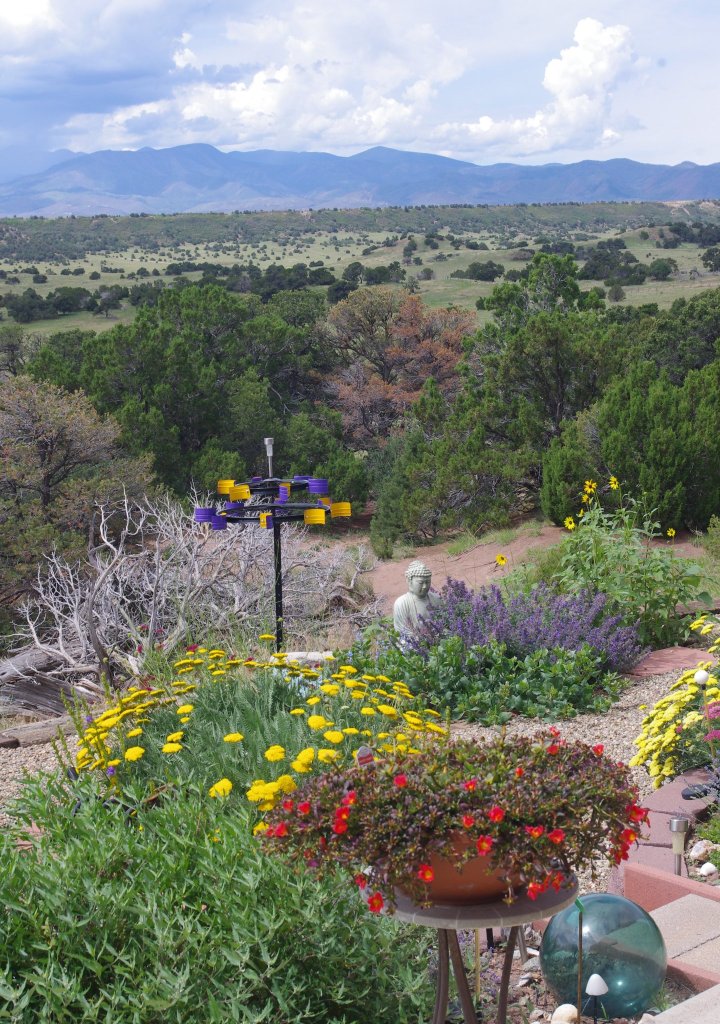
First I noticed the loveliness of the East Spanish Peak, with a sash of wispy clouds around it.
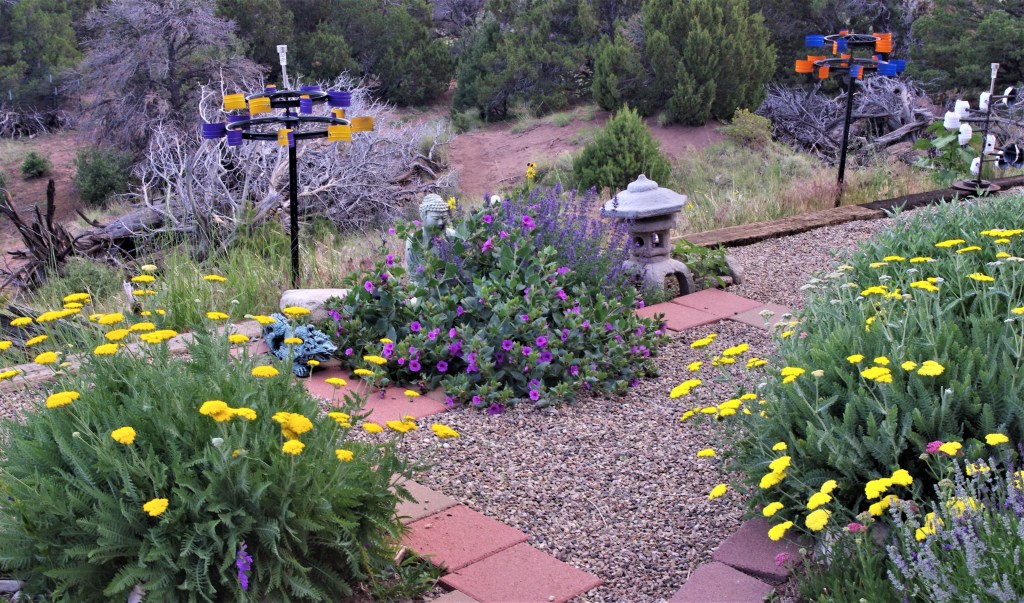
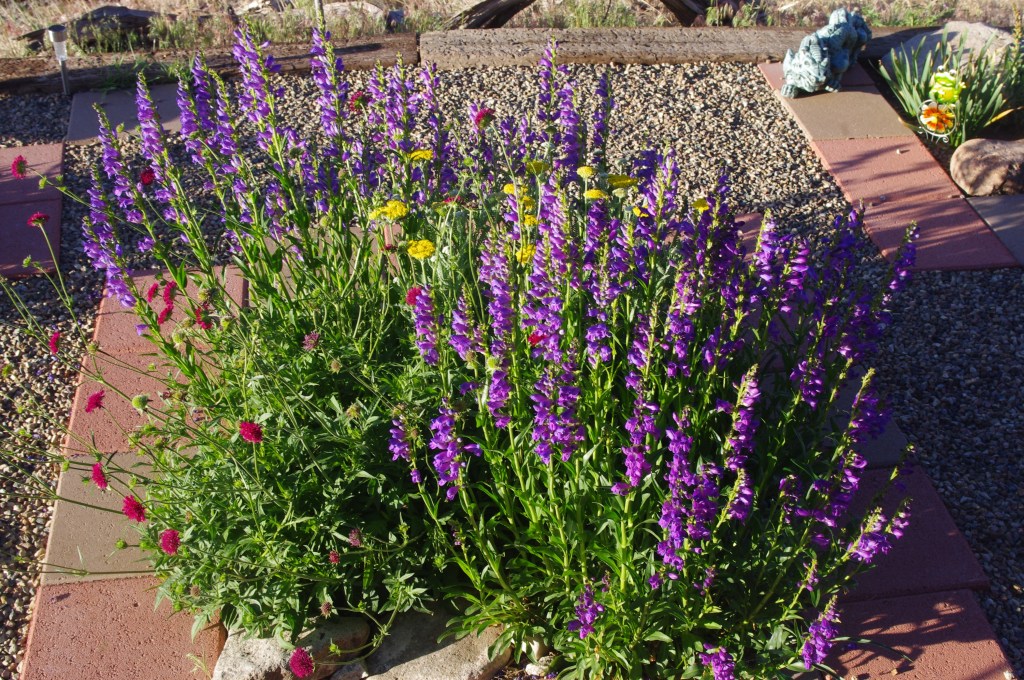
Then I was drawn to my center piece of golden yarrow and those Rocky Mountain Penstemon who survived the deer that ate most of them in early spring.
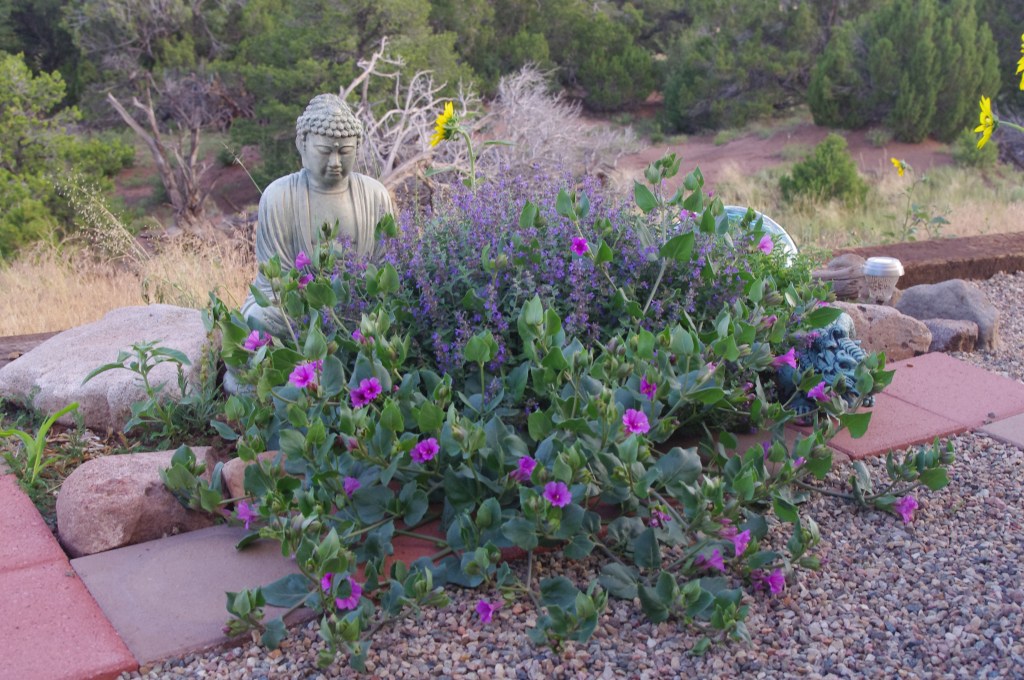
Behind and to the right is my Buddha decorated with native Showy Four O’Clocks and Catmint. I still have a yellow Coreopsis that should be coming in soon to the left of Buddha, if the others leave enough room!
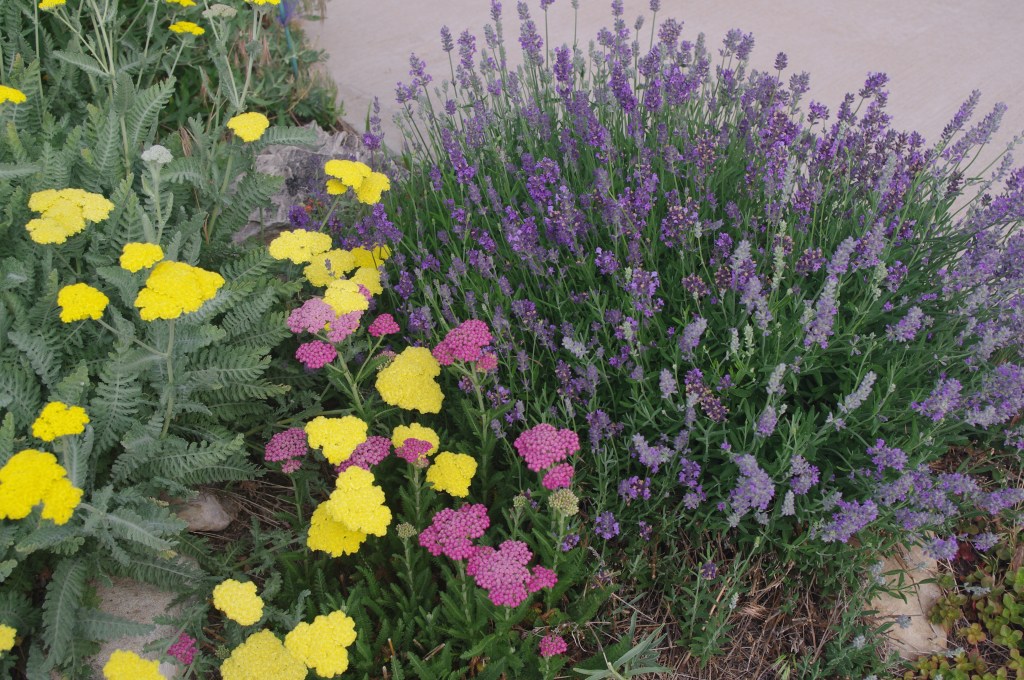
My yarrow and lavender plants are coming along well…
My yellow Columbine is almost finished blooming. Now it’s spreading its seed for next year…
My favorite time of year in my garden!
We had a quiet time celebrating the solstice this June. Our loving pup Rasta is now almost completely blind. Glaucoma just took his other eyethis week 😦
I have been fascinated with movies for as far back as I can remember. My favorite reward when I was a child was to get a trip to see a movie, back when it was only 50 cents! I see now that this was my best chance at escaping into someone else’s fantasy world. I loved the way they showed how we all have problems and how others dealt with them, a kind of group therapy.
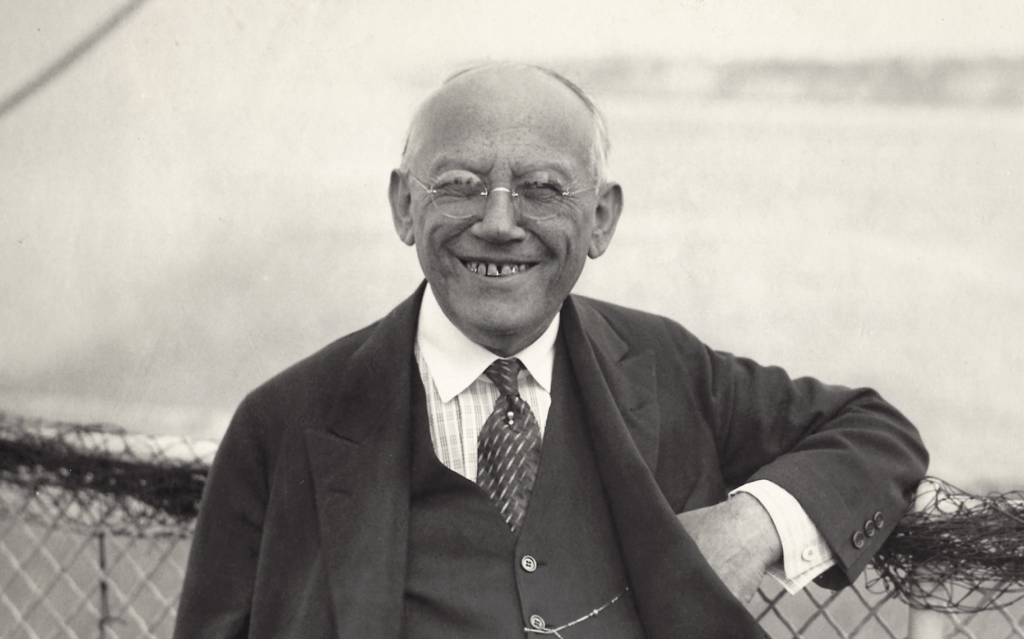
After recently seeing a documentary about the life of Carl Laemmle, and how he escaped Thomas Edison’s east coast monopoly on movie making to found the International Motion Picture Company, the precursor to Universal Studios in 1909, I realized for the first time why our nation’s early immigrants flocked to nickelodeon movie houses. There were a few reasons. First, movie-watchers didn’t need to know how to read English. In fact, watching early movies probably helped them learn the language and more about American culture. This documentary also suggested that seeing those early movies helped immigrants feel like they belonged here.
Early “talkies” had simple themes like comedy, drama, romance, or action. They were shot in a film studio with two or three dedicated actors and a few songs. A short movie could be cheap and easy to make.
In the 1930s the movie industry triumphed by giving the public what it wanted most, a therapeutic diversion for the millions who needed to get away from their troubles for just an hour or two.
One of our most important human needs is to feel like we belong somewhere, in some group or community. That sense of belonging and camaraderie, so essential to the happiness of most of us, is what American movies sold, and very inexpensively. That is why they have always been so popular. As a recent immigrant, Carl Laemmle understood the public’s need for fitting in and therefore feeling less alone in a new country. He made movies that met the needs of the masses, foreign and domestic.
For me, movies have provided so many things I have needed through the years. Diversion, a sense of feeling a part of a group that understood me and my needs, creative escapism, and the joy of being a fly on the wall watching others figure out their lives. They have always made me feel less alone. When I think about it, I have learned so much from movies and documentaries. Once, decades ago, I said to my therapist, “Movies sometimes make me feel like I am entering someone else’s dream.” She told me then that the quality of film making had advanced so far, that they sometimes border on exactly that experience in our minds. And don’t get me started on the genius of screen writers! The writers make the movie for me!
First, let me say, gardening is so much fun and so rewarding! It makes me look forward to spring with such enthusiasm! But that is not to say that there aren’t some MAJOR disappointments as well.
My greatest problem here at around 7,000 feet just north of the Sangre de Cristo Mountains are the critters that come out at night and champ off the flowers on my plants that are just about to bloom for the first time in a YEAR!
For example, my first few years I had the most beautiful Rocky Mountain Penstemons. These are from spring 2020.
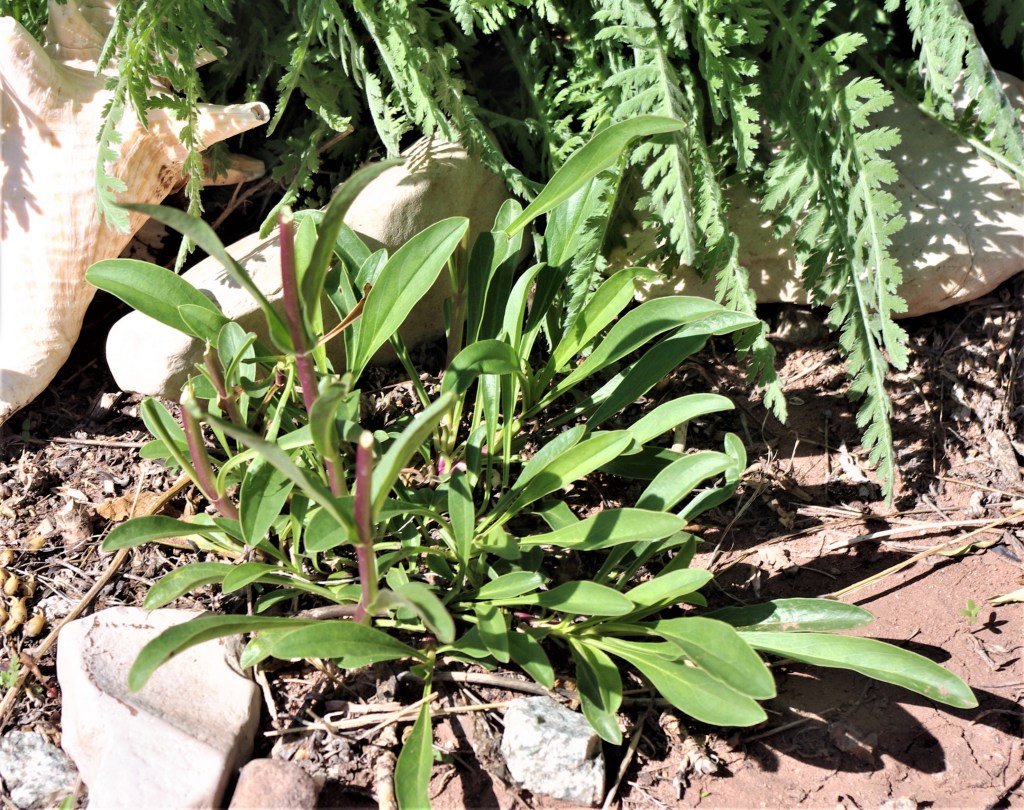
Since then, every time I see a new crop is thinking about blooming they get eaten off overnight. I know I can cover them, but I somehow get convinced that this year will be different and then it isn’t. They even ate some of my native penstemons last night!I’ve also had very bad luck with Evening Primrose out here.
Slowly but surely I’ve turned to the mostly shrub-type plants that never get eaten and seem to love life here.
I’ve never had any problems with my Walker Catmint, here with a native Four O’Clock growing through it!
The Blue-Mist Spirea on the left has not yet bloomed, but the yarrows and lavender are quite happy!
I love when my Jupiter’s Beard comes in for the contrast to all of that purple out there. I seem to almost always choose the purple or yellow plants. I have learned that any plant that is woody and herbal, the animals don’t eat, like lavender.
And if I want to grow some annuals, I put them up far away from the critters!
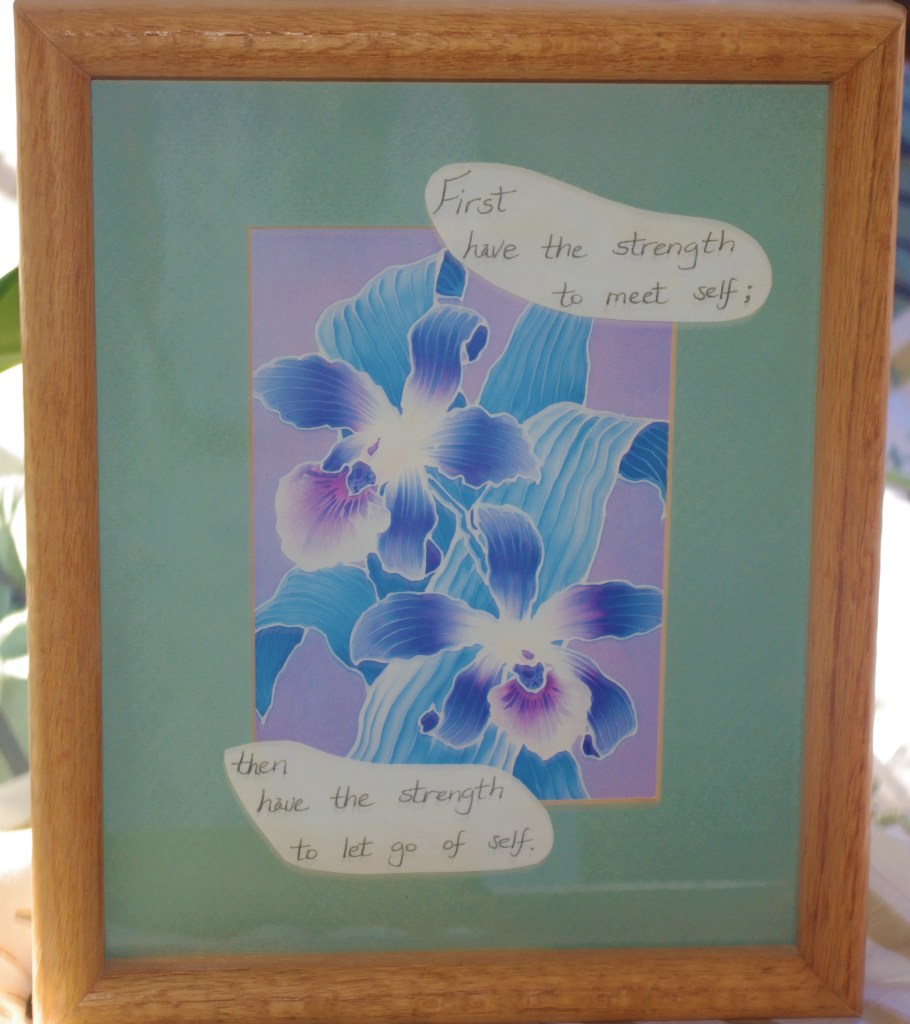
I believe our lives are a process of finding and confronting our true Self, and then slowly letting go of it as we age. Some might prefer the word ego in this scenario. I have had this message on my wall for decades:
What is the ego or sense of Self?
ego: a person’s sense of self-esteem or self-importance, the part of the mind that mediates between the conscious and the unconscious and is responsible for a sense of personal identity.
The way I relate to my sense of Self is to know that as a child and young adult my ‘job’ was to develop my sense of who I was inside, what did I think and value? How should I treat others? How did others see me? This naturally leads to a strong sense of self-consciousness, sometimes painfully so. Then came the time to figure out what I planned to do in the world. How did I hope to change my world? These are the purposes of young adulthood up until our forties or so.
Developing a strong sense of self or ego is a good and necessary part of being human. There is nothing wrong with having a strong ego, but it needs to be regulated. Problems arise when ego affects your decision making process, turning you into a victim, or when it makes you feel superior to others in order to justify your bad behavior. A toxic ego is one that does not learn from bad behavior, but instead blames others, often descending into negativity, resentment, and even violence.
For the past twenty years, my spiritual path has been that of the second part of life. I have been searching for the strength to let go of self. A part of this process is simply getting comfortable with self compassion and death. Although we might think we have a strong sense of self when we are younger, if we are very honest we may find much self-criticism inside. This is all a part of the ego. Like we really did have the power to change any part of our world…
Being close to nature is your best path to realizing your place in the history of time. Please note, there are no other animals or plants that believe they are changing the world. There are no other beings that fear death. They know what their part is, to be born, to live and then die. I have found a gradual process of getting used to the idea of death is the best path for me. At first is was so hard to be with so I would push it away and deny its power. Since I started facing some powerful signs that I won’t be around forever (lung disease and brain injuries) in the past few years, my acceptance has grown like my garden outside my door, bright and beautiful.
My family has been falling apart…literally, in the past few years. We are a family of elders with no children or grandchildren around us. I am the youngest at age 68.
First my Dad died in 2020 leaving my Mom bereaved, in great need of companionship, and beginning to experience dementia and yet forced to live alone for a couple years, because of the COVID pandemic. In the meantime, my brother John finally left his lean-to tent near Oak Creek outside of Sedona AZ to move up near Mike and I. He needed more help to live. Since 2020 my sister and her husband have been taking care of our Mom in Denver while Mike and I have been helping John access affordable housing, medical care and food assistance here.
As John and Mom’s memory and mental status continued to fail, our Mom went into assisted living in Denver. Today my sister and I do what we can to keep everyone going in spite of our own health challenges. We also commiserate often over what is happening to our family. This can be quite depressing at times.
I spent most of my life trying to “go it alone.” After a traumatic betrayal in my early 20s I decided, “Who needs all those others who can be so disloyal, undependable and will only abandon me in the end?” When I was in counseling in my 30s my counselor assigned me the duty of inviting others to share a hike or a meal with me. I have spent most of my life alone.
This is why I can highly recommend the 2022 film “A Man Called Otto.” This story does not minimize the difficulties of life, especially as we enter our 60s and 70s. The writer acknowledges the “systems” we put in place to retain some sense of order in an otherwise lonely, messy and chaotic world. Yes, life can be so unfair at times. Yes, it is almost impossible to go it alone. Yes, suicide is always an option. Yes, some of us must be forced into caring for others, but that can also be our saving grace.
That is why I so joyfully welcomed Mike into my life at age 49. I changed. I finally found somebody worth my trust and was forced to acknowledge that life would not be worth living without the love and support of my best friend.
We Carters have never been a close family, but now we are finally bound together to face the end of us all. Mike has joined us in this process, as his own brother and sisters face their own demise. I guess this must be a common boomer process we face, especially if we don’t have children or grandchildren that care.
We all face the future as it comes, crying together when we need to, and laughing at it all when we can; knowing that all of humanity has come before us facing very similar situations and consequences. In the process, the love of others is such a plus.
I was reorganizing my retirement funds recently and that got me thinking: How are other retired Baby Boomers doing? In that process I learned about why we have fewer and fewer workers for highly skilled jobs…
Baby Boomers, born between 1946 and 1964, make up 28% of the United States population, making them one of the largest living adult generations, second to millennials. In 2011, the first round of Baby Boomers—those Americans born between 1946 and 1964—turned 65.
From now until 2030,10,000 Baby Boomers will be retiring every single day!
The COVID pandemic, shall we say, encouragedearly retirement. According to the Pew Research Center, the rate of retirement for Boomers accelerated with COVID-19, with nearly29 million Boomers retired in 2020, three million more than in 2019.
Seventy-five million Boomers are expected to retire by 2030, paving the way for what is now being called “The Great Retirement,” as opposed to the “Great Resignation.”
Retirement Savings
“The Great Retirement” is an unprecedented flood of retirees exiting the workforce earlier than planned, triggered by the pandemic which heavily affected those 60 and older. Whether it was to enjoy life, health concerns, or a changing work environment, this part of the workforce has seen an uptick in retirement. In spite of these numbers, many Boomers find it hard to retire. Why? Many baby boomers are worried about their finances. Nearly two-thirds expressed concern about not having enough savings to quit their job. Shockingly, at least to me, the median retirement savings of Baby Boomers today is just $144,000 to $202,000.
Health & Death Rate Among Boomers
The largest generation in American history, Boomers are likely to remain that way for the foreseeable future. What wasn’t foreseen was how long Baby Boomers would live. When the first Boomers were born, the average life expectancy was 63 years old. Among Boomers recently that was79 years, but that is falling.
Unfortunately we, as a generation, are not as healthy as our parents were at our age. Why? One culprit is obesity-associated chronic diseases caused by a gigantic dietary shift. Beginning in the 1950s we were introduced to fast, convenient, processed foods with plenty of additives and preservatives. Today we have increased deaths from chronic liver disease, suicide, cirrhosis of the liver, along with poisonings all caused by addiction. I’m sure you have heard about recent death spikes related to opioid abuse, alcohol abuse, and heroin abuse. The implications of this epidemic are massive.
As we all know, addiction is a symptom of bigger issues—the underlying causes of addiction need to be treated. Our generation, known for questioning authority and seeking equality, has lived through significant family changes brought on from two-parent working households, increased divorce rates, increased career mobility, increased technological advancement, and increased psychological awareness. How have these factors impacted our long-term well-being?
My thoughts
As someone who lives in a poor, rural county in southern Colorado, whose average age is 55, I can say I have known many more people who have died here in the past 9 years than I have ever known before. It seems a fairly regular event to hear of another person’s death. Some move here to retire and find the higher elevation too much of a challenge (kind of like me). Many came here to die and do. We certainly have our share of addiction problems and depression. I now see retirement as more of a quality of life challenge. It isn’t about money, addiction or even how long I live, but more about spending my last years in appreciation for what I have right here before me everyday.











 Adventures of the NEW??? Old Farts