What were you born to do?

I heard an expression lately that struck me in a good way and reminded me of my upcoming birthday. Of all the ways there are to say it, I think asking, “What were you born to do?” gets down to the basics of our very existence here on earth. I was born 68 years ago into the mid-1950s, the third kid in a lower middle class family. My Dad was just finishing his PhD at the University of Iowa while my Mom worked nights to keep our family going. No, my family really didn’t need another child, but there I was.

On my first birthday, my Mom made me a cake and then my brother and sister cheered me on as I first learned about the intricacies of blowing out my one candle…

It took me quite a while to figure out what I was born to do and in my case it had little to do with how I earned my living. For as long as I can remember money was never that important to me. Fine qualities of character are what I look for in everyone I meet, and even more so today. Through decades of trusting the wrong people, I learned how to identify those worthy of my trust.

“Experience is the best teacher, and the worst experiences teach the best lessons.

Through a lifetime of experiences I have learned more and more about who I am and what I value. From these I can now clearly identify what I was born to do:

I was born to love unconditionally, but very selectively.

I was born to love the earth & sun, and conserve nature in all forms.

I was born to travel the world.

I was born to try to understand human nature and animal psychology.

I was born to love dance, beautiful movements, and especially in ice skating.

I was born to love intellectual stimulation, learning, research, books and the visual arts.

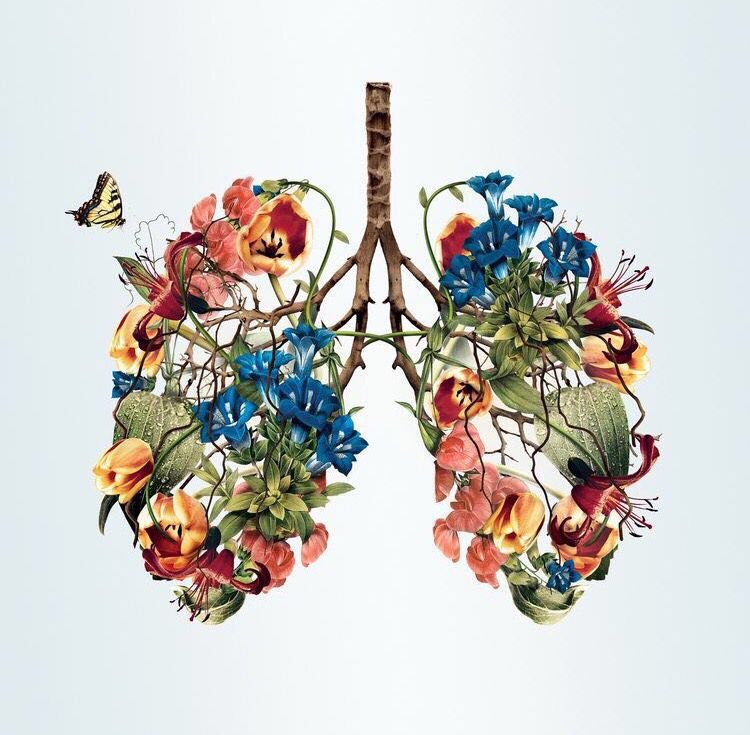
I am a natural born plant and flower lover!

So on this, my 68th year on earth, I now wish myself a heartfelt:

How I Identify With The Women at the Oscars

For once in a very long time (if ever!) we saw women in their fifties and sixties nominated and winning Oscars last night! Angela Bassett, Jamie Lee Curtis, Michelle Yeoh and Cate Blanchett looked so lovely, drawing attention to the fact that, as Michelle pointed out,

“This is proof! Dream big. Dreams do come true! And don’t let anybody tell you that you are past your prime!”

Historically the men in charge of Hollywood decided women were OLD past age 30 or 40. Why would anyone want to see them on the silver screen? Of course there were character actors like Thelma Ritter, who died at 66, and one of my favorites, Eve Arden. Did you ever wonder why Marilyn Monroe killed herself at age 36? Most of the men who have won best actor awards did so later in life, but female actors were finished by age 40. So nice to be defined by your youth and then counted out by an all male majority before your career can even take off.

Of course there have been a few exceptions, Katharine Hepburn age 74 for “On Golden Pond” and Jessica Tandy age 80 for “Driving Miss Daisy” and Maggie Smith, three of the grand dames of movies and theater, won Oscars for their performances. Somehow they were able to keep working past 40.

Doesn’t that make you wonder what other magnificent performances we have missed out on? What more interesting movies might have been made had women producers, directors, writers and actors been in charge or even had some voice in this business?

Why do we celebrate birthdays like we do?

My birthday is coming up next month and that got me wondering when and why Americans started celebrating birthdays in the ways we do. The first thing that comes to mind for me when I think about my birthday was the disappointment I felt to discover that mine was too early to have a swim party in Kansas… too cold. But I think I did have a roller skating party once…maybe. I can’t really remember!

Research suggests that birthdays were once just another day until the 1880s. It wasn’t until the late 19th century that middle-class Americans began having special celebrations of their children’s birthdays, and not until the early 20th century that these celebrations became a nationwide tradition. In fact, “Happy Birthday to you” a song popular worldwide, is only about one hundred years old.

Historically, birthday celebrations were for rich people or national heroes. Americans celebrated George Washington’s birthday, but for everyone else, a birthday—if they even remembered the date—was just another day. The shift in the mid-19th century started with kids. The increased attention that began to be lavished on individual children as families started having fewer of them, may have led to a desire for special celebrations. Could that be because with industrialization, American children started being viewed less for their economic contributions and more for their emotional ones?

My first birthday cake with my brother and sister cheering me on, encouraging me to BLOW THAT CANDLE OUT!

With America industrialization in the 19th century, the rituals and trappings of birthday parties that we think of as common today, became mainstream. The way we celebrate is a strange combination of ancient traditions. Cake can likely be traced back to ancient Roman birthday rites. The candles appear to come from aristocratic German birthday celebrations dating back several hundred years. But the expectation of gifts and cards is a product of good old Western consumerism. What comes to mind when you think of birthday cards? Hallmark!

Today, the idea of someone celebrating their birthday is considered normal, but in the decades after this tradition became common, some groups resisted it, saying that such celebrations were self-centered, materialistic, and turned kids into brats. Sure, there are plenty of American brats, but I don’t think it was a birthday party that did that to them…

Well, I’m no brat, I just like having a special day even at 68!

A Different Kind of Mind

Somehow I never pictured myself breathless and brain damaged at age 67. ‘Disabled’ did not occur to me ever, until things started happening to me. It took me an amazing length of time to believe that I was having trouble breathing. In fact, I didn’t discovery it myself. A very observant MD in Colorado City turned to me once when we were there for Mike’s health and said, “Are your lips turning blue? Let’s do a walking test.” For those unaware, a walking test is a simple walk around a doctor’s office where they test your O2 level before and after your block-long walk. I flunked, dipping far below 90 and yet I still insisted this could not be happening to me. Recently we went through the same test with my brother John, and yes, he denied it, and now he’s enjoying his supplemental O2.

My point is, unless you are literary hit over the head with a new disability (like a head injury?) it is very hard to accept that you may have a big new problem. I struggled against using oxygen at home for quite a while. I simply could not believe it, plus we Carters are known for extreme stubbornness. Now I can only go a couple minutes without it.

The head injuries started in my fifties and who knows, perhaps they were connected with shortness of breath. I know my most recent concussion were related to being out of breath. I went to look for something, forgot my oxygen, and ended up passed out for the floor. Unfortunately Mike was gone for a few days so when I came to I had to crawl over to my bed and get up there to lay down. I never forgot my oxygen again!

The aspect of disability I find both surprising and annoying is when others find it natural or even necessary to feel sorry for me. Some old friends have even stopped communicating with me. Talk about feeling written off! When I heard there is a new TV show called “Not Dead Yet” I thought, that’s me!

What I would like to share with all of you who think I’m done or doomed (aren’t we all?) is that, yes, my brain has changed, but sometimes it feels like it might be for the better.

I know I may have sometimes sounded pathologically optimistic here, but these days I rather enjoy my present state of mind. When I’m sitting staring out at our incredible views of the Sangre de Cristo mountain range, which I do a lot of, there is a certain non-reality that is a bit like being high without drugs. That I like. I also believe that in some strange way I may have become less judgmental and more intelligent by exchanging certain parts of my brain for a less precise and exacting attitude. Call it more flexible or easygoing, but I find that soothing. Perhaps my brain got tired of holding grudges.

Of course living with Mike has helped me a lot. I am definitely the worrywart in this partnership. We Carters are first-class worriers, expertly trained by a number of previous generations. I will never forget a few years ago when I was sitting in the living room listing my well-established list of worries for Mike. He had heard this list too many times, and I guess he was tired of it, so this time he sat back in his easy chair and said, “Who cares! Is worrying about these things going to change anything?” That made a lot of sense to my bruised and shaken brain…

How writing can improve your mood and keep your brain moving forward…

In the process of writing my last post about AI and writing, I learned quite a bit about exactly how good writing is for our brains. First of all I learned that writing by hand is better for the brain than typing. Although a slower task, research indicates that physically writing things down appears to make the writer become more selective in what they write. What’s more, when you pen words on paper, the neurons in your brain fire signals at rapid speed, enabling you to make more neural connections.

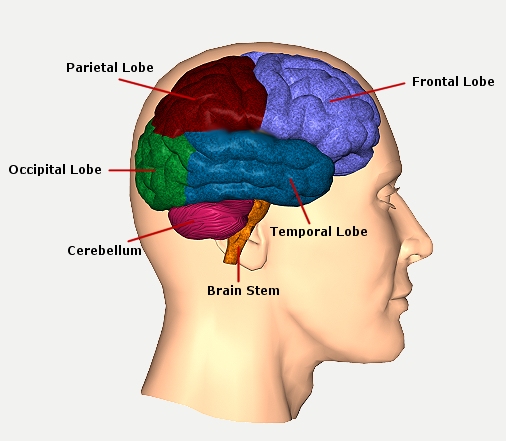
Writing is a stimulating yet strenuous activity for the brain. When you write, all parts of your brain are actively engaged. Thanks to the brain’s neuroplasticity, it can grow and change over time. Just as athletes train their bodies, writers can do the same with their brains.

The process of recalling something, writing it down, and reading it back on paper boosts memory and comprehension, leading to improved cognitive processing. Given that many areas of the brain are engaged, the more you write, the more neural connections are formed within your brain.

Writing every day can benefit everyone, not only professional writers. It improves your memory, builds vocabulary, and refines your communication skills. Writing can also be very relaxing, especially if you lead a busy or stressful life.

When it comes to emotional stability and development, writing can be quite therapeutic. Writing gives some structure and organization to anxious thoughts and feelings. It can help the writer feel more in control of their negative moods, thus helping them get past suppressed difficult or traumatic events.

I have always been a avid writer since I first learned how. Writing is my way to have someone to talk to about difficult thoughts or feelings, a way to process my feelings to make me feel better. These days I find writing to be essential to both my mental health and brain health. Although I sometimes find it quite challenging for my brain, I do need this challenge to keep moving forward after a few serious head injuries.

5 Surprising Benefits of Writing by Hand

Will new AI programs replace the art of writing?

OpenAI’s artificial intelligence writing program ChatGPT can compose poetry, prose, song lyrics, essays, even news articles. That has ethicists and educators worried about the program’s ease at replacing human ideas with chatbot-generated words. I can already hear the concerns of educators. What about the process of writing your first term paper? Isn’t that an important part of learning?

In the history of our species there have been a number of reasons to create writing so we could record history. The first hieroglyphics were used by Egyptian priests to record important events like wars or stories about their gods and Pharaohs. These were also used to decorate temples and tombs. Writing has been used to communicate with future generations, entertain others as art (poetry, plays, prose, stories), for history and business. For most of these purposes an AI program would have sufficed to communicate. Most of us may not need to learn how to write a poem, an essay or a term paper if we have no interest and we will never need that skill again. The skill we all need and seems to be sorely lacking in our world today is critical thinking.

For most, writing a term paper may be a useless exercise, but for some of us, writing is a lifeline to sanity. I have made a practice of keeping journals my entire life. This practice of self-analysis has always helped me think through what I am experiencing and process the reasoning behind my choices, my way of delving into something I want to know more about within myself.

Now, after a few serious brain injuries, writing is my lifeline to my former self; how I connect the two worlds, the person I used to be and who I am today. My fine mind has served me well, but now it is exhausting and confusing for me to sit down at my computer and put ideas and feelings together in writing, and yet I believe this is an essential exercise in me still being me. No AI program can do this for me, and it is so worth the effort.

The process of creating is vital to the human brain. Films, music, books, poems, works of art can all be programmed into AI today, but should they be? What about the lived experience of each of us? What about the emotions of living a life?

Writing was created for a purpose, and it has served humanity in so many ways. I feel certain that will continue.