Divorce is legal? When did that happen?

Thanks to one of my readers, I just learned something fascinating about American history. You know how if something is legal today we assume it has always been that way? Well divorce is relatively newly legal in our country! Especially no-fault divorce, meaning either party could walk away for any reason. The modern concept of a divorce varies by culture and religion, but early forms of divorce were almost always only if the husband wanted it. I remember when I lived in Taiwan in the early 1980s, only men could choose divorce and then only he had all the power to decide whether to keep the kids or not. He usually only kept them if they were male.

The first recorded divorce in the American colonies was that of Anne Clarke and her husband Denis Clarke of the Massachusetts Bay Colony on January 5, 1643. The divorce was granted by the Quarter Court of Boston, MA on the grounds that Denis Clarke abandoned his wife to be with another woman.
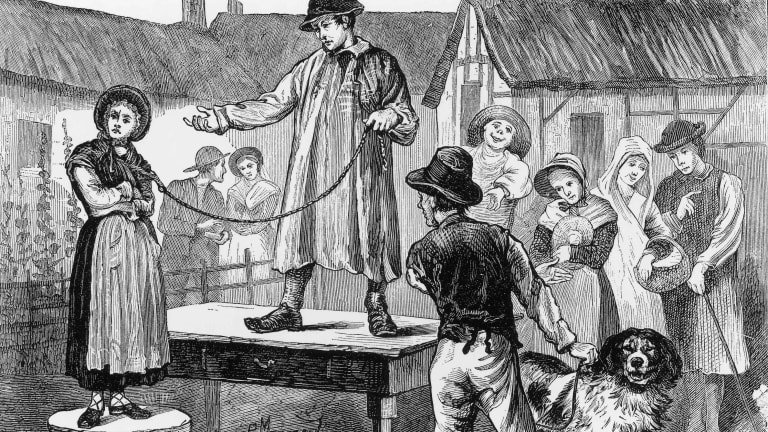
If your marriage broke up in the 1750s, you had to obtain a private Act of Parliament—essentially, an exception to Britain’s draconian divorce law—to formally divorce. The process was expensive and time-consuming, so wife-selling arose as a form of faux divorce.

Until the 1857 Matrimonial Causes Act, it was essentially impossible to obtain a divorce in the U.S., no matter how bad the marriage or how cruel one’s husband. A couple could only be divorced by the passage of a private act through Parliament, a remedy available only to the very wealthy.

If you wanted a divorce in the early 1900s, you had to prove your significant other had committed adultery, abused, or abandoned you. By 1916, the U.S. led the world in number of divorces and in 1942, the U.S. Supreme Court ruled in Williams v. North Carolina that other states had to recognize divorces, under the “full faith and credit” clause of the U.S. Constitution. It wasn’t even until the late 1960s that Americans were allowed no-fault divorces.

If there was divorce in your own family history, like mine, the family was usually quite secretive about it. And as we all know, secrecy usually equals shame in our culture. In my family, who were basically Southern Baptist farmers in the Kansas City area in the early 1900s, I can think of three family secrets that my Mom had to really dig for when she decided to do our full genealogical history: divorce, marrying someone of the Jewish faith and severe mental illness.

My own 2001 Colorado divorce was quite quick and painless. We never had to show up in court because the filing was uncontested, meaning we were not fighting over assets and we had no children. We just filled out some forms, paid $99 and we were done. No muss no fuss, except for a few hurt feelings and the various biases and criticisms I experienced from others afterwards. One great side effect for me, my TMJ went away never to return!

Did you know that more than one quarter of Americans getting divorced in the United States today are over age 50, and most of those divorces happen after 20 years of marriage? Pew Research found that the rate of divorce among those over 50 nearly doubled from 1990 to 2015, and the attitudes of those Americans have shifted to feeling much more supportive of divorce.

Here’s my own conclusion a few years after my own divorce:

“Perhaps it’s mainly women who get stigmatized by divorce: “What’s the matter—couldn’t keep your man?” The assumption being that any man is better than no man at all. Come on—we can do better than this, people! Few marriages are matches made in heaven, and sometimes they truly need to end. Mismatched is no match at all. It’s only fair that after a mistake, each of us can try again to find happiness before it’s too late.”


My experiences with aging, disability and my own mental health

I’ve been thinking a lot about aging and mental health lately, so I looked up the topic. According to an article from our National Institutes of Health:

“The most common mental disorders in older people include depression, anxiety, and substance abuse. Mental disorders are associated with increased healthcare costs, mortality and suicide, along with interference with daily living, and a reduction in quality of life.”

From my own experiences, this makes perfect sense. As our health declines, so does our ability to feel good about our lives, and then there are those predictable thoughts about how we’ve lived our lives and what it must feel like to die. One thing I experience is the daily differences in how I feel about my life, but I’m not certain how much of that is caused by my head injuries. Some days I feel almost like I used to, happy and ready to get out and try new things. Other times I can barely get out of bed and face the day. The problem is I cannot predict what will happen each day, so it’s difficult to plan ahead.

Mike has observed this unpredictability and also wondered what causes it. Now I believe part of it is a natural response to losses later in life. Some days I see little future for myself and so I feel depressed. I do not want to drag him down, because there is no need for both of us to suffer. Other days I feel that old optimism and then I can’t believe I was so low yesterday.

What could be more natural than our ability to confront our own aging and disabilities better on some days than others? Also it takes time to adjust to such major changes in health and abilities…

Realistically my ability to travel very far or go anywhere I want to is limited. But also my desire to travel has become less with age and with so many fantastic travel videos to be enjoyed on Youtube. The place Mike and I most want to visit now is Patagonia. There’s a very good chance I won’t ever get there, but I love watching travel videos and dreaming… Now that’s something previous generations did not have! We really are very lucky, even in our old age. I appreciate that everyday!

“Even in seemingly dormant times, we are in transition. Losses and gains are in constant play. We are the change-agent, and we are changed. Even without toil, we transform. So, wisdom advises us to open our hearts to transition; to honor fully what is passing, to learn from all that unfolds, and to welcome what arrives at our door each day with courage and curiosity.”

Do you feel marginalized as you age? I do.

Perhaps you’ve heard about a new article in The Atlantic by Science journalist Ed Yong entitled:

“The Final Pandemic Betrayal.” Mr. Yong won the Pulitzer Prize in Explanatory Reporting for this “series of lucid, definitive pieces on the COVID-19 pandemic that anticipated the course of the disease, synthesized the complex challenges the country faced, illuminated the U.S. government’s failures and provided clear and accessible context for the scientific and human challenges it posed.

The subtitle of Mr. Yong’s latest article from April 2022 is:

“Millions of people are still mourning loved ones lost to COVID, their grief intensified, prolonged, and even denied by the politics of the pandemic.” I saw an interview with him this week that really hit home for me. At least nine million of us have lost someone we knew and cared for and yet it seems we just go on, ignoring the tremendous losses to so many. In just two years, COVID became the third most common cause of death in the U.S., which means that it is also the third leading cause of grief.

“Each American who has died of COVID has left an average of nine close relatives bereaved, creating a community of grievers larger than the population of all but 11 states. Under normal circumstances, 10% of bereaved people would be expected to develop prolonged grief, which is unusually intense, incapacitating, and persistent. But for COVID grievers, that proportion may be even higher, because the pandemic has ticked off so many risk factors.”

In his recent interview, Mr. Yong discussed what is for me the most important aspect of this horrible loss of life. The groups hardest hit were “marginalized” sections of our society. Who are they? The elderly, those chronically ill, the weakened, the brown, the black and low income groups who have less access to decent health care.

My experience in the past eight years, as I grow older and my own health declines, has been a movement from a “normal” person to one who definitely feels marginalized. First with the aging process we slowly become invisible in our culture, or worse, someone who should just get out of the way of the younger and more vital. Yes, it’s true some help me with doors and seem to feel some compassion for my difficult circumstances, but I have experienced a pulling away from others as I have become more disabled. I have found it almost impossible to make true friends in this rural area. It seems just about nobody believes I am worth their time and energy. I don’t think I would have believed it if I hadn’t experienced it myself.

In this way I have learned what “marginalized” means in this country. We have always put an emphasis on being healthy and able-bodied, and when I was also healthy I rarely noticed what happened to those who are not. Yes, I do have financial resources unlike so many Americans, but I do not live by bread alone. Thanks to those of you who have made an effort to welcome us here. And to the rest of you, I hope you don’t ever become elderly and need a friend.

Aging, Imaginary Friends & Transcendence

I mean, what could be more natural? Throughout human history and certainly since each of us first started attempting to create ‘relationships’, we have naturally projected our own needs, desires, and preferences onto anyone around we found handy and appealing. But reality can be so harsh. If we spend time to get to know our latest “possible friend material”, it’s always disappointing. “Oh no, this is just one more flawed, imperfect, lost soul. Damn, I thought I’d found someone more together than me.”

Then AI comes along and before long we had some fascinating new ways of (mis)communicating. Artificial-intelligence gone wild! Spring break for cheaters! Open season on imagining anything or anyone and then hoping for the best!

Databases like Facebook and most dating sites made it much easier to imagine others’ lives instead of bothering to get to know them… at all! Imagine projecting across the globe and so easily. It may well bring one of our worst traits to the surface, and then convince us that we have scads of imaginary friends. Oh well. I guess that beats no friends at all 😦

I marvel at the apparent power of Facebook. After decades of wondering (or not) we connect to a few we just barely recognized in high school, but back then most of us were too scared, self-conscious or self-absorbed to get to know anyone else. Or maybe just too high… I remember my high school self as a unique combination of shrinking violet and wallflower with just a hint of enforced invisibility. For me, being in public was painful, unless I was ice skating.

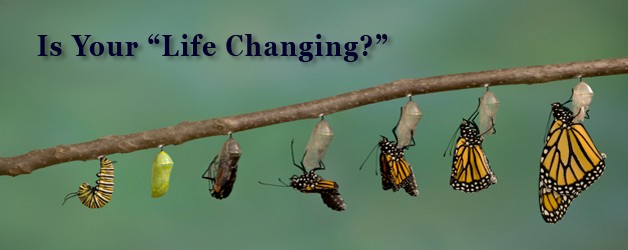
Don’t worry, high school was just the pupa stage. We got much better!

Sometimes I like to compare our lifecycle to that of the butterfly. One of the reasons I enjoy this image is that it means that we were only pupa in high school and college, coming out of our pupa in midlife, and we’re now moving into our full butterfly stage, as free and beautiful as we will ever be! One thing is for sure, we are just about as authentic as we are ever going to be now.

I find that transcendent…

Such a refreshing perspective!
“I had to go through so much just to be here now.
That makes me feel so proud of myself!
I can’t believe I made it so far!”

Postscript: Perhaps death is such a relief because there is truly nothing else to go wrong.

The worst case scenario just arrived!

Aging & Accepting New Limits…

I am ever amazed at the distance between knowing how much my health has changed and accepting those new limits. In the past seven years I have gone from a healthy 60-year-old to one who needs supplemental oxygen to breath and help with balance and stability while walking. My highest priority now is to not fall again and suffer another head injury. I’ve already had one traumatic brain injury and several serious concussions.

Acceptance releases everything to be what it already is.

On my birthday this year I learned in no uncertain terms that I cannot walk more than a few blocks, and that is with balance assistance at all times. I have been an avid walker my whole life. I would love to know how many miles I have walked in my 65+ years. I was inspired by Thoreau’s essay on “The fine art of sauntering.”

Walking was always my best way to contemplate my doubts and troubles. If I was upset I would go for a long walk along the Big Thompson River in Loveland, or around my neighborhood in Fort Collins. There I worked things out in my mind.

This is not an option now. I fell down in my garden a couple years ago and split my upper lip badly. Even short walks are out of the question, even if Mike is there to help. I am depressed and frustrated with this change in my lifestyle, and acceptance has never been my forte. I am one stubborn person!

However, I heard something the other day which stuck with me. It was about how we may decide to focus and go deeper into our spirituality when our physical abilities wane. This has already happened to some extent, because I’m that kind of person and I am stuck inside most of the time.

Luckily I have a phenomenal view from my bed, an 180 degree view of the Sangre de Cristos!

OK, I guess I can live with this.

Could I have insulin resistance? What is that?

Now that I am convinced that I am going to survive my most recent health emergency, a terrible case of anemia (I needed five iron infusions(!), I have decided to make an all-out effort to improve my health. BTW, I believe my anemia was cause by my statin drug. This is a rare side-effect of statins. As far as anemia goes, if you should notice an alarming amount of hair in your shower drain and a sudden, extreme loss of energy, get a blood test…now!

So I noticed an ad for GOLO.com, a supplement that promises weight loss for so many of us who are older, overweight and “insulin resistant.” Then I got to thinking, what’s that? Here’s what I found on a few medical sites:

The two main factors that seem to contribute to insulin resistance are excess body fat, especially around your belly, and a lack of physical activity. People who have prediabetes, Type 1 and Type 2 diabetes usually have some level of insulin resistance.

  • Insulin resistance happens when the body doesn’t respond appropriately to insulin, leading to high blood sugar levels.
  • Insulin resistance can lead to chronic health conditions like diabetes, coronary artery disease, and metabolic syndrome, but it does not always cause symptoms.
  • Insulin resistance is reversible with exercise, diet, weight loss, and, if needed, medications.

Insulin resistance increases your risk of developing diabetes. You could be insulin resistant for years without knowing it. This condition typically does not trigger any noticeable symptoms, so it’s important to have a doctor regularly check your blood glucose levels.

Wow, this sounds serious. So I ordered the “release” supplement from GOLO and started taking it as directed. In the meantime I learned there are many different supplements that may increase insulin sensitivity, but chromium, berberine, magnesium, and resveratrol are backed by the most consistent evidence.

In the GOLO formula, each capsule contains 15 mg magnesium, 10 mg zinc, and 70 mcg chromium as well as a “proprietary blend” of Rhodiola extract, Inositol, Berberine extract, Gardenia extract, etc. These are taken 3 times per day with meals. I found similar supplements in Dr. Gundry’s Metabolic Advanced capsules, but they recommend 4 capsules per day. In the past I did lose some weight with Dr. Gundry’s formula.

First of all you should know that the only healthy way to combat insulin resistance is through increased exercise and diet change. From my experience of losing 50 pounds in my mid-50s, weight loss works best by cutting sugar, dairy, processed foods, and salt way back, then allowing yourself only two very small helpings of white starches (bread, potatoes, pasta, rice) per day. Fill up on vegetables with a small amount of fruit like apples or blueberries.

Steps to reverse insulin resistance and prevent type 2 diabetes:

  1. Exercise for at least 30 minutes a day of moderate activity (like brisk walking) 5 or more days a week.
  2. Get to a healthy weight.
  3. Eat a healthy diet.

I started taking my GOLO capsules a week ago and changing my diet to consume much fewer calories with less salt and sugar. One of the side effects I am pleased to report is how much water weight I have lost. I have been retaining water, especially in my lower legs and feet forever, so much so that it was hard to wiggle my toes sometimes. I knew this wasn’t healthy and so I asked a number of MDs why I am so swollen. None could offer any useful answers. Now I know what I can do about it!

As far as the loss of actual pounds, I have decided not to focus on that for a while. As long as I keep feeling better I will take that as my reward. I learned from my last weight-loss experience that checking the scale constantly is no way to change habits. Losing weight is not a proper goal. For me, a permanent sustainable change in my eating habits, health and a feeling of well-being is my lifelong goal.