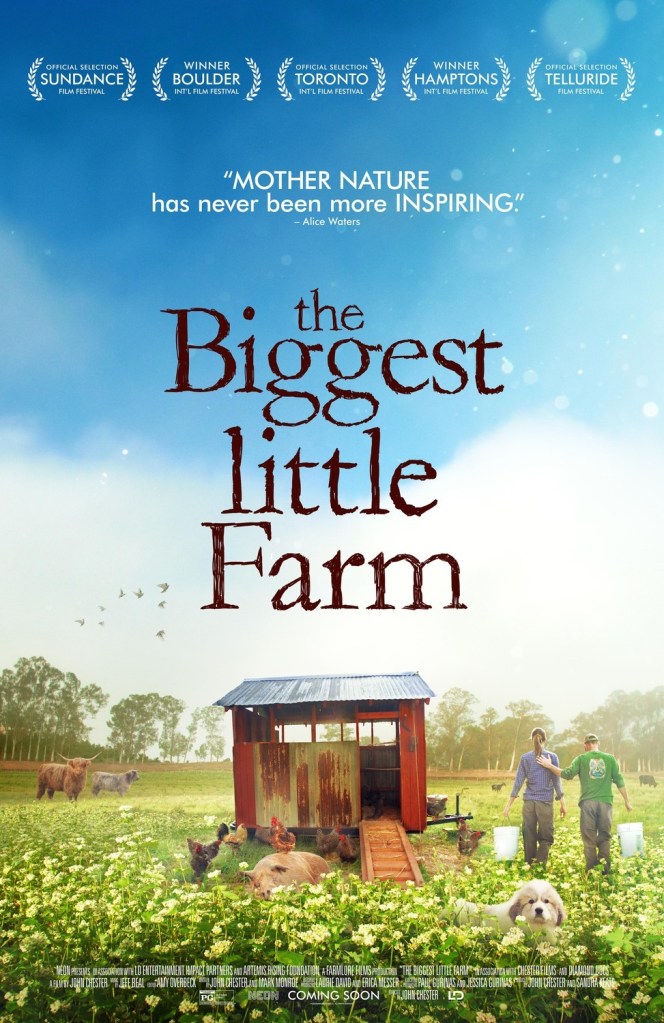
When I first heard about this DELIGHTFUL new film about moving to the country to start a farm, I knew I just had to see it. Mike and I moved to the country ourselves five years ago and we’re just getting settled in. After seeing this documentary, I would say the line from Variety best describes it:
“Like fresh air for the soul!”
This film is refreshing like nothing I have ever seen! It makes you laugh and cry all at once. The narrative and descriptions of finding a whole new way of life are right on, and the cinematography is scrumptious.
That is not to say that all is goodness and light on the newly established Apricot Lane Farm. They started from 200 acres of desiccated land north of Los Angeles with the goal of learning enough to transform their land into a fully balanced and sustainable organic farm. This film chronicles eight years of that process, with all the traumatic ups and downs. I think I observed as much death as life in this film, that is how new farmers learn how to grow in harmony with nature.
Apricot Lane Farm eight years later!
In the end I learned a lot myself about living in harmony with nature instead of fighting it, and I felt so glad to have shared this experience with Molly and John Chester.
I am sure most of us have been in search of ways to “succeed in life” ever since we became conscious human beings. What a great goal, and yet we have been constantly trying to hit a moving target. How many times have you re-defined success in this lifetime?
In my 64 years on this planet, this re-definition process has divided into three main stages of life:
In our early years we are simply busy learning all that we can to be able to succeed in traditional ways like finding a dependable mate and a career of some kind. This stage tends to error on the side of self-consciousness and appearances, focusing too much on what others think we should do.
In our middle years we develop our career and perhaps a family, maybe buy a home, and strive to feel well-established and secure.
Midlife Crisis: I for one experienced a major midlife crisis around age 49. The bottom fell out of all my best-made plans, with a divorce and then job/career loss. Other forms of midlife disillusionment may include serious illness, the death of a loved one, or some combination of these various misfortunes. This may compel us to question many of our previous assumptions about how we have defined our own life success. At this point we might ask:
Will I feel like a success in my life if I continue down this path?
Will I be content in the end if I maintain these priorities?
Aging is nature’s way of answering these questions for us, slowly but surely. For me, my emphasis on career fell away quickly when I realized that my highest priority was finding one genuine, honest, loyal love in this lifetime. After that I became a writer and author, best known as the “Midlife Crisis Queen” online. Then my husband and I decided to choose an entirely different lifestyle by moving to rural Colorado, away from most city stress.
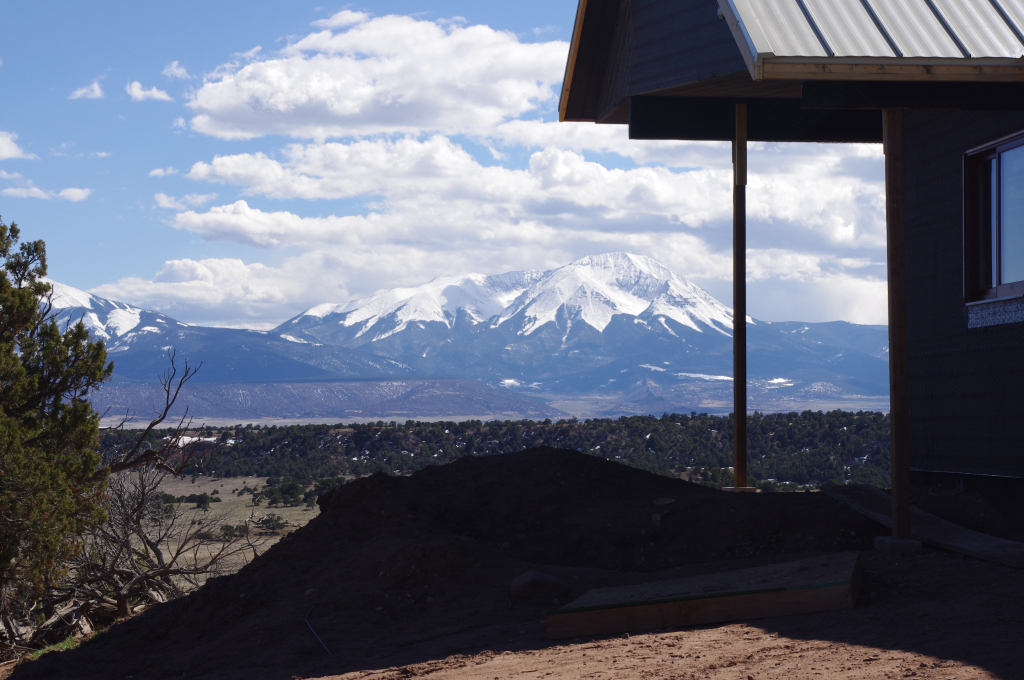
After five years of quiet meditation in the peace of the Sangre de Cristo mountain range, I find I have learned much more about how easily I was convinced to live someone else’s life in the past, making many mistakes in my previous priorities. Now I know, the best things in life aren’t things. And, in the end, it all came down to this:
The hardest battle you will ever face in life is to be no one but yourself, in a world that is trying its hardest to make you like everybody else…
Spending time with my parents last week was a timely reminder to me that I must work to find joy everywhere, in spite of physical limitations. Yes, there are a number of irritations in life that must be dealt with, but be sure and find the joy too, or before long it will all seem like a pain in the butt!
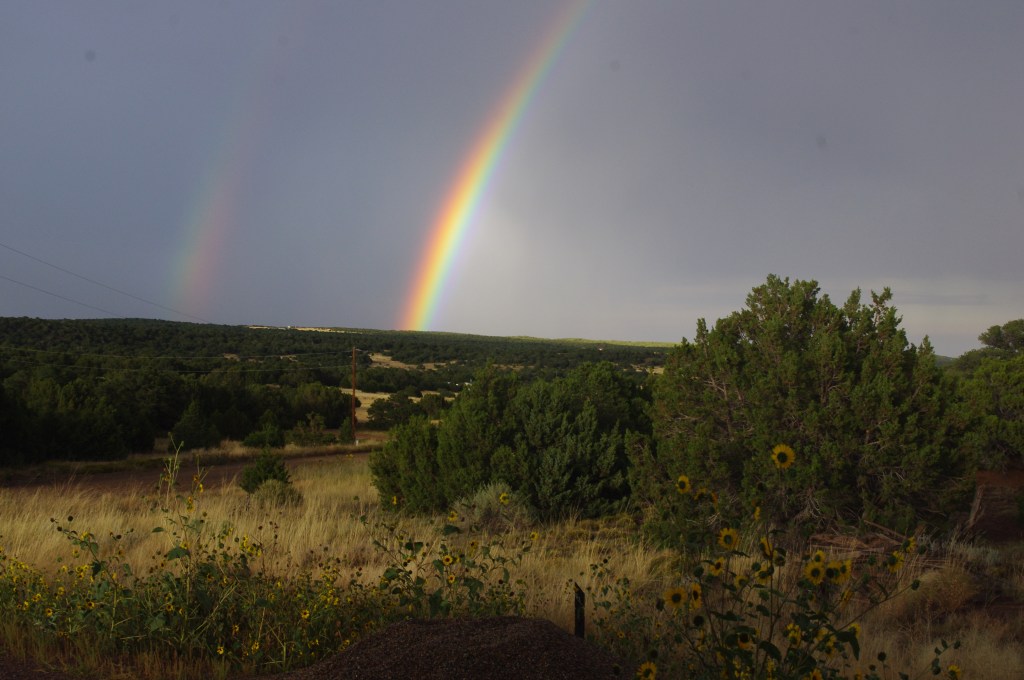
For example, the double rainbow last evening!
One thing I always notice when I visit other people’s home is that their windows and views of nature are so limited compared to ours. We have a passive solar home so our south-facing windows cover the wall. I am constantly looking outside here. That is where the action is…
Sometimes a Road Runner will amble up to look in!
Our sky garden is always a good place to observe birds, lizards and occasional deer coming up for water…
and the clouds around here always present something new and interesting!
Find the joy & gratitude YOU need to keep going! That’s what life is all about!
As someone who grew up around a lot of male rage and anger, there are two psychological concepts I have known for what seems like forever. Men in our culture own anger, while the women generally get scared and depressed. Number two: underneath anger there is always sadness. But it is rare when I see a film that captures the issue of men and their deep, violent anger with such quiet beauty and grace as the film “The Mustang” produced by Robert Redford.
If you don’t believe there is always sadness under anger, stop yourself after feeling extremely angry sometime, and allow your true feels to emerge. You may find a reservoir of sadness you have not allowed yourself to feel perhaps for decades.
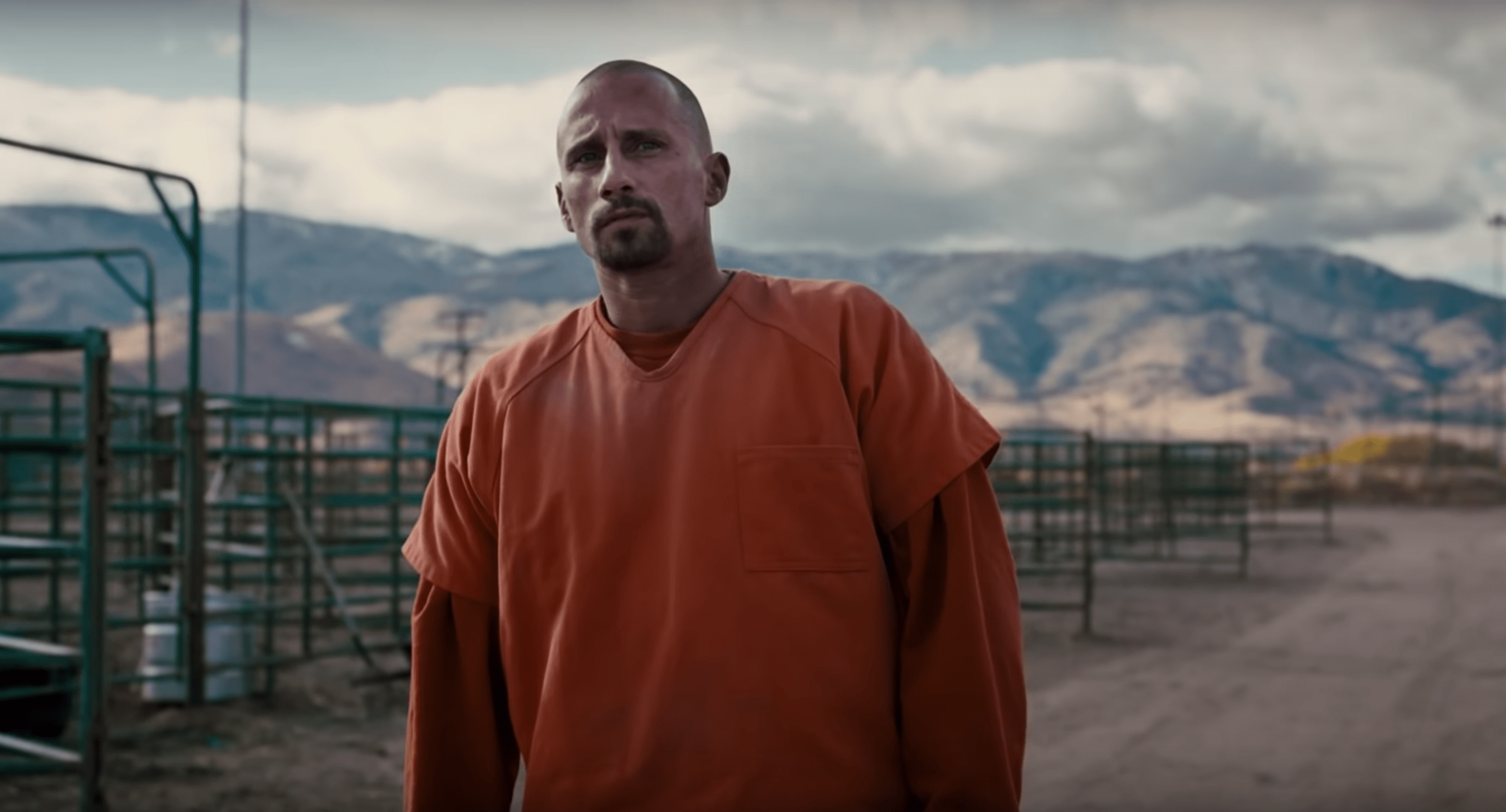
In this film the star, named Roman, is incarcerated for twelve years after leaving his domestic partner permanently brain damaged in an attack. Aware of his short temper and violent tendencies, he has resisted efforts to be reintegrated back into society. He is then invited to participate in a rehabilitation program centered around training wild horses, an actual prison program today in Nevada. At the same time he receives counseling to understand where all of that rage comes from and…
...how powerful saying “I’m sorry” from the heart & soul can be in healing damaged relationships.
Matthias Schoenaerts, a masterful Belgian actor, plays Roman.
This film is very quiet for most of it, as it slowly sneaks up on you. At first of course you dislike this damaged man who cannot control his rage. How can he be so angry? The rancher in charge of this program, Myles, played masterfully by Bruce Dern, knows how to work with men like Roman, the throwaways of our society. The entire story comes together wonderfully with some amazing cinematography and sensitivity to the prison environment. Roman is finally redeemed to some extent from his anger and sadness as the audience gains compassion for the life he has lived. Up to now, he was not given any tools to work on himself, feel his true feelings and change.
In the past one hundred years, Americans have witnessed the greatest increase in life expectancy and longevity in human history. In 1935, when Social Security became a government program and established the retirement age at 65, the life expectancy for American men was 60 and for women, 64. Those born in the early twentieth century were not expected to live past age 65, and most didn’t. Life expectancy in the United States increased a full 20 years between 1930 and 2010. The average American today who lives to be age 65 is expected to survive well past 80.
U.S. Life Expectancy
at Birth, 1930–2010
Birth Year
Both Sexes
Male
Female
2010
78.7
76.2
81.1
2000
77.0
74.3
79.7
1990
75.4
71.8
78.8
1980
73.7
70.0
77.4
1970
70.8
67.1
74.7
1960
69.7
66.6
73.1
1950
68.2
65.6
71.1
1940
62.9
60.8
65.2
1930
59.7
58.1
61.6
(Source:
National Center for Health Statistics, National Vital Statistics Reports,
http://www.cdc.gov/nchs)
It is difficult for most of us to fully comprehend how much the average life span has increased, even just in our own lifetime. The average lifespan for a man born in 1900 was only 48 years and 52 for women. It may help to recall how young most of our great-grandparents and grandparents were when they died. The dilemma becomes, what to do after we stop working full-time?
Senior Binge Drinking on the Rise
From the recent data, it sounds like binge drinking of alcohol is gaining popularity among Americans over 65. Now there’s something to do! Binge drinking is defined as consuming five or more alcoholic drinks at one sitting. For this study, data was collected on nearly 11,000 U.S. adults 65 and older who took part in the National Survey on Drug Use and Health between 2015 and 2017. Of those, 10.6% had binged in the past month, the study found. That was up from previous studies. Between 2005 and 2014, between 7.7% and 9% of older Americans were binge drinkers. Blacks and people with less than a high school education were more likely to do so, researchers found.
Elder Suicides Continue to Increase
Another bit of data which came out last year from the Centers for Disease Control and Prevention, showed that suicide rates for women 45 to 64 increased nearly 60% between 2000 and 2016. For men of the same age the suicide rate increased almost 37% over that time. Overall, suicide rates in the U.S. increased 30% between 2000 and 2016. A separate CDC analysis released this month found that suicides have risen in almost every state.
My new “Sky Garden,” built by my brother, Mike and me!All in our mid-60s!
Were You Ever Taught How Not To Work?
It seems safe to say that many of us aren’t finding positive ways to enjoy our “golden years.” I think this is partially because we were never taught what to do with ourselves beyond working all day. In fact we never learned to value “not working” in productive, positive ways. The learning curve has been a little steep for me, and I worked freelance for a decade before we moved here to retire. How do we learn to love and value non-moneymaking endeavors?
I have learned from Mike the value of having a myriad of healthy avocations. I enjoy cooking, gardening, photography, meditation, reading and writing books, movies, yoga, weather research and other forms of freedom and creativity, but first I had to let go of my early lessons in extreme “productivity.” It took me quite a while to feel really OK about enjoying my hobbies thoroughly. I had to remember that no one was watching or judging me.
Why don’t you try doing what makes you feel creative and happy perhaps for the first time in your life. Experiment. Mess up sometimes. That is how we learn the most about what gets us going.
Learn how to take advantage of that extra decade or two you have available to you for the first time in human history!
This and many other lessons are available in my book:
After changing just about everything in my own life around age 50, I spent ten years studying the psychology of midlife change. In order to pass that learning on to my readers, I wrote this book. I had no idea back in 2004, when my own midlife mayhem began, that I was experiencing a perfectly normal and even healthy response to so many midlife challenges. I soon learned: Midlife is a new rite of passage for the human race, beginning with boomers.If you are willing to take some risks, you can change just about everything. However, some serious soul surgery and personal change will be required.
If you would like a paper copy please contact me at: MidlifeCrisisQueen@gmail.com
One thing I never want to happen, but I know does, is that potential new friends here may decide we cannot relate because I spent so much time at the university. To tell you the truth, this discrepancy never even occurs to me.
My own observation about boomers and college:
Those who didn’t go to college often wish they had had the chance.
Those who did go sometimes wonder why they bothered.
How many boomers went to college anyway? Census data estimates that 28.8 percent of Baby Boomers have earned a Bachelor’s degree or higher, while another 28.9 percent have attended some college classes.
It seems family views and monetary pressures were the largest influence on why many of us attended college. Because my Dad was a professor, everyone in my family got free tuition at Colorado College. We all went there at some time including my Mom.
I guess I always assumed that those who didn’t go to college didn’t want to, but I see now how parental encouragement or total non-encouragement played an important role. Mike’s father didn’t offer any support or encouragement. It was the old, “the Navy training was good enough for me, so it’s good enough for you!” And this was during the Vietnam War! I also learned from Mike that a lot of us learn more easily from doing, not listening to some long-winded professor. Some of us are physical and visual learners.
Overjoyed at college graduation… back when I had all the answers!
I was raised by a college professor and a teacher. I was totally brain-washed that college is good for you. My Dad and Mom were the first kids in their family to go to college, and I would have to say it was “very, very good to them.” It was also a career-maker for me, and I truly appreciate that fact, but that isn’t where I learned the most important lessons in my life. Not even close. In the end, I attended graduate school for a specific career.
I think we learn our most important lessons by living our lives and paying close attention to what works for us, and what doesn’t. What careers or work environments bring out the best in us? What jobs feed on our own natural abilities and talents? Unfortunately I had to wait until I quit work altogether to learn the most about my natural interests and talents.
Gardening: An old friendwho has come in handy in retirement!
Ask yourself today: What would you do if you had all the time in the world? What activities make you lose touch with time and place and take you away to your own great place in your head? Now I only do what gets me going and I have the time to observe exactly what that is. For me now it is gardening, anything with vivid colors, photography, cooking, yoga….









 Adventures of the NEW??? Old Farts