Brain injuries and a misdiagnosis of apathy

One of the results of my recent psychological and memory testing was a diagnosis of apathy. I thought about that for a few days and then spoke to a friend I’ve known for almost twenty years about my supposed problem.

His response? “No, you are absolutely not apathetic!”

So what is apathy? According to Oxford, “lack of interest, enthusiasm, or concern.”

Signs and Symptoms of Apathy:

Lacking the effort or energy to do everyday things. Dependence on others to plan activities.

No desire to learn new things, meet new people, or have new experiences.

Lack of care about your own problems. Tendency to feel no emotions when good or bad things happen.

After further thought I realized that this type of testing mistook “apathy” for a natural sadness and frustration when someone with a great brain experiences multiple assaults on their brain health. I would challenge anyone to experience what I have in the past fifteen years, and not feel sad and frustrated.
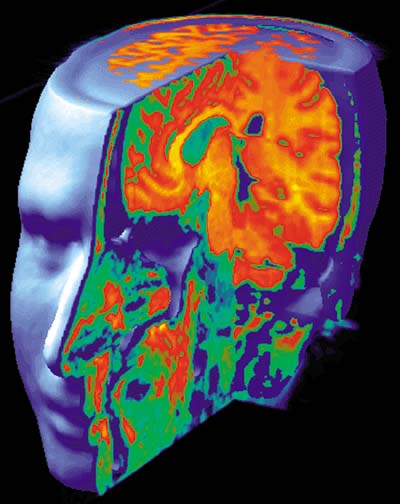
The most reassuring book I have read about brain injury is: “My Stroke of Insight: A Brain Scientist’s Personal Journey” by Jill Bolte Taylor, Ph.D. There I learned how slow the brain recovers from injury, but it certainly can rebuild itself eventually! My first brain injury, a TBI in 2008, taught me that. The most important thing to remember is that your brain will tell you when it’s tired and you really MUST STOP when it tells you that. For me now, an hour or two of any type of total concentration exhausts my brain. So when I took a two hour focused memory test I failed and came across as suffering from apathy, when in fact I felt total brain-exhaustion halfway through and after it was over I slept for over twelve hours straight.

I find myself excited and enthusiastic about many things like plants, gardening, photography, writing, old movies, music, new foods and learning something new everyday. I have just learned to pace myself to give my trusty brain plenty of space to recover with endless hours of restful sleep. Few understand my specific needs these days like I do. My brain will simply shut down if I don’t respect its messages to me. I certainly expected a brain specialist to understand that!

Unfortunately, it seems I must continue to educate “the experts” what brain injuries are all about. Perhaps they don’t know, but one of the best benefits of brain injury is the full realization that we MUST make the most of every single day we’re alive!

“Do we really need much more than this? To honor the dawn. To visit a garden. To talk to a friend. To contemplate a cloud. To cherish a meal. To bow our heads before the mystery of the day. Are these not enough?” — Kent Nerburn

Boomer health is failing earlier than our parents

In a very roundabout way, I learned recently that we Baby Boomers are the first generation in American history to have worse physical and mental health than previous generations. Disturbing huh. Along with celebrating my Mom’s 89th birthday this week, I got some results back from a two hour test of my memory, a baseline for future understanding of how my memory is changing. One of the most concerning findings to me was that I suffer from apathy and depression. So, like a good researcher, I started checking to see how common these feelings are among my own generation. Come to find out:

“Americans born between 1948 and 1965 are more likely than the generations that preceded them to have multiple health problems as they age. Many develop two or more health conditions up to 20 years sooner than folks from other generations…” according to the articleCohort Trends in the Burden of Multiple Chronic Conditions Among Aging U.S. Adultsin the June 2022 issue of The Journals of Gerontology

It seems our apathy may be showing… This study classified people, based on the generation they were born into, like this: Greatest generation (born 1923 or earlier); early children of the Depression (1924 to 1930); late children of the Depression (1931 to 1941); war babies (1942 to 1947); early boomers (1948 to 1953); mid boomers (1954 to 1959); and late baby boomers (born 1960 to 1965).

The researchers looked at nine chronic conditions: heart disease; high blood pressure; stroke; diabetes; arthritis; lung disease; cancer (except skin cancer); depression symptoms; and trouble with memory and thinking skills. Among adults with multiple chronic health problems, arthritis and high blood pressure were the most common for all generations, higher rates of depression and diabetes drove the surge in chronic conditions seen in boomers. Some links can be found between the introduction of fast food and television:

“Fast food restaurants became very popular during the 1950s because families were busy and they needed a place where they could quickly pick up food; people also wanted to be able to get quick food that they could eat in front of their new TVs.”

In other trends, American baby boomers scored lower on tests of cognitive functioning than did members of previous generations, according to a 2020 nationwide study. Findings showed that average cognition scores of adults aged 50 and older increased from generation to generation, beginning with the greatest generation (born 1890-1923) and peaking among war babies (born 1942-1947). These scores began to decline in the early baby boomers (born 1948-1953) and decreased even further among middle baby boomers (born 1954-1959).

 What was most surprising to me is that this decline could be seen in all groups: men and women, across all races and ethnicities and across all education, income and wealth levels. Results showed lower cognitive functioning in boomers was linked to less wealth, higher levels of loneliness, depression, inactivity and obesity, and less likelihood of being married. Could this also be linked in some way to how many of us have tried to live up to our parents’ demands and standards and failed?

The biggest concern is that these apparent trends in lower cognitive functioning in those in their 50s and 60s, could lead to a higher rate of dementia as we age. Among the aging population in the United States, we are already seeing an increase in the number of Americans with dementia. This may continue in our future.

Tolkien: The story of his life and inspirations

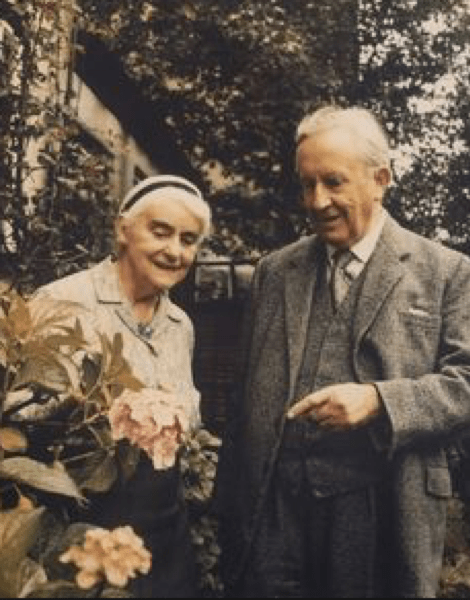
As you might guess, I love stories about writers and how they eventually came to produce their works. Along these lines, I can highly recommend the movie Tolkien, a 2019 American biographical film about the early life of English professor J. R. R. Tolkien, author of The Hobbit and The Lord of the Rings, as well as many notable academic works.

This is a beautifully composed and filmed, sensitive presentation on the lives of four young men who enthusiastically went to fight World War I, and how only two of them came home again. Starting from Tolkien’s poverty-stricken beginnings, he lived with his widowed mother until he found her dead one day. He then was taken in by a kindly rich woman who found a way to send him to college. Tolkien struggles there, but attracts the attention of a prominent philology professor, when Tolkien realizes that language is his true passion. By chance, that kindly rich woman also adopted a girl named Edith, who would figure prominently in Tolkien’s life.

The scenes from the battle of the Somme in France are so powerfully presented and filmed. The excitement of the young men to go fight a war are so skillfully juxtapositioned with the realities of trench warfare. In fact everything about this film is well-thought out and presented.

Edith and Tolkien

While many other authors had published works of fantasy before Tolkien, the great success of The Hobbit and The Lord of the Rings led directly to a resurgence of this genre. Eventually Tolkien came to be popularly identified as the “father” of modern fantasy writing and more specifically “high fantasy.”

Personal note: I have never been a fan of J.R.R. Tolkien. I did not read his books and I walked out of the first film “The Hobbit.” I’m not much on fantasy, but I love this film about Tolkien’s life. Mike has tried to encourage my interest in fantasy stories. Perhaps I’ll try again with the film “The Hobbit.”

Divorce is legal? When did that happen?

Thanks to one of my readers, I just learned something fascinating about American history. You know how if something is legal today we assume it has always been that way? Well divorce is relatively newly legal in our country! Especially no-fault divorce, meaning either party could walk away for any reason. The modern concept of a divorce varies by culture and religion, but early forms of divorce were almost always only if the husband wanted it. I remember when I lived in Taiwan in the early 1980s, only men could choose divorce and then only he had all the power to decide whether to keep the kids or not. He usually only kept them if they were male.

The first recorded divorce in the American colonies was that of Anne Clarke and her husband Denis Clarke of the Massachusetts Bay Colony on January 5, 1643. The divorce was granted by the Quarter Court of Boston, MA on the grounds that Denis Clarke abandoned his wife to be with another woman.

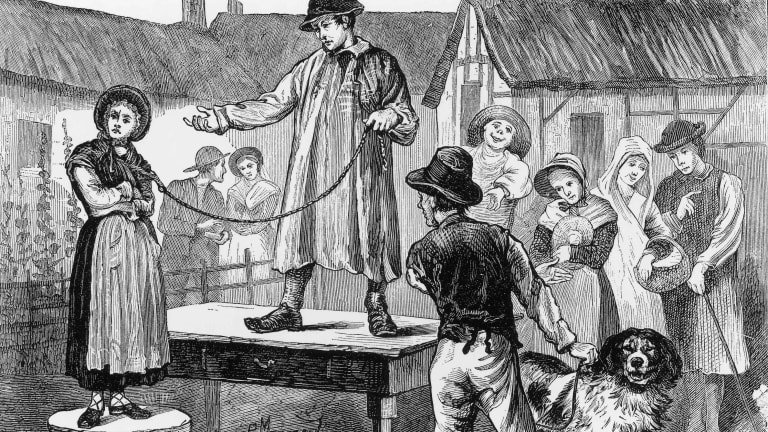
If your marriage broke up in the 1750s, you had to obtain a private Act of Parliament—essentially, an exception to Britain’s draconian divorce law—to formally divorce. The process was expensive and time-consuming, so wife-selling arose as a form of faux divorce.

Until the 1857 Matrimonial Causes Act, it was essentially impossible to obtain a divorce in the U.S., no matter how bad the marriage or how cruel one’s husband. A couple could only be divorced by the passage of a private act through Parliament, a remedy available only to the very wealthy.

If you wanted a divorce in the early 1900s, you had to prove your significant other had committed adultery, abused, or abandoned you. By 1916, the U.S. led the world in number of divorces and in 1942, the U.S. Supreme Court ruled in Williams v. North Carolina that other states had to recognize divorces, under the “full faith and credit” clause of the U.S. Constitution. It wasn’t even until the late 1960s that Americans were allowed no-fault divorces.

If there was divorce in your own family history, like mine, the family was usually quite secretive about it. And as we all know, secrecy usually equals shame in our culture. In my family, who were basically Southern Baptist farmers in the Kansas City area in the early 1900s, I can think of three family secrets that my Mom had to really dig for when she decided to do our full genealogical history: divorce, marrying someone of the Jewish faith and severe mental illness.

My own 2001 Colorado divorce was quite quick and painless. We never had to show up in court because the filing was uncontested, meaning we were not fighting over assets and we had no children. We just filled out some forms, paid $99 and we were done. No muss no fuss, except for a few hurt feelings and the various biases and criticisms I experienced from others afterwards. One great side effect for me, my TMJ went away never to return!

Did you know that more than one quarter of Americans getting divorced in the United States today are over age 50, and most of those divorces happen after 20 years of marriage? Pew Research found that the rate of divorce among those over 50 nearly doubled from 1990 to 2015, and the attitudes of those Americans have shifted to feeling much more supportive of divorce.

Here’s my own conclusion a few years after my own divorce:

“Perhaps it’s mainly women who get stigmatized by divorce: “What’s the matter—couldn’t keep your man?” The assumption being that any man is better than no man at all. Come on—we can do better than this, people! Few marriages are matches made in heaven, and sometimes they truly need to end. Mismatched is no match at all. It’s only fair that after a mistake, each of us can try again to find happiness before it’s too late.”

My experiences with aging, disability and my own mental health

I’ve been thinking a lot about aging and mental health lately, so I looked up the topic. According to an article from our National Institutes of Health:

“The most common mental disorders in older people include depression, anxiety, and substance abuse. Mental disorders are associated with increased healthcare costs, mortality and suicide, along with interference with daily living, and a reduction in quality of life.”

From my own experiences, this makes perfect sense. As our health declines, so does our ability to feel good about our lives, and then there are those predictable thoughts about how we’ve lived our lives and what it must feel like to die. One thing I experience is the daily differences in how I feel about my life, but I’m not certain how much of that is caused by my head injuries. Some days I feel almost like I used to, happy and ready to get out and try new things. Other times I can barely get out of bed and face the day. The problem is I cannot predict what will happen each day, so it’s difficult to plan ahead.

Mike has observed this unpredictability and also wondered what causes it. Now I believe part of it is a natural response to losses later in life. Some days I see little future for myself and so I feel depressed. I do not want to drag him down, because there is no need for both of us to suffer. Other days I feel that old optimism and then I can’t believe I was so low yesterday.

What could be more natural than our ability to confront our own aging and disabilities better on some days than others? Also it takes time to adjust to such major changes in health and abilities…

Realistically my ability to travel very far or go anywhere I want to is limited. But also my desire to travel has become less with age and with so many fantastic travel videos to be enjoyed on Youtube. The place Mike and I most want to visit now is Patagonia. There’s a very good chance I won’t ever get there, but I love watching travel videos and dreaming… Now that’s something previous generations did not have! We really are very lucky, even in our old age. I appreciate that everyday!

“Even in seemingly dormant times, we are in transition. Losses and gains are in constant play. We are the change-agent, and we are changed. Even without toil, we transform. So, wisdom advises us to open our hearts to transition; to honor fully what is passing, to learn from all that unfolds, and to welcome what arrives at our door each day with courage and curiosity.”

How my brain is healing from serious concussion

Although I have other experiences with brain injuries and healing, this most recent concussion a little over a year ago has been quite different. This was the first time I experienced auditory and visual hallucinations after I fell and knocked myself out on a stone floor.

From the first I had lots of balance problems, especially because I so fear anymore falls. But what was different for me was the constant feeling of the world spinning around me, much like the whirlies when you’re drunk. Especially when I turned my head either way or put it back very far I felt so dizzy. This went on for months afterwards and between my bad lungs and my whirling brain, I worried about my balance quite a bit.

What I find most curious about me is that I go through periods of symptoms like the twirlies, and then they go away for a while, maybe a month or so, and then they come back again. When they are bad, I don’t trust myself to walk alone without support of some kind. I have felt like this for the past few days and then this morning I felt fine again.

I know that brain cells can repair themselves, I guess it’s a bit like re-wiring. I experienced that after my TBI in May of 2008. It took lots of rest and a couple years, but I did get almost back to ‘normal’ for me. These kind of personal experiences teach us new appreciation for the incredible resilience of our brains. Perhaps that is what is happening to me now. I get better for a while and then I flash back to that old dizziness for a few days, just to fully appreciate when my balance comes back again.

Let’s hear it for the process of neuroplasticity!