What it feels like to age faster than my friends

Recently I have begun to realize that what I am experiencing at age 67 is what most in my age cohort will experience later. Because of my present health concerns, lung disease and a few serious brain injuries, I feel now what most in my age group may not feel for a decade or two. This has come home to me with a few recent occurrences.

First is my upcoming 50th high school reunion next summer. At first I got confused about whether it was this year or next year, and when I realized it was next summer that they were trying to schedule for, I had to respond with, “I’m not sure if I’ll even be here by then…Either way I’m pretty sure I won’t be able to come.” 

I have also recently heard from a few friends from decades ago. My best friend from high school wrote out of the blue to “catch up.” She is probably a typical 67-year-old who recently retired, loves to travel, and is proud of her children and grandchildren. They seem to have very few health problems. I told her the truth about my situation. I didn’t hear anything back, period.

Same with a lover/friend from my mid-20s. He sent me a brief e-mail in April saying, “Hope all is well.” I sent him a summary of my life now and received stark silence in return when I told him the truth about what is happening with me.

One thing is for certain, my life experiences in the past decade or so have changed my outlook on life. One cannot suffer a traumatic brain injury and fractured ribs, with periods of unconsciousness over 24 hours, without seeing life differently. Now I see that experience as a gift, one which greatly raised my appreciation of life while showing me that death is truly not so unusual or scary. We may simply experience an accident, lose consciousness and it’s over. Is that so bad?

Losing my ability to breathe without oxygen has taught me compassion for those who lose any basic ability that others take for granted. I know now how others can suffer from judgments from others and how harsh I may have been by unconsciously judging those with limited abilities through no fault of their own.

These challenges and insights I face now are the same as many in my age group will face eventually. I’m just getting an early start. I find my experiences so revealing about disability and aging. I try to face all new experiences with a sense of wonder and curiosity. Too bad others seem to want to avoid looking at my life now and possibly their our future.

My experiences with aging, disability and my own mental health

I’ve been thinking a lot about aging and mental health lately, so I looked up the topic. According to an article from our National Institutes of Health:

“The most common mental disorders in older people include depression, anxiety, and substance abuse. Mental disorders are associated with increased healthcare costs, mortality and suicide, along with interference with daily living, and a reduction in quality of life.”

From my own experiences, this makes perfect sense. As our health declines, so does our ability to feel good about our lives, and then there are those predictable thoughts about how we’ve lived our lives and what it must feel like to die. One thing I experience is the daily differences in how I feel about my life, but I’m not certain how much of that is caused by my head injuries. Some days I feel almost like I used to, happy and ready to get out and try new things. Other times I can barely get out of bed and face the day. The problem is I cannot predict what will happen each day, so it’s difficult to plan ahead.

Mike has observed this unpredictability and also wondered what causes it. Now I believe part of it is a natural response to losses later in life. Some days I see little future for myself and so I feel depressed. I do not want to drag him down, because there is no need for both of us to suffer. Other days I feel that old optimism and then I can’t believe I was so low yesterday.

What could be more natural than our ability to confront our own aging and disabilities better on some days than others? Also it takes time to adjust to such major changes in health and abilities…

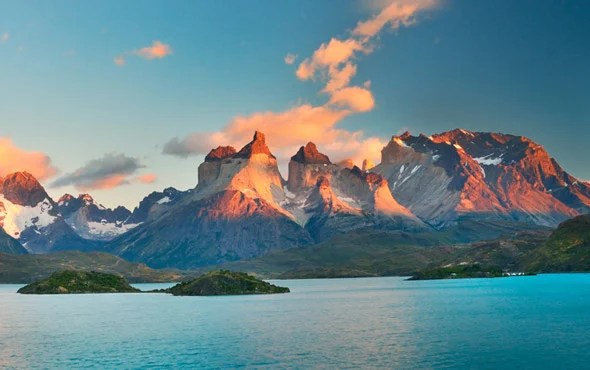
Realistically my ability to travel very far or go anywhere I want to is limited. But also my desire to travel has become less with age and with so many fantastic travel videos to be enjoyed on Youtube. The place Mike and I most want to visit now is Patagonia. There’s a very good chance I won’t ever get there, but I love watching travel videos and dreaming… Now that’s something previous generations did not have! We really are very lucky, even in our old age. I appreciate that everyday!

“Even in seemingly dormant times, we are in transition. Losses and gains are in constant play. We are the change-agent, and we are changed. Even without toil, we transform. So, wisdom advises us to open our hearts to transition; to honor fully what is passing, to learn from all that unfolds, and to welcome what arrives at our door each day with courage and curiosity.”

How my brain is healing from serious concussion

Although I have other experiences with brain injuries and healing, this most recent concussion a little over a year ago has been quite different. This was the first time I experienced auditory and visual hallucinations after I fell and knocked myself out on a stone floor.

From the first I had lots of balance problems, especially because I so fear anymore falls. But what was different for me was the constant feeling of the world spinning around me, much like the whirlies when you’re drunk. Especially when I turned my head either way or put it back very far I felt so dizzy. This went on for months afterwards and between my bad lungs and my whirling brain, I worried about my balance quite a bit.

What I find most curious about me is that I go through periods of symptoms like the twirlies, and then they go away for a while, maybe a month or so, and then they come back again. When they are bad, I don’t trust myself to walk alone without support of some kind. I have felt like this for the past few days and then this morning I felt fine again.

I know that brain cells can repair themselves, I guess it’s a bit like re-wiring. I experienced that after my TBI in May of 2008. It took lots of rest and a couple years, but I did get almost back to ‘normal’ for me. These kind of personal experiences teach us new appreciation for the incredible resilience of our brains. Perhaps that is what is happening to me now. I get better for a while and then I flash back to that old dizziness for a few days, just to fully appreciate when my balance comes back again.

Let’s hear it for the process of neuroplasticity!

Happy to be home!

After just two days up in the northern Colorado cities, Mike and I are always so happy to come home! Speaking as someone with a brain injury, cities increase my stress level immediately, even as we drive north through Pueblo, Colorado Springs and Denver. In summary, being there exhausts my brain energy so quickly. There is also the stress of staying in a different house with different people. All I know is that I need to sleep a lot after I get home to “catch up” on my mental comfort level and health. Of course, psychologists have known for years that:

“City living can chip away at your psychological immune system, which can be precarious for those with a family history of mental illness. According to psychologists , this environmental stress can increase their risk of developing a psychiatric condition, such as anxiety, depression, or bipolar disorder.”

As we drive south out of the metro parts of Colorado, we both breathe a gigantic sigh of relief. We love to return to the life that we love in one of the least populated and developed counties in Colorado. We find slow, quiet, and peaceful is great for our sanity! Our passive solar home always stays cool for free while we’re gone. I miss my garden and Mike misses his cat Rosie when we go on trips.

This is our reward for moving down here eight years ago now… Try to beat that view from your back porch! When I first met Mike he said he wasn’t moving again unless it was to somewhere where he wasn’t looking at the house across the street. Success at last!

I immediately go outside and check on my plants. Luckily nobody got eaten while we were gone 🙂

And yes, I do have some native plants coming up too, like this yucca, a transplanted Cholla cactus and some evening primrose. I sure hope the Cholla decides to bloom this July! It’s flowers are a bright magenta color.

Postscript: The funniest thing I witnessed on our drive through Denver was a trucking company named: “Follow me to Jesus, Inc.” No shit!

Do you feel marginalized as you age? I do.

Perhaps you’ve heard about a new article in The Atlantic by Science journalist Ed Yong entitled:

“The Final Pandemic Betrayal.” Mr. Yong won the Pulitzer Prize in Explanatory Reporting for this “series of lucid, definitive pieces on the COVID-19 pandemic that anticipated the course of the disease, synthesized the complex challenges the country faced, illuminated the U.S. government’s failures and provided clear and accessible context for the scientific and human challenges it posed.

The subtitle of Mr. Yong’s latest article from April 2022 is:

“Millions of people are still mourning loved ones lost to COVID, their grief intensified, prolonged, and even denied by the politics of the pandemic.” I saw an interview with him this week that really hit home for me. At least nine million of us have lost someone we knew and cared for and yet it seems we just go on, ignoring the tremendous losses to so many. In just two years, COVID became the third most common cause of death in the U.S., which means that it is also the third leading cause of grief.

“Each American who has died of COVID has left an average of nine close relatives bereaved, creating a community of grievers larger than the population of all but 11 states. Under normal circumstances, 10% of bereaved people would be expected to develop prolonged grief, which is unusually intense, incapacitating, and persistent. But for COVID grievers, that proportion may be even higher, because the pandemic has ticked off so many risk factors.”

In his recent interview, Mr. Yong discussed what is for me the most important aspect of this horrible loss of life. The groups hardest hit were “marginalized” sections of our society. Who are they? The elderly, those chronically ill, the weakened, the brown, the black and low income groups who have less access to decent health care.

My experience in the past eight years, as I grow older and my own health declines, has been a movement from a “normal” person to one who definitely feels marginalized. First with the aging process we slowly become invisible in our culture, or worse, someone who should just get out of the way of the younger and more vital. Yes, it’s true some help me with doors and seem to feel some compassion for my difficult circumstances, but I have experienced a pulling away from others as I have become more disabled. I have found it almost impossible to make true friends in this rural area. It seems just about nobody believes I am worth their time and energy. I don’t think I would have believed it if I hadn’t experienced it myself.

In this way I have learned what “marginalized” means in this country. We have always put an emphasis on being healthy and able-bodied, and when I was also healthy I rarely noticed what happened to those who are not. Yes, I do have financial resources unlike so many Americans, but I do not live by bread alone. Thanks to those of you who have made an effort to welcome us here. And to the rest of you, I hope you don’t ever become elderly and need a friend.

Aging, Imaginary Friends & Transcendence

I mean, what could be more natural? Throughout human history and certainly since each of us first started attempting to create ‘relationships’, we have naturally projected our own needs, desires, and preferences onto anyone around we found handy and appealing. But reality can be so harsh. If we spend time to get to know our latest “possible friend material”, it’s always disappointing. “Oh no, this is just one more flawed, imperfect, lost soul. Damn, I thought I’d found someone more together than me.”

Then AI comes along and before long we had some fascinating new ways of (mis)communicating. Artificial-intelligence gone wild! Spring break for cheaters! Open season on imagining anything or anyone and then hoping for the best!

Databases like Facebook and most dating sites made it much easier to imagine others’ lives instead of bothering to get to know them… at all! Imagine projecting across the globe and so easily. It may well bring one of our worst traits to the surface, and then convince us that we have scads of imaginary friends. Oh well. I guess that beats no friends at all 😦

I marvel at the apparent power of Facebook. After decades of wondering (or not) we connect to a few we just barely recognized in high school, but back then most of us were too scared, self-conscious or self-absorbed to get to know anyone else. Or maybe just too high… I remember my high school self as a unique combination of shrinking violet and wallflower with just a hint of enforced invisibility. For me, being in public was painful, unless I was ice skating.

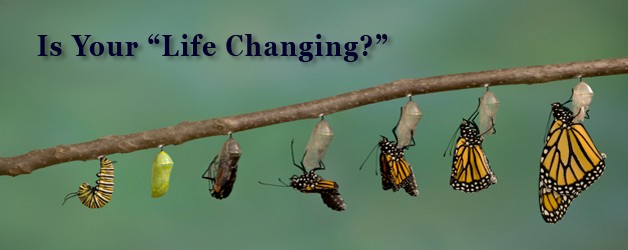
Don’t worry, high school was just the pupa stage. We got much better!

Sometimes I like to compare our lifecycle to that of the butterfly. One of the reasons I enjoy this image is that it means that we were only pupa in high school and college, coming out of our pupa in midlife, and we’re now moving into our full butterfly stage, as free and beautiful as we will ever be! One thing is for sure, we are just about as authentic as we are ever going to be now.

I find that transcendent…

Such a refreshing perspective!
“I had to go through so much just to be here now.
That makes me feel so proud of myself!
I can’t believe I made it so far!”

Postscript: Perhaps death is such a relief because there is truly nothing else to go wrong.

The worst case scenario just arrived!