My insights into Cannabinoid (CBD) Oil

Cannabinoid (CBD) Oil is new to me. I talked to a few people in the past few months who thought that it helped them immensely with pain from sciatica, sleep issues, etc. It took me a lot of online research and thought to decide to buy some, partially because it is quite expensive and I wondered about issues of purity also.

For those of you new to this product, this oil is made from hemp with no THC in it. It is usually taken by a few drops under your tongue, and has no psychoactive ingredients. That is why it is legal in all states. The FDA has ruled it to be a dietary supplement. I didn’t buy it at a marijuana dispensary, just a natural foods store.

I bought a small bottle of That’s Natural CBD Oil with the ingredients of Hemp Seed Oil, Grape Seed Oil, Peppermint Oil and 250mg Hemp CBD Oil. This stuff is guaranteed not to contain marijuana or to have psychoactive effects.

I started out with just a few drops under my tongue once or twice a day. At first the only real effect it had on me was I didn’t wake up as often at night. I took it for a few weeks and then stopped for a few days to see if I felt any different. I was surprised to learn how much those few drops were helping with both my mood and my ability to sleep more deeply. I can’t say it helped at all with my arthritis pain. Still stuck with Aleve there.

But I can recommend that the rest of you check this out. Here’s a few articles I found interesting:

https://healthyhempoil.com/what-is-cbd-in-weed/

http://herb.co/2016/09/18/menopause-symptoms/

Some history:

“Cannabis plants are exceptionally versatile. Both the seeds and cannabis oil were used for food in China as early as 6,000 BCE. Two thousand years later, in 4,000 BCE, there is evidence of textiles made from hemp in both China and Turkestan. The influence of the plant seems to have been global. In 850, the Vikings transported hemp rope and seeds to Iceland, and by the year 900, Arabs were learning techniques for making paper from hemp. By the year 1000 Italians were using ropes made of hemp on their sailing ships.

In contrast to today’s modern restrictions of growing cannabis, England’s King Henry VIII actually fined farmers if they do not raise hemp for industrial use. Less than one hundred years later, settlers in Jamestown, Virginia began growing hemp plants for hemp’s unusually strong fibers. Once the plant demonstrated its usefulness, it became illegal to NOT grow hemp in Virginia.

By 1850, cannabis was added to The U.S.Pharmacopeia, a respected compendium of Medicines and Dietary Supplements. At that time cannabis was used throughout United States as a medicine, easily purchased in pharmacies and general stores. This lasted until about 1915…

(https://discovercbd.com/blogs/cbd-news/88739206-the-history-of-cbd-10-000-years-and-counting)

I’m a newcomer to rural southern Colorado.  After two years I decided to compile a short journal about the ups and downs of moving from a good-sized city to rural America to build a passive solar retirement home in the foothills:

A Memoir of Retirement: From Suburbia to Solar in Southern Colorado

Please share this information with your friends if they are considering similar life changes. Feel free to contact me directly to discuss any of these challenges, and to order your own signed copies of any of my books!  Cheers, Laura Lee  (email me: MidlifeCrisisQueen@gmail.com)



Air Pollution, Dementia and City Life

brain-cogsMore than 50 million people around the world live with dementia, but the causes of this disease that robs us of our memories and brain power, are not well understood. We received some bad news on this topic this week. As many as 11% of dementia cases in people living within 50 meters of a major road could be caused by pollution and/or traffic noise, a new study suggests. The researchers, who followed nearly 2 million people in Canada over eleven years, say air pollution or noisy traffic could be contributing to the brain’s decline.

power outage

This study, published in the Lancet, followed nearly two million people in the Canadian province of Ontario, between 2001 and 2012. There were 243,611 cases of dementia diagnosed during that time, but the risk was greatest in those living closest to major roads.

Compared with those living more than 300 meters away from a major road, the risk was 7% higher within 50 meters, 4% higher between 50-100 meters and 2% higher for those within 200 meters. Researchers adjusted their data to account for other risk factors like poverty, obesity, education levels and smoking so these are unlikely to explain the link.

Pollution particles ‘get into brain’

Dr Hong Chen, from Public Health Ontario, one of the report authors, said:

“Increasing population growth and urbanization have placed many people close to heavy traffic, and with widespread exposure to traffic and growing rates of dementia, even a modest effect from near-road exposure could pose a large public health burden…More research to understand this link is needed, particularly into the effects of different aspects of traffic, such as air pollutants and noise.” 

Add to this the fact that dementia is quickly becoming the leading cause of death, and it becomes harder to deny that living in polluted cities is killing us.

Many studies have focused on the impact of dirty air on the lungs and heart. In early 2016 the World Health Organisation warned that air pollution was leading to as many as three million premature deaths every year. Now, tiny particles of pollution have been discovered inside samples of brain tissue, providing the first evidence that minute particles of what is called magnetite from air pollution, find their way into our brains.

My initial response to this new research is dah! When I first heard about my own serious case of COPD last month, I said to the doctor, “Yes, I’ve had bronchitis in some of the most interesting places.” (Bangkok, Taipei, China, Venice…)

Asia is particularly dirty and I have spent far too much time living there. And Europe isn’t much better, but realistically, most of us breathe polluted air all of the time and somehow believe it isn’t affecting our health. Surprise! It all catches up with you sooner or later.

For decades I have had a personal appreciation of the American Lung Association’s tag line:   “When you can’t breathe, nothing else matters…”

You cannot control how others receive your energy

Perhaps I will always remember this holiday as the one where I finally accepted the truth about other peoples’ reaction to me. Ah, if I could have totally accepted this truth decades ago, my life would have been so much easier:

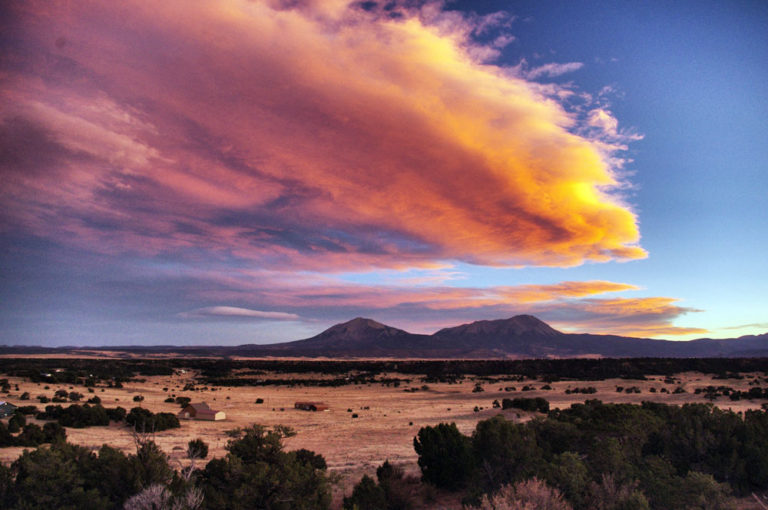
carter_sunset-768x510

You cannot control how other people receive your energy. Anything you do or say gets filtered through the lens of whatever they are going through at that moment, which is NOT ABOUT YOU.  

Just keep doing your thing with as much integrity and love as possible.

This includes everything I write about here and in my books. Just because I have chosen to learn enough to understand the psychology of midlife transition or passive solar technology, and appreciate the freedom this knowledge has given to me, does not mean anyone else has a clue what I’m talking about.

Even my parents, who taught me much of what I learned as a child, the ones I thought knew EVERYTHING when I was young, have no idea where I’m coming from with most of my ideas and thoughts today. They are living in their own reality and often do not appreciate mine, but that is not about me.

earthOn some level I’m ashamed that it has taken me this long on this beautiful blue planet to appreciate this truth. But on the other hand, it is so freeing to let each of us be where we are right now.

We continue to search for whatever makes our lives feel better.

Family History Comes Full Circle


imgp5617

Deep in the silence of a Colorado foothills snow storm, I see how the generations of my family are now coming full circle. Soon after Mike and I moved down here, in the foothills halfway between Walsenburg and La Veta Colorado, my father told me his father’s retirement dream was to move to the tiny town of La Veta to set up his own barber shop.

old-barber-shop

This is a man who had always cut hair in Turner, Kansas, outside of Kansas City, Kansas. Grandpa Carter occasionally drove out to Alamosa in the San Luis Valley to visit relatives. Along the way he found La Veta and loved it. Unfortunately my grandpa died just weeks after his retirement from the railroad in 1968.

I guess it is now safe to say my husband Mike had to do some fast talking to convince me to move down here from busy, expensive Fort Collins, Colorado in 2014. He loved the area, especially for the reasonably-priced lots with their own water district, pinon-juniper woodlands and great solar exposure. I love it now too.

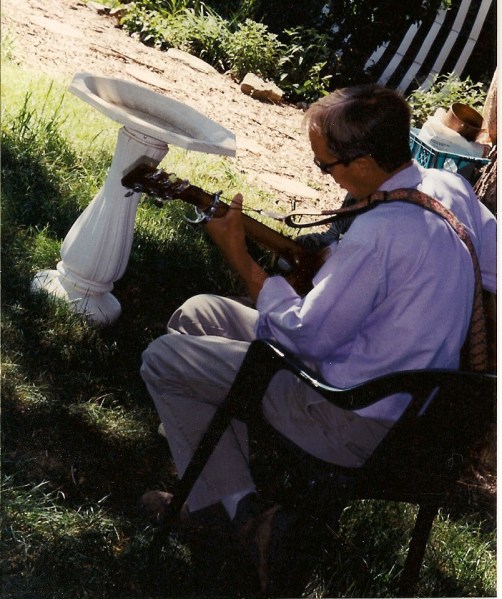
john-carter-2003-with-guitarThis year my estranged brother John, who lives his own version of a Thoreau-like existence outside of Sedona, Arizona, decided to come up to visit us a few times after no word from him in years. In fact, we weren’t even sure he was still alive a few years back. He lives on the land, and a kind forest ranger finally convinced him to contact us. We have all now renewed our relationships with John.

John has not attended our family Christmases in decades, but he is making a point of it this year. My parents are in their eighties and now live in Denver. We will be taking him up there soon.

imgp5472

I feel somehow certain that John would not have come up to visit us if we were still in Fort Collins. He loves the natural setting of our new home. He sits out on the ‘veranda’ every chance he gets, watches nature and plays his guitar, enjoying the lovely silence.

What are the chances that we would all wind up in this lovely place, so close to the town where my Grandpa Carter wanted to wind up? So many synchronicities or “meaningful coincidences” can only be seen in retrospect.

City life, rural life, stress & heart health

I find the gradual transition I have been through in the past few years, from city life, to small town and rural living, fascinating. I did not know until I researched it, that the entire world is moving from rural to urban quickly.

stress and city living

According to a 2011 report from LSE Cities and the Deutsche Bank called Urban Stress and Mental Health:

“Urban living is on the rise whereas rural living is becoming the exception – in all parts of the world and at an ever-increasing rate. The rapid pace of urbanization is an important marker of the societal transition at large that has occurred over the past 30 years. Our world is shifting towards an urban, small-family or single household, and at the same time, an aging society. In the next 30 years we will be faced with the growing challenges specific to our cities’ aged single urban populations. 

However, urban living is not only about getting older, it is also about being in a constant state of stress. Stress is the unspecific physiological and psychological reaction to perceived threats to our physical, psychological or social integrity. Urban living can be threatening if you haven’t enough space of your own, if you experience insufficient security or live under unstable economic conditions. Stress increases with the anticipation of adverse situations and the fear of not having the adequate resources to respond to them. From an evolutionary point of view, stress is the mechanism that prepares us for any ‘fight-or-flight’ reaction, and also causes us to evolve in order to better adapt to our environment. Although not harmful per se, stress may jeopardize our health when stress exposure is chronic or when complete recovery is not possible.”

In our first year of living in a town of under 3,000, my stress level fell precipitously. It felt amazing at times. With only two stoplights in the whole county(!) and almost no traffic, I found nobody in Walsenburg CO to be in a rush, unless of course they were tourists. There were never parking problems or lines anywhere.  But since my natural stress level was geared to noise, traffic, aggressive behavior and threats from strangers everywhere, it took me a while to adjust. I had to tell myself to mellow out constantly.

mike-at-home

In our second year here we moved out to the country on a few acres and began living in a quiet, clean, peaceful, naturally beautiful setting, but my body was still geared to a higher level of alertness and anxiety than my surroundings warranted. It took time to relax by practicing meditation, yoga, and simply sitting quietly more.

I needed to learn again that my emotions were tied to my heart. When my world felt like a threatening place, even unconsciously, I was daily putting my heart at risk. Health practitioners worldwide now see stress as a major risk to cardiovascular health. Cortisol and epinephrine are two hormones that, along with others, raise blood pressure and blood sugars in the body, threatening the heart. Another reason stressed-out people are vulnerable to heart disease is that they rarely eat well, sleep well, and exercise.

In short, I cannot believe how much my life has changed since leaving city life behind. I did not know the level of stress I was living with everyday until it was gone. And even then it took me quite a while to truly relax and enjoy the lack of stress in my life.

Learn more about this major life transition by reading my memoir


Are you moving towards your life goals?

When was the last time you put some serious energy into contemplating your life goals? Not what needs to happen in the next year or two, but what needs to happen for you to feel satisfied in the long run.

After I lost my job and 25 year career back in 2004, I spent months contemplating my life up until then. After decades of work as an academic librarian, I was suddenly set free to consider every option. This was a wonderful gift, well disguised as misfortune.

My first book Midlife Magic: Becoming The Person You Are Inside is a summary of the feelings I went through at that time. Here I share my own story of transformation from divorced, unemployed and miserable, to my best life ever, explaining how midlife change, changes everything.

img_1058

Yesterday I went through a list I made back then, a list of my new priorities after I stopped and considered my life at age 49. Here are a few things I wanted more of before I died: love, acceptance, appreciation, access to pure silence, to be surrounded with solar warmth, natural beauty, music, wildflowers, peace, contentment, relief from guilt and shame, and respect for my own integrity.

Such a wonderful feeling to know that I have somehow brought so many of these blessings into my life through my own stubbornness and courage. The way I describe this transition now, on the “About The Author” page of my new book:

Midlife crisis queen header gold

“Her midlife crisis began with a divorce and then progressed to the loss of her library career, misfortunes she now finds supremely fortuitous, as everything wonderful in her present life flowed from these difficult experiences.”