The most important healing tip I’ve learned from my own brain injuries (TBI & concussions)

I just saw an interesting piece on the importance of sleep on the NBC morning news show, which reminded me of the most important thing I have learned from experiencing a traumatic brain injury and a few serious concussions. That is the amazing healing powers of sleep!

I’ve always been a pretty good sleeper and enjoyed every minute of it, but now I see that sleep, whenever you feel like you need it, is your best brain restoring behavior. When we are younger we may try to get away with less sleep than we need, but, as we age, deep REM sleep is essential to brain health and memory retention.

After my traumatic brain injury fourteen years ago, I had no choice but to sleep quite a bit for months afterwards. I also had fractured ribs and breathing problems. That kept my activities to a minimum. But my brain did slowly heal itself over a few years. It literally re-wired itself to work well again.

It was only after a recent serious concussion in April 2021 that I knew that I must take it really easy on my brain and rest whenever I felt fatigued. Then I read Dr. Jill Bolte Taylor’s amazing book “My Stroke of Insight: A Brain Scientistʼs Personal Journey” where she explained how she slowly healed from a terrible stroke. There she re-emphasized the need to sleep as soon as you feel any need for it. In this way I have slowly regained clarity and stability over the past year and a half.

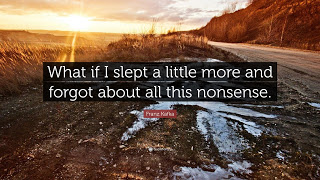
We must all stop fighting sleep and ENJOY IT! It has such a healing effect on your brain and every other part of your body. If you don’t believe me, believe the Dalai Lama:

Boomer health is failing earlier than our parents

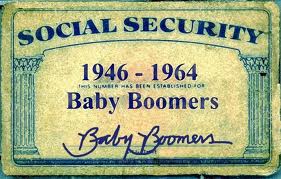
In a very roundabout way, I learned recently that we Baby Boomers are the first generation in American history to have worse physical and mental health than previous generations. Disturbing huh. Along with celebrating my Mom’s 89th birthday this week, I got some results back from a two hour test of my memory, a baseline for future understanding of how my memory is changing. One of the most concerning findings to me was that I suffer from apathy and depression. So, like a good researcher, I started checking to see how common these feelings are among my own generation. Come to find out:

“Americans born between 1948 and 1965 are more likely than the generations that preceded them to have multiple health problems as they age. Many develop two or more health conditions up to 20 years sooner than folks from other generations…” according to the articleCohort Trends in the Burden of Multiple Chronic Conditions Among Aging U.S. Adultsin the June 2022 issue of The Journals of Gerontology

It seems our apathy may be showing… This study classified people, based on the generation they were born into, like this: Greatest generation (born 1923 or earlier); early children of the Depression (1924 to 1930); late children of the Depression (1931 to 1941); war babies (1942 to 1947); early boomers (1948 to 1953); mid boomers (1954 to 1959); and late baby boomers (born 1960 to 1965).

The researchers looked at nine chronic conditions: heart disease; high blood pressure; stroke; diabetes; arthritis; lung disease; cancer (except skin cancer); depression symptoms; and trouble with memory and thinking skills. Among adults with multiple chronic health problems, arthritis and high blood pressure were the most common for all generations, higher rates of depression and diabetes drove the surge in chronic conditions seen in boomers. Some links can be found between the introduction of fast food and television:

“Fast food restaurants became very popular during the 1950s because families were busy and they needed a place where they could quickly pick up food; people also wanted to be able to get quick food that they could eat in front of their new TVs.”

In other trends, American baby boomers scored lower on tests of cognitive functioning than did members of previous generations, according to a 2020 nationwide study. Findings showed that average cognition scores of adults aged 50 and older increased from generation to generation, beginning with the greatest generation (born 1890-1923) and peaking among war babies (born 1942-1947). These scores began to decline in the early baby boomers (born 1948-1953) and decreased even further among middle baby boomers (born 1954-1959).

 What was most surprising to me is that this decline could be seen in all groups: men and women, across all races and ethnicities and across all education, income and wealth levels. Results showed lower cognitive functioning in boomers was linked to less wealth, higher levels of loneliness, depression, inactivity and obesity, and less likelihood of being married. Could this also be linked in some way to how many of us have tried to live up to our parents’ demands and standards and failed?

The biggest concern is that these apparent trends in lower cognitive functioning in those in their 50s and 60s, could lead to a higher rate of dementia as we age. Among the aging population in the United States, we are already seeing an increase in the number of Americans with dementia. This may continue in our future.

What it feels like to age faster than my friends

Recently I have begun to realize that what I am experiencing at age 67 is what most in my age cohort will experience later. Because of my present health concerns, lung disease and a few serious brain injuries, I feel now what most in my age group may not feel for a decade or two. This has come home to me with a few recent occurrences.

First is my upcoming 50th high school reunion next summer. At first I got confused about whether it was this year or next year, and when I realized it was next summer that they were trying to schedule for, I had to respond with, “I’m not sure if I’ll even be here by then…Either way I’m pretty sure I won’t be able to come.” 

I have also recently heard from a few friends from decades ago. My best friend from high school wrote out of the blue to “catch up.” She is probably a typical 67-year-old who recently retired, loves to travel, and is proud of her children and grandchildren. They seem to have very few health problems. I told her the truth about my situation. I didn’t hear anything back, period.

Same with a lover/friend from my mid-20s. He sent me a brief e-mail in April saying, “Hope all is well.” I sent him a summary of my life now and received stark silence in return when I told him the truth about what is happening with me.

One thing is for certain, my life experiences in the past decade or so have changed my outlook on life. One cannot suffer a traumatic brain injury and fractured ribs, with periods of unconsciousness over 24 hours, without seeing life differently. Now I see that experience as a gift, one which greatly raised my appreciation of life while showing me that death is truly not so unusual or scary. We may simply experience an accident, lose consciousness and it’s over. Is that so bad?

Losing my ability to breathe without oxygen has taught me compassion for those who lose any basic ability that others take for granted. I know now how others can suffer from judgments from others and how harsh I may have been by unconsciously judging those with limited abilities through no fault of their own.

These challenges and insights I face now are the same as many in my age group will face eventually. I’m just getting an early start. I find my experiences so revealing about disability and aging. I try to face all new experiences with a sense of wonder and curiosity. Too bad others seem to want to avoid looking at my life now and possibly their our future.

Divorce is legal? When did that happen?

Thanks to one of my readers, I just learned something fascinating about American history. You know how if something is legal today we assume it has always been that way? Well divorce is relatively newly legal in our country! Especially no-fault divorce, meaning either party could walk away for any reason. The modern concept of a divorce varies by culture and religion, but early forms of divorce were almost always only if the husband wanted it. I remember when I lived in Taiwan in the early 1980s, only men could choose divorce and then only he had all the power to decide whether to keep the kids or not. He usually only kept them if they were male.

The first recorded divorce in the American colonies was that of Anne Clarke and her husband Denis Clarke of the Massachusetts Bay Colony on January 5, 1643. The divorce was granted by the Quarter Court of Boston, MA on the grounds that Denis Clarke abandoned his wife to be with another woman.

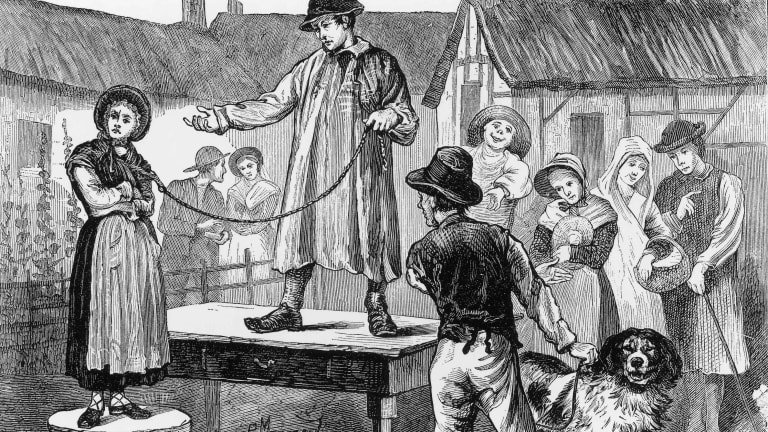
If your marriage broke up in the 1750s, you had to obtain a private Act of Parliament—essentially, an exception to Britain’s draconian divorce law—to formally divorce. The process was expensive and time-consuming, so wife-selling arose as a form of faux divorce.

Until the 1857 Matrimonial Causes Act, it was essentially impossible to obtain a divorce in the U.S., no matter how bad the marriage or how cruel one’s husband. A couple could only be divorced by the passage of a private act through Parliament, a remedy available only to the very wealthy.

If you wanted a divorce in the early 1900s, you had to prove your significant other had committed adultery, abused, or abandoned you. By 1916, the U.S. led the world in number of divorces and in 1942, the U.S. Supreme Court ruled in Williams v. North Carolina that other states had to recognize divorces, under the “full faith and credit” clause of the U.S. Constitution. It wasn’t even until the late 1960s that Americans were allowed no-fault divorces.

If there was divorce in your own family history, like mine, the family was usually quite secretive about it. And as we all know, secrecy usually equals shame in our culture. In my family, who were basically Southern Baptist farmers in the Kansas City area in the early 1900s, I can think of three family secrets that my Mom had to really dig for when she decided to do our full genealogical history: divorce, marrying someone of the Jewish faith and severe mental illness.

My own 2001 Colorado divorce was quite quick and painless. We never had to show up in court because the filing was uncontested, meaning we were not fighting over assets and we had no children. We just filled out some forms, paid $99 and we were done. No muss no fuss, except for a few hurt feelings and the various biases and criticisms I experienced from others afterwards. One great side effect for me, my TMJ went away never to return!

Did you know that more than one quarter of Americans getting divorced in the United States today are over age 50, and most of those divorces happen after 20 years of marriage? Pew Research found that the rate of divorce among those over 50 nearly doubled from 1990 to 2015, and the attitudes of those Americans have shifted to feeling much more supportive of divorce.

Here’s my own conclusion a few years after my own divorce:

“Perhaps it’s mainly women who get stigmatized by divorce: “What’s the matter—couldn’t keep your man?” The assumption being that any man is better than no man at all. Come on—we can do better than this, people! Few marriages are matches made in heaven, and sometimes they truly need to end. Mismatched is no match at all. It’s only fair that after a mistake, each of us can try again to find happiness before it’s too late.”
Sibling Relationships as our Parents Fade

We all know that death is a part of life, but as a middle boomer, I have been learning first hand about a few of the many emotional issues our parents demise can bring up among siblings. I believe a few of my personal struggles may reflect what other boomers are experiencing.

No, I am not talking about who gets what here, although that can certainly create major animosity between brothers and sisters as our parents pass away. What I am talking about here is experiencing the death of relationships with our siblings as our parents fade, and how these stressors may bring up previous traumas from our past.

Suddenly, after 40 or 50 years of growing apart, siblings may be forced to come together to decide quality of life and death issues for our parents. Differences between siblings can be countless after decades of living separate lives. Brothers and sisters may remain worlds apart. For example, my brother and sister could not possibly be more different.

Here are a few major sibling differences:

Very different health statuses and therefore view of quality of life issues

Differences in standards of living (homeless versus very well-off) & financial need

Differences in ethics and personal style

Very different personal relationships with our parents

Differences in the way we treat each other in difficult emotional times

When we add in parents who may be experiencing varying degrees of decreased mental capacity or dementia, we find an emotionally charged situation which often brings up old differences and new personality conflicts as family dynamics finally get settled. Because family members may be the ones whom we have relied on for emotional support in the past, they can be primary sources of relationship stress. It may take some time and work to understand all the stressors involved if siblings should choose to work through this process as our parents’ health fails. Otherwise this may be the best time to resolve decades of anger and frustration by finally ending a toxic relationship with your sister or brother.

Postscript: I just saw a film that dealt with this issue well, “June Again” a new Australian film.

One boomer’s ridiculous dilemma: Beginning to spend all of that saved up delayed reinforcement!

As many of you know, my health has been failing for the past few years, and with one additional serious concussion in April, it appears clear, at least to me, that it’s time. Time for what? Time to begin spending all of that “delayed reinforcement” from the past 45 years of my life.

If you’re anything like me, you have been saving money for as long as you can remember. Why? I guess because I was completely brainwashed in the cradle to save up for my old age. So, exactly when does that “old age” begin? Strange to say, I don’t find myself as the best judge of very much lately, not with this many brain injuries! But I am fairly clear I not going to be living forever and also not sure how long my brain is going to last. One fun fact I learned recently:

Head injuries accelerate aging: “The current state of the literature provides support for the argument that TBI can result in diminished cognitive reserve which may accelerate the normal process of cognitive decline, leading to premature aging, potentially increasing the risk of dementia.”

That explains a lot! The irony in all of this is not lost on me (yet!) I have always prided myself on my excellent brain. Now what? Is it really time to begin spending my wad? I find that hard to believe and even harder to do…

When you have spent your whole life trying to save money, how do you suddenly cut loose? It’s kind of the opposite of the poor guy winning the lottery. Of course he’s going to overspend immediately, but everything in my background suggests that holding on to money is your best avenue to happiness. I know that if I don’t get some big trips planned I probably won’t be taking them. How do I loosen the purse strings? How do I give myself a luxury vacation?

I know, most of the human beings on this planet would like to have such problems, but there it is…