One of my favorite movies EVER!

Raised in small towns in Iowa and Kansas, my first memories of Asia were greeting my Dad when he returned from his regular journeys to India. He always brought back beautiful souvenirs and slides to show us. As a child, the strangeness of this very different culture halfway around the world, fascinated me. I was also introduced to Indian music and food very early. To this day they are my favorites!

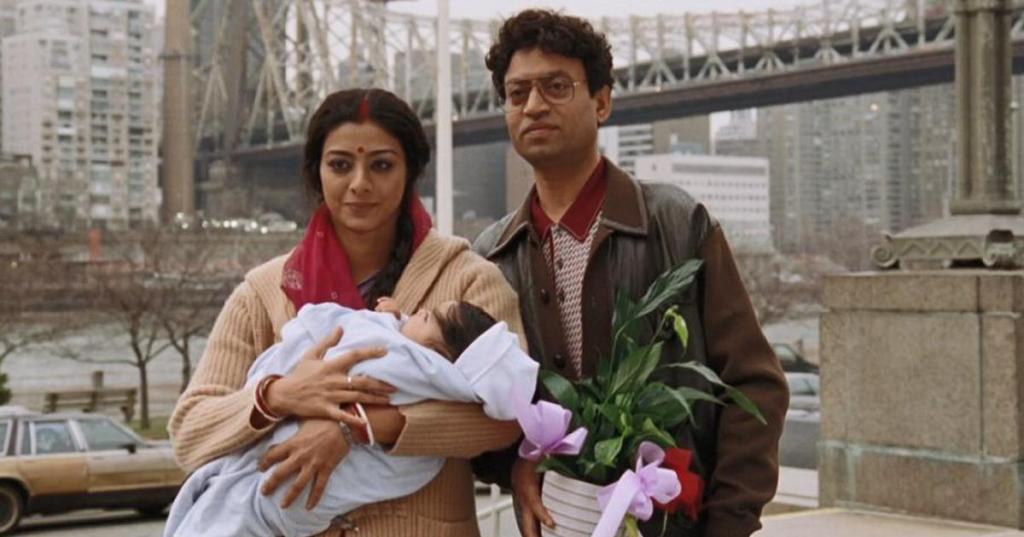
This is all to show you why I fell in love with the film “The Namesake” at first sight this week. The music, from the very beginning, with Tabu’s incredible voice(!), is exquisite. I couldn’t help but wish that this experience came with a lovely, big Indian meal. Mira Nair is my new favorite director. I must see more of her films! But what struck me the most was the emotional depth of her style of storytelling and the beauty of the people of India. That and how much I was drawn to the actor Irrfan Khan, who died this year at 53. He was truly “distinguished and charismatic” and “an enormously valuable bridge between South Asian and Hollywood cinema,” according to Peter Bradshaw of the “The Guardian.” I also loved him in the film “Puzzle” from 2018.
Coming to America….

The story is quite simple. The Namesake depicts the struggles of Ashoke and Ashima Ganguli, first-generation immigrants from West Bengal to the United States, and their American-born children Gogol and Sonia. The film takes place primarily in Kolkata India and the New York City area. I was constantly reminded of generational differences in my own family growing up, as this first generation American family struggled with the different cultures of India and America. And we thought our Dad didn’t understand our generation! Imagine what is must be like if your parents are from a culture a world away.

The film is also an excellent example of the contrasts between Eastern and Western cultures. The East is far more family and community oriented. They find Americans self-centered and even selfish. In the West we do what we please, especially when we are young. Family may become important later for us. I found this film to be a commentary on the toxic loneliness of American society today.

Northern Thailand, 1973

Ever since I lived in Bangkok in 1973-74, I have found Asia to be so different and yet so fascinating. As a teenager I felt almost like I had gone to the moon, everything was just so different compared to Kansas and Colorado. In college, graduate school and in my career as a librarian, I worked to bring these two worlds closer together in the eyes of Americans…

but now I can see that movies like this do the most for us all to truly understand and appreciate our own shared humanity. There is no world that needs this more now than the human race. I found this film so soothing…

Living in post-truth America

At the beginning of this season of commercialism on steroids, I often become cynical about our world. This year I am not feeling alone in this impulse. Why not ask the Chinese youth who are feeling drawn to the “lying flat” movement? Everything I surround myself with suggests that our future is grim and getting grimmer. After observing the complete naivete and gullibility of the American public when it comes to politics and after watching the film “Truth” (2005) this morning, I feel certain that the ‘truth may be out there,’ but it has no chance of revealing itself in today’s world.

As a lifelong purveyor of the wisdom of searching out the truth through extensive research and critical thinking, the stupidity of believing “it must be true, I read it on the Internet” may well be the end of everything I value in our world. The film “Truth” gives some much needed insight into the beginning of end of ‘truth’ here. This story is a microcosm of the loss of critical thinking in our world today.

In 2004, Mary Mapes, a CBS producer and a number of reporters began to research the truth behind President George W. Bush’s military service in the early 1970s. This story eventually ended up on CBS 60 Minutes. The story suggested that, thanks to help from his father’s friends, Bush was able to sign up for the Texas Air National Guard rather than serve in the Vietnam War. Texas Lieutenant Governor Ben Barnes admitted that, in addition to Bush, he’s also helped the children of several other influential Texans to avoid service in Vietnam.

The CBS story was supported by documents purported to be from the files of Bush’s commanding officer, the late Lieutenant Colonel Jerry B Killian. Immediately after the story aired, it was the subject of harsh criticism from truth-tellers like Rush Limbaugh and bloggers who created an immediate smear campaign, attacking the authenticity of the documents. Allies of Bush claimed that the story showed media bias. The Killian documents were reportedly found to be forged. Mary Mapes was fired from CBS. Dan Rather stepped down as CBS anchor after 40 years there.

Later, Mapes said Karl Rove was “an inspirational figure” in the criticism of the 60 Minutes segment. Rove called Mapes’ work “the gift that keeps on giving” due to the story’s “lurid foundations” and the boost it gave to President Bush during his reelection campaign. But some Bush critics suggested that the memos originated from the Bush campaign with the purpose of discrediting the media for revealing Bush’s National Guard service as a giant distract to change the conversation from subjects like the unpopular Iraq War.

Do you see the beginnings of future distraction campaigns and media manipulation? Why bother finding out the truth about any situation? Just decide what you want the “truth” to be and then repeat it millions of times on TV, radio and the Internet. Truth or reality is not useful or even important anymore.

Tellingly, a few days after Trump’s election, the Oxford Dictionaries announced that “post-truth” had been chosen as the 2016 word of the year, defining it as a condition “in which objective facts are less influential in shaping public opinion than appeals to emotion and personal belief.”

Do you smell the end of democracy in these changes, because I do, and soon! I see it as laziness plain and simple. Why spend all of that time researching something when you can just grab anything off the Internet and believe it’s true? And BTW, if your truth does not match that of others, you may be severely punished. Mary Mapes was constantly threatened after that 60 Minutes story broke in 2004. Bring on the brown shirts, a “Nazi paramilitary organization whose methods of violent intimidation played a key role in Hitler’s rise to power.” — https://www.britannica.com/topic/SA-Nazi-organization

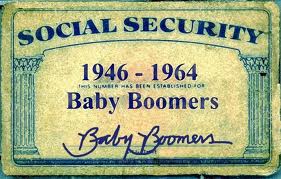
One boomer’s ridiculous dilemma: Beginning to spend all of that saved up delayed reinforcement!

As many of you know, my health has been failing for the past few years, and with one additional serious concussion in April, it appears clear, at least to me, that it’s time. Time for what? Time to begin spending all of that “delayed reinforcement” from the past 45 years of my life.

If you’re anything like me, you have been saving money for as long as you can remember. Why? I guess because I was completely brainwashed in the cradle to save up for my old age. So, exactly when does that “old age” begin? Strange to say, I don’t find myself as the best judge of very much lately, not with this many brain injuries! But I am fairly clear I not going to be living forever and also not sure how long my brain is going to last. One fun fact I learned recently:

Head injuries accelerate aging: “The current state of the literature provides support for the argument that TBI can result in diminished cognitive reserve which may accelerate the normal process of cognitive decline, leading to premature aging, potentially increasing the risk of dementia.”

That explains a lot! The irony in all of this is not lost on me (yet!) I have always prided myself on my excellent brain. Now what? Is it really time to begin spending my wad? I find that hard to believe and even harder to do…

When you have spent your whole life trying to save money, how do you suddenly cut loose? It’s kind of the opposite of the poor guy winning the lottery. Of course he’s going to overspend immediately, but everything in my background suggests that holding on to money is your best avenue to happiness. I know that if I don’t get some big trips planned I probably won’t be taking them. How do I loosen the purse strings? How do I give myself a luxury vacation?

I know, most of the human beings on this planet would like to have such problems, but there it is…

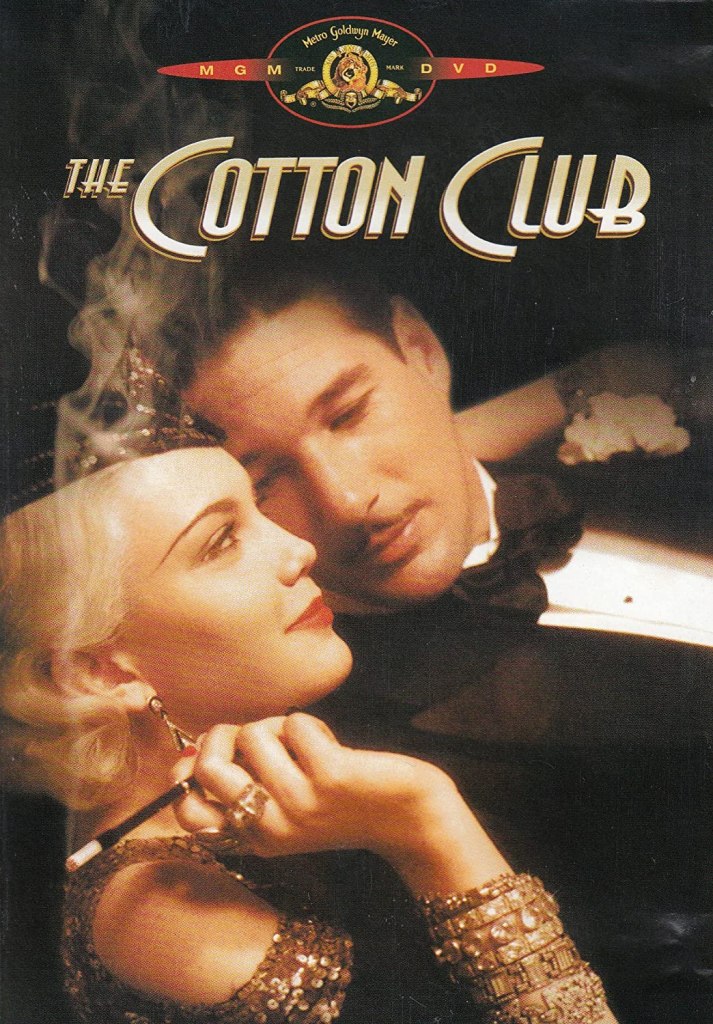
See “The Cotton Club” Encore Edition!

I don’t know how I missed it, but this old movie from 1984 is fabulous, especially if you love 1930s music and watching Gregory Hines dance! Come to think of it, I didn’t even have a TV or go see films much in the 1980s. I was busy learning Chinese and getting degrees I would never use… But this film was so much fun for me yesterday!

For me, the most interesting aspect of this movie was the way it called attention to extreme early racism in Harlem and how those with power drew the line between black and white. Opened in 1923, the Cotton Club on 142nd St & Lenox Ave in the heart of Harlem, was operated by white gangster Owney Madden. Madden used the Cotton Club as an outlet to sell his “#1 Beer” to the prohibition crowd.

The Club was decorated with the idea of creating a “stylish plantation environment” for its entirely white clientele. As with many New York City clubs of the time period, that meant the upper class of the city. The Cotton Club at first excluded all but white patrons although the entertainers and most of staff were African American. Dancers at the Cotton Club were held to strict standards; they had to be at least 5’6” tall, light skinned with only a slight tan, and under twenty-one years of age.

The oppressive segregation of the Cotton Club was reinforced by its depiction of the African American employees as exotic savages or plantation residents and the music was often orchestrated to bring to mind a jungle atmosphere. By transforming the club into this plantation atmosphere and bringing in celebrities, Owney Madden created a demand for the Cotton Club while also helping to perpetuate widely held negative stereotypes about African Americans.

This film also got a lot of relatively new actors noticed like Bob Hoskins, Richard Gere, Gregory Hines, Diane Lane, Nicholas Cage, Laurence Fishburne, and Tom Waits(!) to name a few. I loved the music, the dancing, and the story, plus I learned quite a bit about how racism worked in Harlem in the 1930s!

A personal note: I have been noticing the age difference between the romantic lead actors in older movies lately. In this case the age difference between Richard Gere and Diane Lane is 16 years! Talk about robbing the cradle…

Do you ever write anything personal any more?

I was astounded by this statistic on CBS Sunday Morning today:

22% of Americans under age 45 have never written a personal letter

When I think back to the many personal, intimate exchanges I had with past friends and lovers, I simply cannot believe that we no longer communicate on that level and in that way. I still have and treasure letters from old boyfriends in my twenties and thirties. It makes me sad, but also amazes me that this no longer happens.

“In the future old ‘love letters’ may not be found in boxes in the attic but rather circulating through the Internet, if people care to look for them,” said Webster Newbold, a professor of English at Ball State University in Muncie, Ind.

Consider this, we are experiencing a loss in what people in the future will know about us. The loss is incalculable. In earlier times the “art” of letter writing was formally taught, explained Newbold. In fact, in old China a person’s character was judged by the strength of their letter writing abilities.

“Letters were the prime medium of communication among individuals and even important in communities as letters were shared, read aloud and published,” he said. “Letters did the cultural work that academic journals, book reviews, magazines, legal documents, business memos, diplomatic cables, etc. do now. They were also obviously important in more intimate senses, among family, close friends, lovers, and suitors in initiating and preserving personal relationships and holding things together when distance was a real and unsurmountable obstacle.”

Aaron Sachs, a professor of American Studies and History at Cornell University, said, “One of the ironies for me is that everyone talks about electronic media bringing people closer together, and I think this is a way we wind up more separate. We don’t have the intimacy that we have when we go to the attic and read grandma’s letters.”

I have found through the years that writing helps me realize more clearly how I feel, and what I really need to say to those I love. The process allows me to crystallize my thoughts, and then tell the other my most intimate feelings. Is that practice also gone? Will there be no physical record of any of this in our future? This more than most changes to our culture makes me glad that my days on earth are minimal.

The sunrise west of Walsenburg CO this morning!

I could tell when I first looked east around 6AM this morning that it was going to be a good one! The clouds were lovely…

First I saw the very beginnings of the sunrise…

Then a bit more with sunrays just beginning to show…

Next the early sunrays began to light up the sky!

Spreading colorful light over the Spanish Peaks to the south…

and then BAM, the full light of the sun appeared over the horizon!

Now do you see why I love living here? Magical surprises almost every day!