getting off the grid mentally


Colorado Divide: Rural versus Urban
 We had a pleasant visitor today, a reporter from the Denver Post who is putting together their final piece for a series on rural life across our state. Kevin Simpson came down to visit with us about why we came here, and did we find what we were looking for in choosing the La Veta – Walsenburg area for retirement.
Here’s what he came up with. I think he did a great job of LISTENING to those of us who chose to leave city life behind
Colorado Divide: Why some Coloradans are cashing out of the Front Range and seeking their rural happily-ever-after

And, of course, that got me thinking along the same lines. The answer for me is a resounding YES! What has surprised me the most is how much my own choices have changed me.
As most of you know, I’m almost certain I would have never had the courage to move to this area on my own. I can now see our move to Walsenburg three and a half years ago was nothing short of traumatic for me. At first it felt like I was getting lots of tough things to adjust to with few upgrades in my lifestyle. In other words, I was very short-sighted. I have always wanted to be a go-with-the-flow type, but I’m not.
 It took me over a year and a brand new solar home to decide that I had made the right choice. Only after moving in and living here for a while did I fully appreciate an amazing new lifestyle for myself. And, there’s the rub. I had to take what felt like a gigantic leap of faith to find out how I would feel after I had lived here for a while. Some said rent for a year or two before committing to a new place, but that would not have worked for us. Decent rentals are extremely hard to find here, and living in your own solar home in the foothills outside of town is certainly not the same experience as living in a 100-year-old miner’s home in Walsenburg.
In this process I learned how much I love living close to nature and in silence. Overall I would say the BEST part of living here for me is the silence and lack of daily stress. My newfound ability to live completely in the moment has been a great and wonderful surprise! OK, so I am a contemplative person, but as we age these things become so much more important to us.

“…we all know how this ends, so rushing through life is senseless. As our inner life grows ever more luminous, the chatter of the speed-and-greed world slowly fades, leaving us with greater peace, tranquility, quiet and contentment.” — Arthur Rosenfeld
Christmas Memories from 1960

For unknown reasons, I was flooded with Christmas memories yesterday afternoon. It started out with a sudden strong desire for one perfect cut-out Christmas cookie, and then all sorts of memories of childhood Christmases overwhelmed me.
When I was little, we always drove from Iowa to our grandparents homes in Kansas City to celebrate the holidays. My mom and my dad’s parents lived one block apart, so my family would stay at different houses, and then visit one house and then the other on Christmas Day. But when we were very small we would all sleep at Grandma Carter’s house to experience the magic of Christmas morning together.
This is how I remember it:
‘Twas the night before Christmas and my brother John and I simply could not settle down. We were supposed to be sleeping in my Grandma Carter’s big double bed, but instead were literally bouncing off the walls, trying unsuccessfully to contain our excitement about the next morning’s promised bounty. We would talk for a while and then quietly get up and peek around the doorway to see if Santa had arrived while we weren’t looking.

Grandma Carter’s house was an unusual place, the place where magic could be expected. Her Christmas tree wasn’t tall, but to our young eyes it was most amazing in its sparkling aluminum glory. She had an electric color wheel that lit it up, changing its color constantly! We would sit for hours watching it slowly turn the tree from shades of blue to green to red to yellow and then back again. At home we had plain old evergreen trees.
Normally when we visited my grandparents in Kansas City, my parents slept in the double bed in the bedroom, and we kids slept on the couch in the living room. But this was a special night, one where we were supposed to go to sleep early in grandma’s bedroom so Santa could do his work in private. My big brother John was six and I was five years old, just at the age where we were beginning to wonder about the whole Santa Claus thing. My brother was a whole year older, so he instructed me in the intricacies of how Christmas worked.
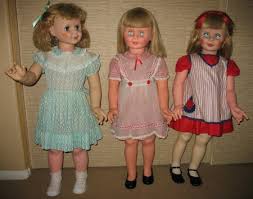 This particular year I had been talking about wanting a walking doll for months. It was almost as tall as me and if you stood behind it, you could make her walk by pushing one and then the other leg forward. Of course, there were other small things I had mentioned, and there were always underwear and socks under the tree, but my heart burned for my own walking doll.

My brother wanted a Davy Crockett hat and a Daisy Red Ryder BB gun (of “You’ll shoot your eye out” fame in The Christmas Story!) more than anything in the world.
Somehow, and I don’t remember how it happened, John and I finally succumbed to the excitement of the long day before Christmas and fell asleep. No visions of sugar plums occurred, but there were definitely dreams of all the toys we wanted most.
First thing in the morning, came the sound of brother John yelling in my ear, “Get up, it’s time to open presents!” and with that the whole household began to stir. We rushed out to the tree and there was my big beautiful walking doll, too big to be wrapped! She just stood there under the tree smiling at me. I ran over, caressed her, named her Sally on the spot, and began helping her walk her around the room.

After my parents got up, John started ripping into his gifts and, sure enough, he received everything he wanted. He ran around in his coonskin cap, pretending to aim his gun at each of us. Then we hugged each other in delight, moving around the tree in a childlike dance of ecstasy. Many decades later, the magic of that particular Christmas still lives on in my heart. So many recollections from childhood are lost forever, but this magical time of bonding remains one of the fondest memories of my young life.
Fine arts in a small town: La Veta Colorado
Some might say they need to live in a city to have access to a vast variety of fine arts. I wish those people could have attended our Holiday Arts Fiesta in La Veta this year. Last night we visited five different galleries in this tiny town, boasting world-class pieces in so many mediums! Clients regularly come from around the world to see and buy pieces from here… Be it batik, oil, watercolor, quilting, weaving, sculpture, music, you name it, we have got it going on here!
The Spanish Peaks Arts Council prides itself in promoting and encouraging educational events in the arts throughout the Spanish Peaks region. Their summer programs for kids are fantastic! Watercolorist Kathy W. Hill is often featured along with many new and emerging artists like my husband Mike. Kathy creates wonderful paintings to capture the beauty of this area! She also offers classes in the summer.
Artists like Peggy Zehring offer experimental drawing and painting classes across the street at the La Veta School of the Arts, and Shalawalla is the home of unique and beautiful batiks, plus classes too. We are also home to noted Oglala Lakota artist Arthur Short Bull. His watercolors are stunningly stark and powerful. And if your interests run towards art quilting, La Veta is home to one of the top quilters in the world, Ricky Tims. If you ever get a chance to see his work, do not miss it!
This is just the beginning when it comes to La Veta! We also have amazing music festivals like the annual Spanish Peaks International Celtic Music Festival. When we first moved here we were amazed to attend a free presentation by Native American flutist Robert Mirabal at Francisco Fort, an adobe fort originally built in 1862.

Later that summer we took a narrow gauge train up to old La Veta Pass with the Nitty Gritty Dirt Band…
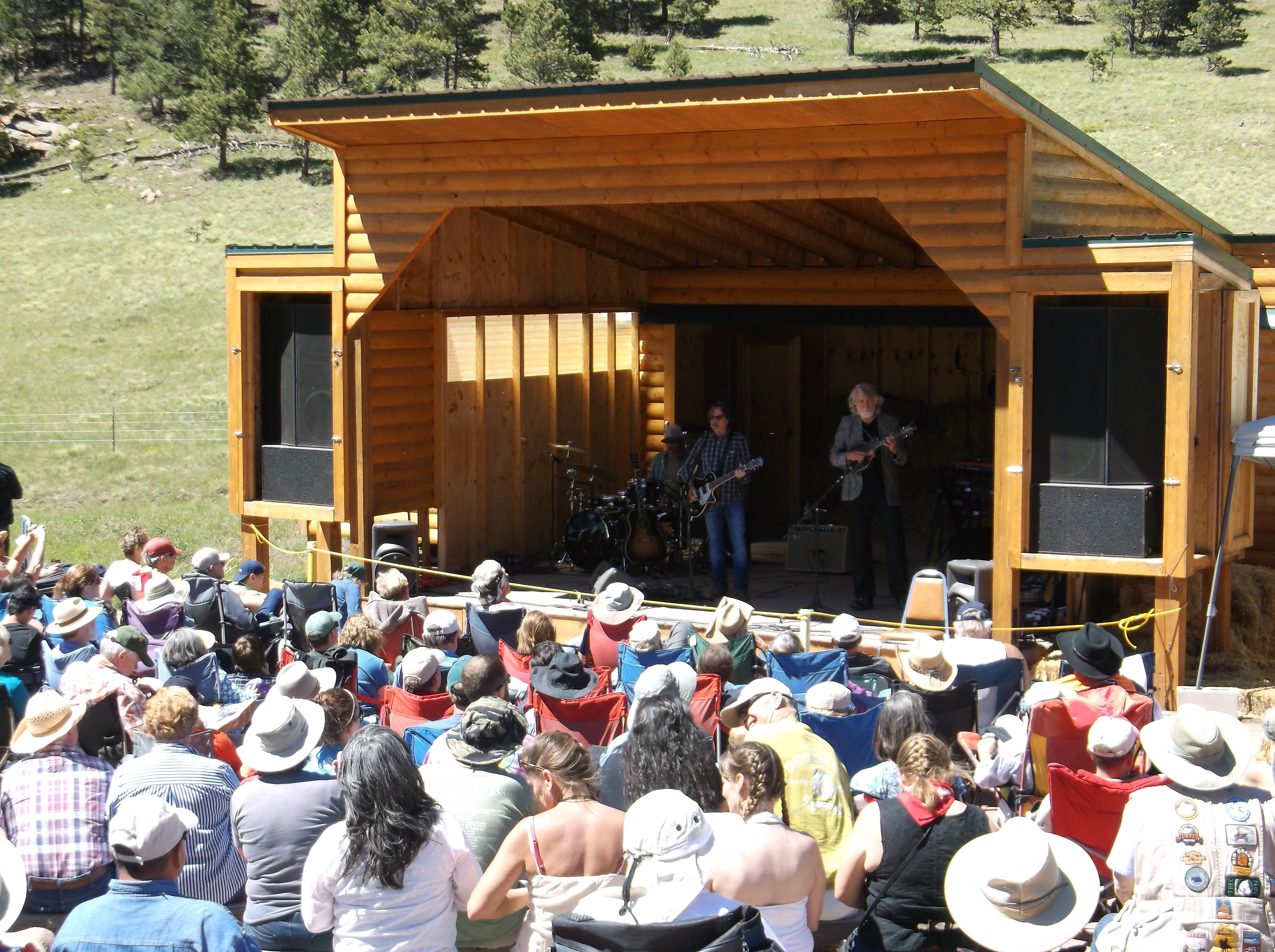
to hear them play in a pristine mountain setting… a fine time was had by all!
Winter living north of the Spanish Peaks!

Yesterday I started thinking about the many people who move here only for the summer, and miss all of this in the winter…
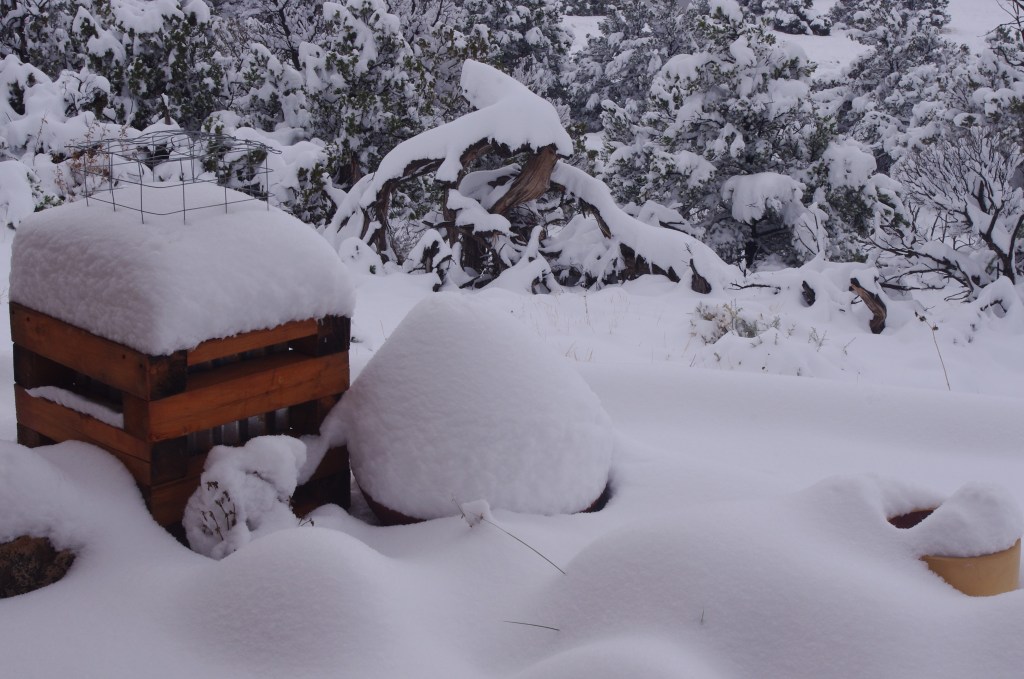
I love a good snowy day…

COPD – The Silent Epidemic
COPD affects an estimated 30 million Americans, and over half of them have symptoms but do not know it…
So, why am I writing about something so depressing right after Thanksgiving? Because Chronic Obstructive Pulmonary Disease (COPD) killed over 150,000 Americans last year. It’s the third largest killer in our country after heart disease and cancer. Over 16 million of us have been diagnosed with this irreversible disease with no cure, and another 10-15 million will develop it without knowing it. Early screening can identify COPD before major loss of lung function occurs.
What are the risk factors and common causes of COPD?
Most cases of COPD are caused by inhaling pollutants including smoking (cigarettes, pipes, cigars, etc.), and second-hand smoke. Fumes, chemicals and dust found in many work environments are contributing factors for those who develop COPD. Genetics can also play a role in the development of COPD—even if you have never smoked or been exposed to strong lung irritants in the workplace. Another major factor is simply the air we breathe.
“It is enough to be grateful for the next breath.” ~ Br. David Steindl-Rast
I learned that I have COPD last winter after noticing how much of a struggle it was to breathe properly at 7,000 feet elevation. I had had no symptoms living at 5,000 feet for decades. I never smoked cigarettes and exercised regularly, but I still had bronchitis many, many times in my life. Cat scans also found nodules in my lungs, which can be a precursor to a lung cancer. The good news? My increased awareness and monitoring of my lung problems.
Go watch this excellent piece that appeared on CBS Sunday Morning this week to learn more about how COPD can be helped in pulmonary rehabilitation centers. Unfortunately, COPD has a big image problem, one that is keeping it from receiving needed government funding for research.
As you might guess, I have learned so much about this common killer, one that will only get more common as air quality declines. The first thing I learned is something that Senior Contributor Ted Koppel’s wife, Grace Anne Dorney Koppel also talks about in the above CBS piece. COPD can be seen as a “it’s your own damn fault” disease.

So now, when I tell others that I have COPD and they invariably ask me, “Did you smoke?” I respond with, “No, but I did breathe!”
To quote Grace Koppel, “Disease is blame free.”

