illness and personal change
 As a sexagenarian (great name for our sixties, huh?) I have entered into a period of being in the present in such a lovely, positive, relaxing way. This feels somehow like my reward for living life fully, to do what I want and answer to nobody.
 Part of that process for me was contacting a key person from my past for a few astonishingly healing and cathartic conversations. Only you can decide whether letting your past go is possible and healing, or doing something in the present will expedite your movement into a better present and future. In my case I was quite lucky, because the lover from my past was also seeking redemption and healing. I don’t think any other choice would have provided that kind of healing for both of us. The whole experience felt like a blessing.
 Sometimes the only way to move on is to take note of what you simply cannot let go of in your past. I would not know about this without experiencing it personally. To learn more about psychic healing and how it can help you believe in love again, I offer you my book:
 Psychedelics: New Hope in Addiction Treatment?
In honor of May, Mental Health Awareness Month, I would like to turn your attention to some new research on how psychedelic drugs can change certain parts of your brain enough to stop addictive urges. For the whole story please go watch this new episode of ‘Breakthrough’ on the National Geographic Channel.
 According to this program, highly regulated experiences with the correct amount of LSD, psilcyben mushrooms, and other psychodelic drugs can alleviate the need for difficult withdrawal from drugs like nicotine and heroin, both of which have been proven to be equally as addictive. Who knew? Now here’s something the government didn’t want you to know! Go watch! It’s amazing. Most have to go to other countries like Mexico to specific clinics to access these treatments.
 In the highly studied field of addiction and the brain, certain psychedelic drugs have been found to reset the addictive patterns in your brain, assisting the patient in avoiding painful withdrawal altogether, and relieve them of most of their urges to shoot up and smoke ever again. At a time when heroin-related overdose deaths have more than quadrupled since 2010 in the U.S. alone, and cigarettes continue to kill millions of Americans, shouldn’t this information be available to those who need it most? The heroin addict in this video had been using for seven years and knew he would not survive much longer without extreme measures, so he decided to travel to Mexico to save his own life.
A large part of this type of research includes the question: Can we truly change as we age?
 I have learned from the past ten years of my own life that our brains are AMAZING in their abilities to adapt and change! First through a new marriage at age 50, then a serious brain injury at 53, and by moving to a rural area at 60, after decades of city life, I have experienced a complete brain reset. Yes, I did have quite a bit of withdrawal and definitely some discomfort as I went through these changes, but I would say now, change is possible and even highly recommended as we age.
COPD in Women
“When you can’t breathe, nothing else matters.” — American Lung Association
For as long as I can remember, I’ve been telling anyone who would listen, that I have a hard time breathing, especially when my annual bout with bronchitis arrived. Most ignored me or looked like they wished I would shut up, so I did. I decided they probably knew better than me. Then last fall a doctor gave me a reality check. After a night-long breathing test and a pulmonary function test, she told me I have COPD with a possibility of worse. X-rays and cat scans followed.
All I know is I have a terrible time breathing here above 7,000 feet. I guess I had to move here to know for sure…
Do you have any idea how demoralizing this is? To be told at age 61 that your ability to breath is not good, and will never get better. I’ve always done whatever I wanted to, but that is over. I’ve climbed fourteeners! It wasn’t ever easy, but I’ve done it!
So today I went to the American Lung Association page and found: “Taking Her Breath Away: The Rise of COPD in Women” Here’s a few fun facts about COPD:
Chronic Obstructive Pulmonary Disease (COPD) is a progressive lung disease that slowly robs its sufferers of the ability to draw life-sustaining breath. It is the third leading cause of death in the United States, surpassed only by heart disease and cancer, and is not decreasing nearly as quickly as the other two
Did you know that more than 7 million women in the U.S. live with chronic obstructive pulmonary disease (COPD), which includes chronic bronchitis and emphysema? Millions more have the disease, but are undiagnosed, possibly because female COPD patients are commonly misdiagnosed with asthma.
In fact, the number of deaths among women from COPD has increased four-fold over the past three decades, and since 2000 more American women than men have died of the disease. Additionally, research shows women diagnosed with COPD experience higher rates of anxiety, depression and report lower quality of life.
The greatest difficulty for me, besides accepting this miserable diagnosis, is how discouraging exercising is. If walking around town is challenging, what then?
My favorite part of the above-mentioned document about COPD, is the last paragraph where the Lung Association encourages people like me “to speak out about the toll COPD is taking in [our] lives…learn more about how it affects us; advocate for our own best care, and become a voice for other women with COPD in my community.”
“The American Lung Association’s “State of the Air” report finds that 4 in 10 Americans live in counties with unhealthful levels of air pollution, putting them at risk for premature death and other serious health effects like lung cancer, asthma attacks cardiovascular damage and developmental and reproductive harm.”
When Breath Becomes Air

“No philosopher can explain the sublime better than this, standing between day and night.” (pg. 34 of When Breath Becomes Air by Paul Kalanithi)
I just finished reading this fine book, the last written words of a top neurosurgeon who died in his mid-thirties of lung cancer in March of 2015. With a recent scary cat scan of my own lungs in January, you may wonder why I chose to read this book now. I wasn’t sure myself until I read it.
First of all, Kalanithi is obviously a deep thinker, always searching for the meaning in life. In fact as I read I realized he had the opposite reaction than most of us when confronted with such a daunting diagnosis. Most become more emotional, he seemed to become more analytical. This was not my response to my own recent confrontation with death. My response was along the lines of: “Am I proud of my life?”
One aspect of Kalnithi’s story rang very true to me, the way my perception of time has changed so much since we left the city behind with all its traffic and deadlines.
“Everyone succumbs to finitude…Most ambitions are either achieved or abandoned; either way, they belong to the past. The future, instead of the ladder toward the goals of life, flattens out into a perpetual present. Money, status, all the vanities the preacher of Ecclesiastes described hold so little interest: a chasing after wind, indeed.” (pg. 198)
We are never so wise as when we live in the moment.

I am boundlessly grateful to finally understand the pleasure of living in the present.
Hard-won Insights Into Cancer
As a woman who was raised with an enormous fear of breast cancer, after my Mom experienced a radical mastectomy in her thirties, I had a lot to learn when I was diagnosed with COPD recently, and then discovered that I might have lung cancer. I noticed that the excellent program “Beyond Cancer” in CBS Sunday Morning today, focused mostly on childhood and breast cancer, most women’s greatest fears. I would like to raise awareness that lung cancer is far more common.
Lung cancer is the leading cause of cancer deaths worldwide, with 1.8 million new cases diagnosed yearly. In the United States, lung cancer is the most fatal cancer in women, surpassing breast cancer in 1987 as the leading cause of cancer-related deaths. It is also the most fatal cancer in men, killing more men than prostate cancer, pancreatic cancer, and colon cancer combined. Lung cancer in never-smokers is the sixth leading cause of cancer deaths in the United States.
Overall, 27 percent of cancer deaths in the U.S. are due to lung cancer
I know what you’re thinking now: Yes but lung cancer only happens in smokers.
The average age for lung cancer is 70, and 80 percent of people who develop lung cancer have smoked at some time, but lung cancer occurs in women and lung cancer occurs in non-smokers. While lung cancer in men who have smoked is decreasing, lung cancer in non-smokers is increasing.

It’s estimated that 20 percent of women who develop lung cancer in the U.S. have never smoked, and that number increases to 50 percent worldwide. Lung cancer also occurs in young adults – It’s estimated that 13.4 percent of lung cancers occur in adults under the age of 40. While this number may seem small, when compared to the incidence of lung cancer overall, it is not. It is estimated that if everyone past age 55 underwent regular screening, the mortality rate from lung cancer could be decreased by as much as 20 percent.
In summary, if you haven’t had a lung x-ray in years, get one now. The nodules in my lungs are small. I did not know that there is a very specific protocol depending on that size and number. In my case we will wait three months and then do another cat scan to see if they are growing.

Now I live in a rural Colorado county with nice clean air, but all those years of living in cities must be catching up with me… How about you? What’s happening in your lungs right now? It may be a good time to take a look!
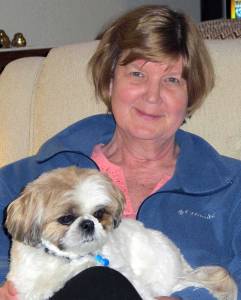 I’m a newcomer to rural southern Colorado. After two years I decided to compile a short journal about the ups and downs of moving from a good-sized city to rural America to build a passive solar retirement home: Memoir of Retirement: From Suburbia to Solar in Southern Colorado Please share this information with your friends if they are considering similar life changes. Feel free to contact me directly to discuss any of these challenges, and to order your own signed copies of any of my books! Cheers, Laura Lee (email me: MidlifeCrisisQueen@gmail.com)
Writing Skills: Short and to the Point!
 Here’s a new take on developing your writing skills. I LOVE the way Kim Tackett decided to write 35 word (very) short stories. Go check out a few and then try writing one for your brain challenge of the day! I tried to do this yesterday and found it quite revealing!
Since I was ill for over a month, I spent some time thinking about why I feel guilty so much of the time. Even when I’m ill with bronchitis, I feel like a lazy bum laying around. I guess I got some SERIOUS brain washing growing up, about being “productive” everyday!
So I wrote:
How does guilt live so long?
From my baby days, and yet still alive and well today, surprising me — stealing my freedom and joy.
Away with all guilt. I’ll go far beyond your influence now!
Oh, if only my 34 words could make it so…
 I’m a newcomer to rural southern Colorado. After two years I decided to compile a short journal about the ups and downs of moving from a good-sized city to rural America to build a passive solar retirement home in the foothills: A Memoir of Retirement: From Suburbia to Solar in Southern Colorado
Please share this information with your friends if they are considering similar life changes. Feel free to contact me directly to discuss any of these challenges, and to order your own signed copies of any of my books! Cheers, Laura Lee (email me: MidlifeCrisisQueen@gmail.com)
 Adventures of the NEW??? Old Farts