Brain injuries and a misdiagnosis of apathy

One of the results of my recent psychological and memory testing was a diagnosis of apathy. I thought about that for a few days and then spoke to a friend I’ve known for almost twenty years about my supposed problem.

His response? “No, you are absolutely not apathetic!”

So what is apathy? According to Oxford, “lack of interest, enthusiasm, or concern.”

Signs and Symptoms of Apathy:

Lacking the effort or energy to do everyday things. Dependence on others to plan activities.

No desire to learn new things, meet new people, or have new experiences.

Lack of care about your own problems. Tendency to feel no emotions when good or bad things happen.

After further thought I realized that this type of testing mistook “apathy” for a natural sadness and frustration when someone with a great brain experiences multiple assaults on their brain health. I would challenge anyone to experience what I have in the past fifteen years, and not feel sad and frustrated.
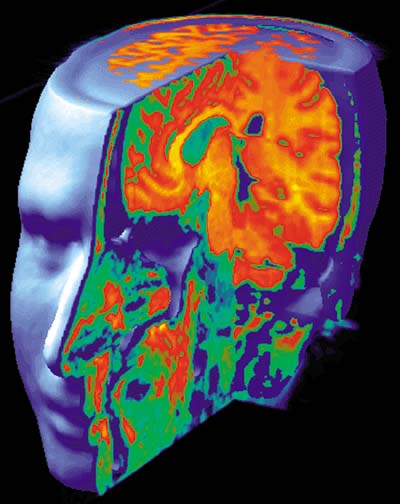
The most reassuring book I have read about brain injury is: “My Stroke of Insight: A Brain Scientist’s Personal Journey” by Jill Bolte Taylor, Ph.D. There I learned how slow the brain recovers from injury, but it certainly can rebuild itself eventually! My first brain injury, a TBI in 2008, taught me that. The most important thing to remember is that your brain will tell you when it’s tired and you really MUST STOP when it tells you that. For me now, an hour or two of any type of total concentration exhausts my brain. So when I took a two hour focused memory test I failed and came across as suffering from apathy, when in fact I felt total brain-exhaustion halfway through and after it was over I slept for over twelve hours straight.

I find myself excited and enthusiastic about many things like plants, gardening, photography, writing, old movies, music, new foods and learning something new everyday. I have just learned to pace myself to give my trusty brain plenty of space to recover with endless hours of restful sleep. Few understand my specific needs these days like I do. My brain will simply shut down if I don’t respect its messages to me. I certainly expected a brain specialist to understand that!

Unfortunately, it seems I must continue to educate “the experts” what brain injuries are all about. Perhaps they don’t know, but one of the best benefits of brain injury is the full realization that we MUST make the most of every single day we’re alive!

“Do we really need much more than this? To honor the dawn. To visit a garden. To talk to a friend. To contemplate a cloud. To cherish a meal. To bow our heads before the mystery of the day. Are these not enough?” — Kent Nerburn

Gratitude for Internet Friends!

With so many nasty things happening on the Internet these days, I would like to call attention to a few marvelous friends I have made over the years and recognize a wonderful source for these friendships. The “Women of Midlife” group on Facebook was started about a decade ago to attract and assist women writers with support and friendship. I joined as soon as it formed, and through the years, as I read the writing of various other women past age 40, I developed online friendships. But I had no idea how much these women meant to me until I ran my last post about aging faster than my friends.

I wrote there about friendship loss as we age and our health begins to fail and was astounded by the response from the friendships I have developed over the years on “Women of Midlife.” These few women have watched me grow as a writer and as a woman over the years and therefore understand best my frustrations with brain injury and how that is now limiting my abilities to communicate and connect with others. They also seem to know that it has been quite difficult for me to make any real friends in my new environment in rural southern Colorado.

One message in particular hit home for me:

“Laura, you have always been tenacious in your hold on life. Your connection to nature often pulls you through. Your love for those in your life MAKES YOU YOUNGER than many. And finally your mental strength. I believe when we lose some of the physical the mental takes over. That is certainly the case with you.”

Blessings, Beth

I had no idea Beth understood my struggles so well and yet continue because of my desire to keep pressing on in spite of multiple challenges. I knew that some women, whom I have known for years but have never met in person, do care for me, but this response was unmistakable in its understanding, love and concern.

Thank you to “Women of Midlife” for fostering these kinds of close online friendships!

P.S. I also just learned what ‘ghosting’ is from one of those friends. Shame on those who do it!

What it feels like to age faster than my friends

Recently I have begun to realize that what I am experiencing at age 67 is what most in my age cohort will experience later. Because of my present health concerns, lung disease and a few serious brain injuries, I feel now what most in my age group may not feel for a decade or two. This has come home to me with a few recent occurrences.

First is my upcoming 50th high school reunion next summer. At first I got confused about whether it was this year or next year, and when I realized it was next summer that they were trying to schedule for, I had to respond with, “I’m not sure if I’ll even be here by then…Either way I’m pretty sure I won’t be able to come.” 

I have also recently heard from a few friends from decades ago. My best friend from high school wrote out of the blue to “catch up.” She is probably a typical 67-year-old who recently retired, loves to travel, and is proud of her children and grandchildren. They seem to have very few health problems. I told her the truth about my situation. I didn’t hear anything back, period.

Same with a lover/friend from my mid-20s. He sent me a brief e-mail in April saying, “Hope all is well.” I sent him a summary of my life now and received stark silence in return when I told him the truth about what is happening with me.

One thing is for certain, my life experiences in the past decade or so have changed my outlook on life. One cannot suffer a traumatic brain injury and fractured ribs, with periods of unconsciousness over 24 hours, without seeing life differently. Now I see that experience as a gift, one which greatly raised my appreciation of life while showing me that death is truly not so unusual or scary. We may simply experience an accident, lose consciousness and it’s over. Is that so bad?

Losing my ability to breathe without oxygen has taught me compassion for those who lose any basic ability that others take for granted. I know now how others can suffer from judgments from others and how harsh I may have been by unconsciously judging those with limited abilities through no fault of their own.

These challenges and insights I face now are the same as many in my age group will face eventually. I’m just getting an early start. I find my experiences so revealing about disability and aging. I try to face all new experiences with a sense of wonder and curiosity. Too bad others seem to want to avoid looking at my life now and possibly their our future.

Divorce is legal? When did that happen?

Thanks to one of my readers, I just learned something fascinating about American history. You know how if something is legal today we assume it has always been that way? Well divorce is relatively newly legal in our country! Especially no-fault divorce, meaning either party could walk away for any reason. The modern concept of a divorce varies by culture and religion, but early forms of divorce were almost always only if the husband wanted it. I remember when I lived in Taiwan in the early 1980s, only men could choose divorce and then only he had all the power to decide whether to keep the kids or not. He usually only kept them if they were male.

The first recorded divorce in the American colonies was that of Anne Clarke and her husband Denis Clarke of the Massachusetts Bay Colony on January 5, 1643. The divorce was granted by the Quarter Court of Boston, MA on the grounds that Denis Clarke abandoned his wife to be with another woman.

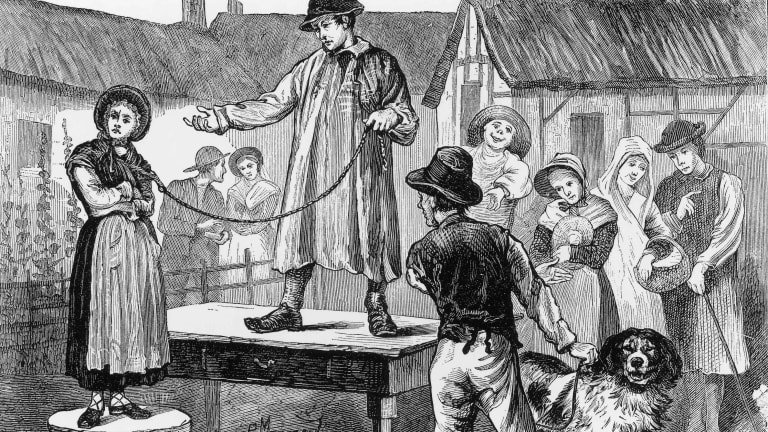
If your marriage broke up in the 1750s, you had to obtain a private Act of Parliament—essentially, an exception to Britain’s draconian divorce law—to formally divorce. The process was expensive and time-consuming, so wife-selling arose as a form of faux divorce.

Until the 1857 Matrimonial Causes Act, it was essentially impossible to obtain a divorce in the U.S., no matter how bad the marriage or how cruel one’s husband. A couple could only be divorced by the passage of a private act through Parliament, a remedy available only to the very wealthy.

If you wanted a divorce in the early 1900s, you had to prove your significant other had committed adultery, abused, or abandoned you. By 1916, the U.S. led the world in number of divorces and in 1942, the U.S. Supreme Court ruled in Williams v. North Carolina that other states had to recognize divorces, under the “full faith and credit” clause of the U.S. Constitution. It wasn’t even until the late 1960s that Americans were allowed no-fault divorces.

If there was divorce in your own family history, like mine, the family was usually quite secretive about it. And as we all know, secrecy usually equals shame in our culture. In my family, who were basically Southern Baptist farmers in the Kansas City area in the early 1900s, I can think of three family secrets that my Mom had to really dig for when she decided to do our full genealogical history: divorce, marrying someone of the Jewish faith and severe mental illness.

My own 2001 Colorado divorce was quite quick and painless. We never had to show up in court because the filing was uncontested, meaning we were not fighting over assets and we had no children. We just filled out some forms, paid $99 and we were done. No muss no fuss, except for a few hurt feelings and the various biases and criticisms I experienced from others afterwards. One great side effect for me, my TMJ went away never to return!

Did you know that more than one quarter of Americans getting divorced in the United States today are over age 50, and most of those divorces happen after 20 years of marriage? Pew Research found that the rate of divorce among those over 50 nearly doubled from 1990 to 2015, and the attitudes of those Americans have shifted to feeling much more supportive of divorce.

Here’s my own conclusion a few years after my own divorce:

“Perhaps it’s mainly women who get stigmatized by divorce: “What’s the matter—couldn’t keep your man?” The assumption being that any man is better than no man at all. Come on—we can do better than this, people! Few marriages are matches made in heaven, and sometimes they truly need to end. Mismatched is no match at all. It’s only fair that after a mistake, each of us can try again to find happiness before it’s too late.”

My experiences with aging, disability and my own mental health

I’ve been thinking a lot about aging and mental health lately, so I looked up the topic. According to an article from our National Institutes of Health:

“The most common mental disorders in older people include depression, anxiety, and substance abuse. Mental disorders are associated with increased healthcare costs, mortality and suicide, along with interference with daily living, and a reduction in quality of life.”

From my own experiences, this makes perfect sense. As our health declines, so does our ability to feel good about our lives, and then there are those predictable thoughts about how we’ve lived our lives and what it must feel like to die. One thing I experience is the daily differences in how I feel about my life, but I’m not certain how much of that is caused by my head injuries. Some days I feel almost like I used to, happy and ready to get out and try new things. Other times I can barely get out of bed and face the day. The problem is I cannot predict what will happen each day, so it’s difficult to plan ahead.

Mike has observed this unpredictability and also wondered what causes it. Now I believe part of it is a natural response to losses later in life. Some days I see little future for myself and so I feel depressed. I do not want to drag him down, because there is no need for both of us to suffer. Other days I feel that old optimism and then I can’t believe I was so low yesterday.

What could be more natural than our ability to confront our own aging and disabilities better on some days than others? Also it takes time to adjust to such major changes in health and abilities…

Realistically my ability to travel very far or go anywhere I want to is limited. But also my desire to travel has become less with age and with so many fantastic travel videos to be enjoyed on Youtube. The place Mike and I most want to visit now is Patagonia. There’s a very good chance I won’t ever get there, but I love watching travel videos and dreaming… Now that’s something previous generations did not have! We really are very lucky, even in our old age. I appreciate that everyday!

“Even in seemingly dormant times, we are in transition. Losses and gains are in constant play. We are the change-agent, and we are changed. Even without toil, we transform. So, wisdom advises us to open our hearts to transition; to honor fully what is passing, to learn from all that unfolds, and to welcome what arrives at our door each day with courage and curiosity.”

Still codependent but working on it at age 67!

As a lifelong co-dependent and apparent sucker for abuse, it took me FOREVER to arrive at this simple answer to all who have taken advantage of my kindness and understanding:

Don’t be afraid to lose someone who is not grateful to have you.

As I head towards 70 years old I find that I have taken abuse from far too many in my life, first from a supremely judgmental family and then just about everyone else I met along the way. From the beginning, when I felt like I must take care of my mother’s emotional needs, I tried to comfort, mediate with and please others instead of standing up for my own needs. In fact, I hadn’t the slightest idea what my own needs were. After years of counseling, I still sometimes struggle with that…

The main sign of codependency is consistently elevating the needs of others above your own. Other signs include controlling behaviors, self-sacrifice, and fear of rejection.

Yes, gigantic fears of rejection and abandonment! And I was certain that if I was honest and truly myself, no one would want to be around me. I learned this behavior from my mother, who worshipped my father, but was also super angry at him most of the time. She thought having her own opinion or interests would be far too selfish, so she took on my father’s interests instead for most of her life, doing things she has no real interest in to please and be with him. After my father’s death she seemed lost. She had lost her leader.

What a shame and a waste of her unique personality and charm. Years of counseling and reading have helped me wake up to my own personality and charm, but also I find now I have a very low tolerance for abusive people. A number of people who used to be in my life are no longer welcome, because I have such a low tolerance for abuse and nastiness. But why should I fear losing them if they were never grateful to have me in their life?

I know it seems late in life to come to these conclusions, but at least I finally got it.