Why we decided to stay in Colorado for retirement

Another short entry from my Memoir of Retirement: From Suburbia to Solar in Southern Colorado.

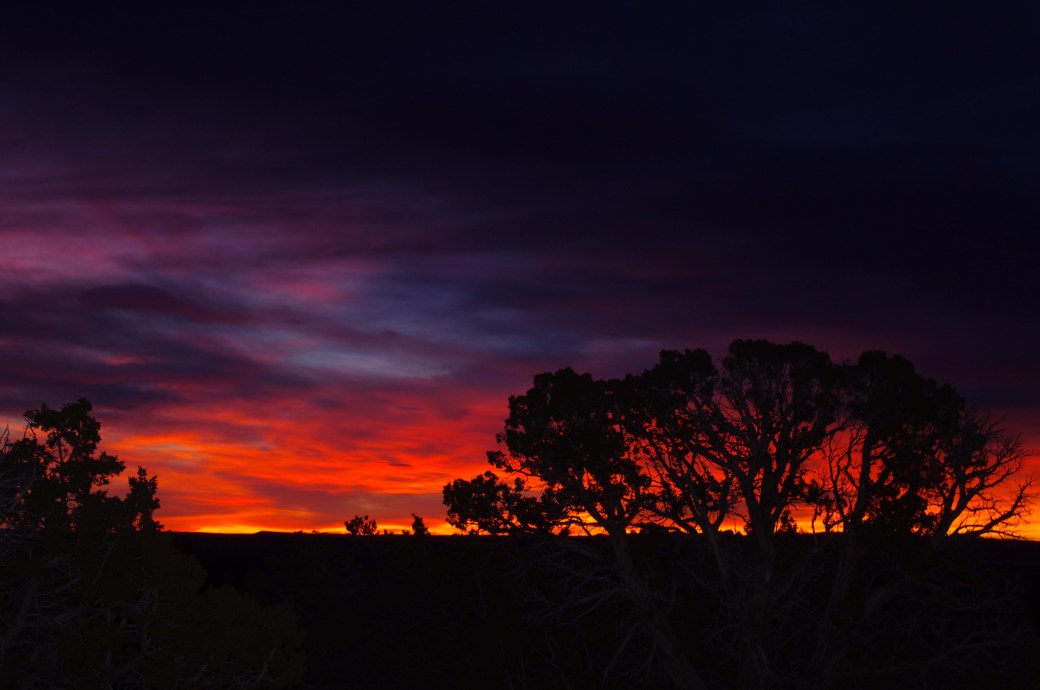
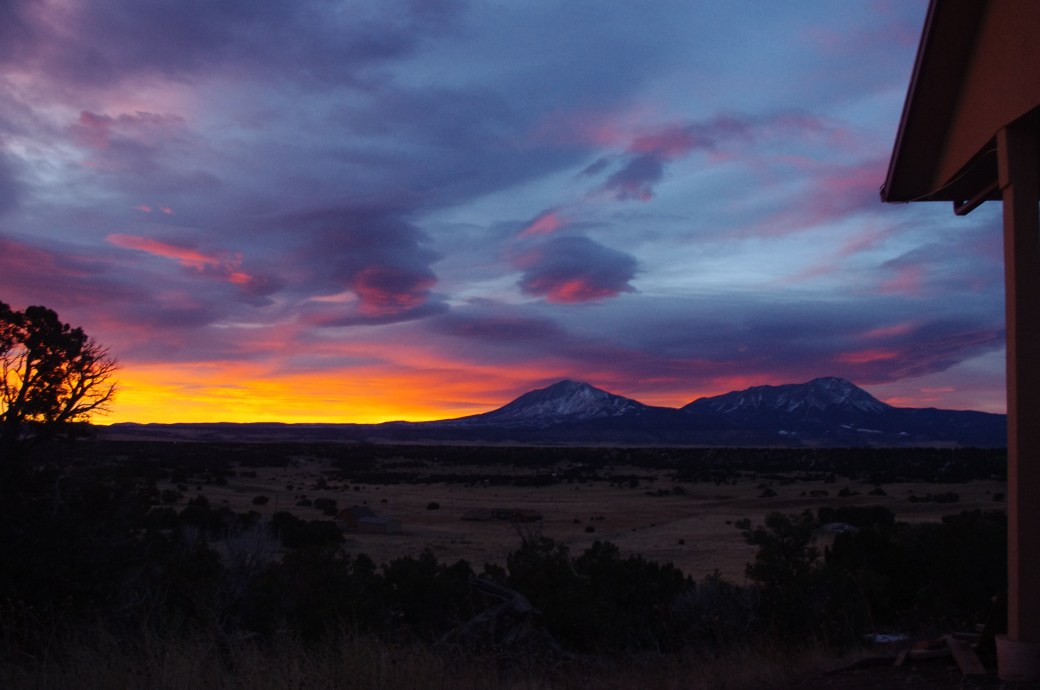
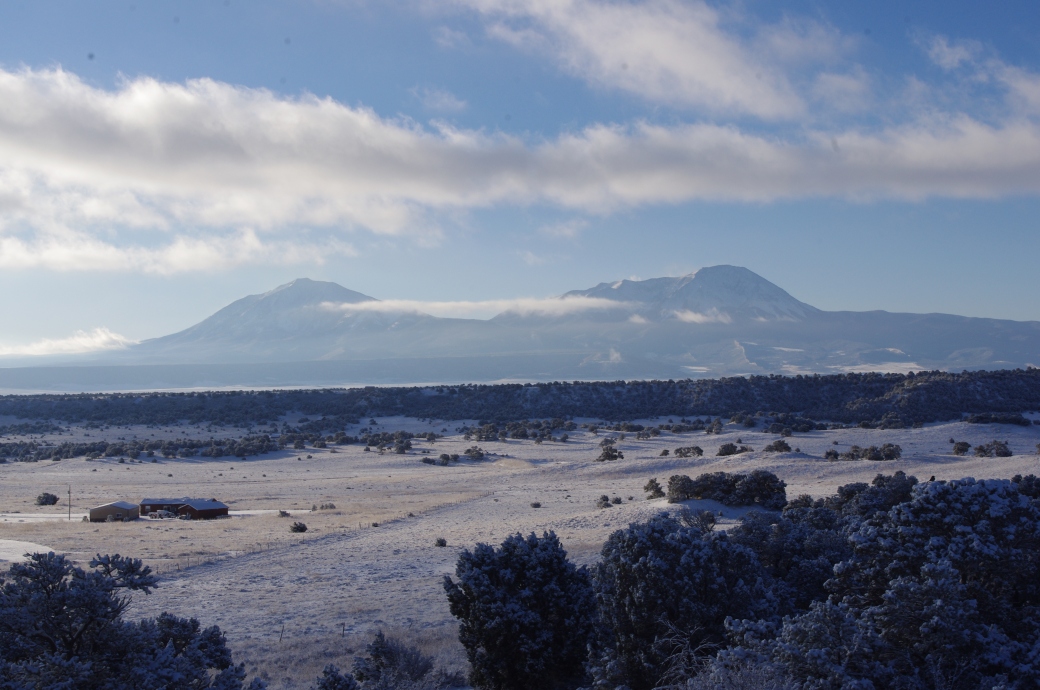
AMAZING sunrise over the Spanish Peaks January 2018

Amazing sunrise from our new passive solar rural home in southern Colorado

I wrote this on May 7th 2014:

Many of you may be like us, making some big decisions about where and when to retire. We just signed a contract yesterday to sell our home in Fort Collins, and move south in the next month or so.

When we started thinking about this major change, we chose to remain in Colorado for a number of reasons.

We were looking for inexpensive land to build a solar home with great views and a cleaner, quieter, calmer existence. We found that in the rural southern part of our state.

Then I just found out this week that in terms of medical care and finances we made a very good choice!

First of all, Colorado ranks in the top quartile in healthcare systems nationally, beating out all other western states. Then I saw a new Bankrate.com financial survey announcing the best states to retire to. Colorado ranks number two, only after South Dakota.

Here’s a quote from that article:  “Colorado gets above-average marks for cost of living, crime rate, health care quality and taxes. The Gallup-Healthways survey finds that the well-being of Colorado residents ranks among the highest in the nation.”

The first thing you need to know about Colorado is how different parts of the state really are. Most Coloradans live in what we call “the front range” cities like Fort Collins, Boulder, Denver and Colorado Springs.  Then there are the mountains which are beautiful, but cold, snowy and generally an expensive place to live.

I have spent most of my life living in Colorado Springs, Boulder and Fort Collins, and to my mind, a city is a city in terms of their ever increasing cost of living, overcrowding, traffic, pollution and quality of life. After living the past nineteen years in the Fort Collins area, I can say these are our worst problems, and they are not going to get any better ever.

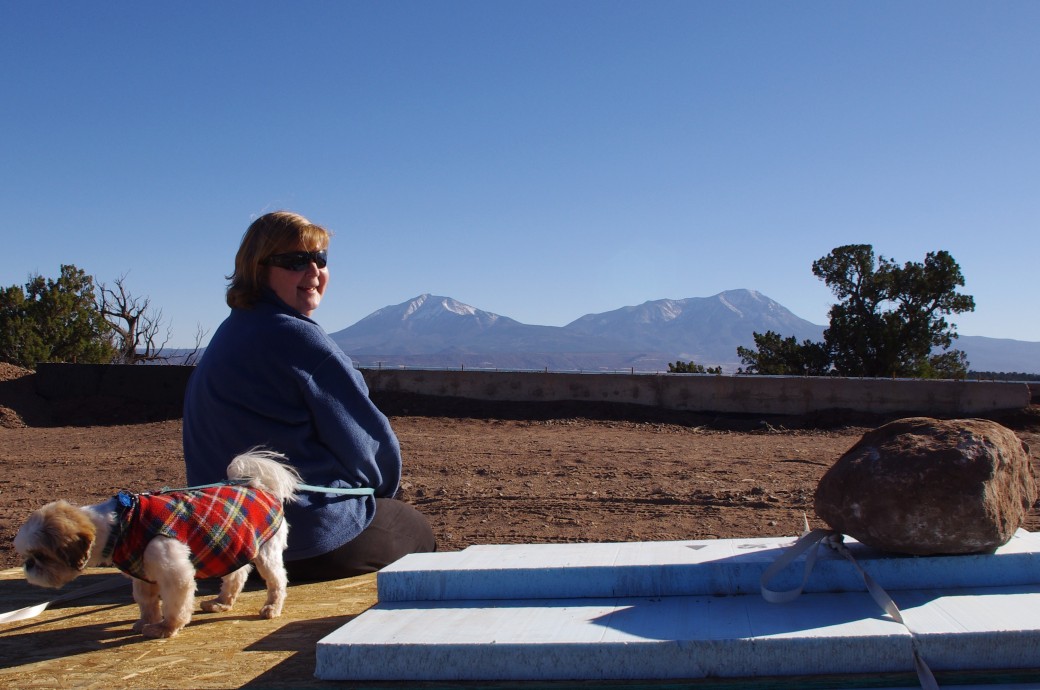
Mike at home

Mike is ecstatic to move out of the city and have this view everyday!

The rest of the state is rural and quite different than “the front range.” The eastern plains are mainly small farming communities and the mountains have few good job opportunities. We have chosen to put down new roots in a rural area west of Interstate 25. We have found the perfect perch for our custom, passive solar home. 

Postscript: I would only add that the average household income for some place like Fort Collins is near $60,000 now, while the average down here in Huerfano County is around $33,000. Colorado exhibits quite a wide range of income levels. You don’t need to be rich to live here, only in the big cities like Denver, Fort Collins, etc.

The hidden purpose of my new memoir: Convincing your pardner to love rural!

I decided to write a memoir of the process Mike and I went through around age 60, as we were going through it. I thought, we can’t be the only ones thinking about leaving city life behind for retirement, hoping to find a quiet, peaceful sustainable life in some beautiful rural area.

horsetooth in summer

Horsetooth Reservoir up above Fort Collins, Colorado!

As we put this plan into action and bought three acres west of Walsenburg to build our passive solar home at the beginning of 2014, I discovered that Mike was MUCH MORE CERTAIN than I was about this whole plan! He felt certain that he wanted to leave the city behind regardless of our old friendships back in Fort Collins, and the services and predictability of city life. This plan was suddenly coming together far faster than I could assimilate! I knew I loved visiting down south, but was I ready to give up everything I knew to move there?

320 w. 2nd St. Walsenburg July 2014

Walsenburg rental we lived in while building our home west of here

After we moved into our rental for the building process, I learned that many wives felt the same way initially about pulling up their roots and going completely rural. The men seemed to know what they wanted, but the women were more careful or hesitant to move to a rural area. Much like I felt at first that our new homestead was rather “isolated” other women I met felt the same. Luckily I totally trusted Mike’s sense of place and his unique abilities to make this home the best of my entire life.

But I just realized yesterday that my memoir is especially suited for wives or partners who want to move somewhere wild and rural, to show them the process I went through. I certainly changed my mind as the building went on…

At first I was so scared and uncertain of this choice we were making, mainly because we needed to sell our suburban home to afford the construction of our new solar home. There was really no way to go back on this deal if I ended up not liking it! It did feel really risky to me, but not to Mike.

morning sun on comanche drive

Our new home at sunrise!

I found that very quickly after we moved into our new home about one year after moving to Walsenburg, I loved it here. The silence, the natural beauty, the amazing sunrises and the big sky feeling… what’s not to love about that?

It just took me a while to adjust my vision and expectations and QUIT WORRYING SO MUCH ABOUT EVERYTHING!

So, for any of you who want to convince your pardner to move to a more rural part of the country. This book might really help!

Passive Solar Heating: The Basics

It has become abundantly clear, from your many comments, that most do not understand what passive solar heating means. Passive solar means there are no solar panels or any electricity involved in the creation and retention of heat within a building. The heat is created only by passive means of collecting energy from the sun and then retention of that heat by the physical structure of the home.

How is this done?

beginning to build on the slab comanche drive

Number 1: The positioning of the structure is essential. Mike made certain that our home was positioned facing directly south, with a whole wall of the correct type of glass doors and windows. In our case that included incredible views of the Spanish Peaks! You need full sun exposure on that side of the house. No trees, buildings, or other obstructions.

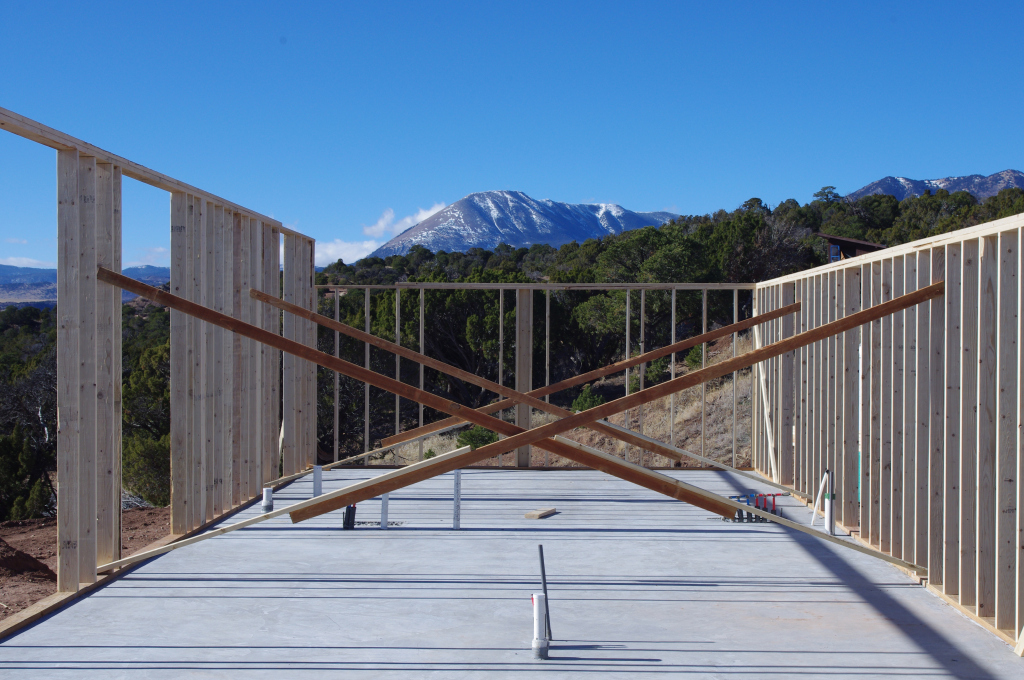
Number 2: In a passive solar home, the slab of concrete the home is placed on must be the heat-sink type and FULLY insulated from the earth. If it is not, the heat will come into the home during the day, sink into the foundation, and leak out of the slab, leaving the home cold at night when heat is most needed.

slab and framing of comanche drive

Number 3: Excellent insulation in the walls and ceiling of the home are essential. Holding the heat in once it enters the home is the only way it can remain warm when it is zero degrees outside. The home must be close to air-tight with quality doors and windows. Your floor must also be some sort of dark tile to help absorb more heat during the day.

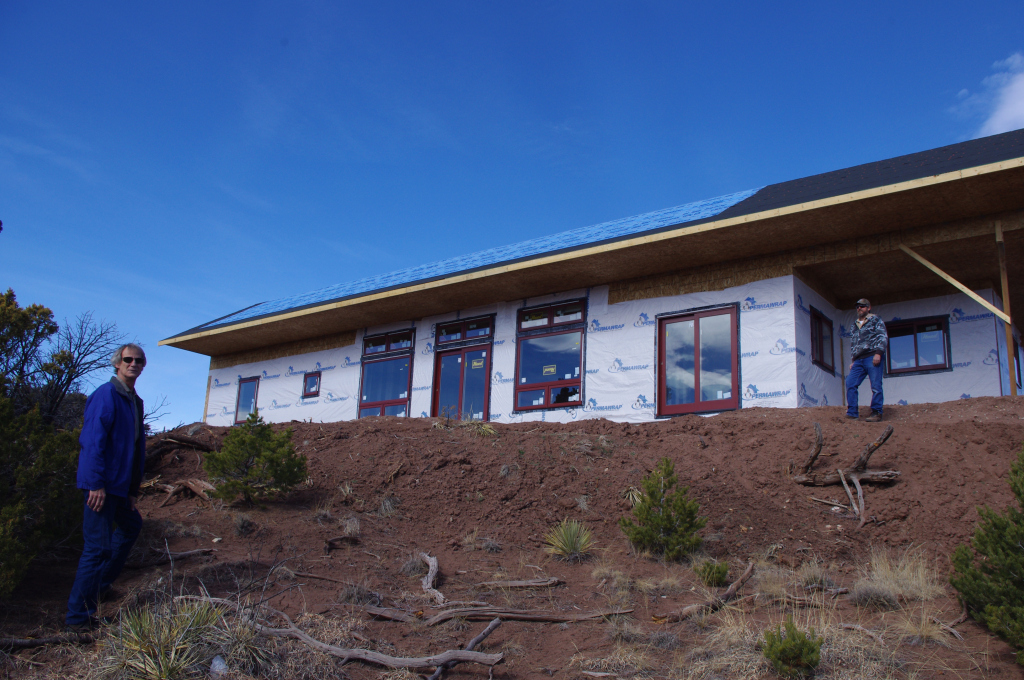
new windows with Mike and Lee in photo

Number 4: Although the sun will be directly overhead in summer, proper overhangs on the south side of the home are essential to keep the sun from coming into the home too early in the fall. Mike also positioned our south-side overhang so that they are the correct size and angle to add solar panels later if needed.

Our home has very few windows on the north side, but a few on the east and west ends to absorb the morning and evening sun. We absorb solar heat most days in the winter, store it in our slab and it returns to keep us warm at night. Sometimes in mid-winter, we need to open a window at the warmest part of the day to cool off a bit!

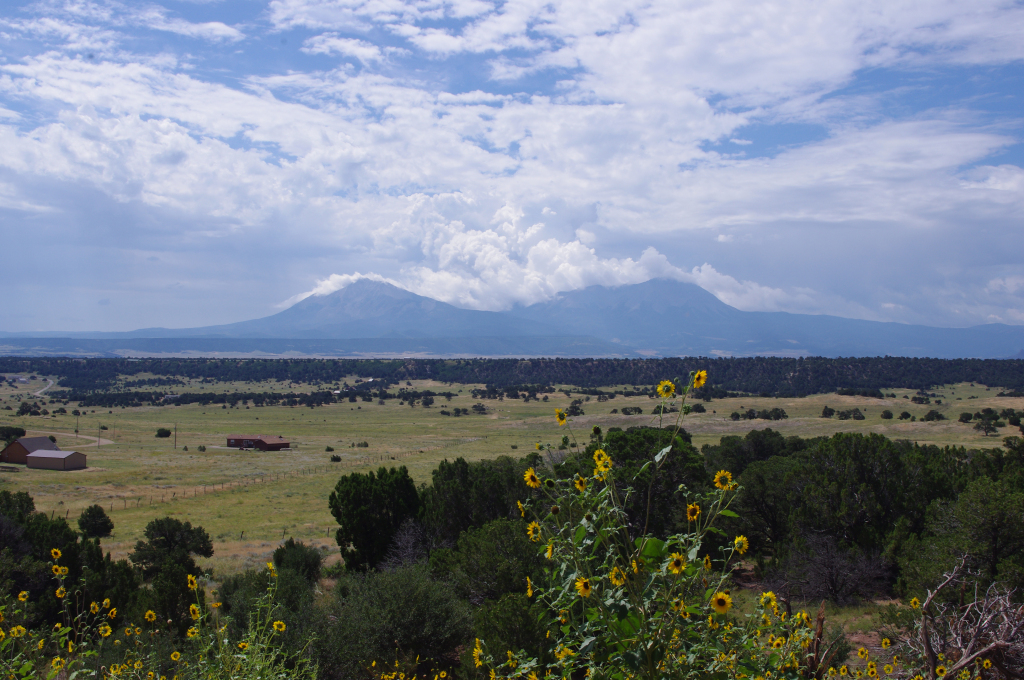
clouds over Spanish Peaks summer

So far in southern Colorado we have never fallen below 60 degrees at night no matter how cold it is outside. We supplement our solar heat with small room electric heaters. No furnace or propane needed. Ceiling fans help to distribute the heat evenly.

Last January, when we lost electricity for three days because of a BAD ice storm, we stayed warm. With this system, we are able to average $100/month for all power to our home. A couple other unexpected benefits? Our home stays cool in the summer with its positioning to the sun and so much ceiling insulation, and it is so quiet inside all the time with no furnace turning on and off in winter!

The funniest part was learning that I didn’t need to turn down the thermostat when I left the house… the heat just keeps on coming in!

Our move to the Colorado country in 2014!

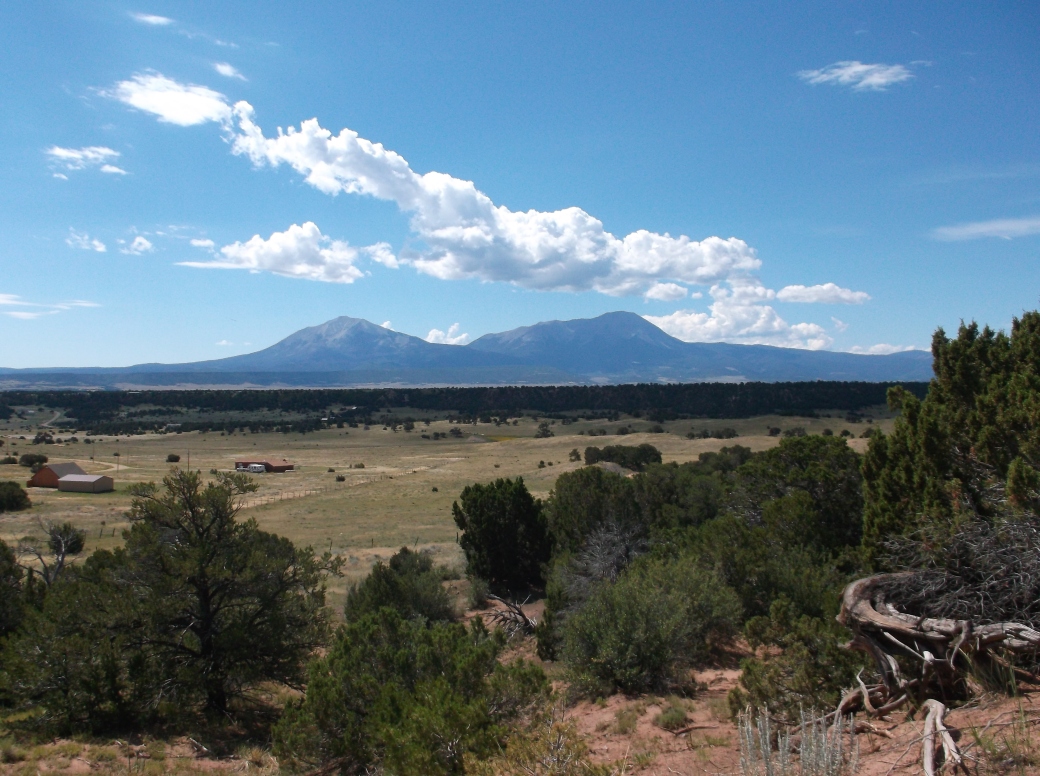
view from our land

Retirement may suggest lifestyle change for some, but how many are willing to take on any real risks at age 60? Enter Mike and I, the quiet revolutionaries. Four years ago this month, we drove down to southern Colorado to purchase a few rural acres of pinon-juniper woodland west of Walsenburg.  Mike’s dream had always been to construct his own passive solar home with amazing mountain views. This was our chance to make that dream come true!

In June 2014 we packed up or got rid of most of our worldly goods, sold our nice  home in suburban Fort Collins, and took off to live in a 100-year-old rental home in Walsenburg, while constructing a new life twenty minutes west of there. Crowning ourselves the “NEW Old Farts,” I began sharing this retirement adventure with the world in October 2014.

laura and rasta on insulation 2014 (2)

Although my husband was a true believer from day one, this all felt like a gigantic leap-of-faith for me. With housing prices rising quickly in the metro areas of northern Colorado, I saw little chance of changing our minds later to return to the city if this didn’t work out. So I made myself believe in my relatively new husband’s vision, and you know what? He was right.

Three and a half years later, after too many doubts and incredible challenges to my idea of who I am and where I belong, I am now quite content in our country solar home looking out each morning at the majestic Sangre de Cristo Mountains. My days are filled with supreme quiet and astounding beauty. I have also found a few good friends, a yoga class I like, and all the books I wish to read and movies I wish to view through the La Veta Public Library.

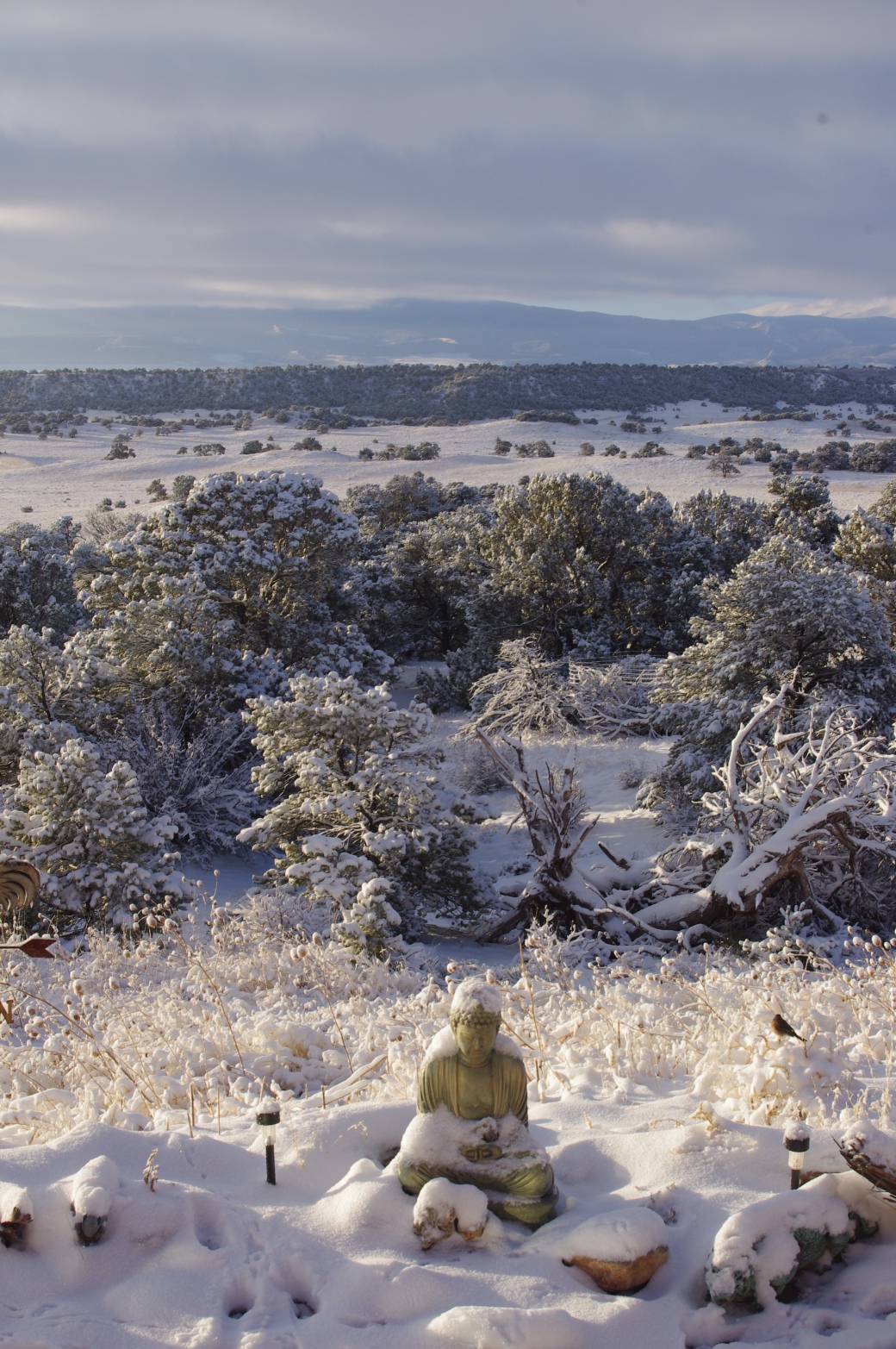
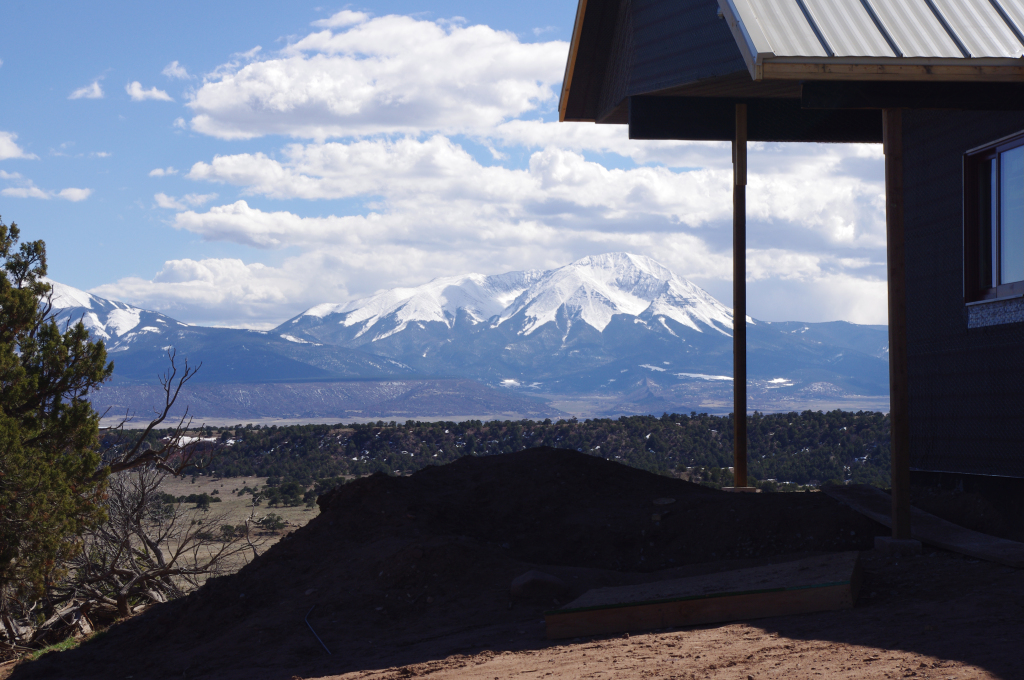
snowy west peak with comanche home in foreground

The view from our new solar home!

I find my need for distractions has dwindled. No, I do not miss city shopping, traffic, stress, noise or air pollution. In fact going into a city of any size is now the perfect reminder that I made the right choice for me. I have finally learned the power of living in this present moment. With so much more available to me and few distractions, I now have the time, energy, and awareness to fully appreciate the world around me.

We moved here for a number of reasons: To live close to nature, to try passive solar living, to build the kind of home we chose to live in for the rest of our lives, and to find a far more peaceful, healthy and less expensive lifestyle than cities could offer us. We have received so much more by choosing to live in this beautiful, quiet place where life is luxuriously slow and overflows with simple pleasures.

Would you like to know more about our adventures? Check out my new memoir!