Are all illnesses caused by our minds?

You cannot control how other people receive your energy. Anything you do or say gets filtered through the lens of whatever they are going through at the moment, which is NOT ABOUT YOU.

I met a new person this week who has me quite perplexed. After speaking to her for only a few minutes, she offered me quite a bit of advice. She diagnosed my problems as, “You need to get out of your head to attract good health and healing.” Her swiftness and certainty was disturbing and mildly annoying considering the fact she does not know me at all. She apparently believes all physical ailments are simply a manifestation of emotional problems. Solve those and the illness disappears. This left me wondering, if I told her I have lung cancer, would she recommend better counseling?
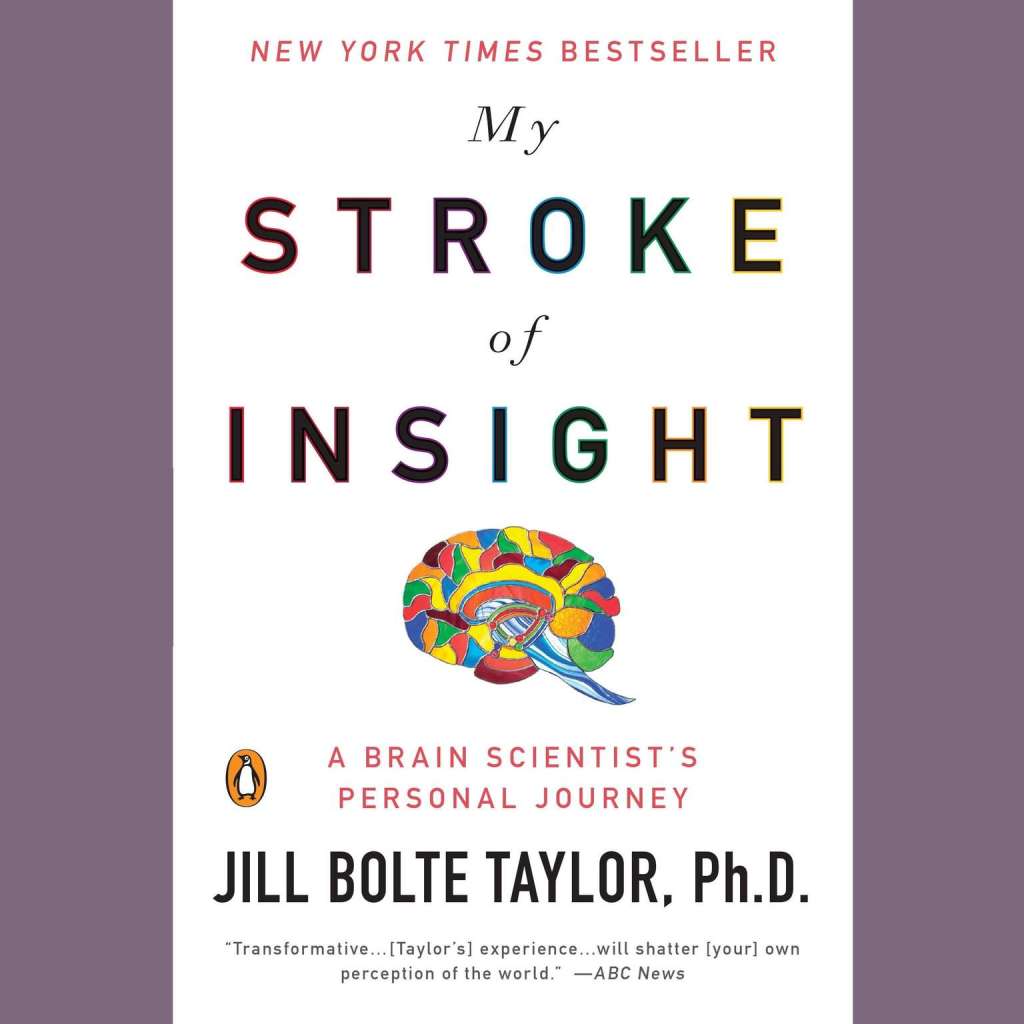
To deal with my confusion I spent some time today talking with my favorite health professional about my exchange with this self-defined “healer.” She first emphasized to me that there is no certainty in the field of medicine. That is why they call themselves “practitioners.” Even what may seem like a perfect diagnosis after months of testing and analysis still has no certainty. So for someone who describes herself as a “healer” to decide after just a few minutes of conversation that she knows how to “fix” me is absurd. That same health professional I once told to “Walk a mile in my shoes!” when she suggested that she knew how it felt to be constantly out of breathe while dealing with a severe head injury. Since then my friend has read and recommended the book: “My Stroke of Insight: A Brain Scientist’s Personal Journey” by Jill Bolte Taylor Ph.D., who experienced a massive stroke at age 37. Now I believe my friend has a much better understanding of what I deal with every single day.

Blaming the victim?

I never forgot an image from my counseling internship at a rehab hospital 25 years ago. I went in to speak to an elderly lady and the first thing she said was, “Why is this happening to me? Doesn’t God love me anymore?” In other words, what did I do to deserve this illness? First of all, we all will die of something. I do not believe we “cause” everything that happens to us. Did Jill Bolte Taylor, a Harvard-trained brain scientist, cause her own stroke? Did I choose or cause myself decades of bronchitis and extreme breathing difficulties? Did I somehow choose to almost die numerous times from hypoxia? What about genetics, air pollution, and my choice to live a stress-filled life in a number of foreign countries?

What do we hope for when we make ourselves vulnerable to others?

What I need from others when I tell them about my difficulties in breathing and concentration is caring concern, non-judgment and, most of all, compassion. I crave exactly what David Richo lists in his book “How to Be an Adult in Relationships.” Drawing on the Buddhist concept of mindfulness, David recommends we offer others our attention (observing, listening, and noticing the feelings at play), acceptance of them just as they are, appreciation of their gifts, limits, longings and affection.

After a lifetime of carefully observing how others respond to pain, I was disappointed with this recent acquaintance. Some run away from pain or change the subject. Others immediately try to “fix” me. When they suggest that they have simple answers to complex problems I have been dealing with for decades, I know they do not know of what they speak.

Lessons in disability & compassion in action

Oh the things we can learn when accidents happen. After a lifetime of glorious health, I am now learning how challenging physical disabilities can be. From a healthy 60 year old a few years ago, I have become breathless and often confused. That popular phrase “I can’t breathe!” is a daily reality for me now and these difficulties have led to numerous falls and concussions. I am now working with a pulmonologist and a neurologist for lung disease and post concussion syndrome that causes great dizziness at times.

What does illness and suffering teach us? Compassion for others who suffer. The first time I spoke directly to Mike (my husband of 16 years) after meeting him through Match.com, he told me he suffered from Chronic Fatigue Syndrome (CFS). At that time I hadn’t the slightest idea what that was or how it might impact our lives. At first he tried to hide some of his symptoms from me, avoiding me when he felt especially bad. It was only later that I learned the crushing cruelty of this at-that-time undiagnosable disease that haunted Mike for decades. He went from a strong 35 year old who could run up mountains, to chronic fatigue that worsened with physical activity, but did not improve with rest, difficulties with memory, focus, concentration and dizziness that worsened with any movement from lying down, sitting or standing. Imagine how depressing that would be for you. And worse, few physicians would believe him. They showed no compassion and would simply say, “You’re just depressed” or “See a psychiatrist.” From this, Mike learned deep compassion for those who suffer with unexplainable illnesses and disabilities. This quote from Gandhi describes Mike’s life perfectly now:

“The best way to find yourself is to lose yourself in the service of others. The difference between what we do and what we are capable of doing would suffice to solve most of the world’s problem.” – Mahatma Gandhi

One of my favorite sayings has been this for decades:

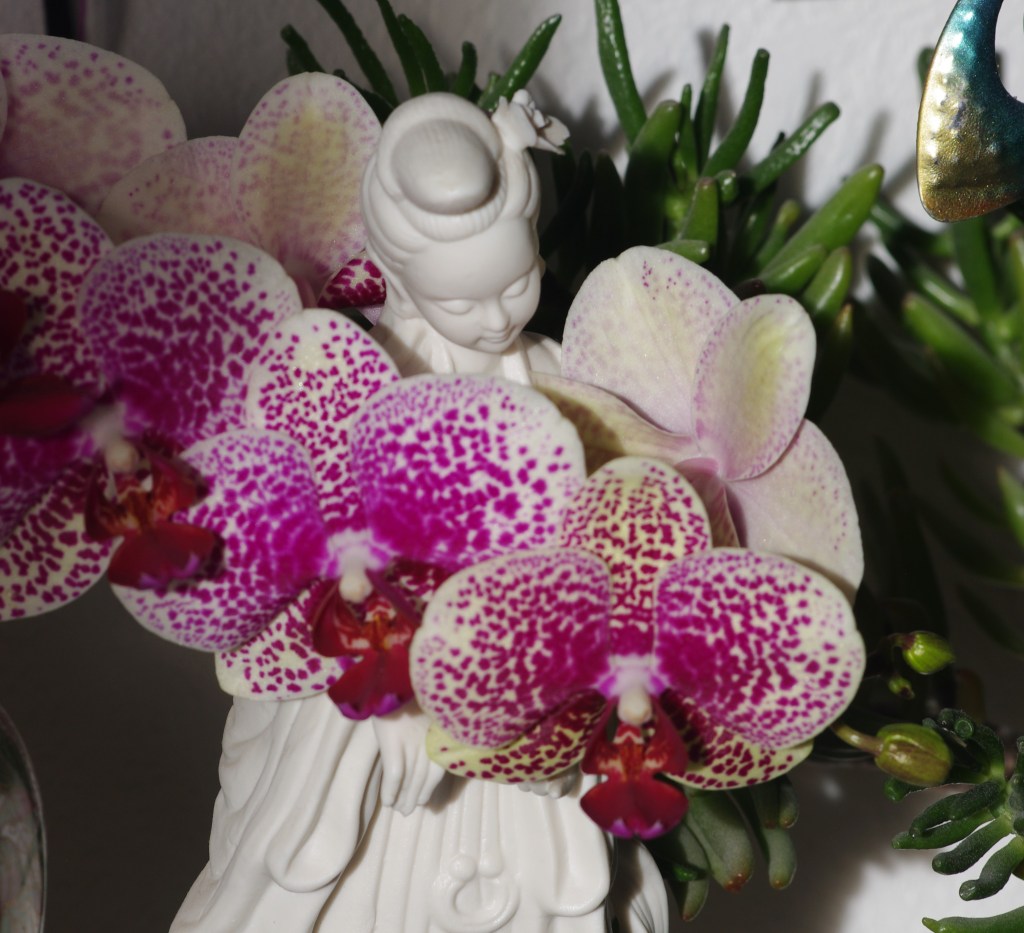
and Guanyin, the Chinese Goddess of Mercy, my daily reminder of compassion in action.

These are some of the most important lessons we can learn in life, and we are learning them well

One of my favorite movies EVER!

Raised in small towns in Iowa and Kansas, my first memories of Asia were greeting my Dad when he returned from his regular journeys to India. He always brought back beautiful souvenirs and slides to show us. As a child, the strangeness of this very different culture halfway around the world, fascinated me. I was also introduced to Indian music and food very early. To this day they are my favorites!

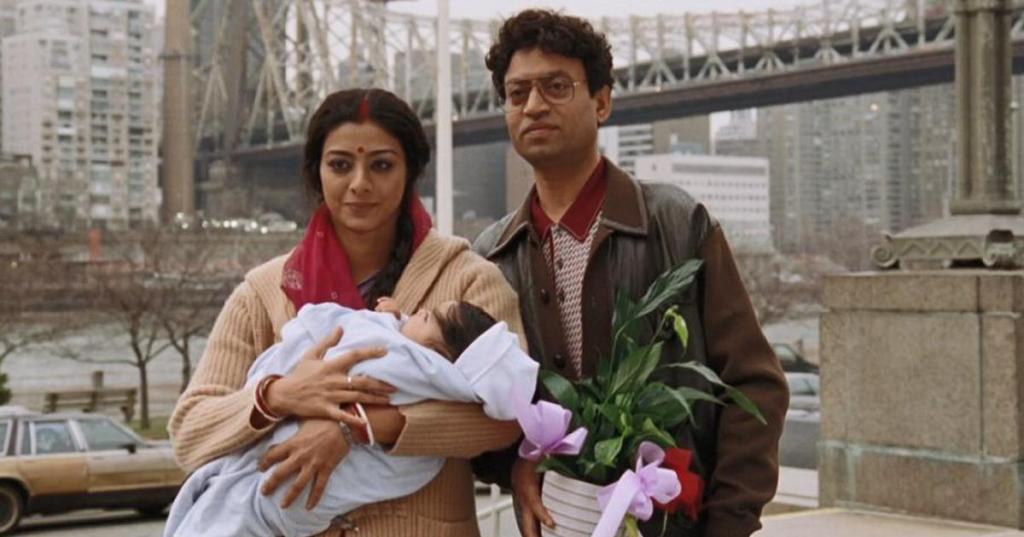
This is all to show you why I fell in love with the film “The Namesake” at first sight this week. The music, from the very beginning, with Tabu’s incredible voice(!), is exquisite. I couldn’t help but wish that this experience came with a lovely, big Indian meal. Mira Nair is my new favorite director. I must see more of her films! But what struck me the most was the emotional depth of her style of storytelling and the beauty of the people of India. That and how much I was drawn to the actor Irrfan Khan, who died this year at 53. He was truly “distinguished and charismatic” and “an enormously valuable bridge between South Asian and Hollywood cinema,” according to Peter Bradshaw of the “The Guardian.” I also loved him in the film “Puzzle” from 2018.

Coming to America….

The story is quite simple. The Namesake depicts the struggles of Ashoke and Ashima Ganguli, first-generation immigrants from West Bengal to the United States, and their American-born children Gogol and Sonia. The film takes place primarily in Kolkata India and the New York City area. I was constantly reminded of generational differences in my own family growing up, as this first generation American family struggled with the different cultures of India and America. And we thought our Dad didn’t understand our generation! Imagine what is must be like if your parents are from a culture a world away.

The film is also an excellent example of the contrasts between Eastern and Western cultures. The East is far more family and community oriented. They find Americans self-centered and even selfish. In the West we do what we please, especially when we are young. Family may become important later for us. I found this film to be a commentary on the toxic loneliness of American society today.

Northern Thailand, 1973

Ever since I lived in Bangkok in 1973-74, I have found Asia to be so different and yet so fascinating. As a teenager I felt almost like I had gone to the moon, everything was just so different compared to Kansas and Colorado. In college, graduate school and in my career as a librarian, I worked to bring these two worlds closer together in the eyes of Americans…

but now I can see that movies like this do the most for us all to truly understand and appreciate our own shared humanity. There is no world that needs this more now than the human race. I found this film so soothing…

One boomer’s ridiculous dilemma: Beginning to spend all of that saved up delayed reinforcement!

As many of you know, my health has been failing for the past few years, and with one additional serious concussion in April, it appears clear, at least to me, that it’s time. Time for what? Time to begin spending all of that “delayed reinforcement” from the past 45 years of my life.

If you’re anything like me, you have been saving money for as long as you can remember. Why? I guess because I was completely brainwashed in the cradle to save up for my old age. So, exactly when does that “old age” begin? Strange to say, I don’t find myself as the best judge of very much lately, not with this many brain injuries! But I am fairly clear I not going to be living forever and also not sure how long my brain is going to last. One fun fact I learned recently:

Head injuries accelerate aging: “The current state of the literature provides support for the argument that TBI can result in diminished cognitive reserve which may accelerate the normal process of cognitive decline, leading to premature aging, potentially increasing the risk of dementia.”

That explains a lot! The irony in all of this is not lost on me (yet!) I have always prided myself on my excellent brain. Now what? Is it really time to begin spending my wad? I find that hard to believe and even harder to do…

When you have spent your whole life trying to save money, how do you suddenly cut loose? It’s kind of the opposite of the poor guy winning the lottery. Of course he’s going to overspend immediately, but everything in my background suggests that holding on to money is your best avenue to happiness. I know that if I don’t get some big trips planned I probably won’t be taking them. How do I loosen the purse strings? How do I give myself a luxury vacation?

I know, most of the human beings on this planet would like to have such problems, but there it is…

Do you ever write anything personal any more?

I was astounded by this statistic on CBS Sunday Morning today:

22% of Americans under age 45 have never written a personal letter

When I think back to the many personal, intimate exchanges I had with past friends and lovers, I simply cannot believe that we no longer communicate on that level and in that way. I still have and treasure letters from old boyfriends in my twenties and thirties. It makes me sad, but also amazes me that this no longer happens.

“In the future old ‘love letters’ may not be found in boxes in the attic but rather circulating through the Internet, if people care to look for them,” said Webster Newbold, a professor of English at Ball State University in Muncie, Ind.

Consider this, we are experiencing a loss in what people in the future will know about us. The loss is incalculable. In earlier times the “art” of letter writing was formally taught, explained Newbold. In fact, in old China a person’s character was judged by the strength of their letter writing abilities.

“Letters were the prime medium of communication among individuals and even important in communities as letters were shared, read aloud and published,” he said. “Letters did the cultural work that academic journals, book reviews, magazines, legal documents, business memos, diplomatic cables, etc. do now. They were also obviously important in more intimate senses, among family, close friends, lovers, and suitors in initiating and preserving personal relationships and holding things together when distance was a real and unsurmountable obstacle.”

Aaron Sachs, a professor of American Studies and History at Cornell University, said, “One of the ironies for me is that everyone talks about electronic media bringing people closer together, and I think this is a way we wind up more separate. We don’t have the intimacy that we have when we go to the attic and read grandma’s letters.”

I have found through the years that writing helps me realize more clearly how I feel, and what I really need to say to those I love. The process allows me to crystallize my thoughts, and then tell the other my most intimate feelings. Is that practice also gone? Will there be no physical record of any of this in our future? This more than most changes to our culture makes me glad that my days on earth are minimal.

Can we let go of a lifetime of pain & suffering?

I’m now witnessing first hand a concept from psychology that I have always believed and yet still wondered about. I am observing in those near death what seems to be an endless outflowing of anger and bitterness at the end of life. Both of my parents were what I would call uptight people. My Dad was definitely an angry controlling person and both of my parents could be called obsessive about getting everything ‘right’ and keeping up appearances for others. Everything had to appear ‘proper.’

Instead I observed that my Mom took mountains of criticism from my Dad throughout their nearly 70 year marriage. She rarely got angry or even replied to this barrage of constant critique. She would drink quite a bit of wine, complain to us, and then simmer in bitterness and rage, while she continued to devote her entire life to helping him reach his goals. The tension in our home was palpable. As you might guess, his kids were collateral damage, each absorbing their share of criticism, anger and love that was always quite conditional.

“Letting go of our suffering is the hardest work we will ever do.” — Stephen Levine

Where does all of that bitterness and anger go in the long-term? Can we resolve these tension in some way before we die? I am wondering about this for my Mom, who is extremely depressed and confused at age 88, after the death of my father last year.

At this point I will yield the floor to Stephen Levine, an American poet, author and teacher, well-known for his work with the terminally ill and/or those deeply affected by loss. Stephen chose to work with this population because they were most ready and even sometimes eager to confront their own deepest misery and, by doing so, heal life-long burdens of self-disgust and punishment. Stephen found that by first acknowledging our deepest levels of pain and suffering and then confronting it with love and compassion for Self and others, most found a way to finally let it go. What a marvelous burden to release before death. In a few cases, Stephen found that this gigantic release of emotional pain was so healing that his patients found remission from their cancer or other life-threatening illnesses.

He felt that our minds fight with our hearts, fear versus love, but by accepting all our past pain and suffering, the sensation in our heart may be that it will burst.

To this Stephen responds: “Let your heart break. Let go of the suffering that keeps you back from life. Now your heart is so open and the pain right there. You are doing now just what you need to do, feel so much compassion for yourself and what you are going through…”

Stephen Levine died in 2016 just south of here. To learn much more about him and his work please consider reading his books. My favorite is “Healing Into Life and Death.” Here is a link to his webpage and his wife’s words at his death: https://levinetalks.com/

My experience has been that unless we commit to major emotional change in ourselves, all of the hostilities and suspicions we have held down within our psyche for our entire life, do come out in the end. Sometimes in some awful ways. For me, this type of emotional healing has taken some great re-parenting therapy through counseling and decades of learning and re-learning deeper levels of self-love and acceptance. This process continues as my parents leave behind their earthly presence.

Sometimes being with my Mom is too much for me, and I must respect my feelings about this. My Mom seems so lost in the contradictions of her life. Feelings of love, anger, pain and dementia confuse and overwhelm her such that she can see no way out. I just wish she could have come to some resolution and healing with Stephen by her side.