1883: “You have the journey – that’s it!”

I have been blown away by watching the Yellowstone prequel “1883” in the past week or so. I did not know a “western” could be so poetic, authentic and full of heart. I loved it so much I watched it again after I got back from Christmas and loved it even more!

First, a little background. I was raised in Kansas near the prairie where my ancestors arrived many decades before me. When I first started reading books, I loved stories about the pioneer West. The first stories I ever wrote were about Native Americans and their ponies. Then I started reading everything by Laura Ingalls Wilder and the personal journals of westward women. I only wanted to play “pioneer woman” as a kid. I guess you could say I have been unconsciously searching for the perfect “western” my whole life. I finally found it in “1883.”

First of all I love that the main character and narrator is a teenage woman. The whole story is told from Elsa’s perspective, with just the right combination of authentic and sensitively-written narrative and dialogue. I felt like I could see into Elsa’s heart, while also understanding the other characters’ inner lives as well. As the writer, Taylor Sheridan, explains in “Behind the Story,” he wanted this story to feel as intimate for the audience as reading a good novel, or even the personal journal of a young woman on a wagon train heading west. He does a masterful job of that, and yet I keep wondering how a man could have such an intimate understanding of a teenage woman’s worldview.

As I think about it now, the ever-changing landscape is the main character in this story, that and the silence. So many of Elsa’s observations remind me of my own after moving to rural Colorado eight years ago. My amazement at the silence and beauty of each sunrise and sunset, the comfort of the wildlife passing by our home each day, the glorious seasons we experience so intimately, this is what I love about living out here. Elsa’s story seems to authentically capture the beauty and the violence of the American West over one hundred years ago around the time the transcontinental railroad began changing everything. There is so much truth in some of her observations like:

“I think cities have weakened us as a species.”

Another profound aspect of Elsa’s story is how living in the West allowed so much more freedom for women. I enjoyed watching her relationship with her mother develop as her Mom tries to remind her of the limitations of being a woman in 1880s America. Elsa rebels every chance she gets. Elsa enjoyed the loss of rules and customs as they moved west. The big transition came when she decided she was a cowboy and got herself some pants to wear instead of dresses.

I loved the writer’s sensitive portrayal of the other characters, especially when it came to ‘race.’ Race is not a word I use, because I do not believe we humans are different ‘races.’ But back in 1880s America, blacks were treated badly as a general rule. Thomas, the old Civil War friend of Shea, played by the wagon train boss Sam Elliott, understood how badly others could treat him for being black, as he stated at one point, “You ain’t never been whipped.” Native Americans play an important role in this saga and mostly as sympathetic characters including members of the Comanche and Crow tribes. The true “bad guys” of this Western are “bandits.”

Suffice to say this is by far the best western story I have ever seen. It shows the beauty and severe violence of the American West in no uncertain terms, and I believe it may be more authentic as a story than any other I have read. I found the very last phrase in this story so vivid and relevant to my state of mind these days –

“There is a moment when your dreams and memories merge together and form a perfect world. That is heaven, and each heaven is unique. It is the world of you…”
“I’ve spent too many years at war with myself…”

Every time I listen to Sting sing “Consider me gone” I get stuck on these words. Why do we spend so much time picking on ourselves? As a psychologist I assume we learn how to do this from our overly self-critical parents, and then carry on the practice by habit. Some say these patterns get stuck in our brains and are almost impossible to fight against or change.

I know I have been far too self-effacing for as long as I can remember and then, of course, others along the way helped me become even more critical. Now, in my 60s, I’m still working at fighting this pattern in various ways. It helps so much to have a close friend or life partner who points out how hard we can be on ourselves. I remember back in my late 40s I gained a lot of new insight when I read Gloria Steinem’s book “Outrageous Acts & Everyday Rebellions” but this is a process that will last forever I’m afraid.

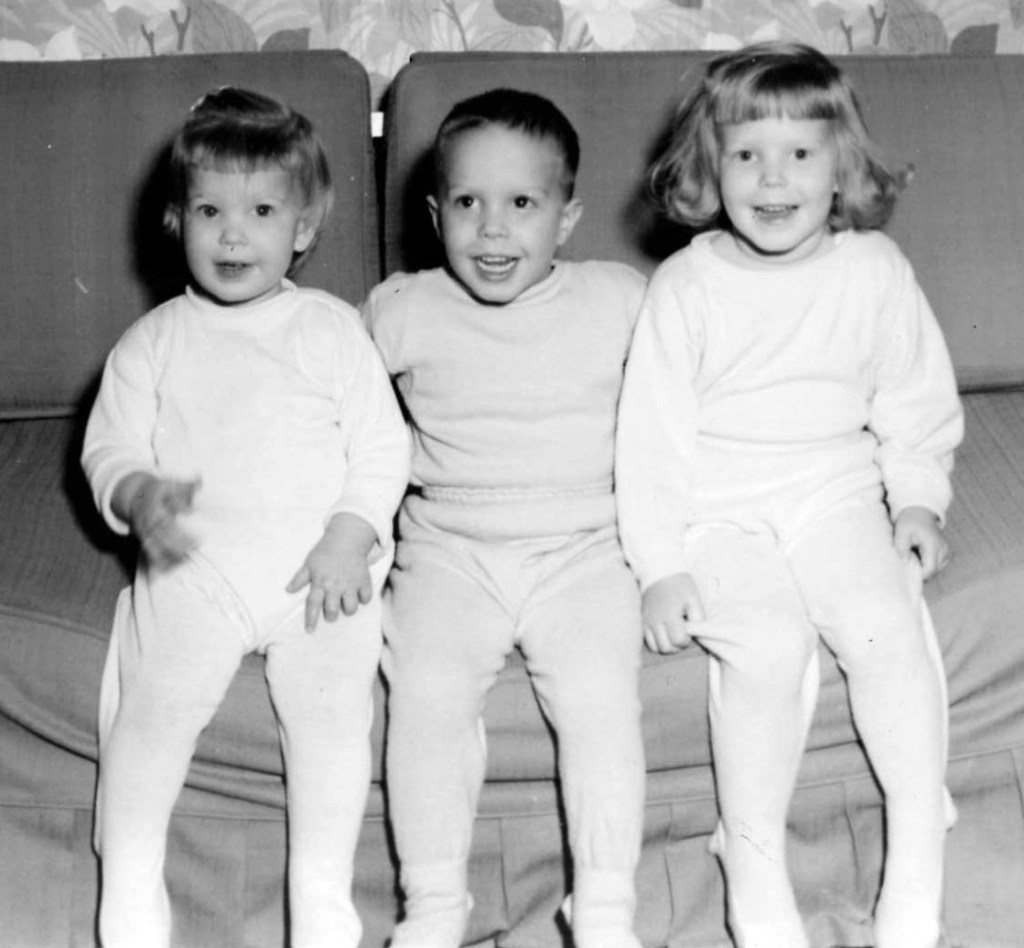
The three Carter kids at Grandma’s house at Christmas

Just recently I was rearranging things and came across a small photo of myself at around age three, looking pretty sassy in my new Easter clothes. Now I focus for a few minutes everyday on that little girl, on loving her all the way through and sending good thoughts for the many ways she might feel really good about herself for the rest of her life. I feel so much compassion for the battles she has fought in her war against herself and visualize how much easier her life could have been if she had learned self-love at an early age. I seems it has always been easier to be critical rather than compassionate towards myself.

I watched a marvelous 2005 movie recently called, “Mrs. Palfrey at the Claremont.” It’s about a retired older woman, played wonderfully by Joan Plowright, who befriends a young man, played by Rupert Friend, (YUM!) by chance on the streets of London. It’s has a lot of insights into aging and how we treat our elders with a number of great lines, but the one that keeps coming back to me is:

“It’s very important to praise people a lot early on, otherwise they might die of disappointment.

Buddha & Me: A Few Of My Best Buddha Photos

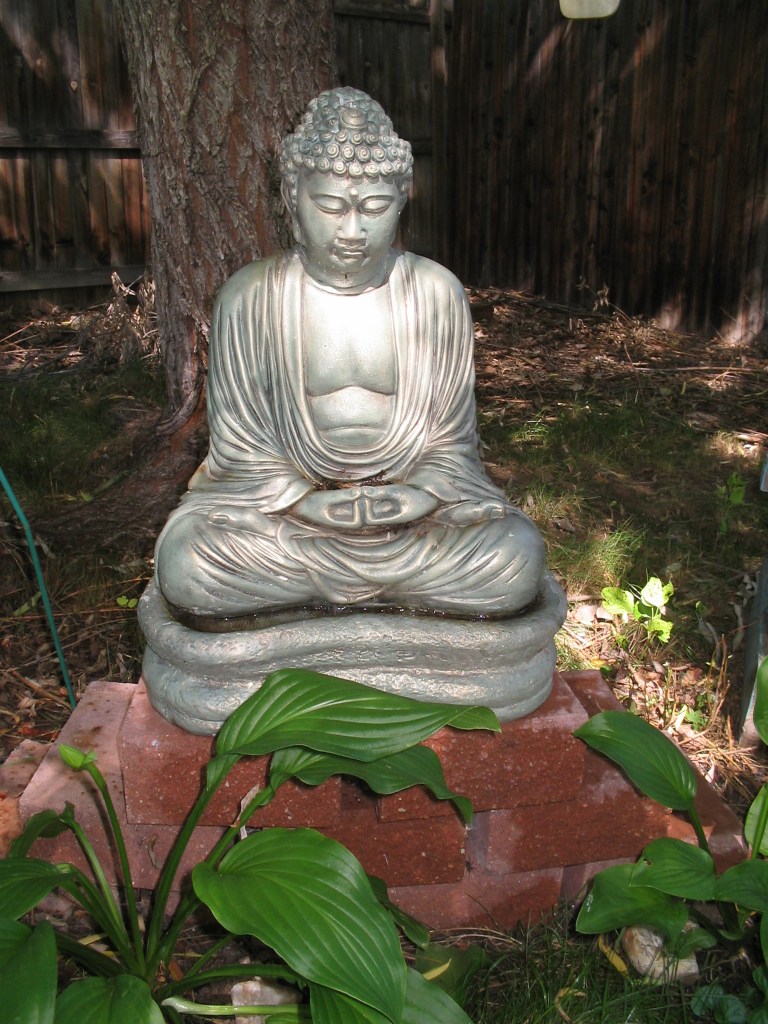
I have had this Buddha statue for twenty years now, and taken many pictures of him in all seasons and at the few homes I have lived at in that time. I bought him for my 47th birthday, after I bought my very first home in Loveland Colorado. I had two great shelties back then, Mica and Calla.

A few years later I moved in with Mike in Fort Collins

He had a magnificent backyard with over thirty aspens in it. I placed Buddha under a big old Upright Willow tree and then planted flowers in front of him. I had Lilies of the Valley, Johnnie Jump-ups, Sweet Williams, Hosta and Bleeding Hearts. By then I had my dog named Rasta.

With our thoughts we make the world.

Oh how my garden grew! I called it my Peace Garden.

I took photos of Buddha in all types of weather back there. Buddha loved his coats of snow!

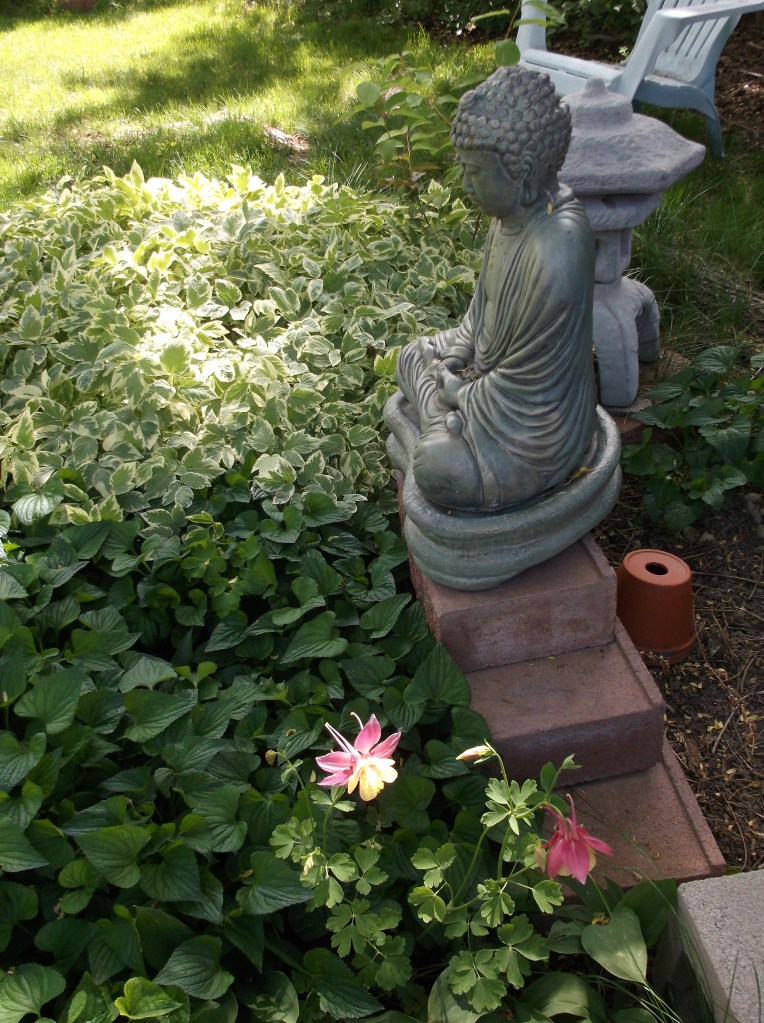
Then we moved to Walsenburg to begin building our solar home west of there… We rented a rundown hundred year old miner’s home there and Buddha was not so happy sitting out back in the weeds. I asked him and he said, “YUCK!” He said,

“Build me a glorious garden with a tremendous view of the mountains, so we did.”

The garden grew and grew and Buddha smiled.

Sometimes I could barely see him, but he didn’t mind…

…because he knew that spring would come again in all of its brilliant natural glory!

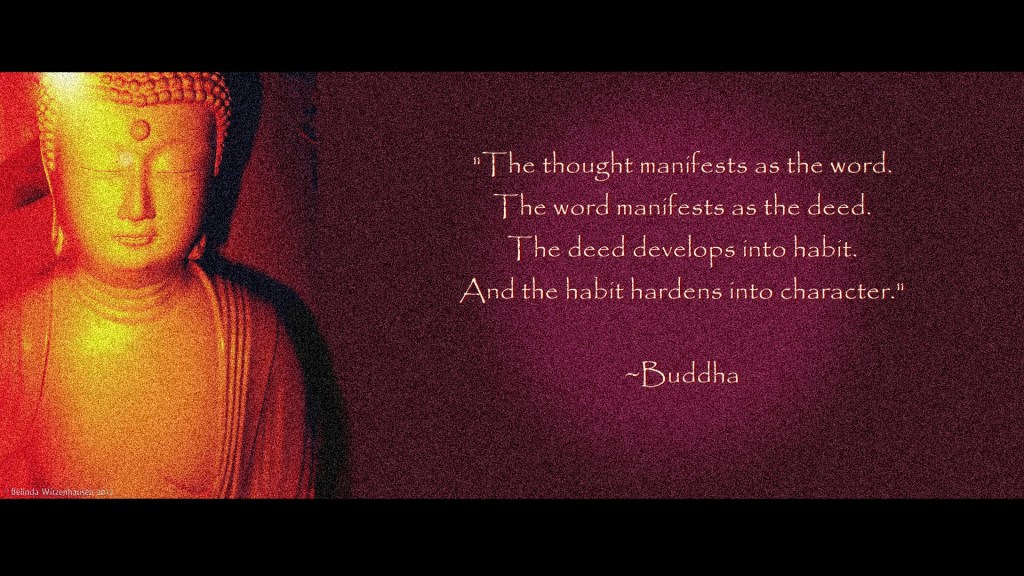
What kind of character do you wish to manifest?

Dealing with Trauma as a Highly Sensitive Person with Head Injuries: A Personal Note

I have been thinking about trauma in my own history these past few weeks and I now see I have suffered a number of traumatic experiences that I did not originally recognize as such. I think this can be attributed to two personal factors. One is that I have always been a “highly sensitive person” and the second is my numerous head injuries in the past 15 years.

I assume most of you have heard of the term highly sensitive, but these are the traits I relate to personally:

  • Overly sensitive to emotional and physical violence
  • Naturally experiencing the emotions of those around me
  • Often feel overstimulated
  • Often need to withdraw because of overstimulation
  • Startle very easily
  • Enjoy a rich inner life
  • Feel deeply moved by beauty
  • Deeply emotional and compassionate
  • Unable to deal with even moderate amounts of criticism
  • Usually feel different and alone
  • Easily overthink and worry way too much
  • Very intuitive
  • Often feel tired and emotionally overwhelmed

I guess you can see why someone like me can be more easily traumatized. Then when I experienced a traumatic brain injury in 2008, my ability to deal with others, especially when they are angry or even just mean to me was multiplied by one hundred percent. And with this most recent serious concussion I find I am so easily drained after simple exchanges with others, and I can only socialize for an hour or two with anyone.

Luckily I found a life partner who is also quite sensitive and therefore understands exactly how much I can take from others. And yet, even with him I need to withdraw regularly into my quiet little world where nobody can reach me. I simply feel safest alone in very quiet places. I guess I am a true introvert now.

Understanding the power of trauma in your life

I found myself wondering recently why a traumatic breakup with a lover over forty years ago still has such a powerful impact on my brain, so I did some research on recent findings on how psychological trauma can affect us. I was especially interested in how we can get “stuck” emotionally when traumatized.

I have always found it fascinating how one traumatic event can change everything. Ever since I did my counseling psychology internship in a rehab hospital back in the 1990s, trauma has been one my favorite areas of research.

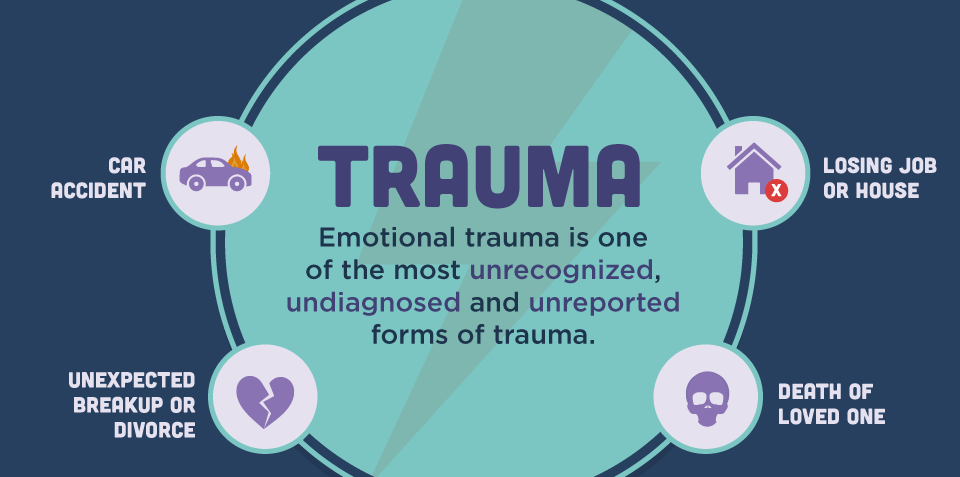
There are a number of important misunderstandings about human trauma. The first is that a “trauma” has to be something tragic, violent or catastrophic, like being injured in combat, a natural disaster or terrible accident. This is simply not true. Our brains are all very different and may interpret any incident in our lives as traumatic, even if the event does not register as highly significant at the time.

Our psychological backgrounds and emotional sensitivity levels are so unique that a traumatic breakup or an abusive relationship can cause one person to regress or get stuck emotionally, while that same event might have little impact on someone living through a similar experience.

Trauma is not an event that happens to you, it’s how you process that event. If you are emotionally injured as a child or young adult, the outcomes can be greater than as an adult. If you receive support or help while going through a traumatic event and its aftermath, the trauma is less likely to have such long term effects. But if you experience the trauma alone and with no support, the effects can be much more long-term and traumatic, especially if that event feels like it threatens your very existence.

Depending on the severity of the trauma, your entire way of being may be formed around one traumatic event. This is because, on a neurobiological level, the trauma is not properly processed. It can rewire your brain in such a way that ultimately influences your thought patterns and behavioral responses as you get older.

Traumatic events can overwhelm you body and mind, leaving a lasting mark on your mood, relationships, and sense of self long after the trauma has ended. When trauma impairs your ability to develop full emotional maturity, this is known as arrested psychological development. Trauma can freeze your emotional response at the age that you experienced it. When we are traumatized at an early age, the memory of the trauma is stored both in our brain and body. As a result, if healing does not occur, the traumatic incident can impede healthy development.

The good news is that if we understand how traumatic this event has been in our lives and then seek proper help from a licensed therapist, most can integrate their traumatic experiences and become unstuck emotionally. For many this will mean developing more mature emotional responses and relying less on unhelpful, child-like coping methods.

Take it from me. Spending the time to fully process anything you consider traumatic in your past, can only benefit your emotional future!

The most important healing tip I’ve learned from my own brain injuries (TBI & concussions)

I just saw an interesting piece on the importance of sleep on the NBC morning news show, which reminded me of the most important thing I have learned from experiencing a traumatic brain injury and a few serious concussions. That is the amazing healing powers of sleep!

I’ve always been a pretty good sleeper and enjoyed every minute of it, but now I see that sleep, whenever you feel like you need it, is your best brain restoring behavior. When we are younger we may try to get away with less sleep than we need, but, as we age, deep REM sleep is essential to brain health and memory retention.

After my traumatic brain injury fourteen years ago, I had no choice but to sleep quite a bit for months afterwards. I also had fractured ribs and breathing problems. That kept my activities to a minimum. But my brain did slowly heal itself over a few years. It literally re-wired itself to work well again.

It was only after a recent serious concussion in April 2021 that I knew that I must take it really easy on my brain and rest whenever I felt fatigued. Then I read Dr. Jill Bolte Taylor’s amazing book “My Stroke of Insight: A Brain Scientistʼs Personal Journey” where she explained how she slowly healed from a terrible stroke. There she re-emphasized the need to sleep as soon as you feel any need for it. In this way I have slowly regained clarity and stability over the past year and a half.

We must all stop fighting sleep and ENJOY IT! It has such a healing effect on your brain and every other part of your body. If you don’t believe me, believe the Dalai Lama: