mindfulness
 This past week I spent some time with my father, Jack Carter, a botanist and naturalist. He was a professor of biology at numerous universities and colleges, and is now a professor emeritus at Colorado College. He chose, much like Mike and I, to leave the city behind as he retired, and lived in rural New Mexico until recently. I feel like my father understands the importance of developing special connections with nature, so I enjoy discussing with him how my own feelings have changed in the past few years just by moving away from the many distractions of city life.
 Just outside my parents’ door is a marvelous Crab Apple Tree in full bloom. What a beauty! The cities have so many introduced trees and plants that make it more colorful in the spring. I experienced a small amount of spring-envy, but on the other hand, as I walked around the lovely grounds near their home, all I could hear was traffic in the distance. This is a sound I am completely familiar with. Every city I have ever lived in has this distant roar of people in cars going somewhere, or at least trying to, with an occasional siren thrown in.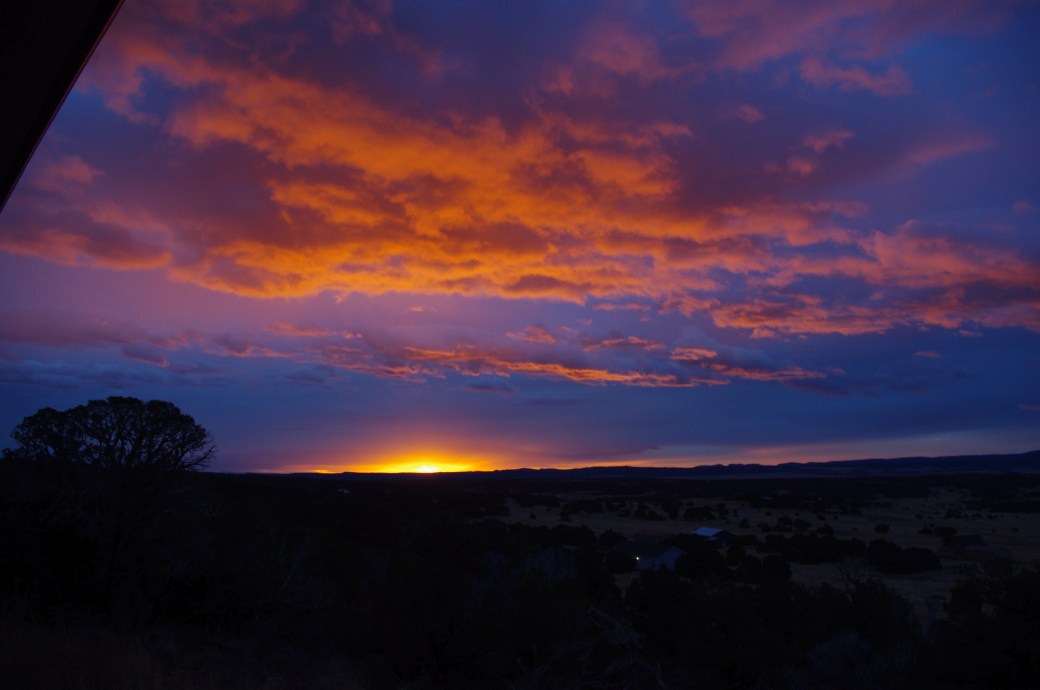
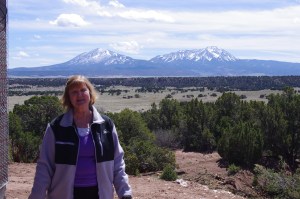 I’m a newcomer to rural southern Colorado. After two years I decided to compile a short journal about the ups and downs of moving from a good-sized city to rural America to build a passive solar retirement home:
 When Breath Becomes Air

“No philosopher can explain the sublime better than this, standing between day and night.” (pg. 34 of When Breath Becomes Air by Paul Kalanithi)
I just finished reading this fine book, the last written words of a top neurosurgeon who died in his mid-thirties of lung cancer in March of 2015. With a recent scary cat scan of my own lungs in January, you may wonder why I chose to read this book now. I wasn’t sure myself until I read it.
First of all, Kalanithi is obviously a deep thinker, always searching for the meaning in life. In fact as I read I realized he had the opposite reaction than most of us when confronted with such a daunting diagnosis. Most become more emotional, he seemed to become more analytical. This was not my response to my own recent confrontation with death. My response was along the lines of: “Am I proud of my life?”
One aspect of Kalnithi’s story rang very true to me, the way my perception of time has changed so much since we left the city behind with all its traffic and deadlines.
“Everyone succumbs to finitude…Most ambitions are either achieved or abandoned; either way, they belong to the past. The future, instead of the ladder toward the goals of life, flattens out into a perpetual present. Money, status, all the vanities the preacher of Ecclesiastes described hold so little interest: a chasing after wind, indeed.” (pg. 198)
We are never so wise as when we live in the moment.

I am boundlessly grateful to finally understand the pleasure of living in the present.
Romantic Expectations & Reality
So I’m watching some show on HGTV, and the woman who’s looking for a new home says, “I’m looking for a home that feels magical when you walk in!” From this brief comment I launch into my own version of a song from this 1965 Rodgers & Hammerstein’s Cinderella television special. Sure, you remember it, don’t you? With Leslie Ann Warren?
I LOVED THIS SHOW AT AGE TEN! I memorized the songs.
“Magical, mystical, miracle, can it be, is it true? Things are incredibly lyrical, is it me? No it’s you. I do hear a waltz. I see you and I hear a waltz. It’s what I’ve been waiting for all my life, to hear a waltz.”
What a lovely thought, and how unrealistic can you get? I know Rodgers and Hammerstein were probably just trying to think of words that went together well, but instead they helped to create the most unrealistic expectations in a generation of young girls!

Besides the story, which promotes the idea of waiting for a prince to rescue you from your grim surroundings, the words of the songs, which have stayed in my mind for over 50 years now (!) suggest we will most certainly “hear a waltz” when Mr. Right arrives in our lives. And they say we don’t have brainwashing in the USA… No, we have commercialism instead! Just as powerful and encouraged by our culture.
To be fair, by the time I was more interested in looking for a partner, around 1975, this song by Jefferson Starship was popular, and it also promised miracles.
No, I’m not saying that falling in love isn’t magical, I’m just saying the first time I met my “prince” in 2005, I didn’t hear a waltz OR believe in miracles. I had finally gotten past all of that garbage at age 49. I was now ready to meet a real person who had the self-awareness and emotional capability to love and give to others in their life. As it turned out, nothing about his outward appearance or natural talents were what I expected. No, I had no expectations of falling in love with a motorcycle man who knew how to fix things. But I went with my gut and inner wisdom. Good thinking Laura!

Now that we live almost off the grid in rural southern Colorado, I have so many more reasons to appreciate his abilities to wire up the generator when the power goes off for days at a time. No magical, mystical miracles. I don’t remember hearing a waltz when he appeared, but I knew instinctively that he would help me make it through the rest of my life, with love and affection every single day!
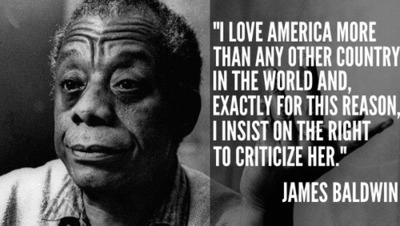
Great Quotes From James Baldwin
If you’re like me, perhaps you read books by James Baldwin in college. Do you remember “Go Tell It On The Mountain” or “Nobody Knows My Name”? My Dad challenged me the other day by reading me a quote from him:
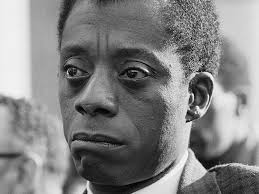 “It is nearly impossible to become an educated person in a country so distrustful of the independent mind.”
James was an American novelist, essayist, playwright, poet, and social critic who lived from 1924 to 1987. His essays explore palpable yet unspoken intricacies of racial, sexual, and class distinctions in Western societies, most notably in mid-20th-century America.
When I went in search of other information on James Baldwin, I found some wonderful quotes that spoke to me, some especially under our present circumstances in the USA today. Here’s a sampling:

This is exactly why I wrote books about midlife confusion, and finding LOVE again!

Powerful and absolutely true if you want one other human being to truly know you!
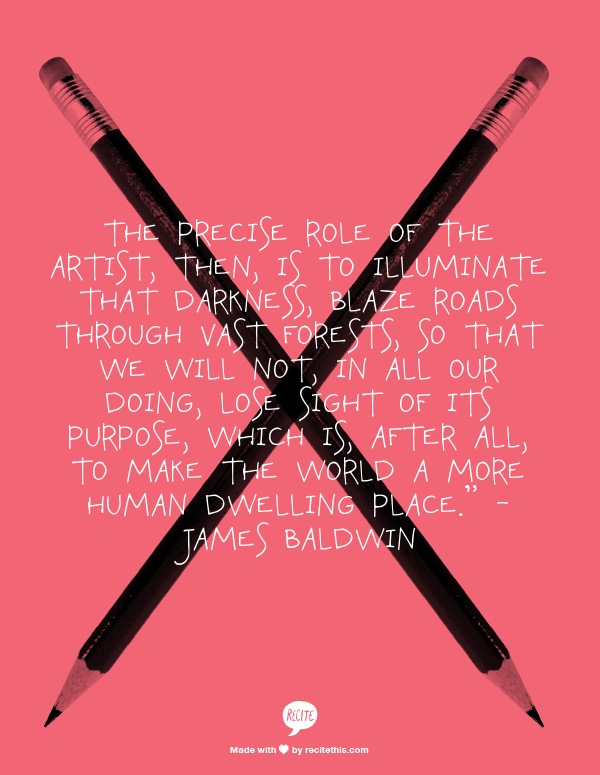
Precisely why I write!

This of course reminds me of you know who, our present Liar-in-Chief…
And finally, for those who still feel “America, Love it or Leave it!”:
When did I lose contact with my own culture?
Granted, I have had an unusual transition from my working life as an academic librarian for 25 years, to a new career as a writer at age fifty. At that time I began pitching stories to magazines and sold quite a few. I still felt connected with the world around me, and wrote about it constantly as the “Midlife Crisis Queen.”
 My focus then was on the experience of “midlife” broadly defined as that time between age 40 and 60, when we awaken into a whole new world of possibilities, a new and improved realization of do-overs before its all over. Midlife became an exciting new rite of passage for me, available for the first time in human history to boomers, and those who follow after us. Numerous women writers I know and respect have written about becoming invisible in our culture as we age. In my experience, this transition has been so slow and subtle that I have not noticed it as the years go by. But I am here to say that I now feel, at age 62, in many respects I can no longer see myself at all in our present culture.
Especially on television I see a culture that does not include me. The contradictions just keep coming, and sometimes I want to deny that this is my culture, especially when I watch the news. The definitions of words I thought I knew keep changing.
For example, in a recent interview with Kellyanne Conway, she complained about everyone judging her by the clothes she wore instead of her words. Hello Kellyanne, that is a battle women have been fighting forever. In fact, that is one the main reasons women became feminists! Did you miss that blast from the past?
I suppose most of these misunderstandings do come from the younger folks having no sense of history, or just a very jaded understanding of where ideas like feminism came from. How many Americans know that women didn’t get to vote in national elections until the 19th Amendment to the U.S. Constitution was ratified on August 18, 1920? Sometimes I wish we could give all of our elected officials a test to see how much they actually do know about our history.
Here’s another example: I would love to hear President Trump’s definition of “McCarthyism.” Would it include “the practice of making accusations of subversion or treason without proper evidence?” McCarthyism is the practice of making unfair allegations especially in order to restrict dissent or political criticism. This sounds a bit like Trump’s allegations that progressive protesters are getting paid to protest. Where is his proof? What has happened to innocent until proven guilty?
Mostly I am shocked and ashamed at how quickly we have gone from a nation of facts to a nation of “alternative facts.” And I fear most of our population does not know the difference. I am afraid David Brooks hit the nail on the head when he observed recently that President Trump continues to “take a page from the Fascist Handbook.”
‘Those who do not know their history, are condemned to repeat it.’
 I’m a newcomer to rural southern Colorado. After two years I decided to compile a personal journal about the ups and downs of moving from a good-sized city to rural America to build a passive solar retirement homes: A Memoir of Retirement: From Suburbia to Solar in Southern Colorado Please share this information with your friends if they are considering similar life changes. Feel free to contact me directly to discuss any of these challenges, and to order your own signed copies of any of my books! Cheers, Laura Lee (email me: MidlifeCrisisQueen@gmail.com)
Writing Skills: Short and to the Point!
 Here’s a new take on developing your writing skills. I LOVE the way Kim Tackett decided to write 35 word (very) short stories. Go check out a few and then try writing one for your brain challenge of the day! I tried to do this yesterday and found it quite revealing!
Since I was ill for over a month, I spent some time thinking about why I feel guilty so much of the time. Even when I’m ill with bronchitis, I feel like a lazy bum laying around. I guess I got some SERIOUS brain washing growing up, about being “productive” everyday!
So I wrote:
How does guilt live so long?
From my baby days, and yet still alive and well today, surprising me — stealing my freedom and joy.
Away with all guilt. I’ll go far beyond your influence now!
Oh, if only my 34 words could make it so…
 I’m a newcomer to rural southern Colorado. After two years I decided to compile a short journal about the ups and downs of moving from a good-sized city to rural America to build a passive solar retirement home in the foothills: A Memoir of Retirement: From Suburbia to Solar in Southern Colorado
Please share this information with your friends if they are considering similar life changes. Feel free to contact me directly to discuss any of these challenges, and to order your own signed copies of any of my books! Cheers, Laura Lee (email me: MidlifeCrisisQueen@gmail.com)
 Adventures of the NEW??? Old Farts