The movie for academics and us bookish types!

“So, you went to college. Is your life better because of it?”

First of all, you should know I was raised on college campuses and worked on them my entire adult life as an academic librarian. As kids, we collected pop bottles on campus and I was born at a university hospital. So when I watched the film “Liberal Arts” this morning it spoke to me in so many interesting and unique ways. This screenplay is superb!
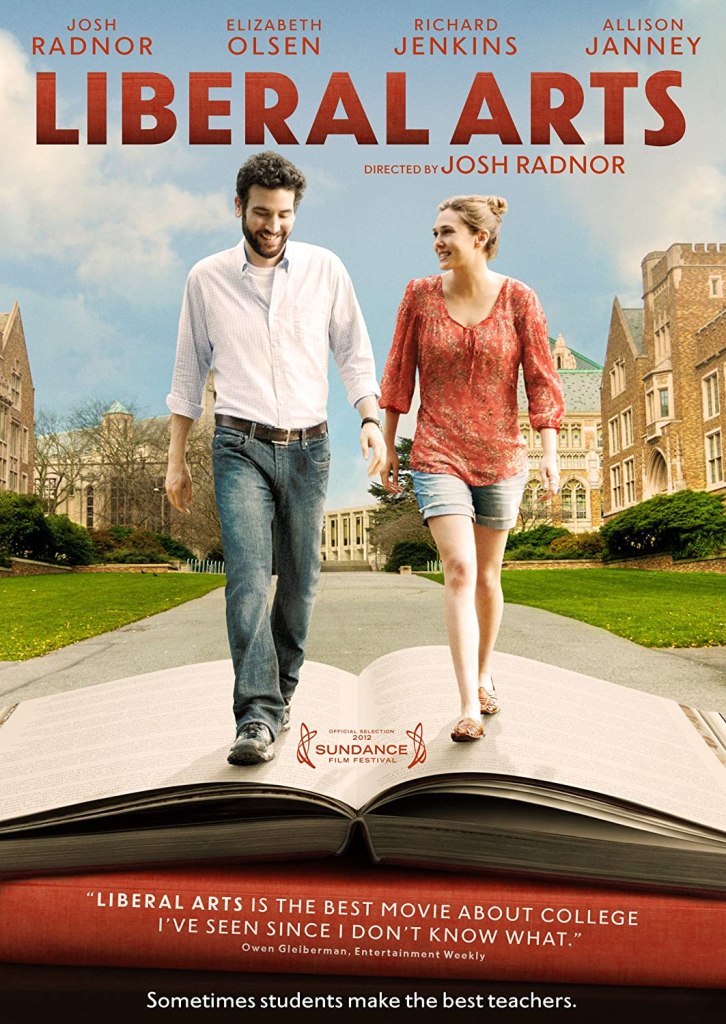
This film, which premiered at the Sundance Festival in 2021, deals with so many important aspects of life: love, romance, sex, maturing into adulthood, retirement and what happens to aging academics. The story is told from the perspective of a 35-year-old played by Josh Radnor, who wrote, directs and stars in this little gem. He plays Jesse, an admissions counselor in NYC whose life is on the skids (fully disillusioned and going through a divorce), when he is invited back to his small liberal arts college for a retirement party for one of his favorite professors.

Jesse absolutely loves returning to college. Ah. the feel of total irresponsibility on a small liberal arts college campus! There he meets a few characters who complicate is pathetic life. There’s a beautiful, young woman who he falls in love with over long-distance letter writing, there’s a mysterious elf-like creature who shows up regularly to share his truths. ‘Nat’, played so well by Zac Efron, seems so ethereal that Jesse says at one point, “I’m not even sure you’re real.” There are a few bitter older professors who cause Jesse some serious disillusionment over choosing the academic life, as well as a college kid who is right on the edge of giving up on life all together.

Jesse slowly begins to see that being such an intellectual and expert on books and ideas has stunted his growth in terms of simply living an authentic life. He connects with everyone through books and ideas. When asked at one point why those of us who are lucky enough to go to college should appreciate it, he says, “Because you have time to sit around reading books all day, and you have lots of smart people around to discuss ideas! That’s not true when you leave here…” Yes, college was certainly that for me, and caused one of my greatest disappointment in life. I’ve been seeking intellectual types to talk with my whole adult life. Where are all the intellectuals in rural Huerfano County, Colorado?

When I saw the preview, I thought this would just be a fun romp through the ridiculousness of academia, something I am a bit of a expert on. Oh the stories I could tell… “Liberal Arts” turned out to be one of my most favorite films. It somehow covers most stages of adult life and disillusionment with so many great lines like, “I think being old will be OK. It’s getting there that kicks your ass.”

See this film if you loved getting lost in books, being in college and have felt disillusioned ever since. You know, if you happen to be an academ-idiot like me!

Further thoughts on being an academ-idiot…

What does the censorship of history accomplish?

Of course I must put my two cents in about those who wish to censor certain school library books, partially so we cannot recognize and acknowledge what happened in our past. I was an academic librarian for twenty-five years, most of which did not include censoring our history.

This is one area where history and psychology agree:

“Those who do not know their history are doomed to repeat it!”

In counseling we learn that the first step to any type of change or healing process begins with awareness of our past. If we cannot acknowledge what happened to us, we can never change its traumatic effects or how we now perceive it. How can you change that which you do not even recognize as true? Knowing and feeling your past can be so liberating!

You cannot change what you do not even know about.

Denying our history is not the answer. Historically we have certainly done a decent job of downplaying the slaughter of most Native Americans and their culture, not to mention “normalizing” the practice of kidnapping native Africans and enslaving them. When fully witnessed and acknowledged, our history holds much to be ashamed of. The only solution to this terrible record as a nation is to tell the truth about these travesties and then seek some kind of healing.

As Professor Henry Louis Gates, Jr. on the PBS show “Finding Your Roots” states, we should not feel guilty for the sins of our ancestors. We had no part in the choices they made or the societal pressures put upon them. But if we search out and now know the truth in our history, we can then move forward with a knowledge and understanding of how we should act today and every day in our future.

In addition, I must scoff at those idiots who criticize a decision to choose a non-European-American female for our next Supreme Court Justice. For well over two centuries we all knew that the President would nominate a European-American male for the post. The dominant culture made sure of that. And now these idiots feel threatened by one African-American woman on the Court…. GROW UP!

Postscript: When they tried to ban sex education in Utah when I lived there in the 1980s, we used to say: “If ignorance is bliss than Utah is utopia!” Nah, kids will never figure out what sex is if you don’t tell them…

Check your iron levels because anemia sucks!

It’s been a few weeks since I have felt decent, and I thought I might briefly share with you why. In summary I would caution you to watch out for ANEMIA!!! I only had it once before, and this time it was totally incapacitating by the time I got some help and got it under control. We’re (as in a couple doctors and I) still aren’t sure what’s causing it, but I got a big infusion of iron yesterday and I feel so much better.

For me, the first signs are a lot of hair falling out (in the shower) and a strange desire to chew on ice. I know, crazy! Then I let it get so low that my GP here said she had never seen it that low. Even then it took almost a week to start on the iron infusions and by then I felt truly crazy. I have a graduate degree in psychology, so I know what CRAZY looks like.

Anemia signs and symptoms vary depending on the cause and severity of anemia. Depending on the causes of your anemia, you might have no symptoms.

Signs and symptoms, if they do occur, might include:

  • Fatigue
  • Weakness
  • Pale or yellowish skin
  • Irregular heartbeats
  • Shortness of breath
  • Dizziness or lightheadedness
  • Chest pain
  • Cold hands and feet
  • Headaches

At first, anemia can be so mild that you don’t notice it. But symptoms worsen as anemia worsens. Source: The Mayo Clinic

Note: I have most of those symptoms normally between my low oxygen and a recent concussion.

My point is, get regular blood tests and watch for these symptoms. Anemia is much more common in those over age 65 and hard to spot, because of all the variety of symptoms.

Postscript February 2022: I have come to think that the statin drug I started in 2020 may be causing my severe anemia. I have since learned there are so many side effects to statins. Inform yourself before taking anything!

Thank you readers!

As one more year slips away, I wish to thank all of you who come by here occasionally to see what’s happening in Mike and I’s life. I know we are not action-packed, just 65+ers surviving day by day…

You may sometimes wonder why I write here. The best reason I can think of is to keep myself going. As most of you know, I have been slammed with health problems in the past few years, and the truth is, I don’t know how much longer I can keep writing, but it gives me meaning every time I do it. Otherwise I wouldn’t bother. Don’t worry, I am NOT trying to be an ‘influencer’ here.

In return for your loyalty, I will share a few of my favorite T-shirt sayings I have seen lately. I don’t wear T-shirts, but if I did, these are the ones I’d choose. Perhaps you can relate to a few of them:

From years of living alone:

Sometimes I talk to myself, then we both laugh & laugh!

A Rasta Special:

All dogs are therapy dogs. Most are just freelancing.

From the therapist in me:

Keep talking. I’m diagnosing you.

From the writer in me:

I’m silently correcting your grammar… (And also noticing all misspelling everywhere!)

From the analysis paralysis in me:

Hold on. Let me OVERTHINK this…

And my favorite doormat:

Come in. We are awesome!

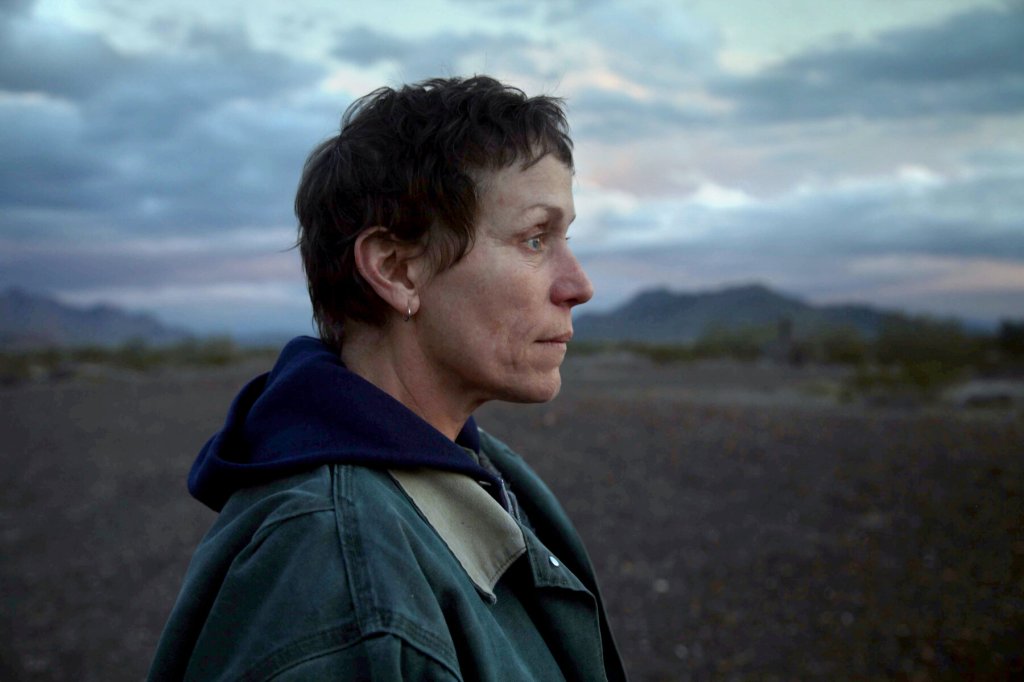
Aren’t we all a little lost in ‘Nomadland’?

I know, I get the movies a lot later than most of you. I borrow them from La Veta Public Library, such a lovely, friendly place, where everyone knows my name 🙂 It’s so much more personal than streaming…

In the first few minutes of watching the film ‘Nomadland’ I thought about my brother John, who was homeless until about a year ago when we helped him find a home in Walsenburg. I thought, here we go, this is going to really make me appreciate the fact that I have a lovely solar home on a ridge overlooking the Spanish Peaks and the Sangre de Cristo range, and yes, it certainly did that. But as I got deeper into the daily life and choices of Fern, the roaming nomad in this film, I understood the metaphor presented for all of us to relate to. Questions like: Do we need to work to feel adequate? Do we look down on the nomads we meet and should we? What about all the homeless in towns like Walsenburg whom we see sleeping in doorways and down by the river? What about them?

Nomadland was unique in some ways because all of the characters were mobile, moving from place to place for jobs, or help from others, or whatever suited them. The freedom of being mobile was important to who they were. They also found great fellowship with other nomads by camping together for long periods of time. Not everybody wants to be alone all the time, or around others much of the time. I got their lifestyle and their choices. I loved the honesty with which these folks spoke of end of life choices like choosing not to die in a hospital, and their own celebrations of life when one of their members died.

Many of them were depressed and why not? How many of us wonder everyday about our world and where it’s headed? Past a certain age, loss is a major factor for all of us. Loss of abilities, health, independence, loved ones, stability and sanity. The characters here deal with all of that day to day in an honest way, like we all must to some extent.

Pretending that life will not change or that this will not end soon is hopeless. We may all be lost in our own version of ‘nomadland’ and this film might help you accept that.

Winter Solstice & Gratitude

In the cool darkness of the early morning, my thoughts turn to the billions of people who have come before me. How difficult must their lives have been. I am reminded of the quote from Thomas Hobbes (5 April 1588 – 4 December 1679), considered to be one of the founders of modern philosophy. Back then, he described human life as ‘nasty, brutish and short,’ which serves to remind us of what a good time and place we were born into.

In spite of my own very human problems, I feel fabulously lucky to have lived the life I have been given. Living in a time with access to nutritional food, heat in our homes, nice clothes, vaccines, comfortable transportation to almost anywhere and access to an excellent education, books, media, wonderful music, we must be some of the most fortunate humans in history! And yet, all we do is complain… We seem to lack perspective.

The Shortest Day

The Winter Solstice in Human History

The winter solstice was a special moment in the annual cycle for most ancient cultures back to the neolithic. Astronomical events were often used to guide activities, such as the sowing of crops and the monitoring of winter food reserves. Many cultural mythologies and traditions are derived from this.

This is attested to by physical remains in the layouts of some ancient archaeological sites, such as Stonehenge in England and ceremonial structures in New Mexico’s Chaco Canyon. The primary axis of these monuments seem to have been carefully aligned on a sight-line pointing to the winter solstice sunrise and the winter solstice sunset at Stonehenge.

To the Ancient ones, the winter solstice was immensely important. They were economically dependent on monitoring the progress of the seasons. Starvation was common during the first months of the winter, January to April (northern hemisphere) or July to October (southern hemisphere), also known as “the famine months.” In temperate climates, the midwinter festival was the last feast, before deep winter began. Most domestic animals were slaughtered because they could not be fed during the winter, so it was the only time of year when a plentiful supply of fresh meat was available. The majority of wine and beer made during the year was finally fermented and ready to drink at this time.

I have found this day to be a good time to count my many blessings. The sun will return to bring spring to warm the earth and make my sky garden bloom again. So yes, we do have so much to be thankful for. Let us all rejoice!