Lessons in disability & compassion in action

Oh the things we can learn when accidents happen. After a lifetime of glorious health, I am now learning how challenging physical disabilities can be. From a healthy 60 year old a few years ago, I have become breathless and often confused. That popular phrase “I can’t breathe!” is a daily reality for me now and these difficulties have led to numerous falls and concussions. I am now working with a pulmonologist and a neurologist for lung disease and post concussion syndrome that causes great dizziness at times.

What does illness and suffering teach us? Compassion for others who suffer. The first time I spoke directly to Mike (my husband of 16 years) after meeting him through Match.com, he told me he suffered from Chronic Fatigue Syndrome (CFS). At that time I hadn’t the slightest idea what that was or how it might impact our lives. At first he tried to hide some of his symptoms from me, avoiding me when he felt especially bad. It was only later that I learned the crushing cruelty of this at-that-time undiagnosable disease that haunted Mike for decades. He went from a strong 35 year old who could run up mountains, to chronic fatigue that worsened with physical activity, but did not improve with rest, difficulties with memory, focus, concentration and dizziness that worsened with any movement from lying down, sitting or standing. Imagine how depressing that would be for you. And worse, few physicians would believe him. They showed no compassion and would simply say, “You’re just depressed” or “See a psychiatrist.” From this, Mike learned deep compassion for those who suffer with unexplainable illnesses and disabilities. This quote from Gandhi describes Mike’s life perfectly now:

“The best way to find yourself is to lose yourself in the service of others. The difference between what we do and what we are capable of doing would suffice to solve most of the world’s problem.” – Mahatma Gandhi

One of my favorite sayings has been this for decades:

and Guanyin, the Chinese Goddess of Mercy, my daily reminder of compassion in action.

These are some of the most important lessons we can learn in life, and we are learning them well

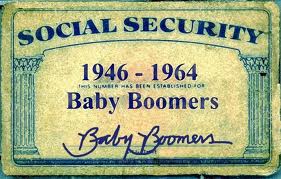
One boomer’s ridiculous dilemma: Beginning to spend all of that saved up delayed reinforcement!

As many of you know, my health has been failing for the past few years, and with one additional serious concussion in April, it appears clear, at least to me, that it’s time. Time for what? Time to begin spending all of that “delayed reinforcement” from the past 45 years of my life.

If you’re anything like me, you have been saving money for as long as you can remember. Why? I guess because I was completely brainwashed in the cradle to save up for my old age. So, exactly when does that “old age” begin? Strange to say, I don’t find myself as the best judge of very much lately, not with this many brain injuries! But I am fairly clear I not going to be living forever and also not sure how long my brain is going to last. One fun fact I learned recently:

Head injuries accelerate aging: “The current state of the literature provides support for the argument that TBI can result in diminished cognitive reserve which may accelerate the normal process of cognitive decline, leading to premature aging, potentially increasing the risk of dementia.”

That explains a lot! The irony in all of this is not lost on me (yet!) I have always prided myself on my excellent brain. Now what? Is it really time to begin spending my wad? I find that hard to believe and even harder to do…

When you have spent your whole life trying to save money, how do you suddenly cut loose? It’s kind of the opposite of the poor guy winning the lottery. Of course he’s going to overspend immediately, but everything in my background suggests that holding on to money is your best avenue to happiness. I know that if I don’t get some big trips planned I probably won’t be taking them. How do I loosen the purse strings? How do I give myself a luxury vacation?

I know, most of the human beings on this planet would like to have such problems, but there it is…

Please prepare now for unexpected outcomes

I’m sad to learn that my friend Rena Kaplowski died yesterday, even though she went the way she wished, in her sleep. Her passing has been a bit of a wakeup call for me and perhaps should be for millions of us. Rena had just turned 67 when she suffered a devastating stroke. Weeks of unconsciousness and intensive care followed, and she had just been moved to a rehab center when she passed.

Rena had not signed an advance directive form like Five Wishes which allows each of us to guide important medical care decisions that might be made if we should become seriously ill, decisions like whether we would like to be given life-support treatments. You may think that your loved ones and doctors will know what you want when you are very ill, but in reality, everyone has different wishes and it’s important to make them clearly known. Expressing your wishes in an advance directive helps to empower your family and other loved ones, and your doctor to make the best decisions when the time comes, and avoid disagreements about what to do next. Completing a form like “Five Wishes” can help you and your loved ones gain peace of mind around difficult end-of-life decisions.

The best time to fill out an advance directive form is now, before you face a health crisis. Because life is unpredictable, it’s best to be prepared. Anyone over the age of 18 can use the “Five Wishes” form. It is also a good idea to review and possibly update your Five Wishes advance directive when you experience significant life events like marriage, divorce, having children, or being diagnosed with a major illness. “Five Wishes” was written with the help of the American Bar Association’s Commission on Law & Aging and is used widely in all 50 states. Federal law requires medical care providers to honor patient wishes as expressed.

Remember, you will always make your own health care decisions if you are able to talk with your doctor and understand what is being said. This directive only takes effect when you are too ill to understand or communicate. If you are unable to make your own decisions or speak for yourself, an advance directive and the person you chose to be your healthcare agent, can help direct your care with your doctor.

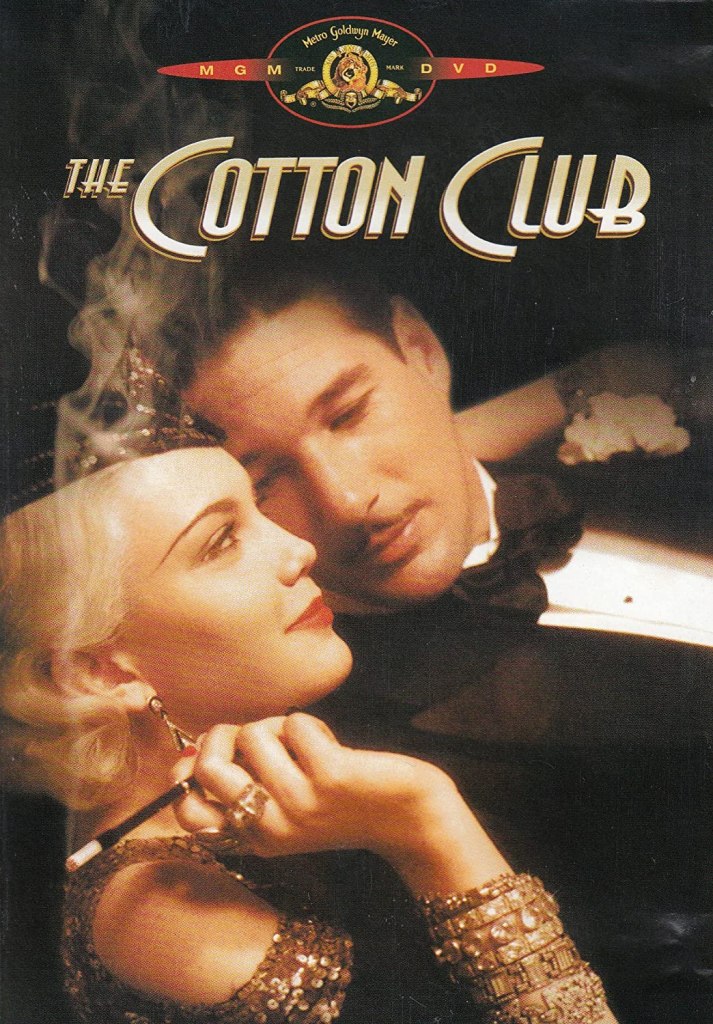
See “The Cotton Club” Encore Edition!

I don’t know how I missed it, but this old movie from 1984 is fabulous, especially if you love 1930s music and watching Gregory Hines dance! Come to think of it, I didn’t even have a TV or go see films much in the 1980s. I was busy learning Chinese and getting degrees I would never use… But this film was so much fun for me yesterday!

For me, the most interesting aspect of this movie was the way it called attention to extreme early racism in Harlem and how those with power drew the line between black and white. Opened in 1923, the Cotton Club on 142nd St & Lenox Ave in the heart of Harlem, was operated by white gangster Owney Madden. Madden used the Cotton Club as an outlet to sell his “#1 Beer” to the prohibition crowd.

The Club was decorated with the idea of creating a “stylish plantation environment” for its entirely white clientele. As with many New York City clubs of the time period, that meant the upper class of the city. The Cotton Club at first excluded all but white patrons although the entertainers and most of staff were African American. Dancers at the Cotton Club were held to strict standards; they had to be at least 5’6” tall, light skinned with only a slight tan, and under twenty-one years of age.

The oppressive segregation of the Cotton Club was reinforced by its depiction of the African American employees as exotic savages or plantation residents and the music was often orchestrated to bring to mind a jungle atmosphere. By transforming the club into this plantation atmosphere and bringing in celebrities, Owney Madden created a demand for the Cotton Club while also helping to perpetuate widely held negative stereotypes about African Americans.

This film also got a lot of relatively new actors noticed like Bob Hoskins, Richard Gere, Gregory Hines, Diane Lane, Nicholas Cage, Laurence Fishburne, and Tom Waits(!) to name a few. I loved the music, the dancing, and the story, plus I learned quite a bit about how racism worked in Harlem in the 1930s!

A personal note: I have been noticing the age difference between the romantic lead actors in older movies lately. In this case the age difference between Richard Gere and Diane Lane is 16 years! Talk about robbing the cradle…

Is our life better than previous generations?

I suppose the thought that stays with me after reading about my ancestors’ journey through life, is how difficult their lives were compared to ours, and yet so many of us struggle with our own challenges today. What has changed between previous generations and ourselves?

‘… and which is worst of all, continual fear, and danger of violent death; and the life of man, solitary, poor, nasty, brutish, and short’ (Leviathan, i. xiii. 9) — Thomas Hobbes, 1651

I am certain that our lives today are so much easier in so many ways compared to my great grandmother and grandmother. In fact, let’s face it, most of us are living much better than most in human history.

I feel so lucky to be alive today! How do we appreciate these differences without undervaluing our own daily challenges?

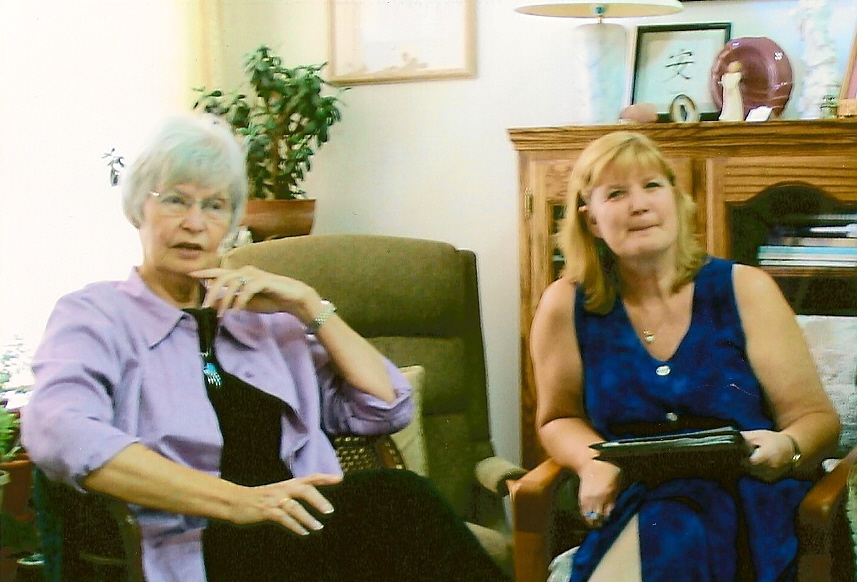
Mom and I at my wedding in 2005

For example, I know there were members of my mother’s family who suffered from mental illness and dementia in their later years. So much was not known about these illnesses fifty or one hundred years ago, and with misunderstanding came criticism, stigma and heavy judgment. My Mom’s first cousin was sent to the Kansas Mental Hospital where he killed himself by consuming pesticide!

Dementia sent my Great Grandfather McGrew to the Kansas mental hospital at the end of his life…

Today there is counseling and many new drugs to ease our physical and mental pain. There are people like Stephen Levine to help us accept ourselves more fully instead of torturing ourselves with harsh self-judgment. I know I would not be half as healthy and happy as I am today, if I had not had some excellent counseling in my thirties. Since I suffer from a shortness of breath, I wonder what happened to others back then with lung disease. And what about head injuries?

Do you see how lucky we are to have a better education, better science education and many more options because we were born in this age? Have you seen that new TV commercial that says:

Do you know anyone with polio or smallpox? Vaccines work.

It is so hard to watch so many suffer because they refuse to believe that we HAVE MADE PROGRESS! Our lives can be better through education, science and yes, even chemistry. That some refuse to use these tools to better their lives is a travesty and a human tragedy of personal choice…

Why am I here now? Family History!

Somehow, all of the happenings in my family right now are stirring up many questions for me about my family background. The death of my father in 2020, the dementia of my Mom now and the birth of the first member of the next generation of our family has me wondering how all of this came about.

Why am I here? What and who participated in the creation of our family and why?

Top: Photo of my parents’ wedding in 1951 in Kansas City, Kansas

Luckily, my Mom spent a few years searching for the answers to these exact questions back in the early 2000s and produced a detailed family history called: Generations: Our Grandmothers for all of us to learn from. So this week I decided to sit down and read it cover to cover. It also included many family photos I had never seen before. What a gold mine of genetics and social history from a family whose roots go back to farming in eastern Kansas in the 1800s and railroad development in the Kansas City Kansas area.

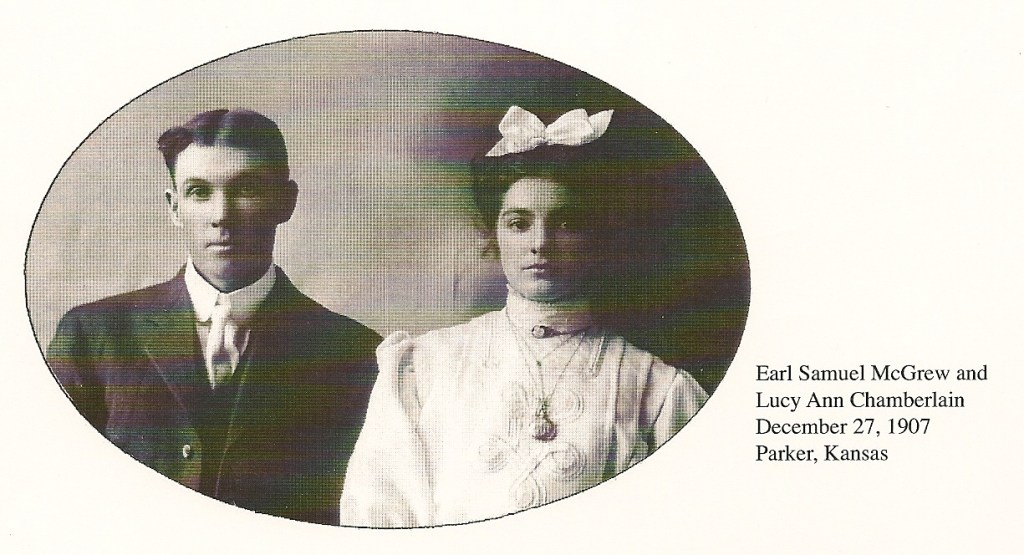
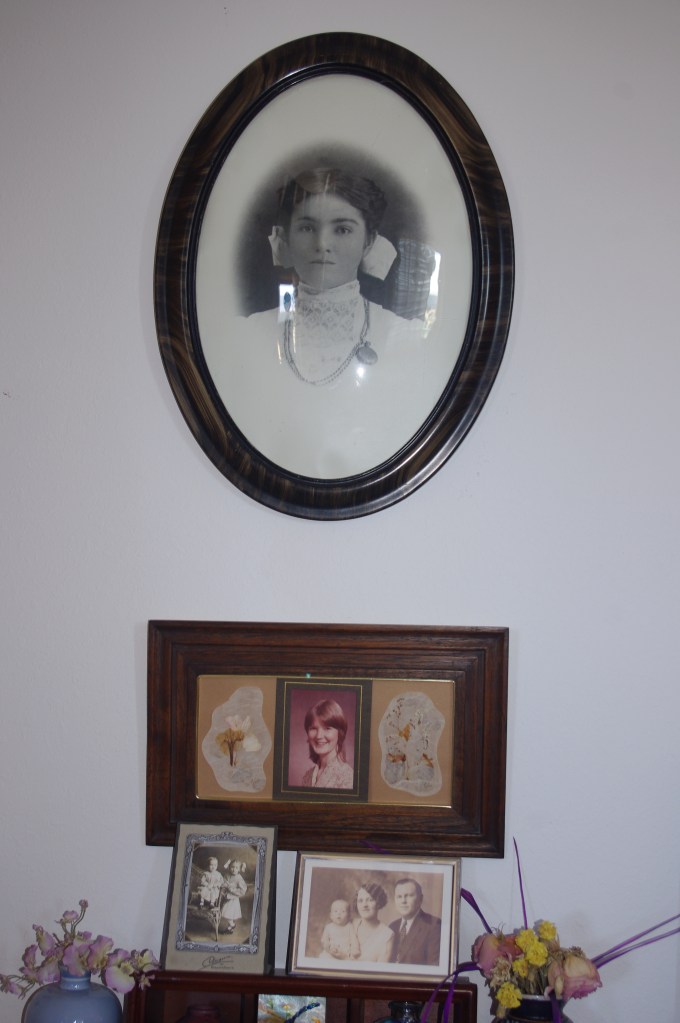
Top: Great-Grandma McGrew on her wedding day in 1907

What struck me first was how large families were back then, and how “romances” developed in the late 1800s and early 1900s. In the case of all of my great grandparents, they met because so many lived in boarding houses where family members mixed. In the case of my Great-Grandma McGrew, she was sent to live with a different farm family to help out, because her own family had too many mouths to feed. She ended up marrying the only son in her adopted family. The McGrews greatly valued education, so even though the closest high school was ten miles away, they made certain that their only daughter, my grandmother, finished high school. She taught elementary school for two years and then ventured out to the big city to expand her horizons in business school. She then secured a job as a secretary in Kansas City where she soon met my grandfather.

My Mom describes our Carter background this way: “If there is a unifying “track” to the story of the Carter family, it would be the Santa Fe Railroad and its development over time as the history of railroads was unfolding in the West.” My Grandpa Carter, his father, and most of his brothers worked on the railroad their whole life, but Grandpa was determined that his two sons would not. He also believed strongly in education as the primary path to a better life, and my Dad and uncle’s lives certainly proved that point. My dad and Uncle Bob were the first Carters to not only finish high school, but also finish college and graduate school. My dad swore by the advantages of a good education and it worked out great for him and his kids.

Developing your mind and allowing it to go wherever it wishes, opens up so many doors and windows on life! It also allows for so much freedom in determining where we go next. I cannot even imagine how different I would have been without my love of learning…