Crisis or opportunity? How do we convert our breakdowns into breakthroughs?

Watching the news these days fills me with sadness. I feel like the witness to the worst misfortunes that have befallen this country in my lifetime. Job loss, poverty, hunger, terrible health losses and death, not to mention the worst economy perhaps ever. This is truly a terrible crisis for everyone involved. I do feel badly for those who feel no hope as this year comes to a close. Those of us who now live on Social Security and Medicare are so fortune that we have survived our own crises and lived this long.

When I look back over my own life, I remember when I lost a job, then ran out of unemployment checks, my fears of losing my home and the depression that ensued. This was not so many years ago for me. This was my life in 2004. I remember crying with the counselor at the state employment office, my desperation was that great. Since then I have lost my health to an unidentified problem with my lungs. Mike also almost lost his home when Chronic Fatigue Syndrome (CFS) dominated his life in his mid-30s. He had to move out and rent his home so he would not lose it. I would not wish these kinds of crises on anybody. Mike and I do know that hopeless, sinking feeling personally. That is why we give to charities for the hungry and homeless.

What I did when disaster struck was sit down and consider how I would now find a way to land on my feet and avoid future misfortunes. Mike and I feel we both learned a lot from our own crises, things like how to protect our assets, ask for help and find strength inside that we did not know we had. We also learned not to be critical when bad things happen to others. In other words, we learned compassion in place of harsh judgment. We never could have imagined that these crises would happen to us, but they did, so the first goal is to not be too critical of ourselves. We now know that compassion must begin at home and then expand outward to those around us. Judging those who suffer does nothing to help them problem solve. Although it may seem harsh, the Chinese were correct when they combined the characters “danger” and “opportunity” in their word for crisis.

What is this difficult situation teaching me? What opportunities are presented right now for me to benefit from?

If you live through the crisis, you must then struggle to find the opportunity that may be well-hidden in your terrible misfortune. In every crisis there is a message. This is nature’s way of forcing change into our lives. What old structures or ways of thinking need to be reviewed? What bad habits can go so that we can try something different and better? Sometimes life crises require some serious soul searching and surgery to cut out the worst assumptions we have made about ourselves. This can lead to psychological reframing of our problems.

For me, my midlife crisis (divorce, job loss, career loss) led to a brutal analysis of what I needed most in my life to make it worth living. I decided that love was my greatest need and highest priority, and I would need to make some major changes in my heart and mindset to make that happen. I would also need to learn to listen carefully to my intuition, the wisdom inside that had been accumulating for decades. Why had my culture taught me not to listen and believe in these messages? Once I started to listen to them, they came through even more clearly and I followed them. This process led me to a positive career change and love.
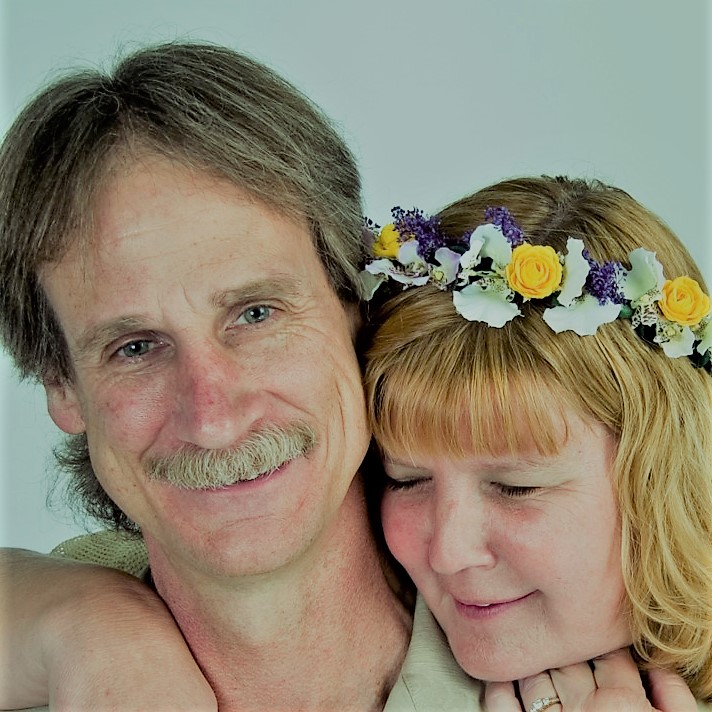
Eventually I would appreciate my crisis, because without it I would have never changed so much. Today I’m so glad I got divorced and lost my job. Only then was I ready to accept love and embrace a whole new way of living and loving. I heard the message of my crisis and saw the opportunity within it. Is it time for you to do the same?

I am a trained psychotherapist and have written a few books about how this process works…

Surprise! I’m looking forward to Christmas!

This is the time of year I usually post my “I’m beginning to dread a lot about Christmas” post. Once those ubiquitous commercials begin, I start complaining. But this year feels different. I’m anxious to get our tree cut (from our own land!) and decorated, and I’ve ordered just a few small, special gifts online. I wonder why…

I think it’s because of the tough past few years. I know I was too depressed last Christmas to decorate the tree. My health has been a constant concern for a few years now. When you’ve been consistently healthy for most of your life up until around age 60, and then you keep having serious new ailments turn up, it’s disconcerting to say the least. The one I fought the hardest was going on fulltime oxygen. I simply could not believe it, and I also didn’t want to! It’s terribly cumbersome, expensive and irritating. Try fixing dinner while trailing around an O2 tube. But I did somehow adjust after a couple bad falls and much difficult breathing convinced me.

Funny how illness may help one appreciate things in whole new ways. When you are no longer so certain that you will be here for Christmas next year, you see things differently. Now I want to enjoy every little detail. Oxygen tube or not, I want to be present for every moment now.

A New Thanksgiving Gratitude Challenge!

I have been making Thanksgiving dinner for so many friends and family for most of the past fifty years of my life. It usually turns into a bit of a stress-fest trying to get everything done and on the table at the same time. When it’s time to make the gravy I am usually at wit’s end and exhausted! I guess I should add I am very controlling and bossy in the kitchen…

So last night Mike laid down this challenge to me: Let him do it all. He has done it before, before he met me, he reassured me. This blew my mind as I started taking it in fully. Could I let go of that much control? Could I trust him to do it right? This all blew my mind, because it showed me exactly what a control freak I still am. Did I trust Mike to do it well and do it “right?”

Of course, we do need to take into consideration that I am now on oxygen fulltime and even then sometimes short of breath. Since I first saw it, I have related too well to that new anti-smoking ad about starting in October if you are in charge of fixing Thanksgiving dinner this year. I have to admit it made me laugh because that was me! And no, I never did smoke, just crappy lungs, which no MDs so far can figure out.

As it turns out, I cannot turn the whole affair over to Mike, but he will be doing most of the work. I feel I need to make my cornbread dressing and the pie. Funny how we slowly give up control, and only when it becomes almost impossible to do it all yourself!

Now for one of my favorite stories about Thanksgiving. When I was in my late 20s I went to Taipei Taiwan to study Chinese language at the Stanford Center. Thanksgiving can be tough in a place where nobody even knows what a pumpkin or a turkey are. Soon after I got there in September, my grandmother died and I could not go home for her funeral. My brother-in-law did something really kind for me that year. He had his grade school kids make me Thanksgiving cards and sent them to me. They were all so cute and welcome, but one of them still comes to my memory every year.

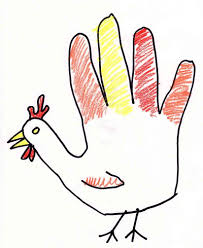
This kid had drawn a turkey and along the bottom he wrote the words:

“I am a turkey too yum yummy yum yum!”

to be sung to the tune of Little Drummer Boy!

“I am grateful for what I am and have. My Thanksgiving is perpetual.” — Henry David Thoreau

“Writers & Lovers” by Lily King, a review

Reading a novel is so personal, rather like watching a movie. We all relate to the story in different ways, depending on the various parallels between ourselves, the author’s life and the main character. My new favorite author is Lily King. Her life, her stories and my own life experiences coalesce in many interesting ways.

I already told you about her novel “Euphoria” ten days ago. This week I was lucky enough to be the first one to check out her new book from 2020: “Writers & Lovers” from the La Veta Public Library.

For me, this book is about the complexity and confusion of being an independent woman with goals and a dream, in a world where most are giving up their dreams as unrealistic. The main character, Casey, is a 31 year old writer who is as afraid of risking her dream of being a writer, as she is of falling in love. Along the way she provides what seems like casual, but enduring insights into counseling, dealing with the sudden death of her mother, and the mysteries of love.

Much like myself, Casey’s 31st year is particularly challenging, with the theme of “What am I supposed to be doing with my life?” If a woman does not follow the traditional path of marriage and children, what then? What if you are determined to follow your own unique path wherever that leads you?

“Only those who risk going too far can possibly find out how far one can go…”  -T.S. Eliot

My 31st year was one of my most difficult. Like a dream, I still remember particularly well one afternoon driving through Denver on I-25, certain that my life had absolutely no meaning, but also certain that I would eventually find out why I was here. I had always dreamt of becoming a writer and yet I did not have the confidence or courage to pursue that dream yet.

Lily King on becoming a writer:

“Then I understood how hard it is to re-create in words what you see and feel in your head.” pg. 270, “Writers & Lovers”

Lily King on counseling:

“You don’t realize how much effort you’ve put into covering things up until you try to dig them out.” pg. 168

Lily King on breaking up:

“I don’t normally have to break up with anyone. Usually they do it for me, or I leave the state or the country. I don’t have to spell it out very often.” (pg. 291)

These quotes all reminded me of my turbulent 30s, and in turn showed me how grateful I am to be past all of that chaos. I am now ensconsed in such a beautiful, comfortable, safe place. Lucky me! Those turbulent times resulted in enduring love & happiness.

“Make yourself useful!” A post for overly responsible boomers

Two themes have been competing in my brain for decades:

Do we need to “make ourselves useful” all the time? Or is it OK to simply relax and enjoy our lives?

Let me begin by acknowledging that I was brainwashed as a child that everything we do should be “useful.” Laziness was not allowed, and laziness was very broadly defined. Pursuits like games, art, music, cinema, anything that was simply pleasurable and not academically motivated was a waste of time. Productivity was key, but only certain types of productivity. Now I find some of these same strict definitions among my fellow Boomers, who are having trouble getting comfortable with aging, illness and retirement.

First of all, I have studied the psychology of American boomers for years. One conclusion I came to is that we have been identified unfairly as an extremely self-centered and irresponsible generation. The boomers I know are now taking care of their parents if they are still alive, environmentally aware and responsible, and feel a strong need to feel useful in this world. That flower child, druggy image does not stick. Perhaps we are more self-aware than our parents, and more aware of our impact on this planet, but totally irresponsible, no.

Speaking for myself, I grapple daily with guilt over my own idleness even though I also struggle with hypoxia and the long-term affects of a traumatic brain injury. Besides the usual, “Why me?” questions, I feel lazy if I cannot complete at least a few household chores every day. Guilt feels like a permanent companion to my illnesses. Luckily my husband Mike is the direct opposite of my inner critic. He encourages me to feel good about simply still being here, and helps me make the most of it. He keeps our vehicles and home running smoothly…

while encouraging me to focus on hobbies that give me pleasure like photography,

gardening,

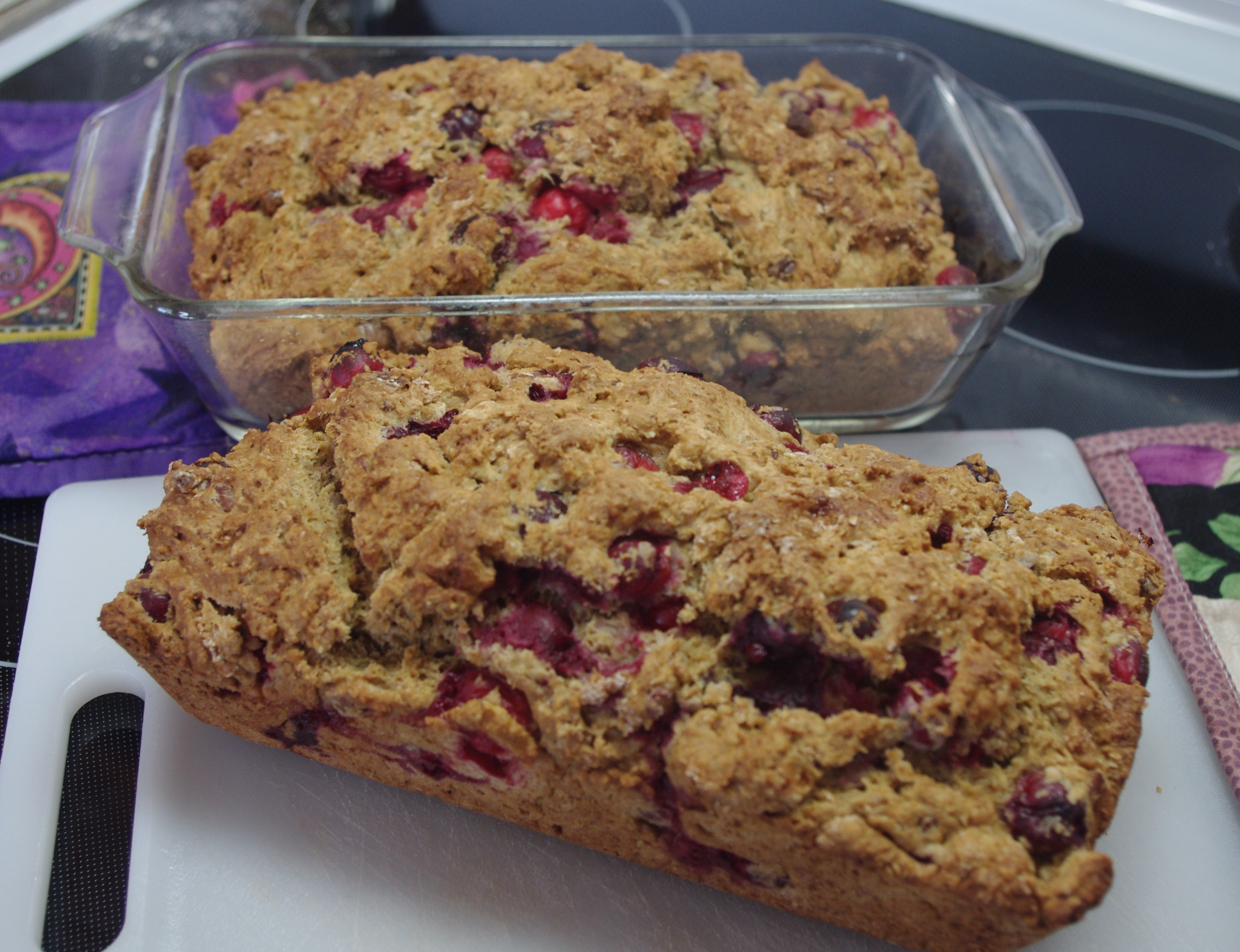
cooking and writing this blog.

Mike also understands my struggle with every day guilt, partially because he was not raised that way. He believes that retirement should be joyful and guilt-free. He believes we earned it “after slaving away our entire working life!” I can learn a lot from him.

How realistic are our memories of early adulthood?

Now to answer the question: Were we always this stupid, from my last post? The answer is, we were much dumber in high school and college. I have medical proof!

I’ve been reading a FASCINATING BOOK called “The Body” by Bill Bryson. So many new and interesting facts about this crazy body we call home. I HIGHLY RECOMMEND IT!

For example, one of his most memorable moments while researching this book, was when an English surgeon peeled back a sliver of skin a millimeter thick from the arm of a cadaver for him and said:

“That is where all your skin color is. That’s all that race is – a sliver of epidermis.”

But the section on the brain was even more interesting! Brains have always interested me. But then when I got a couple brain injuries, I became even more focused on learning more about how they work.

OK, so here’s why we did some really stupid things in our teens and early twenties and now remember them far too fondly:

“The brain takes a long time to form completely. A teenager’s brain is only about 80% finished…[and] a region of the forebrain associated with pleasure, grows its largest size in one’s teenage years. At the same time, the body produces dopamine, the neurotransmitter that conveys pleasure, more than it ever will again.”

I knew before that our frontal lobe isn’t fully developed until our twenties, thus less impulse-control, but I have never heard that our teens and twenties were our best chance to experience extreme pleasure. Now, as we age, do you ever wonder if your memory is playing tricks on you? Could those early memories be real? This finding suggests our memories of the best sex in our life in our teens and twenties could be correct! Who knew?

This explains a lot. Memories can be so uncertain and unclear. They can also be manipulated and change through time. So find ways to enjoy your memories, but don’t count on them all being correct.