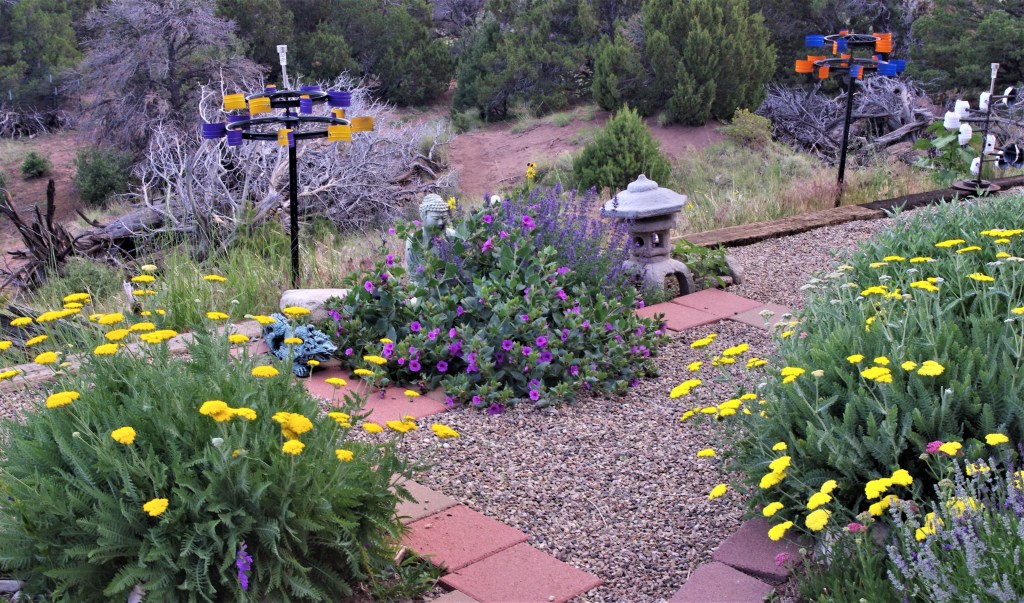
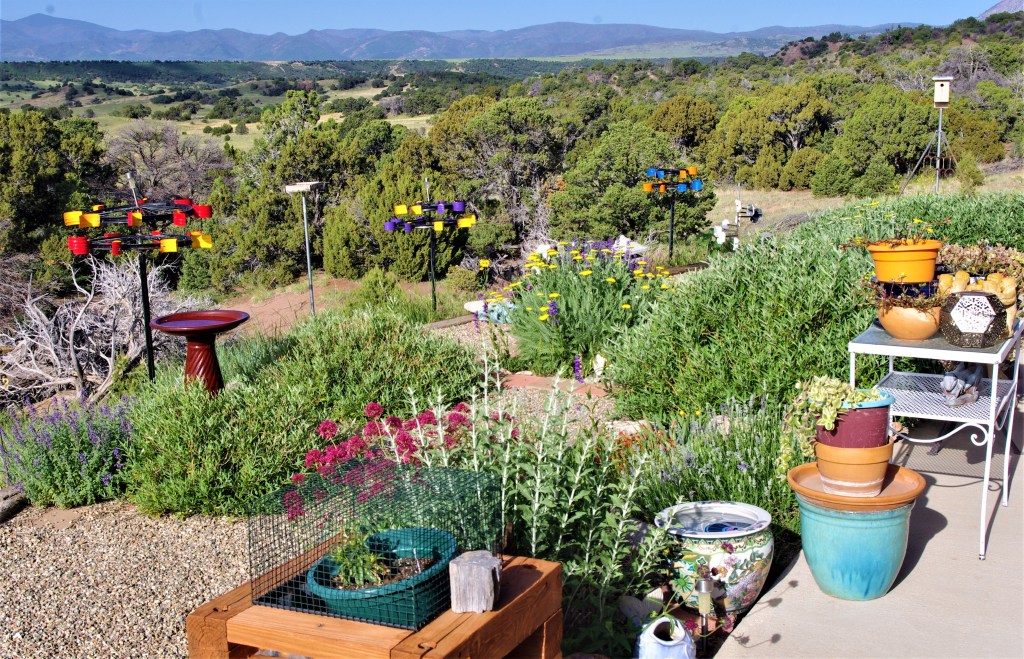
August Colorado Foothills Garden Scenes

Although just north of here has received more than abundant rainfall this summer, we are very low on our Water Year measurement at only 11 inches so far, with less than two months to go. That has been pretty tough on my xeriscape garden & landscape.

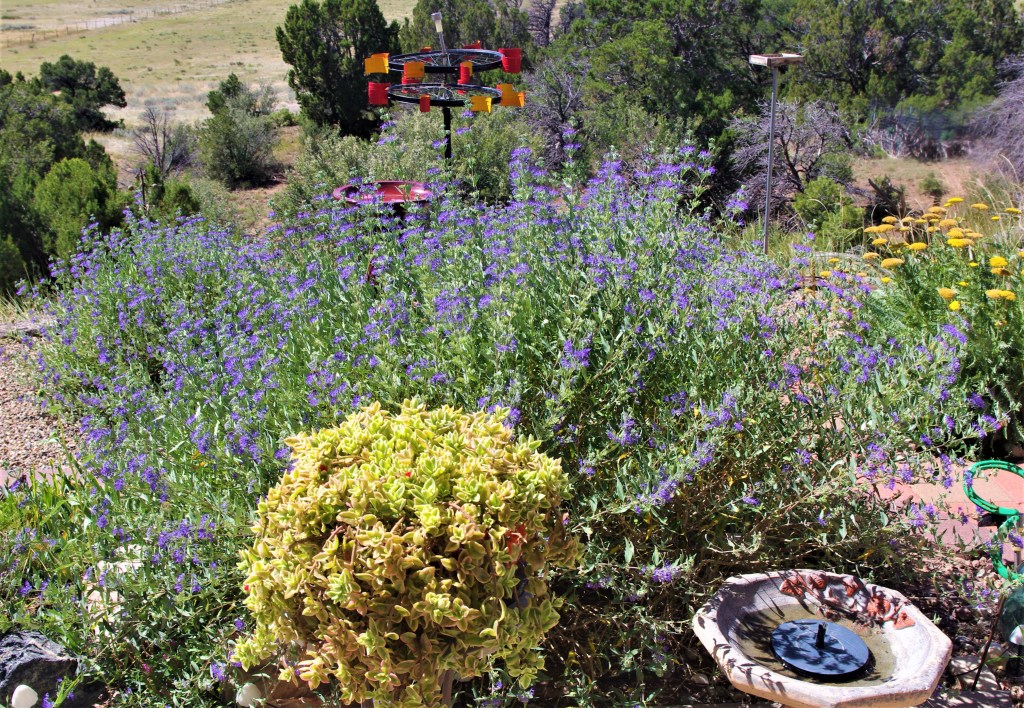
But my Blue Mist Spirea bushes are bigger and brighter than ever!

And curiously, all the big sunflowers have sprouted on a hill below our home on the east side.

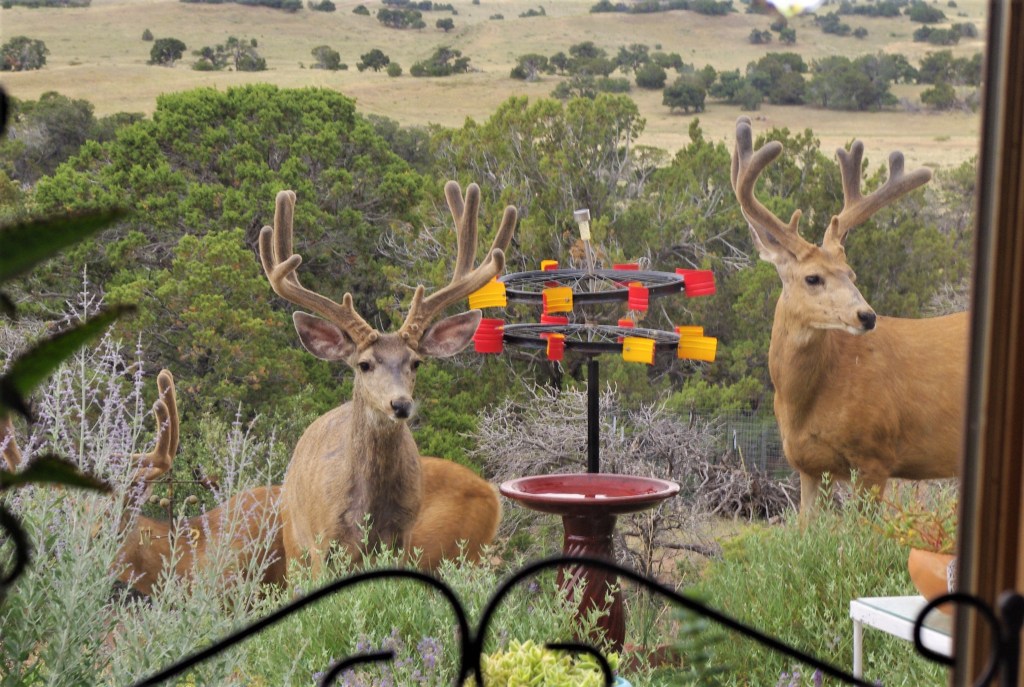
Our fountain & bird bathes continue to attract all kinds of birds, bunnies, chipmunks, bobcats, badgers…

and, of course, deer. It’s so fun to look outside at various times during the day and enjoy their antics.

This year is in stark contrast to the much wetter August of 2021, when we had had twice as much precipitation by this time in the water year! GO SEE PHOTOS HERE:

The Legacy of American Lawns & “Lawn Nazis”

I got a few interesting responses to my last post about re-wilding areas destroyed by farming or other forms of human landscape “improvements.” The 4th episode of PBS “Human Footprint” this week caused me to think further about our American addiction to lawns and lawn care.

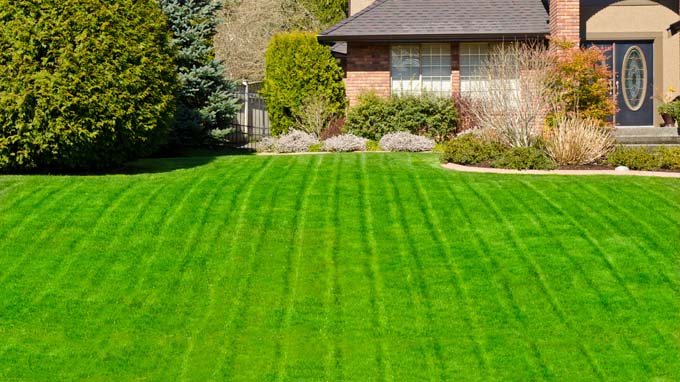
Did you know one 400 acre golf course uses 358,000 gallons of water every day? We have more than 40 million acres of turf in the United States that use over 80 millions pounds of fertilizer per year.

Grass is the most resource intensive plant in our country today.

In a country where we so highly value productivity, lawns are the ultimate in unproductive.

The story goes that we can apparently blame the Brits originally. The old idea of owning your own manor and “estate” added to our own brand of individualism in the USA caused many of us to want to own a home on maybe a quarter acre in suburbia. Our home was our castle, and the surrounding space was our territory to improve and maintain. Although some grasses have American-sounding names like Kentucky bluegrass, most of the turf-grass species we plant in the United States are native to Europe.

We also have a strong tradition from our earliest days of feeling like we had “too much land” (after we stole it from the native Americans). If we farmed it, or ranched it, or timbered it for five years than that land was ours. This set the precedent that we should not just sit on land, we should “improve it.” Every place humans inhabit is made artificial in some way, and in our country that usually involves lawns.

The Lawn is the Ultimate Male Status Symbol, showing how deeply grass is rooted in the American psyche.

Thinking about these American traditions reminded me of how proud my Grandpa Carter was of his small home and yard outside of Kansas City, Kansas. He took so much pride in keeping it perfect with his walking mower and lots of watering. And my own Dad the botanist, a lifelong advocate of leaving things natural, still worked hard to keep a nice lawn around his home.

The younger generations may not be so convinced that lawns are a good thing.

To quote that PBS special: “Grass is a signal. Just having it says that we are part of a community.”

And yet, as Nancy Hill pointed out after reading my last piece, those who don’t choose to maintain traditional yards in suburbia may be ostrasized by HOAs and other nasty neighbors. Covenants can be legally enforced. I had never before heard of the term “Lawn Nazis.” In a country that prides itself in offering “freedom of choice,” when it comes to the land around our own homes, we can be forbidden to plant native plants or go natural.
Rewilding, some positive nature news at last!

If you tire of hearing ever more negative news about how we humans continue to pollute and destroy the earth we depend on for life itself, try watching this five minute story from this week’s CBS Sunday Morning. Trust me, you will be glad you did!

Rewilding: Letting nature take over

Rewilding is a progressive approach to conservation. It’s about letting nature take care of itself, enabling natural processes to shape land and sea, repair damaged ecosystems and restore degraded landscapes. Through rewilding, wildlife’s natural rhythms create wilder, more biodiverse habitats.

By growing native, drought-tolerate plants here, we have encouraged the return of wildlife, birds, bees, etc.

This idea/story offered me a sign of relief, showing me that sometimes nature wins in a great win-win way for people too. This is what my late father was always talking about, letting nature take over, because she did a great job up until now! This is also what we have tried to do on our own three acres in southern Colorado. I just do not comprehend those who buy land in the country and begin mowing the crap out of it immediately. We hated “yard work” when we lived in suburbia, and guess what, all the birds and bees and other wildlife there also could not tolerate it. They need biodiversity to thrive. Rewilding is a form of ecological restoration aimed at increasing biodiversity and restoring natural processes to the land.

Why is it so hard for man to simply leave nature alone to take care of itself? Why are we so convinced that we need to “improve” it? We as a species must learn the answer to this question before we “improve” ourselves into complete extinction.

A Tour of My CO Sky Garden, End of June 2023

I haven’t been out to my garden lately because of a painful hip and various illnesses in our family. But this morning was glorious, with temperatures in the 60s and great light, so I took a walk around and this is what I found.

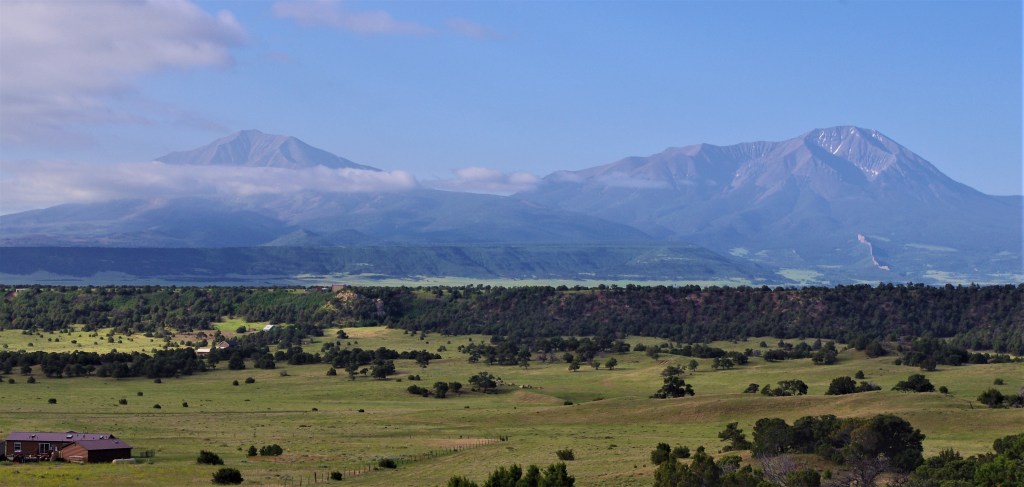
First I noticed the loveliness of the East Spanish Peak, with a sash of wispy clouds around it.

Then I was drawn to my center piece of golden yarrow and those Rocky Mountain Penstemon who survived the deer that ate most of them in early spring.

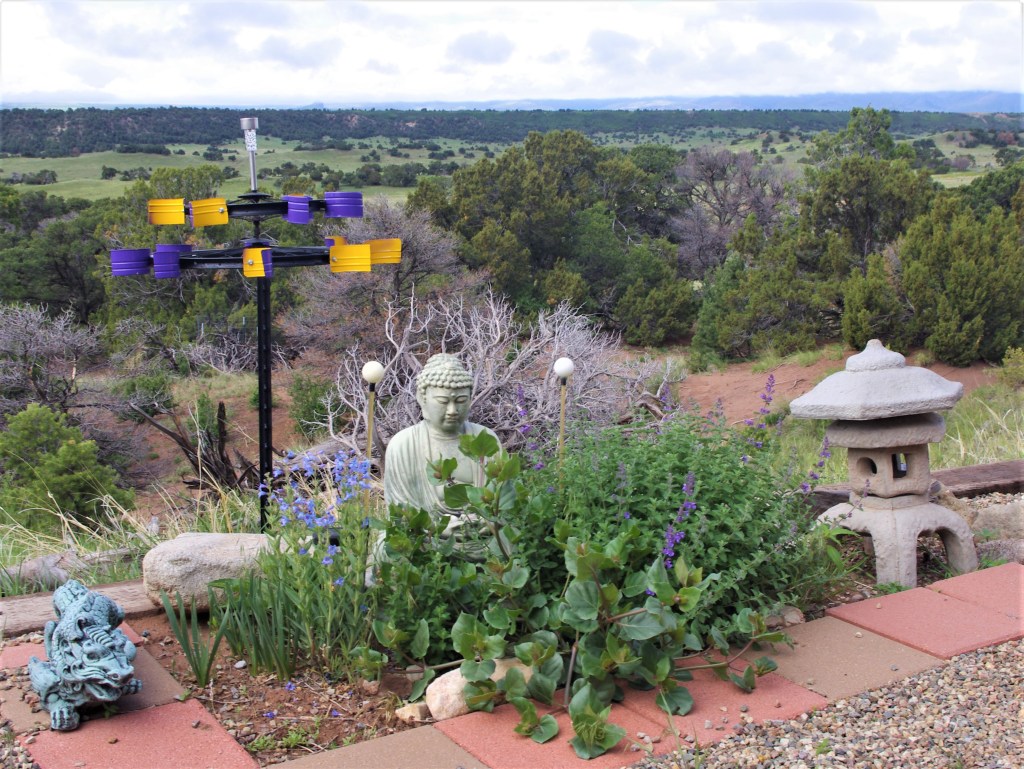
Behind and to the right is my Buddha decorated with native Showy Four O’Clocks and Catmint. I still have a yellow Coreopsis that should be coming in soon to the left of Buddha, if the others leave enough room!

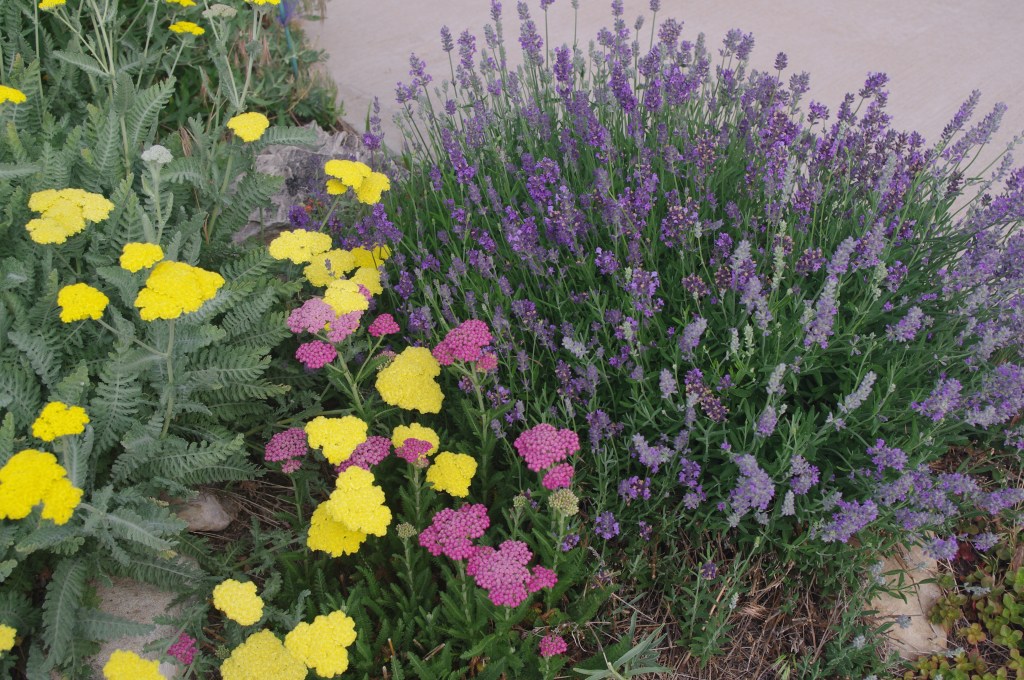
My yarrow and lavender plants are coming along well…

My yellow Columbine is almost finished blooming. Now it’s spreading its seed for next year…

My favorite time of year in my garden!

We had a quiet time celebrating the solstice this June. Our loving pup Rasta is now almost completely blind. Glaucoma just took his other eye this week 😦

My Early June Garden After a Rainy May

Although we haven’t had the kind of moisture that Denver and Colorado Springs have had this past May (with over five inches!), we have had over two inches here with cloudy rainy days for quite a while now. Today is a good example. Here are some pictures of my plants and bloomers in my foothills garden in southern Colorado today.

Starting on the west end, we have some very happy yucca, cacti and evening primrose plants, although the flowers and fruit of the yucca were rudely eaten off by some kind of varmint. Note the cute little honeysuckle bush in the upper left. It always blooms too early in the year!

Next we have the plants that bloom around my Buddha. On the left is a native Penstemon volunteer still blooming, some catmint coming in on the right and a native Four O-Clock fighting its way through in the middle. That will have magenta flowers eventually… Love it!

What I’m most proud of is my yellow Columbine, because I’ve never had one bloom in my garden thus far. Although it is the Colorado state flower, it usually gets bitten off before blooming.

On the east end I have some lovely irises blooming with the West Spanish Peak behind them!

Overall I’m so pleased with what I have so far, because I know that those May and June showers will bring some great blossoms later on! I’ll keep you posted…