Earth Day in the USA: Love Your Mother

earth day

On January 28, 1969, a well drilled by Union Oil Platform A off the coast of Santa Barbara, California, blew out. More than three million gallons of oil spewed, killing over 10,000 seabirds, dolphins, seals, and sea lions. As a reaction to this natural disaster, activists were mobilized to create environmental regulation, environmental education, and Earth Day. Among the proponents of Earth Day were the people in the front lines of fighting this disaster, Selma Rubin, Marc McGinnes, and Bud Bottoms, founder of Get Oil Out.

Earth Day 1970

The first Earth Day celebrations took place in 1970 at two thousand colleges and universities, roughly ten thousand primary and secondary schools, and hundreds of communities across the United States. It also brought 20 million Americans out into the spring sunshine for peaceful demonstrations in favor of environmental reform. It now is observed in 192 countries, and coordinated by the nonprofit Earth Day Network, chaired by the first Earth Day 1970 organizer Denis Hayes, according to whom Earth Day is now “the largest secular holiday in the world, celebrated by more than a billion people every year.” Environmental groups seek to make Earth Day into a day of action to change human behavior and provoke policy changes.

Why Earth Day Today?

Because the earth needs us now more than ever! And since we’re fresh out of other planets to live on, now is as good a time as ever to do everything we can to preserve the miracle of this green and blue planet. Go solar! Use wind power. Change old habits that hurt the earth. You could probably name ten things today that would benefit Mother Earth immediately. Do it instead of just thinking about it!

big earth

What does the future hold? It’s all up to us!
 

The Ancient Ones & My Own Spirit Quest

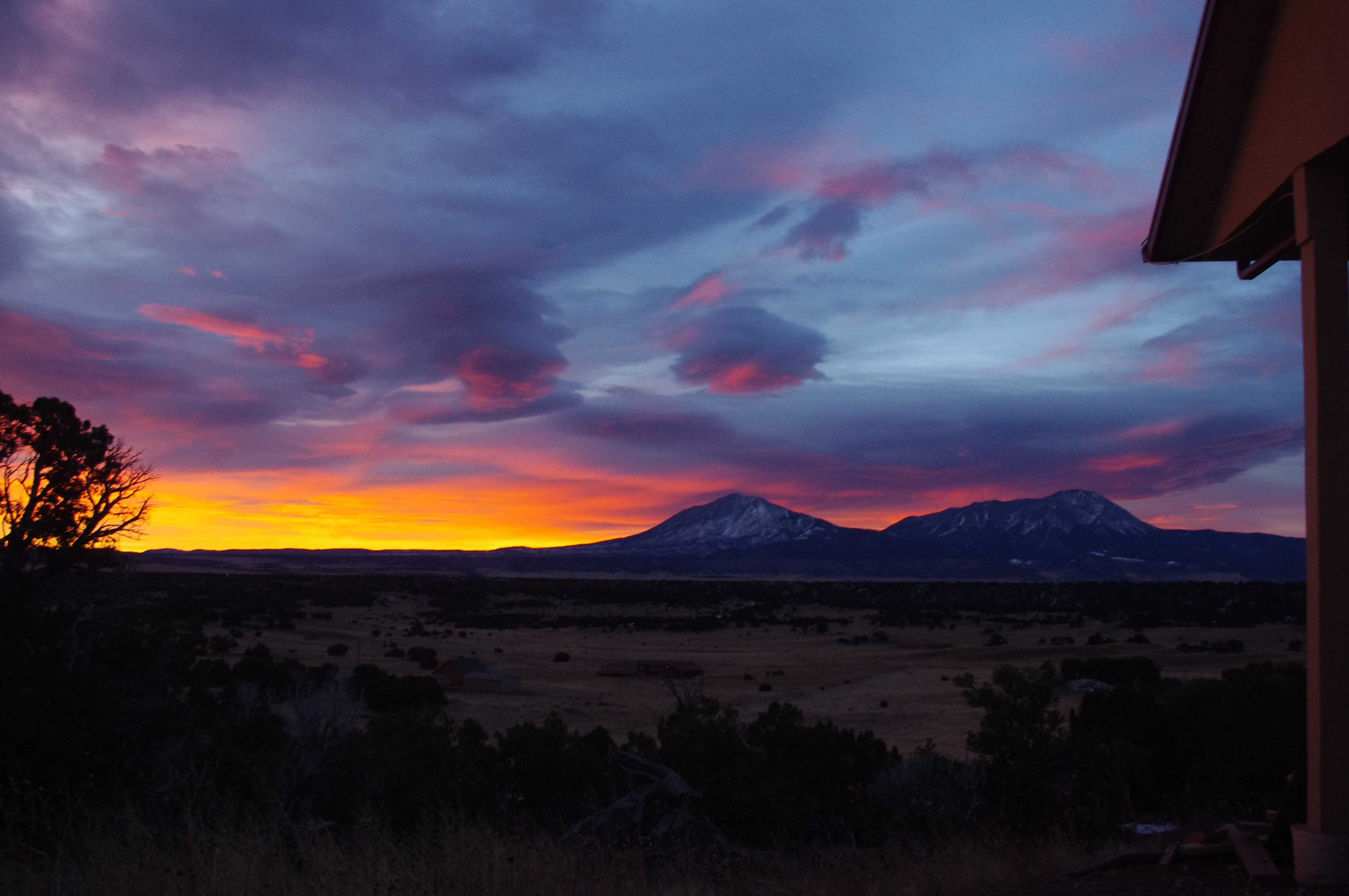
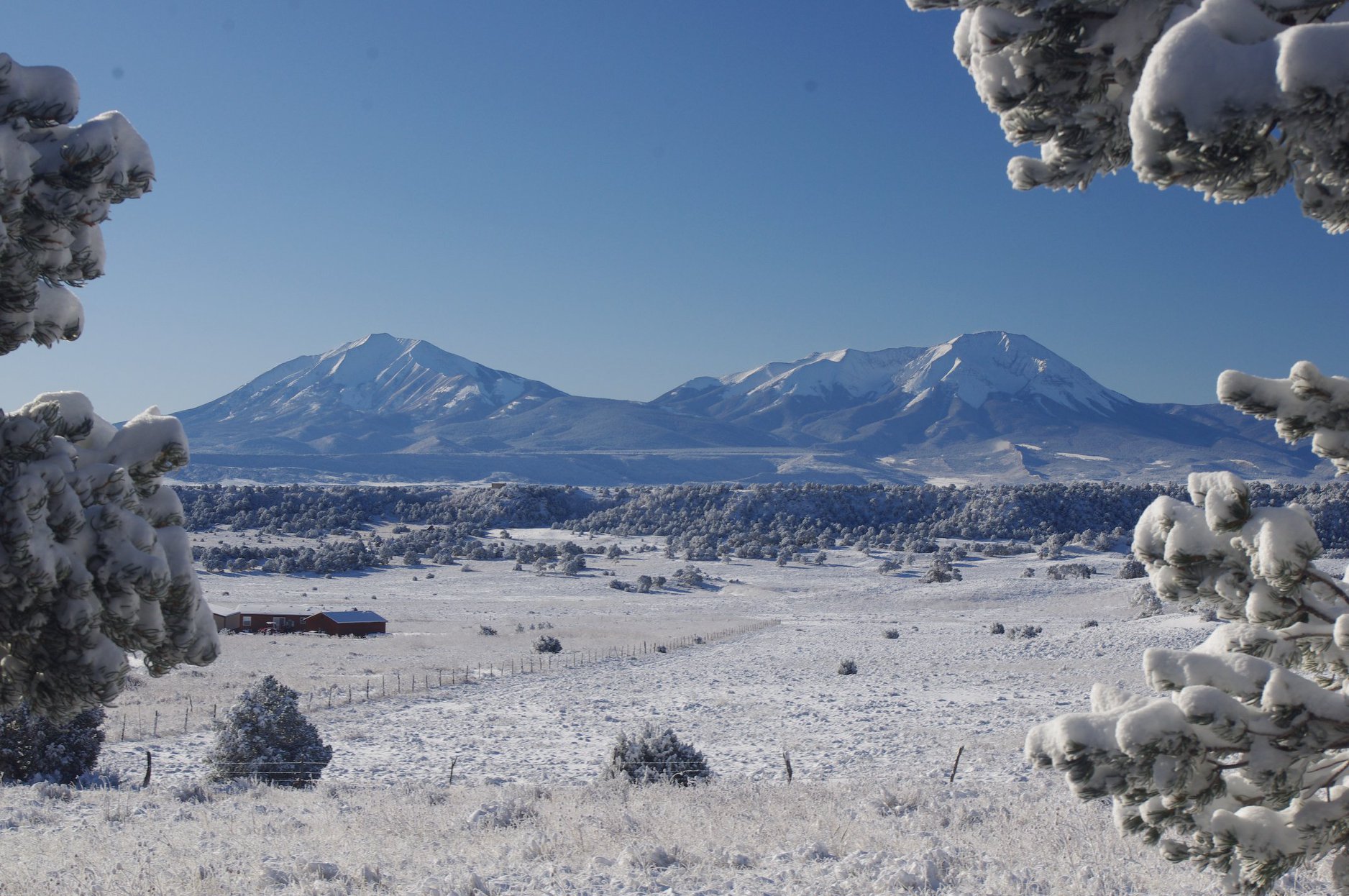
great Mike photo of snow and Spanish Peaks

Since we moved here on our three acres outside of any city or town, my spiritual quest has been to connect more deeply with this land and its history. I know mostly Ute Indians traversed the valley below us regularly to travel out east to Old Bent’s Fort to sell their furs and meet other life-minded nomadic tribes. I sometimes feel their presence.

Last night, when I was having trouble sleeping, I remembered a marvelous spiritual experience I had back when Mike and I were still searching for the perfect place to retire. Here you go:

“Conchas” Living by Laura Lee Carter, April 2008

My husband Mike and I are spending our vacations these days, exploring possible destinations to retire to, just in case we can ever afford it. This year we spent a few days on a road trip through northeastern New Mexico.

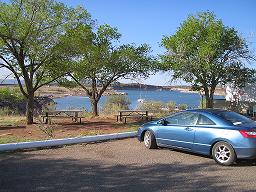
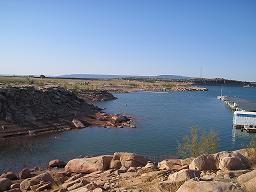
We were drawn to a series of lakes north of Tucumcari: Ute Lake, Conchas Lake and Santa Rosa Lake. These are all state parks with nice facilities and beautiful but ever shrinking reservoirs as the drought continues down there. Two nights were spent camping at Conchas Lake State Park.

The first night felt like a spiritual awakening to me. Our tent was open at the top so I could see all the stars, and I don’t recall ever experiencing such amazing and overwhelming silence in my entire life. My personal account follows, written in the middle of the night:

In the perfect silence of a star-filled New Mexican night, I lie in my sleeping bag, contemplating the wonders of our universe. Yes, there are still places in America where one can marvel at the brilliant stars above, while getting lost in the silence of the surrounding wilderness.

Did a Native American woman lie in this exact same spot thinking similar thoughts many centuries before me? I feel so connected to the earth.

Living close to the earth increases my awareness of everything: the air temperature, the slightest breeze, the fragrances, the colors of the wildflowers and cacti, the occasional yelp of coyotes in the distance, the soaring hawks and vultures overhead. Time slows down.

The animal sounds serve to remind me that there was a time when we were simply prey to the many predators around us. We weren’t high-minded beings that thought that we had taken possession of the earth, but were instead just a potential meal to a hungry wolf or coyote nearby.

The homophonic nature of the Indian word “Conchas” and our word “conscious” were not lost on us. Mike’s Ojibwa family heritage may have been at play. We came to explore this land and also our own “conscious” minds, to learn about the ancient ones that inhabited this land long before us, to understand on a deeper level, the history of our earth.

Those that study the earth say that the present drought is probably another eleven year cycle, and the rains will return. But we must all wonder if man has impacted the earth’s natural cycles so gravely that they may be forever changed. We shall see.

After Conchas Lake, we headed northwest to the Jemez Pueblo area. I rarely use the word “awesome”, but I can’t imagine a better description of the deep red canyons of the Jemez Mountains. They are a unique and wonderful vision to behold!

Medical Cannabis, Seizures & Colorado Research

CBD oil what is itOne thing that continues to increase, since we moved to southern Colorado, is the number of families who move here to be able to properly medicate their children who suffer from severe seizures. Imagine having to make the choice between a good job and the health of your child. That is what our government is asking from these parents. Some move down here because it is so inexpensive to rent or buy a home here, compared to the cities up north.

I have to admire Alexis Bortell, a 12-year-old girl who is spearheading a campaign to legalize medical cannabis across our country. She and her family had no choice but to move from Texas to Colorado to find adequate treatment for her severe epilepsy. Now, her family and a handful of others are suing Attorney General Jeff Sessions and the Drug Enforcement Administration (DEA), demanding “cannabis for the treatment of their illnesses, diseases and medical conditions.” Ever since Alexis began her cannabis treatment, she has been seizure-free for 974 days.

Data from the Epilepsy Foundation:

Does cannabis help seizures?

Evidence from laboratory studies, anecdotal reports, and small clinical studies from a number of years ago suggest that cannabidiol, a non-psychoactive compound of cannabis, could potentially be helpful in controlling seizures. Conducting studies can be difficult as researchers have limited access to marijuana due to federal regulations and even more limited access to cannabidiol; there are also increased financial and time constraints.

Cannabidiol (CBD)

Open-label studies in the U.S. of Epidiolex (a drug derived from cannabidiol or CBD) are being performed. Epidiolex is a purified, 99% oil-based CBD extract from the cannabis plant and is produced by GW Pharmaceuticals to give known and consistent amounts in each dose. The U.S. Food and Drug Administration (FDA) has given some epilepsy centers permission to use this drug as “compassionate use” for a limited number of people at each center.

Recently, gold-standard studies (double-blind, placebo-controlled studies) have finished for difficult epilepsies such as Lennox-Gastaut syndrome (LGS) in children and adults and Dravet syndrome in children. Information from these studies has been presented at major scientific meetings and in press releases by GW Pharmaceuticals.

Results from 214 people who received Epidiolex (99% CBD) in an open-label study (without a placebo control) and who completed 12 weeks or more on the drug were published in Lancet Neurology.

Enter Sangre AgroTech

The most exciting development for Huerfano County, our “orphan” county with around 6,000 souls, has been in the tiny town of La Veta Colorado.  WEED, Inc. announced this past July, that it recently acquired Sangre AT, LLC (dba “Sangre AgroTech”), with plans to open a Sangre Bioscience Center, investing over $1,000,000 into the Colorado Medicinal Cannabis Industry.

Sangre AgroTech then chose La Veta for their new research facility whose mission is:   “To create a genomics-based Cannabis breeding program that will produce new, genetically-enhanced strains of Cannabis which express the desired plant characteristics for the treatment of disease…”

“At Sangre AgroTech, we are focused on the development and application of cannabis-derived compounds for the treatment of human disease. Targeting cannabis-derived molecules which stimulate the endocannabinoid system, we are developing the required scientifically-valid and evidence-based cannabis strains for the production of disease-specific medicines. Yes, medicines.” 

Passive Solar Heating: The Basics

It has become abundantly clear, from your many comments, that most do not understand what passive solar heating means. Passive solar means there are no solar panels or any electricity involved in the creation and retention of heat within a building. The heat is created only by passive means of collecting energy from the sun and then retention of that heat by the physical structure of the home.

How is this done?

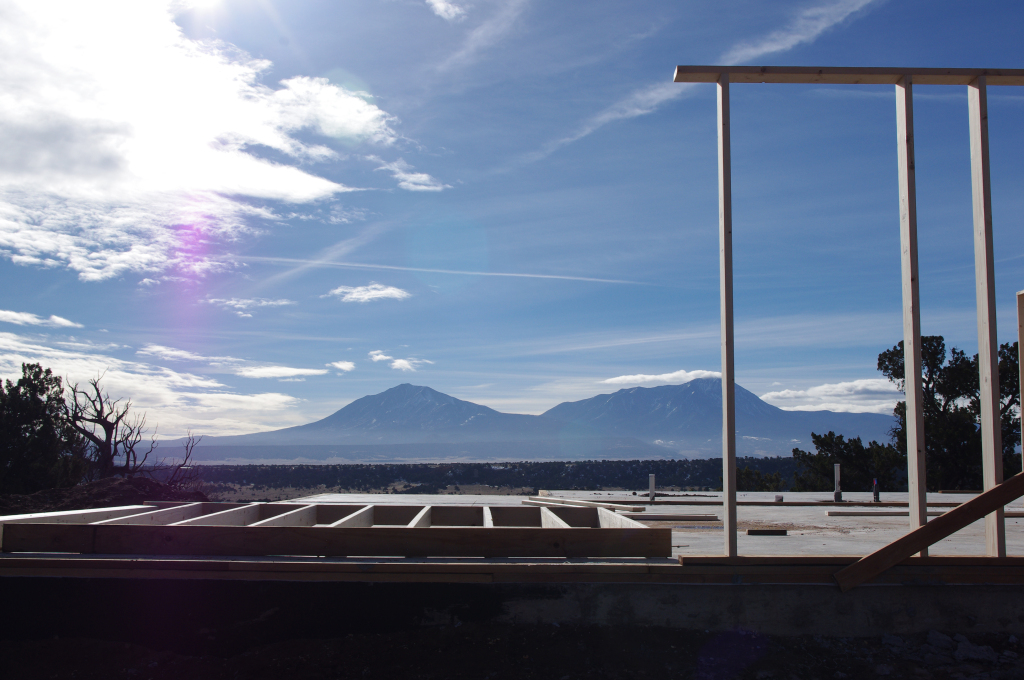
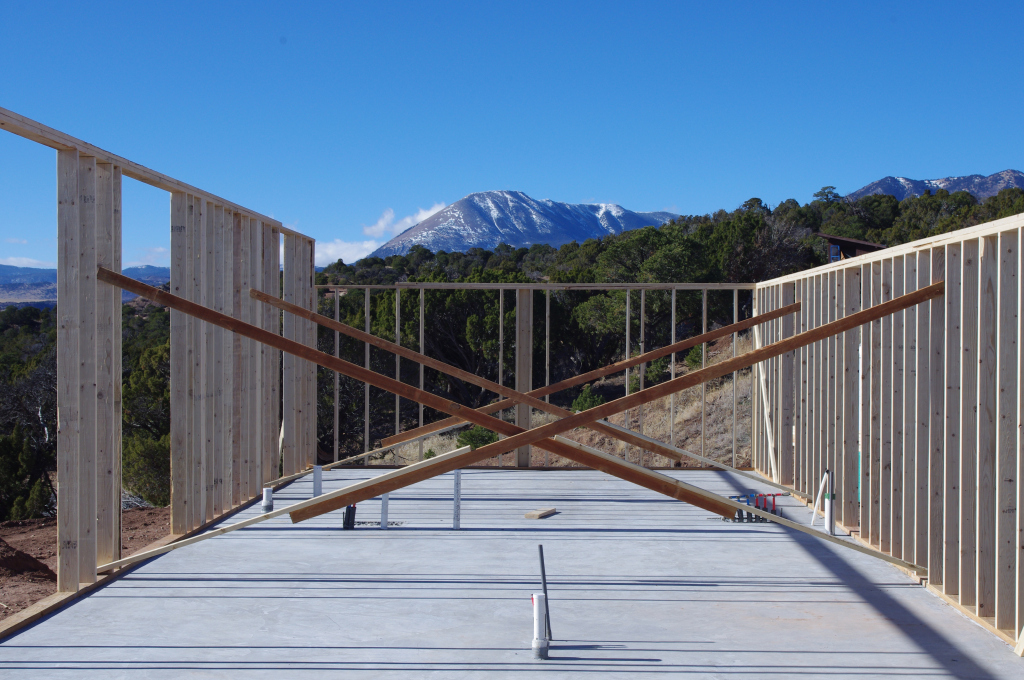
beginning to build on the slab comanche drive

Number 1: The positioning of the structure is essential. Mike made certain that our home was positioned facing directly south, with a whole wall of the correct type of glass doors and windows. In our case that included incredible views of the Spanish Peaks! You need full sun exposure on that side of the house. No trees, buildings, or other obstructions.

Number 2: In a passive solar home, the slab of concrete the home is placed on must be the heat-sink type and FULLY insulated from the earth. If it is not, the heat will come into the home during the day, sink into the foundation, and leak out of the slab, leaving the home cold at night when heat is most needed.

slab and framing of comanche drive

Number 3: Excellent insulation in the walls and ceiling of the home are essential. Holding the heat in once it enters the home is the only way it can remain warm when it is zero degrees outside. The home must be close to air-tight with quality doors and windows. Your floor must also be some sort of dark tile to help absorb more heat during the day.

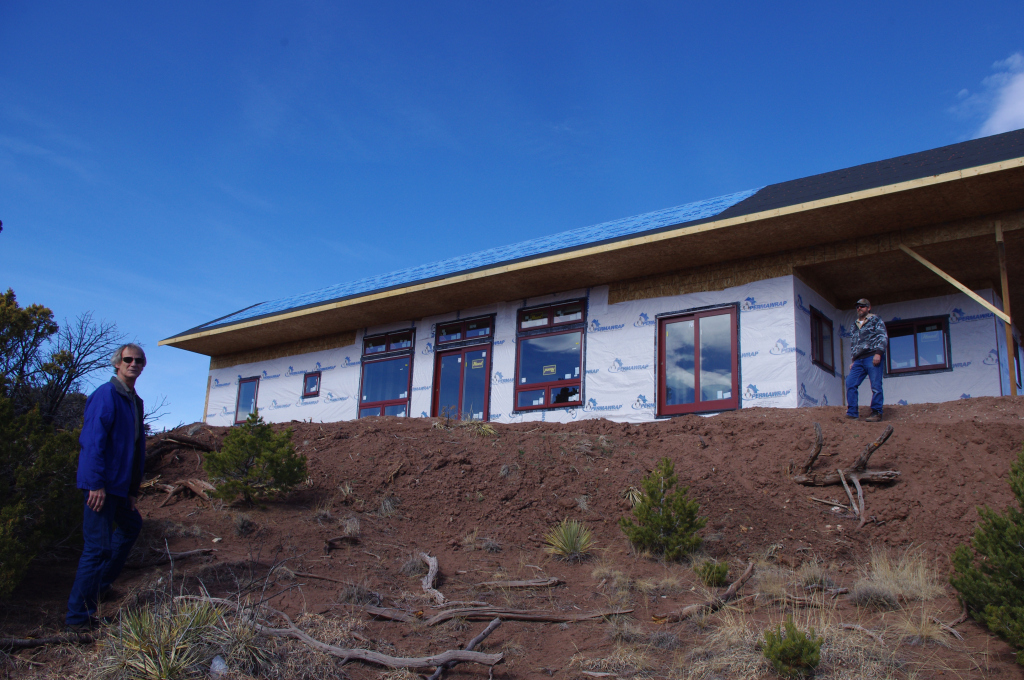
new windows with Mike and Lee in photo

Number 4: Although the sun will be directly overhead in summer, proper overhangs on the south side of the home are essential to keep the sun from coming into the home too early in the fall. Mike also positioned our south-side overhang so that they are the correct size and angle to add solar panels later if needed.

Our home has very few windows on the north side, but a few on the east and west ends to absorb the morning and evening sun. We absorb solar heat most days in the winter, store it in our slab and it returns to keep us warm at night. Sometimes in mid-winter, we need to open a window at the warmest part of the day to cool off a bit!

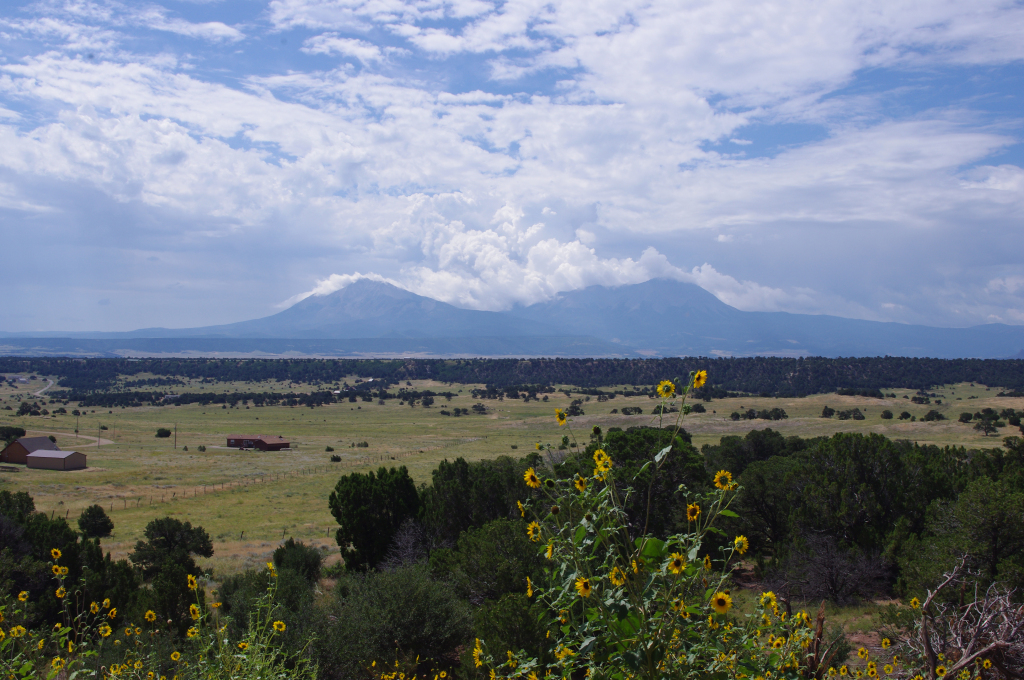
clouds over Spanish Peaks summer

So far in southern Colorado we have never fallen below 60 degrees at night no matter how cold it is outside. We supplement our solar heat with small room electric heaters. No furnace or propane needed. Ceiling fans help to distribute the heat evenly.

Last January, when we lost electricity for three days because of a BAD ice storm, we stayed warm. With this system, we are able to average $100/month for all power to our home. A couple other unexpected benefits? Our home stays cool in the summer with its positioning to the sun and so much ceiling insulation, and it is so quiet inside all the time with no furnace turning on and off in winter!

The funniest part was learning that I didn’t need to turn down the thermostat when I left the house… the heat just keeps on coming in!

De-metrofying your life: The strong connection between where we live and how we treat others

Sunflowers on a county road

After driving in the country, about half that time on county roads, for the past few years, I feel the need to report my findings are where you live and what it does to you.

friendly waveNow you need to understand, on the county road we take out to the highway from our home, most drivers coming the other way wave to us, even if they don’t know us personally. Even in small towns like La Veta, most are quite friendly. It took me a while to get used to this after living in cities my whole life. At first I didn’t know whether to wave back, because some wave and some don’t.

Then I thought, “Oh screw it. I’ll just going to wave at everybody, regardless.”

Yesterday we drove a few hours north to Denver and back for Christmas. I have become so accustomed to natural friendliness, that when an elderly man sitting in a truck stop looked at me for a second or two, I responded with, “Merry Christmas!” He looked shocked…

Then as we progressed north past Pueblo, attitudes on I-25 took an extreme downward trend, even on Christmas day. Down here, almost no one goes more than 5 MPH over the speed limit. Up there near Colorado Springs and Denver, drivers look at you with disgust if you aren’t going at least 10 over the speed limit.

fuck you from carAnd you can just feel the anger and frustration in the drivers around you. The change in attitude is palpable, and not anything I wish to spend any more years of my limited lifespan in contact with. Really, is this the best we can do for quality of life in the wonderful old USA?

Another fun fact. I had so much pain in my right knee before I left suburbia four years ago, I felt certain I would have to get some sort of surgery. Then I moved here and it rarely ever hurts. Why? Because I’m no longer sitting with my foot on the brake at stop lights. We only have two in our whole county and I can certainly avoid those!

cloudy Spanish Peaks with snow and garden

These are just a few aspects of city versus rural life that make me glad every day that I don’t live near cities anymore. I so rarely feel angry and my stress level is near zero most of the time. It took me a year or so to totally quit pre-worrying everything and just relax. That is why driving back up to metroland is so very illuminating and yet anxiety-producing at the same time…

This is a great example of what I now like to call “de-metrofying my life.” Ha, love it! Now I am clearly off-the-grid mentally.