Everyone talks about the weather. Here’s something you can do about it!

The scene outside my bedroom this morning!

On a day like today, with ten inches of fresh, white snow outside our door in the foothills of southern Colorado, it seems crazy to focus on future drought conditions in the American Southwest. And yet, if you are at all climate aware, you know that droughts can happen at anytime and last for decades. Ask the Anasazi who disappeared from Mesa Verde centuries ago, or those who lived through the Dust Bowl in the 1930s in the American Midwest. Do you think those Oklahoma farmers had any idea what was coming?

I admit it. I have been an avid weather watcher forever, and when I lived near Fort Collins Colorado on July 28th 1997, we experienced a flash flood through the middle of town that killed five residents and scared the hell out of the rest of us! I worked then at Morgan Library on the Colorado State University campus (CSU) when eight feet of water swept through our area from an intense rain storm over the western foothills. In just minutes we lost almost all of our journal collection in compact shelving located in the library basement. There were some kayaking across campus that night! We were not even allowed to go into the library building for over a month.

I saw a TV documentary this week that explained what we know now about future water uncertainty in the American southwest. Cities like Los Angeles, Phoenix and Las Vegas are quite vulnerable to future drought. Water supplies are limited and not adequate if even a short drought should arrive in the next few years. The study of where we receive rain and snow is essential to understanding weather patterns and helping us plan for an uncertain future waterwise.
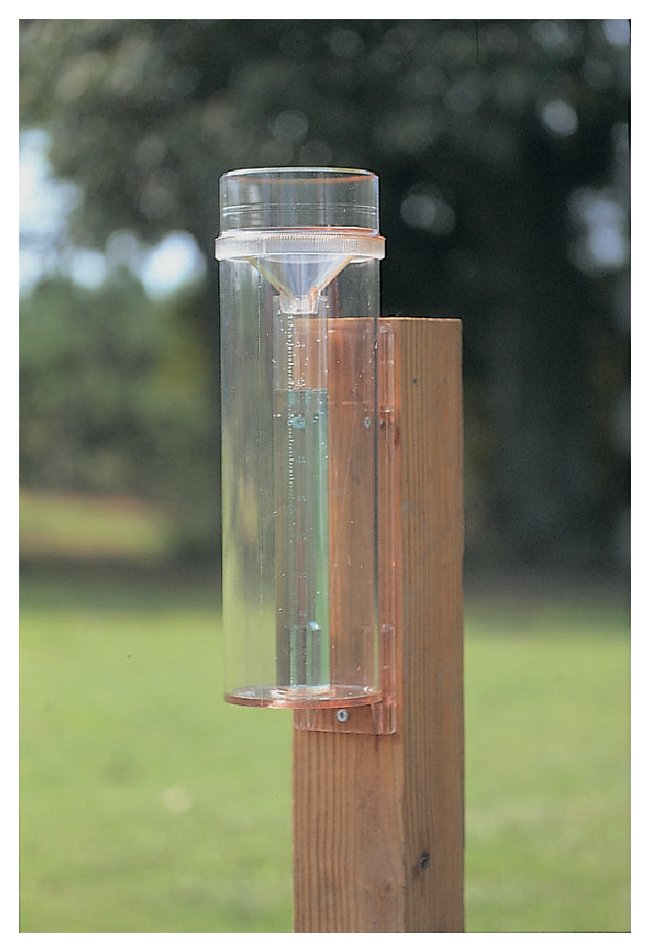
The rain gauges used to collect precipitation for COCORAHS

In response to the flood in Fort Collins in 1997, the Community Collaborative Rain, Hail and Snow Network (CoCoRaHS) was developed by the Colorado Climate Center at CSU a year after the flood, to improve the acquisition of concise precipitation data nationwide and facilitate quick communication of rain/snow reports during disasters. Each time a rain, hail or snow storm crosses an area, volunteers take measurements of precipitation from as many locations as possible. These precipitation reports are then recorded on their Web site www.cocorahs.org. The data are then displayed and organized for end users like Weather Service meteorologists, hydrologists, emergency managers, city utilities (water supply, water conservation, storm water), insurance adjusters, USDA, engineers, mosquito control, ranchers and farmers, outdoor & recreation interests, teachers, students, and neighbors in the community to analyze and apply to daily situations ranging from water resource analysis and severe storm warnings to neighbors comparing how much rain fell in their backyards.

COCORAHS is now a nation network for volunteers! Please consider joining in this effort to record accurate data and be a part of future water planning efforts. All you need to do is purchase a standard rain gauge, learn how to read it and then send in your data everyday. I have been a volunteer for over 20 years now from a number of locations in Colorado.

I love being a part of such an important volunteer effort! Please consider joining in. We need lots more volunteers in Huerfano county & most rural areas of the USA!
Finding Health in an Unhealthy World

In a world filled with glaring contradiction, unfairness and stress, where can we turn for comfort? Too many of us turn to food, pharmaceuticals and other forms of self-medication. The possible distractions are endless, but many are unhealthy or even self-destructive.

New research is showing another alternative:

Spending a minimum of 2 hours in the great outdoors (parks, green space, your own backyard) every week boosts both your physical and mental health.

What roles do nature and exposure to natural surroundings play in improving our health? We know that spending time in nature makes us feel good, but does it measurably affect our well-being? Study after study has shown the answer is yes.

In fact, social determinants of health—including where we’re born, live, work, play and age collectively have a far greater impact on our health outcomes than the healthcare delivery system. Healthcare services account for just 10% of longevity, while social and environmental factors account for twice that at 20%, your genetic makeup accounts for 30%, and lifestyle choices and behaviors a whopping 40%. 

Ever since I left suburbia and moved a lot closer to a natural setting, I have been changing. My mental health has improved with ever increasing mindful meditation and peace. My vigilance and fear have gradually diminished, and yet I struggle to explain how this move has changed me. I only know when I return to cities I notice a difference between me and those who struggle with traffic, congestion and overpopulation every day.

Now we have new research proving what I have learned on my own. Sure, this may all seem like a no-brainer, but if you are looking for a new form of tranquility, accept the obvious and find comfort in nature. It’s free and clean!

How our self-image must change as we age

Somehow I never pictured myself with oxygen equipment. For most of my life I have felt strong, healthy and very self-sufficient. That was how I saw myself as I traveled the globe, collecting sometimes difficult but important life experiences and M.A. degrees.

Life certainly has an amazing way of surprising us!

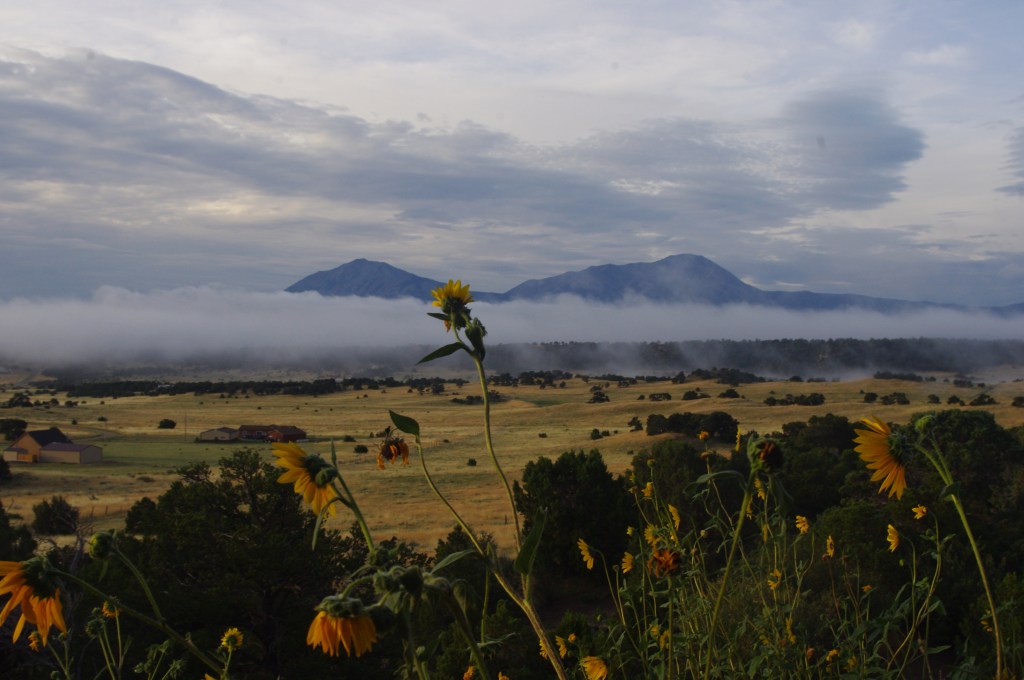
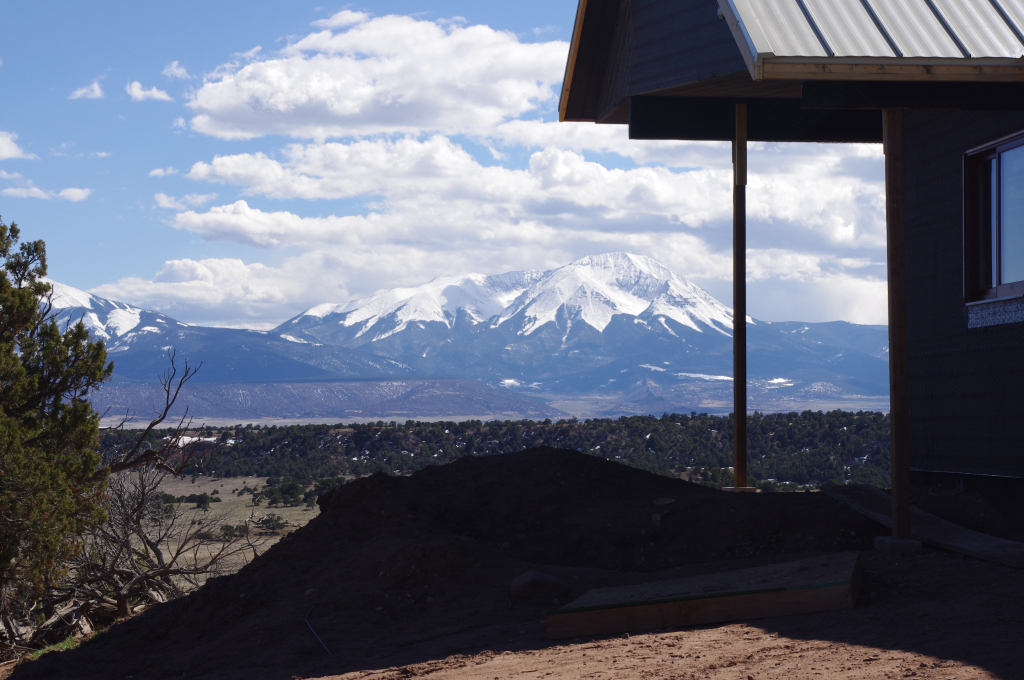
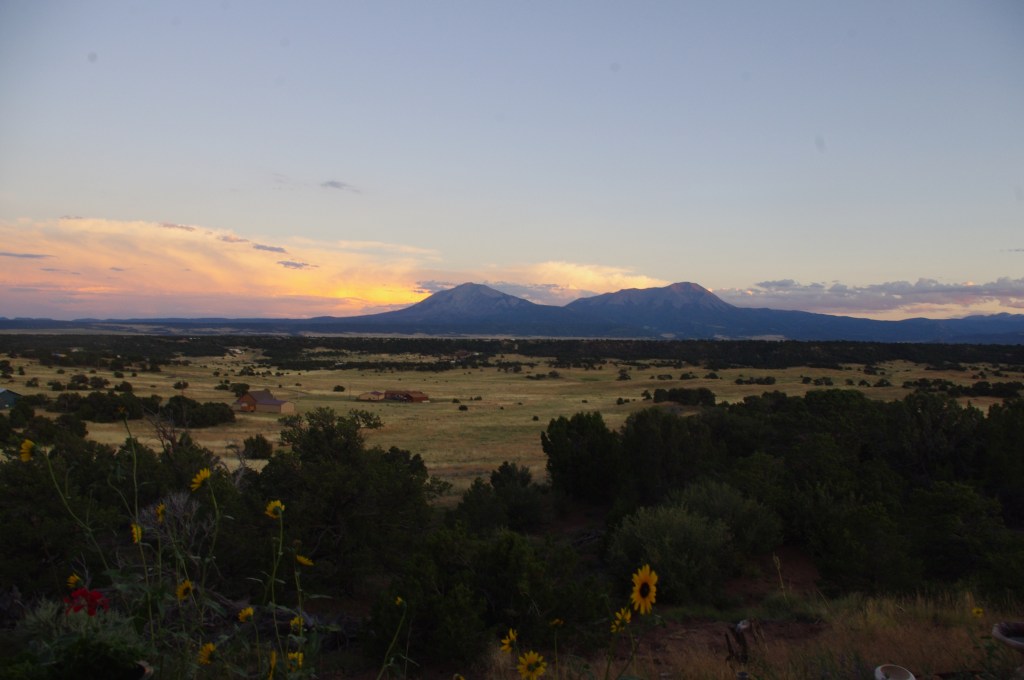
The view from our new solar home!

Ever since I moved down to southern Colorado in 2014 and then up to seven thousand feet in 2015, breathing has been a struggle, leading to many doctor’s appointments, cat scans and even a recent lung biopsy. No, I don’t have cancer, just damaged lungs from decades of bronchitis and bad air. What a great thing to find out as we settled into our forever home near the Sangre de Cristo Mountains.

I fought hard for a couple of years, not accepting that I needed oxygen full-time to live a normal life. I thought I would eventually adjust to our thin air, using all of my inborn stubbornness. If you know me, you know how stubborn I can be! Accepting reality has never been my forte. But finally, twenty tests and a sleep study later, I have resigned to my new reality. I will probably be on oxygen for the rest of my life.

Acceptance releases everything to be what it already is!

Some say just move to a lower elevation. My answer is a resounding NO! Living away from cities, listening to the marvelous natural silence and looking at the mountains constantly has changed me completely in ways impossible to describe to others. I feel so content, safe and grateful here in spite of my breathing struggles.

I know what’s happening in the “world” but I can also completely ignore it here, close to nature and what matters most to me…

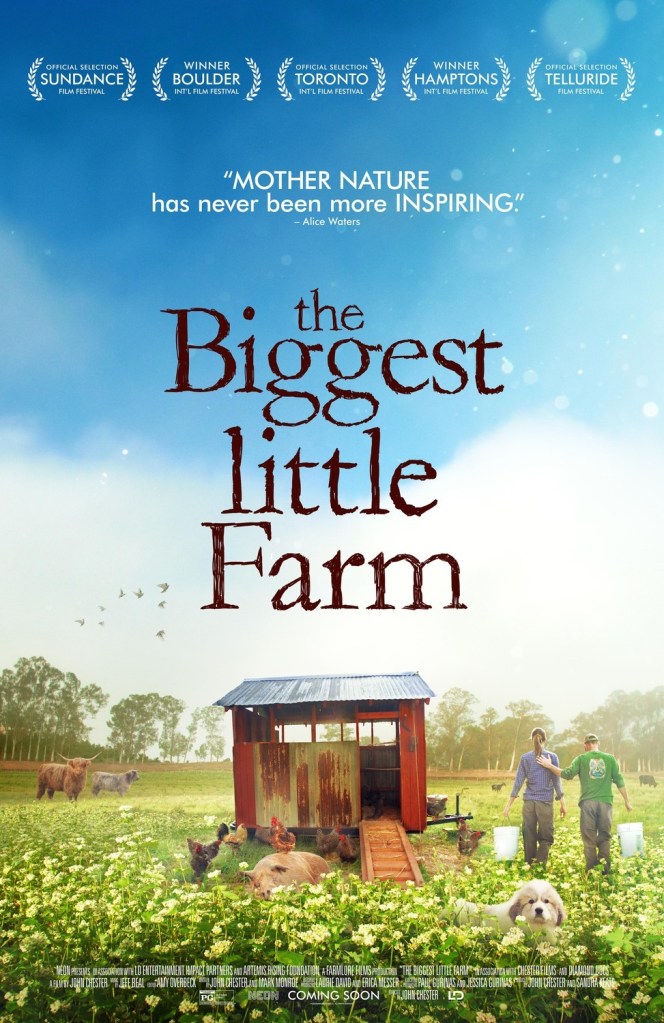
Are YOU ready for the country? A Review of “The Biggest Little Farm”

When I first heard about this DELIGHTFUL new film about moving to the country to start a farm, I knew I just had to see it. Mike and I moved to the country ourselves five years ago and we’re just getting settled in. After seeing this documentary, I would say the line from Variety best describes it:

“Like fresh air for the soul!”

This film is refreshing like nothing I have ever seen! It makes you laugh and cry all at once. The narrative and descriptions of finding a whole new way of life are right on, and the cinematography is scrumptious.

That is not to say that all is goodness and light on the newly established Apricot Lane Farm. They started from 200 acres of desiccated land north of Los Angeles with the goal of learning enough to transform their land into a fully balanced and sustainable organic farm. This film chronicles eight years of that process, with all the traumatic ups and downs. I think I observed as much death as life in this film, that is how new farmers learn how to grow in harmony with nature.

Apricot Lane Farm eight years later!

In the end I learned a lot myself about living in harmony with nature instead of fighting it, and I felt so glad to have shared this experience with Molly and John Chester.

How our definition of “success” changes throughout our lifetime

I am sure most of us have been in search of ways to “succeed in life” ever since we became conscious human beings. What a great goal, and yet we have been constantly trying to hit a moving target. How many times have you re-defined success in this lifetime?

In my 64 years on this planet, this re-definition process has divided into three main stages of life:

In our early years we are simply busy learning all that we can to be able to succeed in traditional ways like finding a dependable mate and a career of some kind. This stage tends to error on the side of self-consciousness and appearances, focusing too much on what others think we should do.

In our middle years we develop our career and perhaps a family, maybe buy a home, and strive to feel well-established and secure.

Midlife Crisis: I for one experienced a major midlife crisis around age 49. The bottom fell out of all my best-made plans, with a divorce and then job/career loss. Other forms of midlife disillusionment may include serious illness, the death of a loved one, or some combination of these various misfortunes. This may compel us to question many of our previous assumptions about how we have defined our own life success. At this point we might ask:

Will I feel like a success in my life if I continue down this path?

Will I be content in the end if I maintain these priorities?

Aging is nature’s way of answering these questions for us, slowly but surely. For me, my emphasis on career fell away quickly when I realized that my highest priority was finding one genuine, honest, loyal love in this lifetime. After that I became a writer and author, best known as the “Midlife Crisis Queen” online. Then my husband and I decided to choose an entirely different lifestyle by moving to rural Colorado, away from most city stress.

After five years of quiet meditation in the peace of the Sangre de Cristo mountain range, I find I have learned much more about how easily I was convinced to live someone else’s life in the past, making many mistakes in my previous priorities. Now I know, the best things in life aren’t things. And, in the end, it all came down to this:

The hardest battle you will ever face in life is to be no one but yourself, in a world that is trying its hardest to make you like everybody else…

Hip Hip Hooray! There’s joy in everyday!

Spending time with my parents last week was a timely reminder to me that I must work to find joy everywhere, in spite of physical limitations. Yes, there are a number of irritations in life that must be dealt with, but be sure and find the joy too, or before long it will all seem like a pain in the butt!

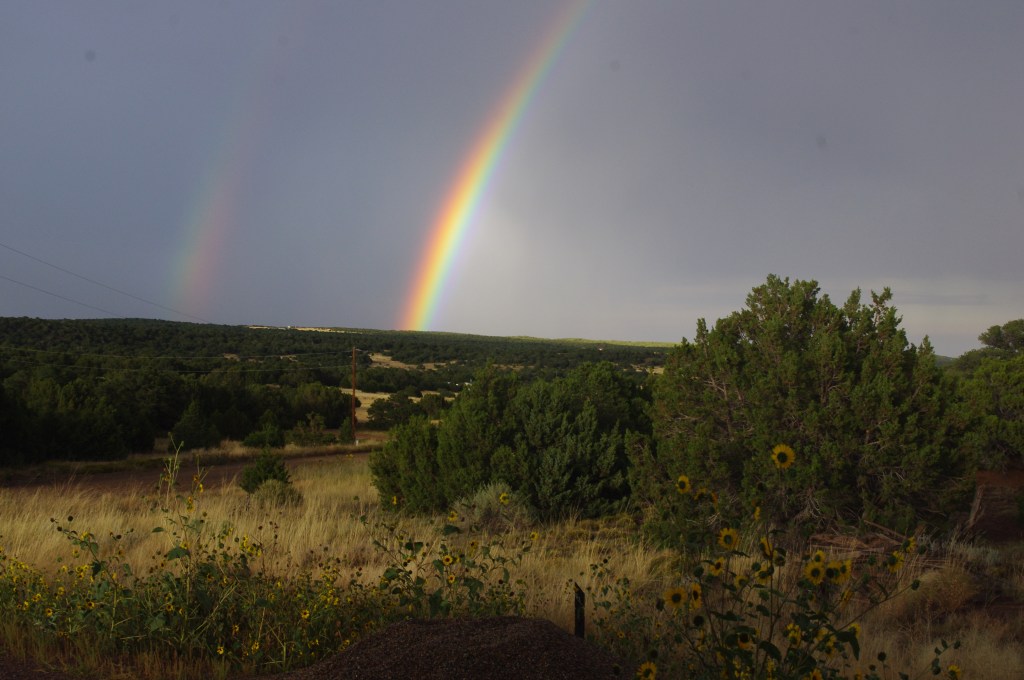
For example, the double rainbow last evening!

One thing I always notice when I visit other people’s home is that their windows and views of nature are so limited compared to ours. We have a passive solar home so our south-facing windows cover the wall. I am constantly looking outside here. That is where the action is…

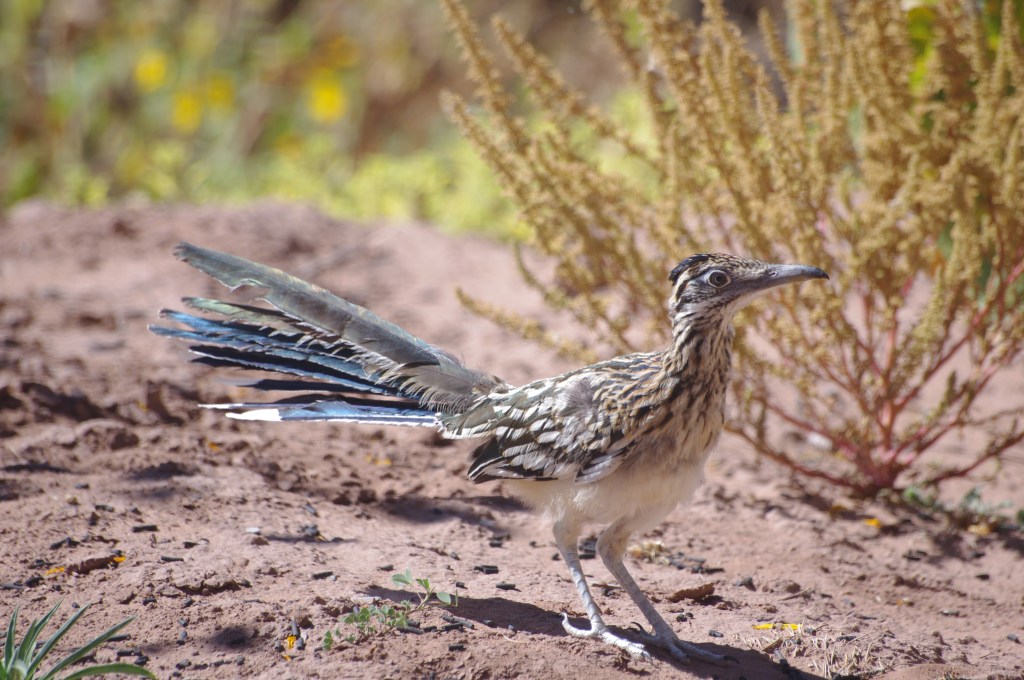
Sometimes a Road Runner will amble up to look in!

Our sky garden is always a good place to observe birds, lizards and occasional deer coming up for water…

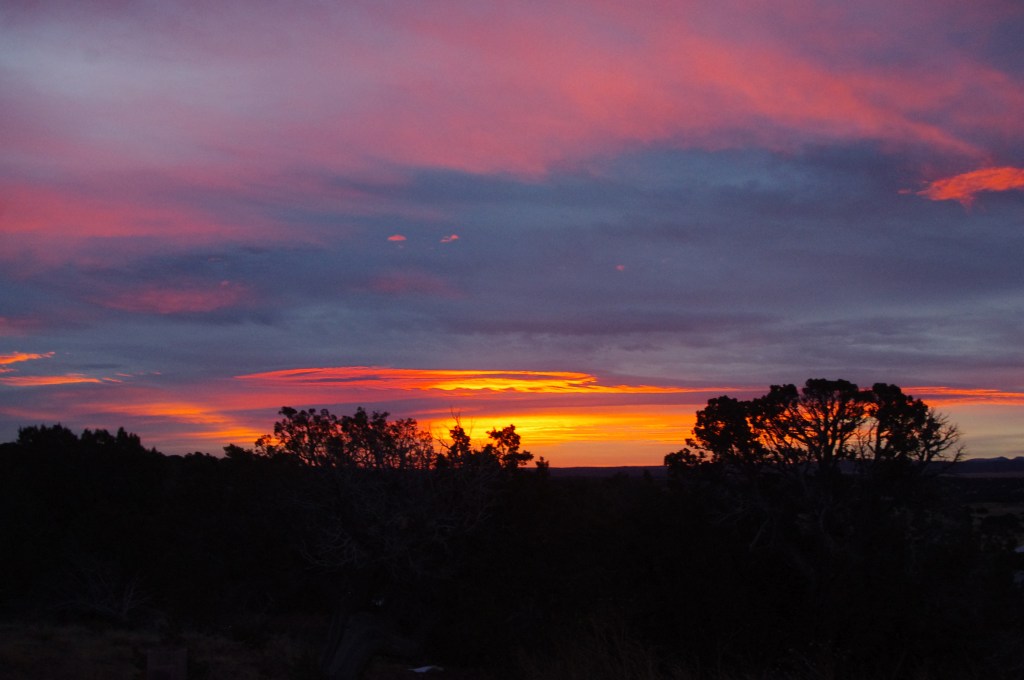
and the clouds around here always present something new and interesting!

Find the joy & gratitude YOU need to keep going! That’s what life is all about!