American Women and Their Long Struggle for Equality: Women’s History Month and the ERA

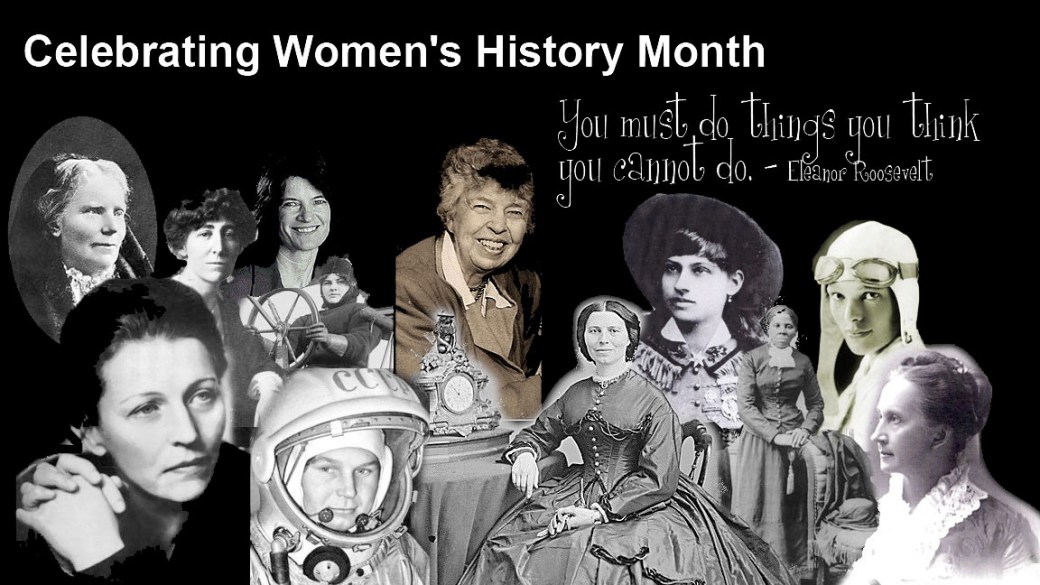
March is “Women’s History Month” in the USA, and like most attempts to honor and respect women, “Women’s History Month” took many years to become official in Congress.

In fact it took from 1981 to 1995!
womens-history-month

Before women had the whole month, the U.S. recognized Women’s History Week; before that, a single International Women’s Day. Dedicating the whole month of March in honor of women’s achievements may seem irrelevant today, but at the time of the conception of Women’s History Week, activists saw the designation as a way to revise a written and social American history that had largely ignored women’s contributions.

Women’s History Month had its origins as a national celebration in 1981 when Congress passed Pub. L. 97-28 which authorized and requested the President to proclaim the week beginning March 7, 1982 as “Women’s History Week.” Throughout the next five years, Congress continued to pass joint resolutions designating a week in March as “Women’s History Week.” In 1987 after being petitioned by the National Women’s History Project, Congress passed Pub. L. 100-9 which designated the month of March 1987 as “Women’s History Month.” Between 1988 and 1994, Congress passed additional resolutions requesting and authorizing the President to proclaim March of each year as Women’s History Month. Since 1995, Presidents Clinton, Bush and Obama have issued a series of annual proclamations designating the month of March as “Women’s History Month.”

What happened to the Equal Rights Amendment to the Constitution?

Yes, it is now OK to honor women, but still not OK to offer them equal rights under our constitution. The Equal Rights Amendment (ERA) is a proposed amendment designed to guarantee equal legal rights for all American citizens regardless of sex. It seeks to end the legal distinctions between men and women when it comes to divorce, property rights, employment, and other matters.
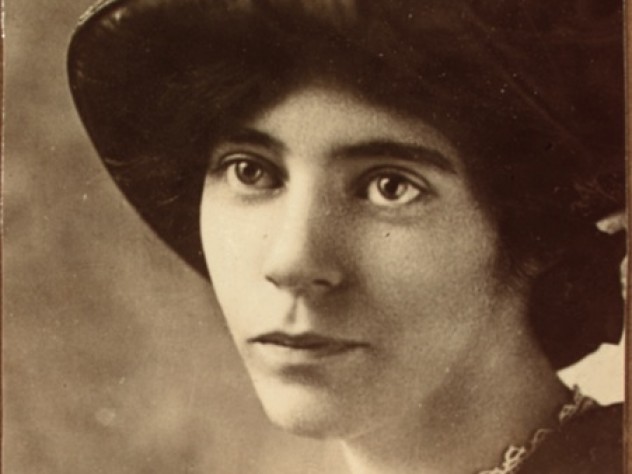
Alice Paul

Alice Paul: Courtesy of the Historic National Woman’s Party, Sewall-Belmont House and Museum, Washington, D.C.

The ERA was originally written by Alice Paul and Crystal Eastman. and was  introduced in Congress for the first time in 1921. It has prompted many conversations about the meaning of legal equality for women and men ever since.

women working in a factory early 1900s

“In the early 20th century, women who worked outside of the home were primarily low-income factory workers without recourse to oppose the inhumane treatment and serious discrimination they faced. In growing the suffrage movement, activists aligned themselves with the growing female labor force to promote the expansion of labor rights women’s suffrage would help to make a reality. By reaching out to some of the women most hurt by a lack of voice, the suffragist movement gained incredible power in its fights for the vote.

American women gained more than just the right to vote in 1920. After decades of fervent activism and organizing, suffrage finally gave women access to political involvement and the legislative process .The era following the 19th Amendment’s passage saw a dramatic increase in women’s participation in both the workforce. Though societal expectations certainly continued to limit women in many ways, this increase in workplace participation and access to political influence has helped them make amazing strides towards equality at work.”  — SOURCE: https://www.equalrights.org/womens-equality-day-where-would-we-be-without-the-vote/

In the early history of the Equal Rights Amendment, middle-class women were largely supportive, while those speaking for the working class were often opposed, pointing out that employed women needed special protections regarding working conditions and employment hours. With the rise of the women’s movement in the United States during the 1960s, the ERA garnered increasing support, and, after being reintroduced by U.S. Representative Martha Griffiths (D-Michigan), in 1971, it was approved by the U.S. House of Representatives on October 12 of that year and on March 22, 1972, it was approved by the U.S. Senate, thus submitting the ERA to the state legislatures for ratification, as provided for in Article V of the U.S. Constitution.

Congress had originally set a ratification deadline of March 22, 1979, for the state legislatures to consider the ERA. Through 1977, the amendment received 35 of the necessary 38 state ratifications. With wide, bipartisan support including that of both major political parties, both houses of Congress, and Presidents Nixon, Ford and Carter, the ERA seemed destined for ratification until Phyllis Schafly mobilized her followers against it . These women argued that the ERA would disadvantage housewives, cause women to be drafted into the military and to lose protections such as alimony, and eliminate the tendency for mothers to obtain custody over their children in divorce cases. Labor feminists also opposed the ERA on the basis that it would eliminate protections for women in labor law. The 15 states that did not ratify the Equal Rights Amendment before the 1982 deadline included:     Alabama, Arizona, Arkansas, Florida, Georgia, Illinois, Louisiana,Mississippi, Missouri, Nevada, North Carolina, Oklahoma, South Carolina, Utah, and Virginia.
IMGP7783

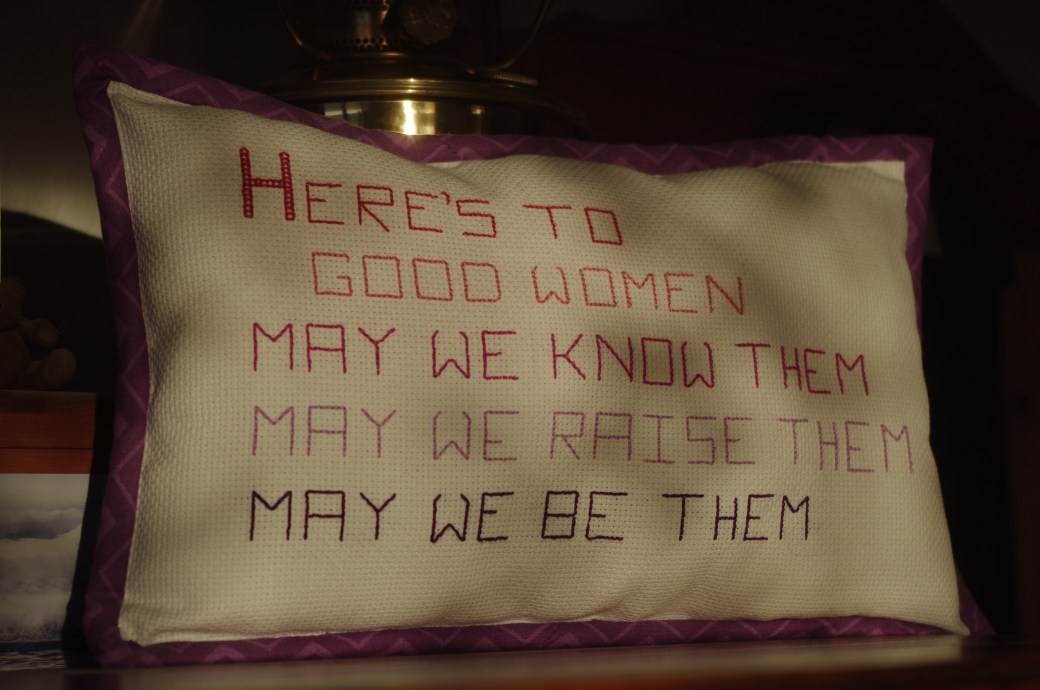
Pillow embroidered by my Mom as gifts to her daughters and granddaughters!

I have to say, I find it amazing that in a country like ours, our equal rights are not a given. This is just another example of how threatening women are to men’s power. After all, where would they be without us? I LOVED the results of the 2018 election.

I guess we need to take over Congress to make it work better!
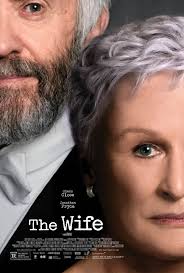
 

A Brief Review of “The Wife”: How often did this happen in history?

The wife movieWhen I began watching the new film “The Wife” starring Glenn Close and Jonathan Pryce yesterday, I had no idea what the whole story was, and I can highly recommend that approach if possible. It begins as an elder couple receives the big phone call from the Nobel Prize Committee in Sweden. Let the celebration begin! Imagine the joy you would feel if you or your husband won a Nobel Prize in literature. But alas, so much is hidden behind this joyful moment in marriage. As always, marriages are more complicated than they at first seem to be.             Go ahead. Ride the wave of joy, anger and sorrow as this couple of forty years comes to terms with the many lies within their relationship.

This film is a tour de force for the actor Glenn Close, whose image is shown from almost every angle, exposing decades of anger and frustration as the years of bias and sexism take their toll on her psyche and their marriage.

YES! Give her the Oscar for Best Actress! She so deserves it!

‘Courage in women is often mistaken for insanity…’ and so is anger!

votes for womenAs a government information librarian, I never forgot an old record I found from an American “insane asylum” from the 1800s. In there it mentioned that one woman was placed in the asylum for “refusing to obey her husband.” This parallels the apparently not unusual behavior of President Woodrow Wilson and his cronies back in 1917, when they tried to persuade a psychiatrist to declare the suffragette Alice Paul insane so they could institutionalize her permanently. The doctor refused saying Alice Paul was strong and brave, but that did not make her crazy. The doctor admonished the men:
‘Courage in women is often mistaken for insanity.’

But when we stop and consider the centuries of historical and genetic evidence, we see that males of our species increased their chance of survival with shows of aggression, while the females survived best my passive, receptive behavior. Females needed male protection to survive, especially after babies arrived. Aggressive females probably did not survive or have the chance to procreate like the more passive ones.

Jumping from historical records to personal experience, I was taught from a very early age not to express my anger. My father was the holder of the anger in my family. The rest of us were afraid of his rage. This fear in myself was so ingrained and unconscious that it took years of counseling for me to finally uncover this new source of power within myself. The first time I tried to get in touch with my anger and express it in some useful way, I instead found myself breathless and confused.

Did I have the courage or the right to express so much pent up rage from decades of standing by while others, usually men, raged on?

Granted, we boomers have lived in a time of transition from traditional female definitions of success to modern independence. Traditionally marriage was a time to celebrate female success. This meant that the woman could now fulfill the proper role of mother and helpmate to her husband. He was the head of the family. and she was the helper who worked to promote her husband’s success.

But since I had no desire to marry at an early age and fulfill this traditional role, where did I fit in? I spent a lifetime figuring this out for myself. In the meantime, I slowly learned through excellent counseling to appreciate and express a full range of emotions, even anger. But I find most women of my age still fear expressing any emotion close to anger.

When we feel anger, it comes from a place deep inside of us whose purpose is to protect us from outside aggression or danger. It tells us when our bodies and minds are threatened and then tells us to react to protect ourselves. Historically women had no way to protect themselves from male aggression or anger, but today we do. I can highly recommend using it.

I LOVE this response to this post! Read the whole comment below:

“The day we stop needing the approval of those around us is the day we take our power back and are free to express the full range of emotions we have. Thanks for this post – it’s very supportive.”    – Gilly 

“Woman Walks Ahead” A Film Worth Seeing

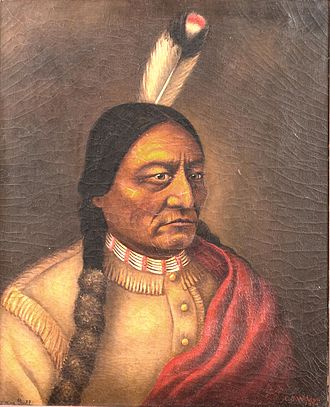
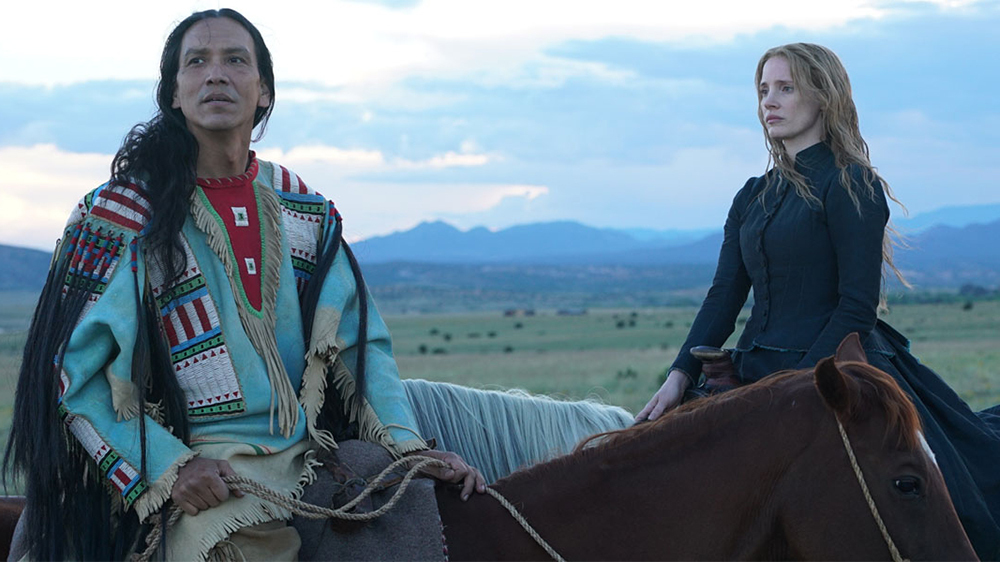
Based on true events, this 2018 film astounded me with a story I had never heard before. WOMAN WALKS AHEAD is the story of Catherine Weldon (Jessica Chastain), a New York artist in the 1880s, who traveled alone out to North Dakota with the purpose of painting an authentic portrait of Chief Sitting Bull (Michael Greyeyes).

woman-walks-ahead

When she arrives at Standing Rock, she is confronted with open hostility from the US Army. They have stationed troops around the Lakota reservation to undermine Native American claims to their own land. This film is mainly about the close relationship that develops between Catherine and Sitting Bull, but their lives are both threatened by US government forces, in a lead up to the massacre of many Lakota members at Wounded Knee.

In reality, this woman’s name was Caroline Weldon, a name she gave herself after a few scandalous affairs in her past. She was born in Switzerland and came to the US in 1852. After divorce she became active in the summer of 1889 and traveled to Dakota Territory to fulfill her dream of living among the Sioux. She joined NIDA, the National Indian Defense Association, embarking on a quest to aid the Sioux in their struggle to fight the US government’s attempt to expropriate vast portions of the Great Sioux Reservation for the purpose of opening it up for white settlement,  with the intent of rendering the creation of the two new states of North and South Dakota. She befriended Sitting Bull, leader of the traditionalist faction among the Sioux, acting as his secretary, interpreter and advocate.

Sitting_Bull_by_Caroline_Weldon_oil_on_canvas_1890I found this film to be beautifully and sensitively made, well-written with lines from Catherine like her need to fight “a battle of insignificance” as a woman in 1880s America. She did finally create four portraits of Sitting Bull. Two are known to have survived. One is now held by the North Dakota Historical Society in Bismarck, ND and the other at the Historic Arkansas Museum in Little Rock, AR. I enjoyed a few lines from Sitting Bull like when he said, “To place and hold in your heart this moment.” and as he referred to death as “to cross over into the spirit world…”

Where did the term “Black Friday” come from?

Black Friday 2012

The first recorded use of the term “Black Friday” was applied not to holiday shopping but to financial crisis: specifically, the crash of the U.S. gold market on September 24, 1869. Two notoriously ruthless Wall Street financiers, Jay Gould and Jim Fisk, worked together to buy up as much as they could of the nation’s gold, hoping to drive the price sky-high and sell it for astonishing profits. On that Friday in September, the conspiracy finally unraveled, sending the stock market into free-fall and bankrupting everyone from Wall Street barons to farmers.

The most commonly repeated story behind the post-Thanksgiving shopping-related Black Friday tradition links it to retailers. As the story goes, after an entire year of operating at a loss (“in the red”) stores would supposedly earn a profit (“went into the black”) on the day after Thanksgiving, because holiday shoppers blew so much money on discounted merchandise. Though it’s true that retail companies used to record losses in red and profits in black when doing their accounting, this version of Black Friday’s origin is an inaccurate story behind the tradition.

The true story behind Black Friday is not as sunny as retailers might have you believe. Back in the 1950s, police in the city of Philadelphia used the term to describe the chaos that ensued on the day after Thanksgiving, when hordes of suburban shoppers and tourists flooded into the city in advance of the big Army-Navy football game held on that Saturday every year. Not only would Philly cops not be able to take the day off, but they would have to work extra-long shifts dealing with the additional crowds and traffic. Shoplifters would also take advantage of the bedlam in stores to make off with merchandise, adding to the law enforcement headache.

By 1961, “Black Friday” had caught on in Philadelphia, to the extent that the city’s merchants and boosters tried unsuccessfully to change it to “Big Friday” in order to remove the negative connotations. The term didn’t spread to the rest of the country until much later, however, and as recently as 1985 it wasn’t in common use nationwide. Sometime in the late 1980s, retailers found a way to reinvent Black Friday and turn it into something that reflected positively, rather than negatively, on them and their customers. The result was the “red to black” concept of the holiday mentioned earlier, and the notion that the day after Thanksgiving marked the occasion when America’s stores finally turned a profit. In fact, stores traditionally see bigger sales on the Saturday before Christmas.

The Black Friday story stuck, and pretty soon the term’s darker roots in Philadelphia were largely forgotten. Since then, the one-day sales bonanza has morphed into a four-day event, and spawned other “retail holidays” such as Small Business Saturday/Sunday and Cyber Monday. Stores started opening earlier and earlier on that Friday, and now the most dedicated shoppers can head out right after their Thanksgiving meal. According to a pre-holiday survey this year by the National Retail Federation, an estimated 135.8 million Americans definitely plan to shop over the Thanksgiving weekend (58.7 percent of those surveyed), though even more (183.8 million, or 79.6 percent) said they would or might take advantage of the online deals offered on Cyber Monday.

A Wonderful Week for American Women!

us flagOur population is more than 50% women, and yet only 20% of our Congress is made up of female members. After Tuesday’s elections, a record number of women will serve in Congress come January 2019.                            UPDATE: With votes still trickling in, 99 women have been elected to the U.S. House, 12 women to the U.S. Senate and 9 women will serve as governor. The number of women in power has grown steadily, but this year’s election, with more than 270 women running for Congress and governor, shattered records. Source: 11/6/18 LA Times

A little history on this topic from my old Midlife Crisis Queen blog:

Courage in women is often mistaken for insanity”

votes for womenThis is the story of our Grandmothers, and Great-grandmothers, as they lived only 90 years ago. It was not until 1920 that women were granted the right to go to the polls and vote…Thus unfolded the ‘Night of Terror’ on Nov. 15, 1917, when the warden at the Occoquan Workhouse in Virginia ordered his guards to teach a lesson to the suffragists imprisoned there because they dared to picket Woodrow Wilson’s White House for the right to vote. The women were innocent and defenseless. And by the end of the night, they were barely alive. Forty prison guards wielding clubs and their warden’s blessing went on a rampage against the 33 women wrongly convicted of ‘obstructing sidewalk traffic.’

They beat Lucy Burn, chained her hands to the cell bars above her head and left her hanging for the night, bleeding and gasping for air. They hurled Dora Lewis into a dark cell, smashed her head against an iron bed and knocked her out cold. Her cell mate, Alice Cosu, thought Lewis was dead and suffered a heart attack. Additional affidavits describe the guards grabbing, dragging, beating, choking, slamming, pinching, twisting and kicking the women.

For weeks, the women’s only water came from an open pail. Their food–all of it colorless slop–was infested with worms. When one of the leaders, Alice Paul, embarked on a hunger strike, they tied her to a chair, forced a tube down her throat and poured liquid into her until she vomited. She was tortured like this for weeks until word was smuggled out to the press.

So, refresh my memory. Some women didn’t vote this year because why? We have carpool duties? We have to get to work? Our vote doesn’t matter? It’s raining?

Last week, I went to a sparsely attended screening of HBO’s new movie ‘Iron Jawed Angels.’ It is a graphic depiction of the battle these women waged so that we could pull the curtain at the polling booth and have our say. I am ashamed to say I needed the reminder.

All these years later, voter registration is still my passion. But the actual act of voting had become less personal for me, more rote. Frankly, voting often felt more like an obligation than a privilege. Sometimes it was inconvenient.

My friend Wendy, who is my age and studied women’s history, saw the HBO movie, too. When she stopped by my desk to talk about it, she looked angry. She was–with herself.

‘One thought kept coming back to me as I watched that movie,’ she said. ‘What would those women think of the way I use–or don’t use–my right to vote? All of us take it for granted now, not just younger women, but those of us who did seek to learn.’ The right to vote, she said, had become valuable to her ‘all over again.’

HBO released the movie on video and DVD. I wish all history, social studies and government teachers would include the movie in their curriculum. I want it shown on Bunco night, too, and anywhere else women gather. I realize this isn’t our usual idea of socializing, but we are not voting in the numbers that we should be, and I think a little shock therapy is in order.

It is jarring to watch Woodrow Wilson and his cronies try to persuade a psychiatrist to declare Alice Paul insane so that she could be permanently institutionalized. And it is inspiring to watch the doctor refuse. Alice Paul was strong, he said, and brave. That didn’t make her crazy.

The doctor admonished the men: ‘Courage in women is often mistaken for insanity.’