As another Christmas comes and goes…

imgp5639

Rasta, the MOST attractive being at our family Christmas!

Why oh why does Christmas go from exciting and FUN as a child, to challenging? Probably  because I’m not as good at being around “family” as I used to be. But seriously, after spending almost no time together in the past 50 years, why should we get along well? I don’t know about you (obviously) but this holiday celebration completely wore me out.

The only truly notable adventure we had was driving south on I-25 yesterday evening south of Pueblo. The wind was blowing pretty crazy off the Rockies to the west. We both saw the wires on the power poles blowing sideways. At that point I said, I wonder if those poles ever break in half.

semi-truck-on-side

In only a few more miles we were stopped by an accident ahead for a few minutes. As we came up to the accident we saw one semi truck lying on its side beside the highway. It turned out that a pick-up towing an old RV had blown over onto the highway.

broken-power-poleAs we approached that accident, we saw old wooden power poles on our right, broken off halfway and blowing in the wind. It was AMAZINGLY windy! A bunch of cars ahead of us got off at the Walsenburg exit after seeing that!

We were just so pleased to get home in time to watch the Broncos lose, and celebrate the passing of another family “holiday”in our own way, with champagne of course.

City life, rural life, stress & heart health

I find the gradual transition I have been through in the past few years, from city life, to small town and rural living, fascinating. I did not know until I researched it, that the entire world is moving from rural to urban quickly.

stress and city living

According to a 2011 report from LSE Cities and the Deutsche Bank called Urban Stress and Mental Health:

“Urban living is on the rise whereas rural living is becoming the exception – in all parts of the world and at an ever-increasing rate. The rapid pace of urbanization is an important marker of the societal transition at large that has occurred over the past 30 years. Our world is shifting towards an urban, small-family or single household, and at the same time, an aging society. In the next 30 years we will be faced with the growing challenges specific to our cities’ aged single urban populations. 

However, urban living is not only about getting older, it is also about being in a constant state of stress. Stress is the unspecific physiological and psychological reaction to perceived threats to our physical, psychological or social integrity. Urban living can be threatening if you haven’t enough space of your own, if you experience insufficient security or live under unstable economic conditions. Stress increases with the anticipation of adverse situations and the fear of not having the adequate resources to respond to them. From an evolutionary point of view, stress is the mechanism that prepares us for any ‘fight-or-flight’ reaction, and also causes us to evolve in order to better adapt to our environment. Although not harmful per se, stress may jeopardize our health when stress exposure is chronic or when complete recovery is not possible.”

In our first year of living in a town of under 3,000, my stress level fell precipitously. It felt amazing at times. With only two stoplights in the whole county(!) and almost no traffic, I found nobody in Walsenburg CO to be in a rush, unless of course they were tourists. There were never parking problems or lines anywhere.  But since my natural stress level was geared to noise, traffic, aggressive behavior and threats from strangers everywhere, it took me a while to adjust. I had to tell myself to mellow out constantly.

mike-at-home

In our second year here we moved out to the country on a few acres and began living in a quiet, clean, peaceful, naturally beautiful setting, but my body was still geared to a higher level of alertness and anxiety than my surroundings warranted. It took time to relax by practicing meditation, yoga, and simply sitting quietly more.

I needed to learn again that my emotions were tied to my heart. When my world felt like a threatening place, even unconsciously, I was daily putting my heart at risk. Health practitioners worldwide now see stress as a major risk to cardiovascular health. Cortisol and epinephrine are two hormones that, along with others, raise blood pressure and blood sugars in the body, threatening the heart. Another reason stressed-out people are vulnerable to heart disease is that they rarely eat well, sleep well, and exercise.

In short, I cannot believe how much my life has changed since leaving city life behind. I did not know the level of stress I was living with everyday until it was gone. And even then it took me quite a while to truly relax and enjoy the lack of stress in my life.

Learn more about this major life transition by reading my memoir


How sacred are our mountains…

After watching an episode of Sacred Journeys on PBS, one which included a bit about the sacredness of mountains in Asian thought, I got to thinking about how important it feels to have a full-time view of the forever changing Spanish Peaks right outside our front windows.

IMGP3555

The Spanish Peaks, pictured above, have a centuries-old history of sacredness. Dating back far before the Europeans arrived, this area was a crossroads of the American West. Taos Pueblo, located in northern New Mexico today, has been a major Native American trading center for over 1,000 years. One trail headed north out of Taos into the San Luis Valley, crossing east over Sangre de Cristo Pass, through the gap between Rough Mountain and Sheep Mountain.

Various Native American tribes like the Ute, the Navajo, the Jicarilla Apache and the Comanche passed through this valley regularly. To them the Spanish Peaks stood out because they seemed to emerge out of nowhere up to 13,000 feet running east and west, not north to south like the rest of the Rocky Mountains.

The natives peoples considered this a sacred place of ceremony. As far as they were concerned, this is where mankind first emerged from the womb of the earth. In other words, this was their own Garden of Eden.

The Ute Indians named these two peaks Huajatolla (pronounced Wa-ha-toy-a), meaning the “two breasts” which translates as “Breasts of the Earth”. I loved learning this ancient history, which I first heard about from Robert Mirabal when he came here to perform recently.

We moved here to create a dynamic relationship with these mountains, this landscape and the lovely silence. Mike and I have both traveled to many parts of the world. We now find the inward journey more essential than outward ones.

DSCF1014For us this is a sacred place, one where we can celebrate and appreciate the beauty of nature every single day, while continuing a long tradition of sustainable living.

Want to learn more about what it feels like to say goodbye to city life in order to live more intentionally?  Here’s a link to my new memoir.

Follow us on TWITTER!

A Sunrise & New Snow on Spanish Peaks!

Yesterday I awoke to the sound of drip, drip, drip outside my window, and some outstanding colors as the sun came up.

imgp5326

It went from this…

imgp5328

to this, fairly quickly…

imgp5329

And then this.

imgp5331

When I looked south, I saw a whole new crop of snow on the West Peak of the Spanish Peaks! WHAT A NICE WAY TO WAKE UP!

How did I end up here, feeling so fortunate?

It’s a long story, one I can now share with you in my new memoir!


Boomers and Their Busy Boomer Lives!

IMGP5298

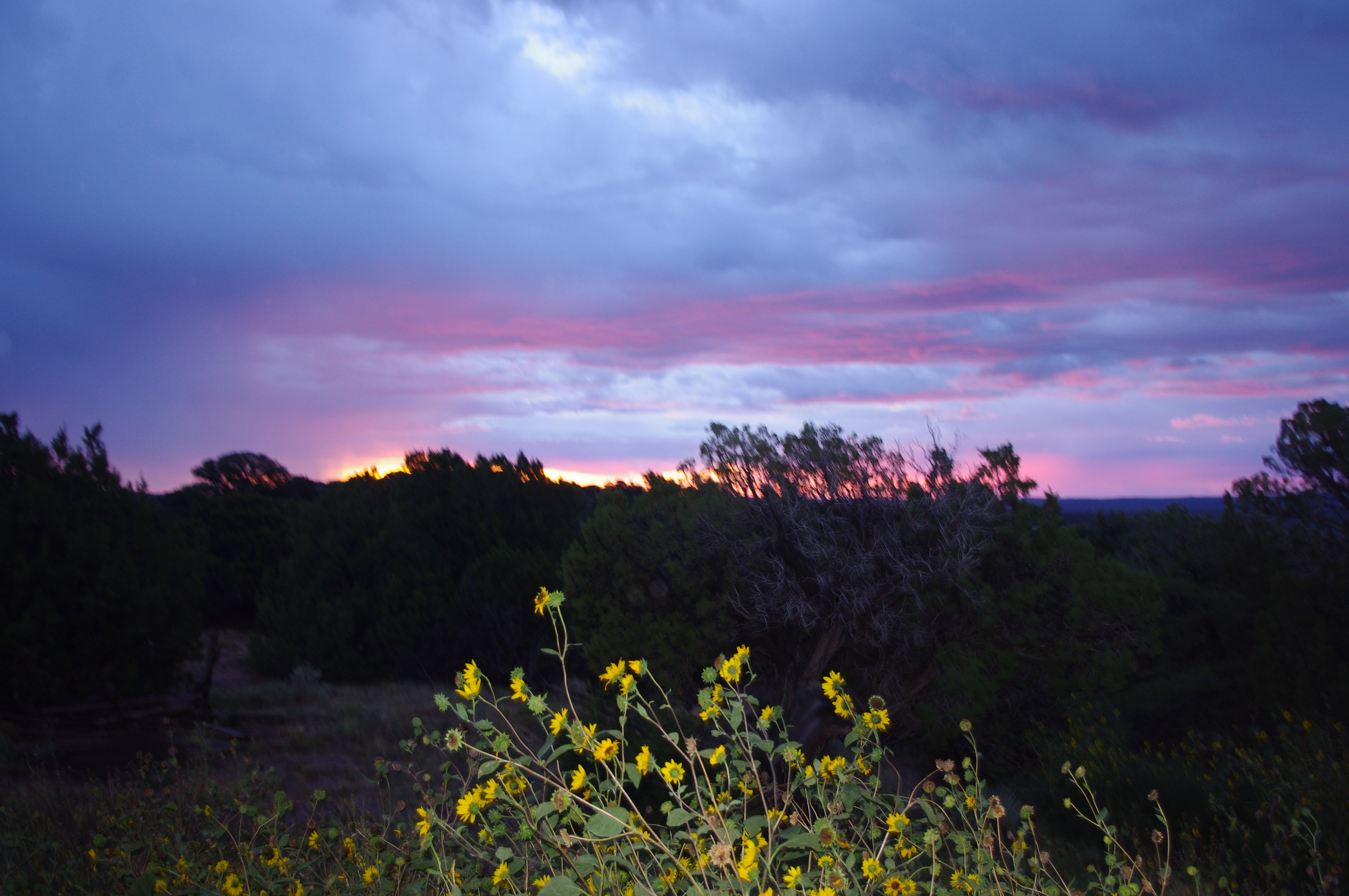
When I woke up this morning it was chilly and rainy outside. Then I looked out east and boom! what an amazing sunrise!

But even the nicest places on earth can be ruined if you aren’t getting along with your significant other. That’s why it’s so important to manage your ‘closeness’ so you can both be happy in retirement! 

Writer Meryl Baer says, there are all sorts of reasons people love the place they live. She enjoys her current hometown because of the ease of walking and cycling around town. In this week’s post, she lists the Ten reasons I love my walkable community. 

pink love sunsetWriter Carol Cassara says, many boomers who are otherwise living fulfilled lives, face problems with waning libidos. She explains over at Heart-Mind-Soul, there’s no need to deny ourselves the pleasure of a vibrant sex life, not when there’s a new book by boomer and midlife sex expert Walker Thornton that offers practical advice to anyone who would like to invite desire back into their life. Carol reviews Ms. Thornton’s book here.  And to give love equal time, she offers her simple secret to love

DMVAccording to Tom Sightings, in Beaten by the Bureaucracy, sometimes it’s hard to appreciate what the government does for us, even if you’re a liberal. He tells the story of changing his driver’s license and car registration after he moved to a new state. What’s the solution? “Don’t move to a new state!”

Rita's gardenOver at The Survive and Thrive Boomer Guide, Rita R. Robison, a consumer journalist, gives us a report on her bountiful garden. Robison, who went on vacation for a week, found that special something that gardeners dread finding when they return: “Surprises From My Garden.” 

Just published my memoir of moving to this beautiful rural place in southern Colorado to get a ways off the grid and finally truly enjoy life!  Please take a look!


High in the Sangre de Cristo Mountains: Foothills versus Mountain Living in Southern Colorado

Yesterday was so interesting! We visited some new friends who have lived up above 8,000 feet in the Sangre de Cristo Mountains west of here for the past few years. Loved hearing their stories about living up high.

I know many have romantic visions of life up in those beautiful mountains, but remember this too:

Manuel's snow tractor

The approach to their house is a windy, dirt road off of a major highway, a road they and their few neighbors must maintain, unlike the county road we live off of, 15 miles west of Walsenburg. Once they came home a few years ago and there was 6 feet of snow on this road. They couldn’t go home!

We heard stories about when the deep snows come, and the big state highway snowplows plow their road closed! That’s why they need to maintain snow-moving equipment themselves….imagine that!

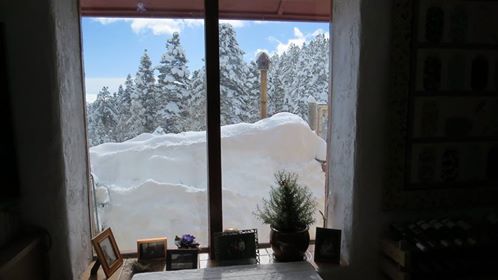
snow over the windows

I asked them how deep the snow gets up there, and they decided one picture was worth a thousand words!

WOW! We have had a few snows of a foot or so, but nothing like this! They told us stories of  a few snowstorms where they shoveled for eight hours straight. If they didn’t have heavy equipment they wouldn’t be able to get out for weeks!

Their property includes an old straw-bale cabin on a mine site plus 100 acres. Their water comes from a spring nearby, and what delicious water it is! They heat with a large wood stove, which requires a great amount of log splitting to prepare for the winter cold. They have electric service, mainly because the costs of returning renewal energy back to the grid here requires outrageous fees and insurance requirements, and going off grid presents other problems with reliability and initial  installation costs. We are stuck here until better energy storage solutions are developed worldwide.

The natural beauty of their landscape is beyond words and, did I mention, they have no water or heating bills… They maintain a number of wildlife cameras and see so many different animals around their home. Bears are so commonplace that they have named a few of them! It’s a wonderful place that requires a lot of work to maintain.

Postscript: This home was lost in the Spring Creek Fire , July 2019.

We recently built a passive solar home right at 7,000 feet and are told by our new friends that we are really saving a lot of money in the winter by absorbing the sun’s heat directly into our insulated slab, which helps to hold the daily sun’s heat within our home overnight.

solar water tubesWe hope to add a few of these solar thermal water tubes to our home soon to increase our thermal mass and help to moderate temperature swings both in the winter and summer. Beyond solar, we depend on Cadet forced-air electric wall heaters on thermostats for all of our winter heating needs. They usual turn themselves on during the night and turn off soon after the sun comes up most days. In the summer, the positioning and excellent insulation in our new home keeps us cooler than most without the need for air conditioning. We have ceiling fans in every room.

We have rarely been “snowed in” this past winter, but we did purchase a Subaru and love how well it works on steep snowy roads. Overall, we’re glad we chose a lower elevation, especially since our home survived the Spring Creek Fire in 2018!

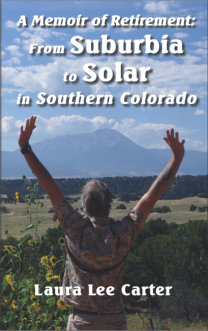
memoir of retirement 2016We are newcomers to rural Colorado, so after two years I compiled a book about the total experience of moving here to build passive solar  in the foothills:  A Memoir of Retirement: From Suburbia to Solar in Southern Colorado Please feel free to contact me directly for copies of any of my books! MidlifeCrisisQueen@gmail.com