Making friends in small towns

A new friend has been through hell lately adjusting to the many strange things that go on when you move to a small town. That is not to say that you don’t also meet plenty of strange ones in cities too, but I have come to think there is something unique about moving to a town under population 1,000 where many people also come and go with the seasons.

My friend got stuck in the middle of lots of confusion and negativity which resulted in bad feelings. In talking with her about all of that, I began to recall how many beginner friendships I had in my first two years here, most of which ended quickly. So I decided to make a list and ended up with well over twenty individuals or couples where some sort of friendship began and then either went nowhere or worse.

I basically met no one worth being friends with for about two years here. Either they weren’t friendly at first, our politics were too far apart, we had nothing in common, or they started out friendly enough, but then went unfriendly fast. What I have found is that La Veta is not so much a close knit community as one with a few main cliches, where few are truly friendly when you’re new here.

A few said they were just waiting for us to leave after a year or two. Four years later that is not happening! Luckily there are enough decent people to go around, so who cares about the rest?

When my friend started lamenting her recent bad experiences with new friends, I told her that I always approach this topic with the certainty that I am a great person to have as a friend, but here I have learned to be pretty selective. A friend is someone who improves the life of someone they care about. Mike and I live by that code. Once we are friends with someone we will help them improve their lives in any way we can. I make an extra effort through this blog and my book about this area, to reach out to those just moving here for the first time. I call that being neighborly.

Good friendships take time. There will always be a period of  adjustment and testing in the beginning. I have found I do best with those with a similar education and background. Jealousy kills friendships. Most people here are quite nice, but I must keep in mind that some moved here to avoid relationships altogether.

How lonely are you?

According to recent research, Americans are a pretty lonely group, and the younger you are, the lonelier you feel.

nationwide survey by the health insurer Cigna underscores that fact. Their survey of over 20,000 American adults age 18 or older, finds that loneliness is widespread in our country, with nearly 50 percent of respondents reporting that they feel left out always or sometimes.

The Cigna results offer some alarming findings:

  • Nearly half of Americans report sometimes or always feeling alone (46 percent) or left out (47 percent).

  • One in four Americans (27 percent) rarely or never feel as though there are people who really understand them.

  • Two in five Americans sometimes or always feel that their relationships are not meaningful (43 percent) and that they are isolated from others (43 percent).

  • One in five people report they rarely or never feel close to people or feel like there are people they can talk to.

  • Americans who live with others are less likely to be lonely (average loneliness score of 43.5) compared to those who live alone (46.4). However, this does not apply to single parents/guardians (average loneliness score of 48.2) – even though they live with children, they are more likely to be lonely.

  • Only around half of Americans (53 percent) have regular meaningful in-person social interactions, such as having an extended conversation with a friend or spending quality time with family.

  • Generation Z (adults ages 18-22) is the loneliest generation and claims to be in worse health than older generations.

Is social media part of the problem?

Social media use alone is not a predictor of loneliness; respondents defined as very heavy users of social media have a loneliness score (43.5) not markedly different from the score of those who never use social media (41.7).

More time online and social media may be causing a rise in depression and suicide among American adolescents. People who spend less time looking at screens and more time having face-to-face social interactions are less likely to be depressive or suicidal.

It appears that how people use social media determines its influence on one’s sense of isolation.

Members of Generation Z, born between the mid-1990s and the early 2000s, had an overall loneliness score of 48.3. Millennials, just a little bit older, scored 45.3. By comparison, baby boomers scored 42.4. The Greatest Generation, people ages 72 and above, had a score of 38.6 on the loneliness scale.

I have been what I consider to be a loner for most of my life, and enjoyed most of that time alone. Even though I moved here with Mike, I feared moving to rural Colorado because I didn’t know if I would find friends here. As it turns out, I do have a few friends who understand the value of a great education, deep friendship and healthy solitude.

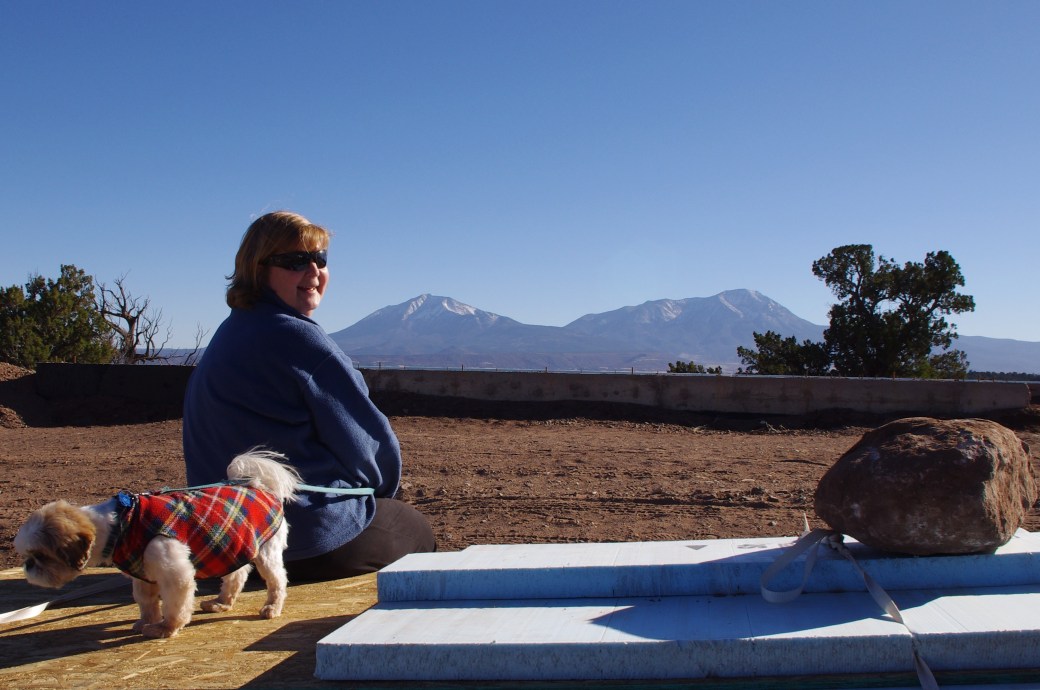
Laura and Rasta on insulation 2014 (2)

I also find I enjoy spending more time alone when feeling so connected to nature as I do here.

A Study of Vigilance in Rural Colorado

Vigilance: the action or state of keeping careful watch for possible danger or difficulties. Synonyms: alertness, attentiveness, watchfulness

As a psychologist, my natural tendency is to observe changes in my own and others’ behavior. By living in cities for most of my life, and then moving outside of even the smallest town recently, I have had a marvelous opportunity to observe how my consciousness has changed. One area I find particularly interesting is my level of vigilance.

This is a state which most are not conscious of, because it can often be barely felt on a conscious level. Simple thoughts like “Are my doors locked?” “Do I feel safe now?” and “Am I safe?” can come up constantly. I became much more aware of these feelings after moving away from cities. In this way I discovered that we all experience varying degrees of safety in any environment.

I see now that while living in cities I felt the need to be constantly vigilant. Especially living as a single woman there, I was always quite aware of locking my doors, noticing strange sounds or things going on around my home, etc. Cities offer such a tight concentration of people everywhere, with traffic, lines at the store, etc. They seem to require a heightened level of vigilance at all times.

Sunflowers on a county road

MY COMMUTE TO TOWN

However, I didn’t become aware of my city-inspired heighten state of vigilance until I tried living away from others. When I first moved out into the country I felt isolated and concerned about that sense of isolation. How would I make new friends? What about emergencies?

But in less than a year or so those fears turned into a new sense of security and safety. We live among others who have three to six acres of land, and most keep completely to themselves. In this new setting I found that I needed to train myself how to mellow out. I was still hyper-vigilant, a trait that no longer served me.

Each year I live here, my level of deep security and relaxation increases along with my level of introversion. Some might see this as a bad thing, but I must say it feels really good to feel truly safe for the first time in decades, both in my home and in my life.

Should a seeker not find a companion who is better or equal, let him resolutely pursue a solitary path. There is no companionship with a fool.  – The Dhammapada


How do we get “good with money?”

When I recently saw the headline: “Money Habits Established by Age 7” on PBS, I was astounded! Could we really be that set in our ways by seven? But then I thought back to my earliest saving habits and I could pretty much believe this. While my older brother could never hold on to money for any length of time, and my big sister also struggled with high finance, I was a born saver from way back.

I can even prove it:

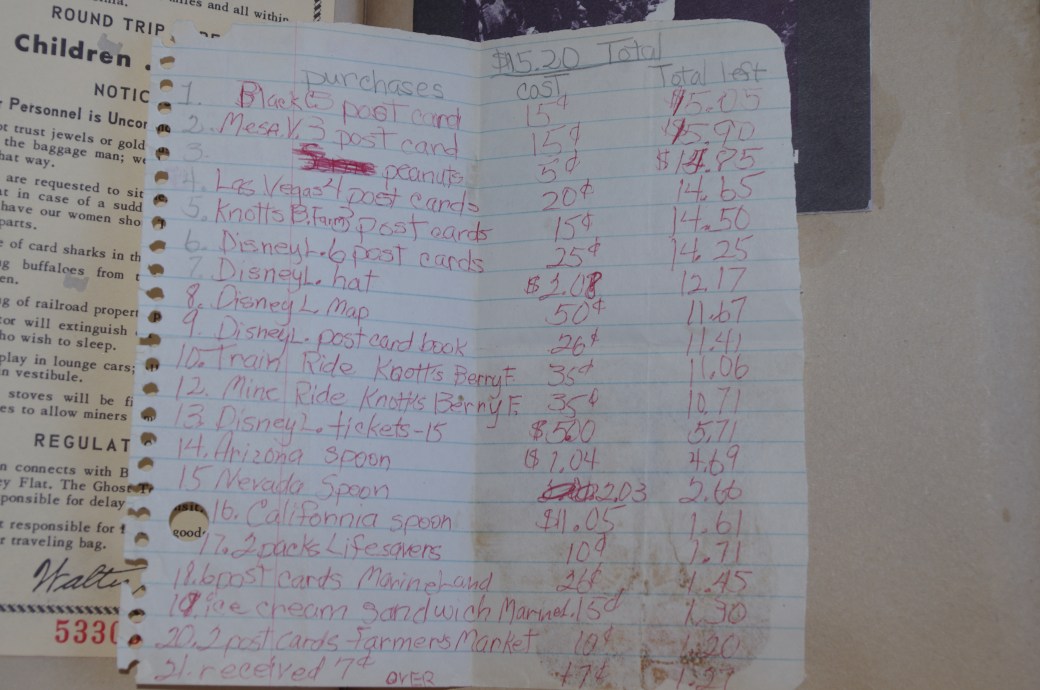
1967 budget for trip to Disney Land California

We took a family trip to Disneyland the summer of 1967 and wouldn’t you know, I documented every penny I spent on that trip. I was twelve years old! I started out with a little over $15.00 which sounds like nothing, but this was back when postcards were a nickel and rides at Knott’s Berry Farm were 35 cents. I ended up with a dollar left. I also had a savings account by then. I loved to watch my money grow, while my siblings didn’t. I’ve always wondered why.

kid counting coinsI read an article yesterday that predicted that the oldest sibling would be best at finances and the youngest fairly bad at saving. Nope, that’s not how it worked in our family. How about yours? Where does the desire to save money come from? Why do so many boomers have nothing extra saved for retirement, while some of us saved like crazy starting at age 20? That is a mystery to me!

Earth Day in the USA: Love Your Mother

earth day

On January 28, 1969, a well drilled by Union Oil Platform A off the coast of Santa Barbara, California, blew out. More than three million gallons of oil spewed, killing over 10,000 seabirds, dolphins, seals, and sea lions. As a reaction to this natural disaster, activists were mobilized to create environmental regulation, environmental education, and Earth Day. Among the proponents of Earth Day were the people in the front lines of fighting this disaster, Selma Rubin, Marc McGinnes, and Bud Bottoms, founder of Get Oil Out.

Earth Day 1970

The first Earth Day celebrations took place in 1970 at two thousand colleges and universities, roughly ten thousand primary and secondary schools, and hundreds of communities across the United States. It also brought 20 million Americans out into the spring sunshine for peaceful demonstrations in favor of environmental reform. It now is observed in 192 countries, and coordinated by the nonprofit Earth Day Network, chaired by the first Earth Day 1970 organizer Denis Hayes, according to whom Earth Day is now “the largest secular holiday in the world, celebrated by more than a billion people every year.” Environmental groups seek to make Earth Day into a day of action to change human behavior and provoke policy changes.

Why Earth Day Today?

Because the earth needs us now more than ever! And since we’re fresh out of other planets to live on, now is as good a time as ever to do everything we can to preserve the miracle of this green and blue planet. Go solar! Use wind power. Change old habits that hurt the earth. You could probably name ten things today that would benefit Mother Earth immediately. Do it instead of just thinking about it!

big earth

What does the future hold? It’s all up to us!


Breathe: A Surprisingly Refreshing Movie!

When I read the description of the 2017 film Breathe, I wasn’t so sure whether to borrow it from my local library. It sounded very sad and perhaps overly sentimental, but as it turns out, I LOVED IT!

First of all, nobody remembers how devastating polio was just a few years before I was born (1955). This is the true story of how Robin Cavendish  became paralyzed from the neck down by polio in Africa in 1958 at age 28.

How common was this in the 1950s?

In the United States, the 1952 polio epidemic became the worst outbreak in the nation’s history. Of the nearly 58,000 cases reported that year, 3,145 died and 21,269 were left with mild to disabling paralysis.  -Wikipedia

Robin Cavendish and son

Robin and his son Jonathan in 1961

The love between Robin and his wife is so inspirational! The uplifting part of this film is the way Robin and his wife Diana Blacker refuse to allow Robin to be confined to a hospital bed, imprisoned by the limits of his respirator. In England Robin Cavendish became one of the first paralyzed polio victims to defy expectations, leave the hospital, and with the help of a special wheelchair, live life to its fullest despite his polio-induced paralysis.

After a year in hospital he insisted on being able to leave, against the advice of his doctors. So excited about his new-found freedom, Cavendish decided to help others experience the same. He sought the help of Teddy Hall, an Oxford scientist and engineer, who developed a wheelchair with a portable respirator so he could become ever more mobile. Cavendish and Hall raised money from benefactors across the country and also persuaded the government to help fund the manufacture of these special wheelchairs.

Breathe film

Robin died by assisted suicide (euthanasia) in 1994 when his lungs stopped functioning at age 64, defying doctors’ predictions that his life would be meaningless and cut short outside of a hospital. His son Jonathan, conceived months before his paralysis, grew up to become a film producer. His production company Imaginarium Studios, is behind this film.

I highly recommend this well-made film about real life challenges and how the human brain and spirit often rises to overcome them. Yes it is definitely a tear-jerker, but in such a meaningful and  positive way!